Egypt’s Central Bank Crypto Ban: Law No. 194/2020 & Enforcement
Egypt's Central Bank bans crypto under Law No. 194/2020, detailing enforcement, risks, and the selective use of blockchain for government projects.

When talking about Egypt crypto ban, the Egyptian government's prohibition on buying, selling, or using cryptocurrencies within its borders. Also known as Egypt cryptocurrency restriction, it shapes how local users and global platforms interact with digital money.
The ban is part of a broader cryptocurrency regulation, rules that define how digital assets can be issued, traded, and held in a jurisdiction. This regulation encompasses licensing requirements, AML checks, and limits on cross‑border flows. Because of it, the country's central bank has to tighten its central bank policy, the set of monetary and supervisory actions a central bank uses to steer the financial system. The policy now forces banks to block crypto‑related transactions and to report any suspicious activity linked to digital assets.
One immediate effect is on crypto exchanges, online platforms that let users trade cryptocurrencies for fiat or other tokens. The ban requires these exchanges to suspend services for Egyptian users, which in turn influences market liquidity and price stability worldwide. For traders, this means less access to local liquidity pools and potentially higher transaction costs when using regional peers. At the same time, DeFi projects find it harder to attract Egyptian users because the legal risk of interacting with smart contracts spikes dramatically.
Another ripple is on investor sentiment. When a government imposes a hard stop, it sends a signal that crypto assets are viewed as risky or destabilizing. That signal affects both retail and institutional players, pushing some to pull out of exposure while others double down elsewhere. The ban also shapes the broader narrative around crypto adoption in emerging markets, shaping how other countries design their own rules.
On the practical side, anyone holding crypto in Egypt now faces a compliance dilemma. You need to assess whether your wallets, exchanges, or DeFi contracts fall under the new rule. Many users are turning to privacy‑focused wallets, but that raises security and tax‑reporting challenges. If you’re a developer, the ban means you must redesign onboarding flows to block Egyptian IPs and verify user location before permitting any crypto‑related activity.
All of this ties back to the core idea that the Egypt crypto ban is more than a headline—it’s a concrete example of how government policy, regulation, and market infrastructure intersect. Below you’ll find a curated list of articles that break down each piece, from legal analysis to exchange reviews and DeFi workarounds, giving you the tools you need to navigate this shifting landscape.
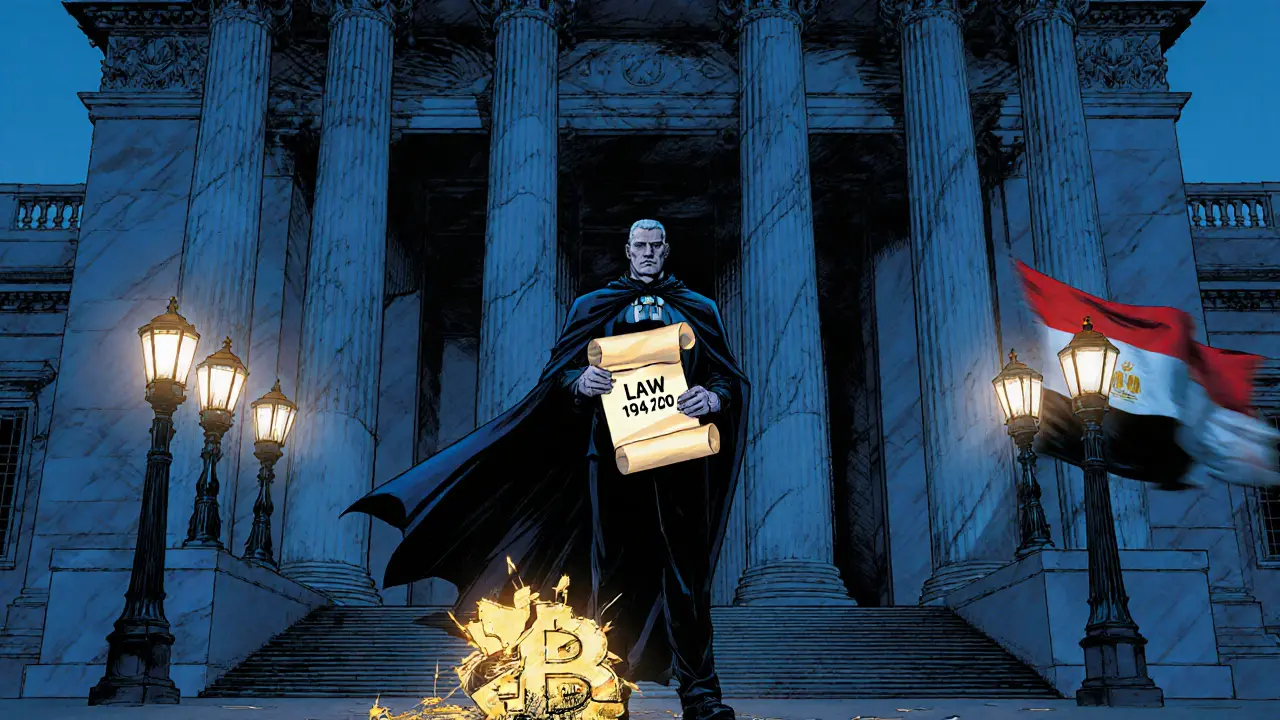
Egypt's Central Bank bans crypto under Law No. 194/2020, detailing enforcement, risks, and the selective use of blockchain for government projects.