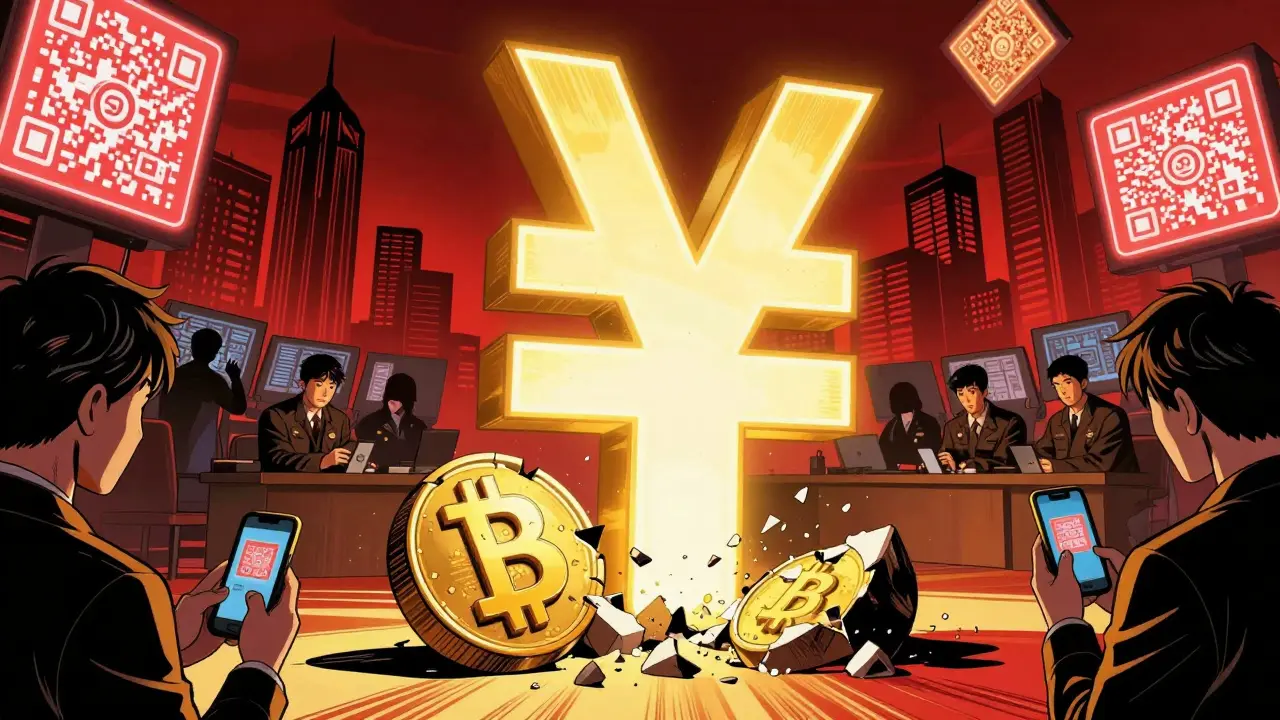
China digital currency: What it is, how it works, and why it matters
When you hear China digital currency, the official digital form of the Chinese yuan, issued and controlled by the People's Bank of China. Also known as Digital Yuan, it's not a cryptocurrency like Bitcoin—it's a central bank digital currency (CBDC) designed to replace physical cash and streamline payments across the world's second-largest economy. Unlike decentralized coins, the Digital Yuan gives the Chinese government full visibility into transactions while still letting users hold digital money directly in their phones.
This isn’t just about convenience. The People's Bank of China, the central bank that designed and launched the Digital Yuan has been testing it since 2020, rolling it out in over 200 cities. It’s used for everything from subway rides to grocery bills, and even government subsidies are now paid out through it. The system runs on a hybrid blockchain—part public, part private—so the state can track money flow for anti-money laundering, while users get fast, low-cost transfers without needing a bank account. This is why countries like the EU, India, and the U.S. are watching closely: if the Digital Yuan becomes a global settlement tool, it could weaken the dollar’s dominance.
Related to this is the concept of CBDC, a government-backed digital currency that replaces physical cash and is issued by a central bank. Over 130 countries are exploring CBDCs, but China is the only one with a live, nationwide system. It’s not about privacy—it’s about control. The Digital Yuan can be programmed to expire if not spent, limit usage to certain stores, or even freeze funds during sanctions. That’s why it’s often called a "programmable money" system. And while some see it as a step toward financial inclusion, others warn it’s the most advanced surveillance tool ever built into a currency.
You won’t find the Digital Yuan on exchanges or wallets like MetaMask. It’s not traded. It’s not mined. It’s distributed through state-approved apps like Digital RMB Wallet, and linked to your real identity. That’s why it’s not listed alongside Bitcoin or Ethereum in crypto guides—it operates in a completely different system. But its impact on global finance, cross-border payments, and even crypto adoption is real. If you’re trying to understand where money is headed, you can’t ignore what’s happening in China.
Below, you’ll find real-world posts that dig into how China’s digital currency compares to other national digital money systems, how it affects global crypto markets, and what it means for users trying to navigate finance in an era of state-controlled digital money. These aren’t theoretical pieces—they’re based on actual policy shifts, pilot data, and on-the-ground use cases from 2023 to 2025.