Egypt’s Central Bank Crypto Ban: Law No. 194/2020 & Enforcement
Egypt's Central Bank bans crypto under Law No. 194/2020, detailing enforcement, risks, and the selective use of blockchain for government projects.

When working with Central Bank of Egypt, the country's chief monetary authority that sets interest rates, supervises banks and steers financial reforms. Also known as CBE, it directly influences how digital assets and blockchain projects are treated under Egyptian law. The bank’s mandate includes safeguarding the national currency, controlling foreign exchange and preventing illicit finance. Because of that, any crypto exchange or token offering that wants to operate in Egypt must align with the CBE’s guidelines, especially around anti‑money‑laundering (AML) and know‑your‑customer (KYC) rules. This creates a clear link between the central authority and the emerging crypto ecosystem.
One of the key related concepts is cryptocurrency regulation, the set of rules that dictate how crypto businesses must register, report transactions and protect users. The CBE works hand‑in‑hand with Egypt’s Financial Regulatory Authority to draft these rules, meaning that compliance is not optional but a legal requirement. Another important entity is digital assets, tokens, stablecoins and other blockchain‑based instruments that represent value. The bank treats stablecoins as potential substitutes for the Egyptian pound, so it monitors their issuance closely to avoid currency destabilisation. Finally, FinTech, technology‑driven financial services such as mobile payments, lending platforms and blockchain‑based apps thrives only when the regulatory environment is clear. The CBE’s recent sandbox initiatives give startups a controlled space to test innovations without breaching existing laws.
How do these entities interact in practice? The CBE defines monetary policy, which sets the backdrop for crypto regulation; cryptocurrency regulation then establishes compliance checkpoints for digital assets; digital assets, when issued responsibly, can boost FinTech solutions that expand financial inclusion. For example, a local exchange that wants to list a stablecoin must first obtain a license from the CBE, prove AML compliance, and then demonstrate that the token does not threaten the pound’s stability. Once approved, the same exchange can offer that stablecoin to users as a low‑cost way to move money across borders, feeding directly into FinTech payment apps that rely on fast, cheap transfers. This chain of cause and effect shows why understanding the CBE’s stance is essential for anyone eyeing the Egyptian crypto market.
Below you’ll find a curated set of articles that break down these topics – from deep dives on exchange reviews to practical guides on KYC compliance and airdrop safety. Whether you’re a trader, a developer or just curious about how Egypt’s monetary authority shapes the next wave of digital finance, the insights here will help you navigate the landscape with confidence. Stay tuned for insights on how the Central Bank of Egypt influences the crypto scene.
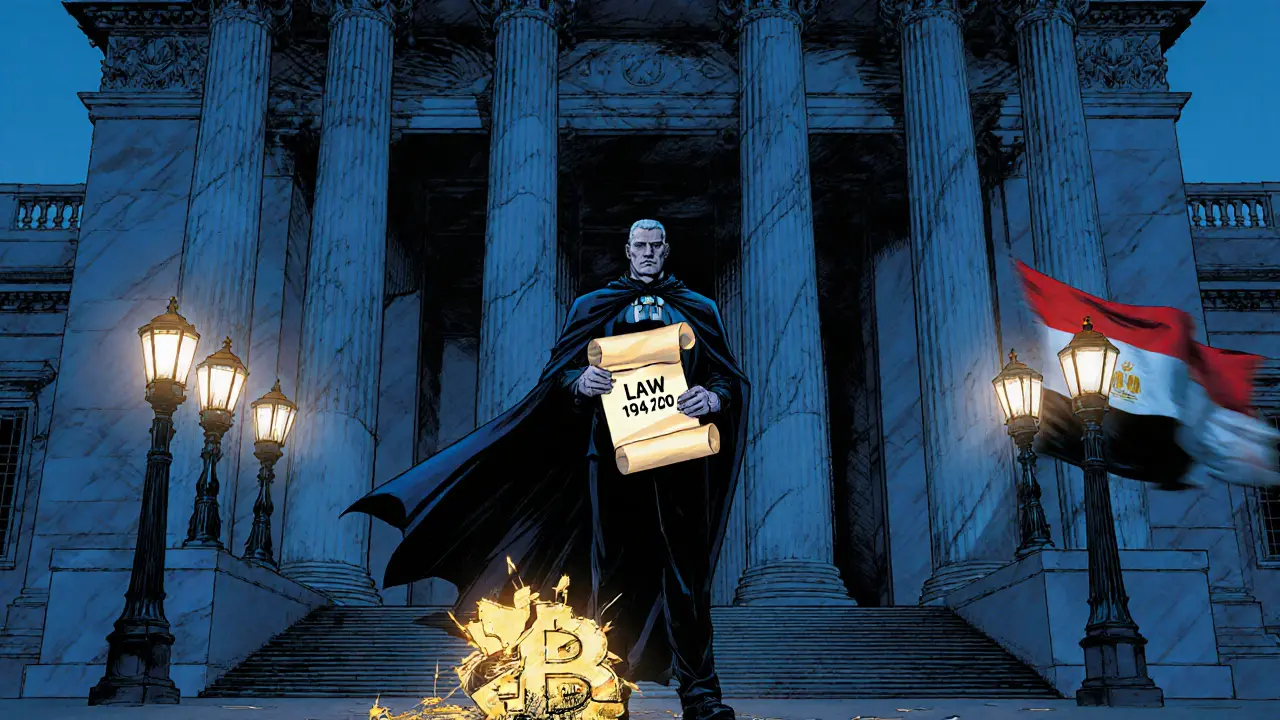
Egypt's Central Bank bans crypto under Law No. 194/2020, detailing enforcement, risks, and the selective use of blockchain for government projects.