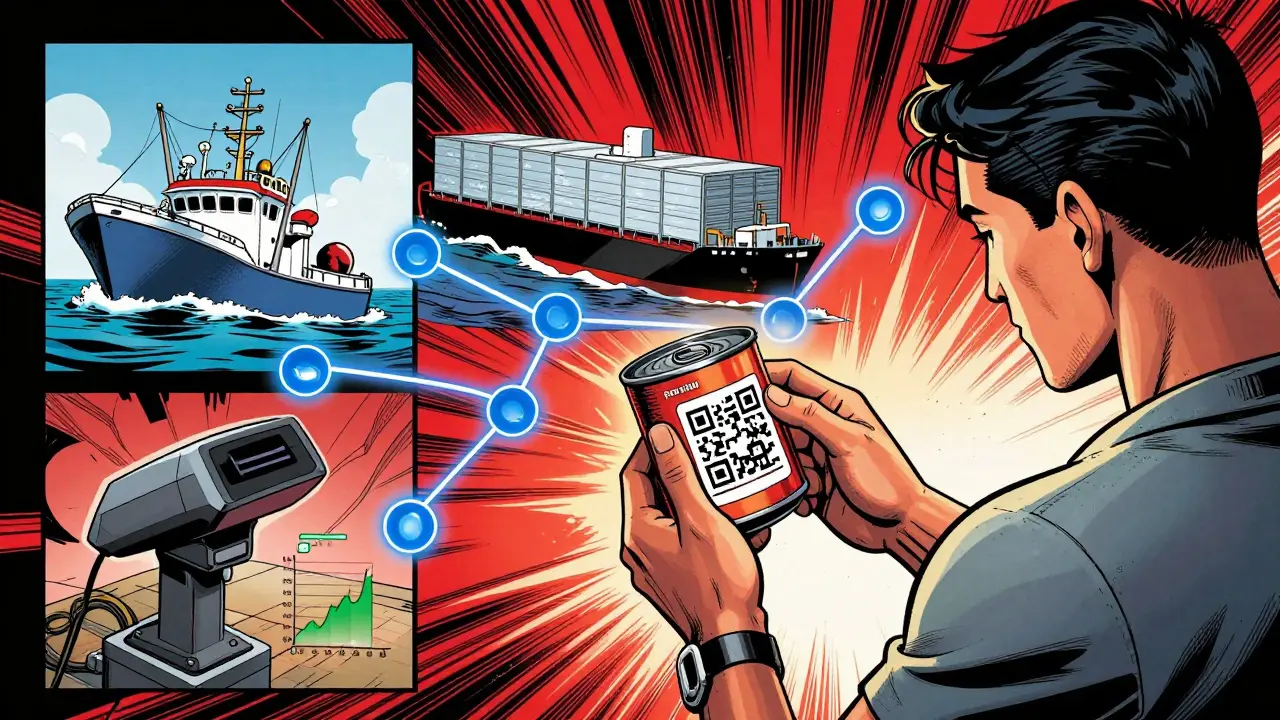
Blockchain in Logistics: How It's Changing Supply Chains Today
When you track a shipment from a factory in China to a store in Chicago, blockchain in logistics, a decentralized digital ledger that records every step of a product’s journey with tamper-proof timestamps. Also known as supply chain blockchain, it doesn’t just store data—it proves it happened, when, and by whom. No more guessing if a shipment was delayed because of weather, customs, or a fake invoice. Every scan, signature, and temperature reading gets locked in, and no one can change it without everyone knowing.
That’s why companies like Maersk and Walmart use it. Maersk cut shipping paperwork by 40% by moving bills of lading onto a blockchain. Walmart tracks mangoes from farm to shelf in 2 seconds instead of 7 days. These aren’t lab experiments—they’re live systems saving millions. Behind the scenes, smart contracts, self-executing code that triggers actions when conditions are met handle payments the moment a truck arrives, or freeze funds if a shipment goes off-route. And decentralized ledger, a shared database that no single company owns or controls means suppliers, carriers, and retailers all see the same truth—no more blaming each other for errors.
But it’s not magic. Blockchain in logistics only works if every player feeds in real data. If a warehouse still uses paper logs and scans them in manually, the chain breaks. And if a company doesn’t want transparency—say, because they’re hiding expired goods or overcharged fees—they won’t join. That’s why adoption is still uneven. Big players lead. Small ones lag. But the pressure is growing. Regulators demand proof of origin for food and medicine. Customers want to know their sneakers weren’t made with forced labor. Insurance companies need verifiable shipping records. The tech is ready. The question is: who’s willing to use it?
Below, you’ll find real cases where blockchain cut costs, exposed fraud, or failed completely. Some posts show how a single shipment was tracked across 12 countries. Others reveal fake blockchain projects pretending to solve logistics problems. You’ll see what works, what’s hype, and what’s just a fancy spreadsheet with a blockchain label.