
Supply Chain Traceability Time Estimator
See how blockchain transforms supply chain traceability. Based on Walmart's implementation where traceability time dropped from 7-14 days to under 2 seconds.
Traditional Traceability
Time per step: 1-2 days
3.5 days
Blockchain Traceability
Real-world implementation
2 seconds
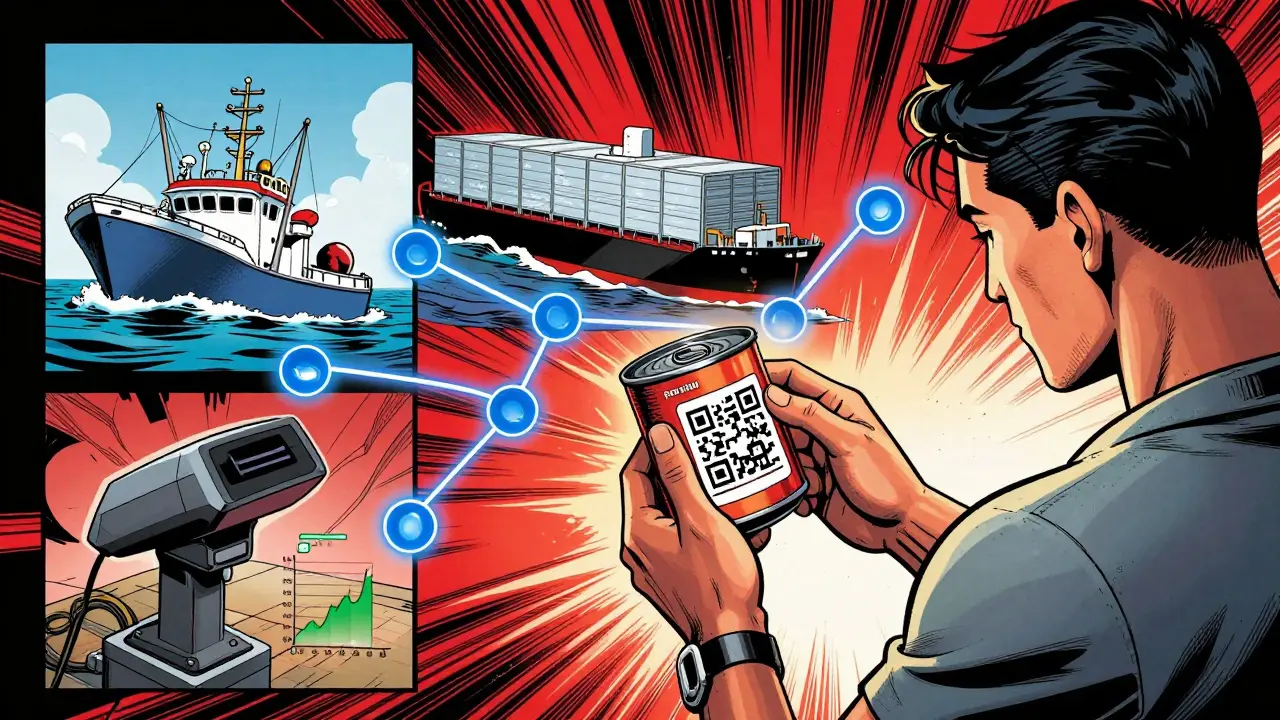
Imagine you buy a can of tuna. You scan a QR code on the label. In seconds, you see exactly which fishing boat caught the fish, when it was caught, where it was processed, how it was shipped, and even the carbon footprint of the entire journey. This isn’t science fiction. It’s happening right now - thanks to blockchain supply chain technology.
Why Supply Chains Need Blockchain
Traditional supply chains are messy. Paper bills of lading, disconnected databases, manual updates, and hidden layers of middlemen make it nearly impossible to know where a product really came from. A food recall can take weeks. A counterfeit part can slip into an airplane engine. A diamond from a war zone can end up in a wedding ring. Blockchain fixes this by creating a single, shared, unchangeable record that everyone in the supply chain can see. It’s not about cryptocurrency. It’s about trust. Every time a product changes hands - from farm to factory to warehouse to store - the event gets recorded on a blockchain. No one can delete it. No one can fake it. And every participant gets instant updates.Food Safety: From Contamination to Clarity
When E. coli hits a bag of spinach, every second counts. In a traditional system, tracing the source means calling dozens of suppliers, digging through spreadsheets, and waiting days for answers. The average recall takes 7 to 14 days - sometimes longer. Walmart started using blockchain in 2018. Now, when a problem arises, they can trace a package of lettuce back to the farm in under two seconds. That’s not a guess. That’s a verified record stored on a blockchain. How? Sensors on trucks record temperature. Scanners at each stop log location and time. Smart contracts auto-trigger alerts if the cold chain breaks. If a product goes above 4°C for more than 30 minutes, the system flags it, notifies all parties, and even blocks payment until the issue is resolved. Tracifier, a German tech company, helped food processors cut costs by up to 40% after switching to Oracle Blockchain. Why? Fewer delays. Less waste. Fewer disputes. And no more lost paperwork.Pharmaceuticals: Protecting Lives with Transparency
Counterfeit drugs kill over a million people a year. The World Health Organization estimates 1 in 10 medical products in low- and middle-income countries are fake. During the COVID-19 pandemic, vaccines needed to stay frozen at -70°C. One degree too warm, and the entire batch could be ruined. Moderna used blockchain to track every vial from production to clinic. Temperature, humidity, location, and time were logged in real time. If a shipment deviated, the system alerted the team immediately. No guesswork. No delays. No wasted doses. Regulators in the U.S., EU, and Singapore now require blockchain-level traceability for high-value drugs. It’s not optional anymore. It’s compliance.Diamonds: Ending Conflict Trade
For decades, the diamond industry struggled with conflict diamonds - gems mined in war zones and sold to fund violence. Even after the Kimberley Process was created in 2003, verification was based on paper certificates that could be forged. De Beers launched Tracr in 2018 - a blockchain platform that tracks every diamond from mine to retail. Each stone gets a digital ID. Every cut, polish, and shipment is recorded. Buyers can scan a code and see the full history: where it was mined, who cut it, and how it was transported. No more uncertainty. No more guilt. The result? Retailers now market diamonds as “blockchain-certified” - a powerful selling point for ethical consumers.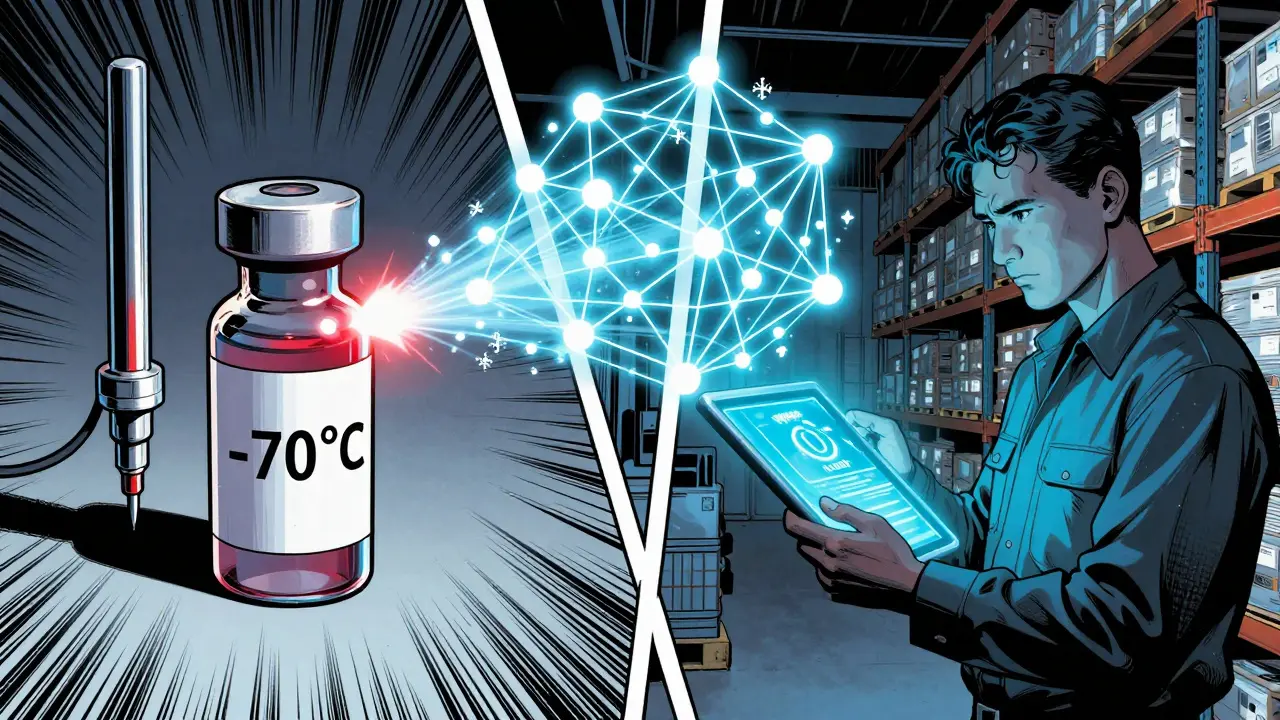
Automotive: Tracking Cobalt and Cutting Costs
Electric cars need batteries. Batteries need cobalt. Cobalt mining in the Democratic Republic of Congo is linked to child labor and environmental damage. Ford started using blockchain in 2020 to track cobalt from mines in Africa to their battery factories in Michigan. Each batch is logged with GPS coordinates, miner IDs, and audit reports. If a supplier can’t prove their cobalt is ethically sourced, the system blocks payment. Beyond ethics, blockchain saves money. Ford reduced inventory tracking time by 80%. Instead of manual counts and spreadsheets, sensors and smart contracts update stock levels automatically. Warehouse workers now spend less time verifying paperwork and more time fixing problems.Logistics: FedEx, Maersk, and the End of Paperwork
Shipping a container from Shanghai to Los Angeles used to involve over 200 documents. Each one had to be signed, scanned, emailed, and manually checked. Delays were common. Disputes were endless. Maersk and IBM built TradeLens - a blockchain platform that digitizes the entire shipping process. Every document - bill of lading, customs forms, inspection reports - is uploaded once and shared instantly with ports, customs, and carriers. FedEx joined the Blockchain in Transport Alliance (BiTA) and now uses blockchain to resolve customer disputes faster. Instead of digging through old emails, agents pull up a verified record of the shipment’s entire journey. Disputes that took weeks now get settled in hours.Fisheries: From Ocean to Table
Overfishing and mislabeling are huge problems in seafood. Up to 30% of fish sold as “tuna” isn’t tuna at all. John West, a UK-based fish supplier, put traceability codes on every can of tuna. Scan the code, and you see: the fishing vessel, the captain’s name, the exact GPS coordinates of the catch, the date, and the processing facility. Customers can verify they’re eating real tuna - and that it was caught legally. This isn’t just marketing. It’s a defense against fraud. And it’s working. Sales of John West’s blockchain-tracked tuna rose 22% in the first year.Oil and Gas: ADNOC’s Blockchain Pilot
Abu Dhabi National Oil Company (ADNOC) started a blockchain pilot to track oil from the wellhead to the customer. Every step - extraction, refining, shipping, delivery - is recorded. Smart contracts auto-pay suppliers when delivery is confirmed. No invoices. No delays. No disputes. The system cut administrative costs by 30% and reduced payment cycles from 45 days to under 7. That’s cash flow you can’t ignore.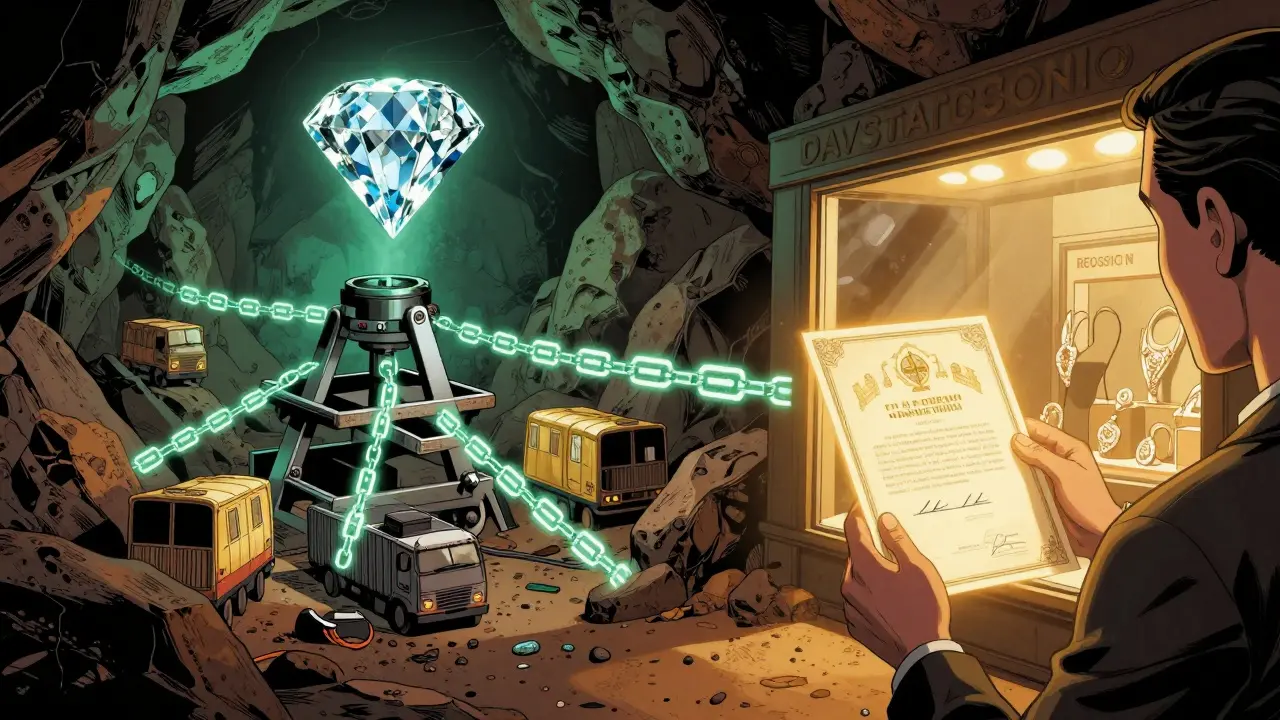
How It Actually Works: Sensors, Smart Contracts, and Tokens
Blockchain doesn’t work alone. It needs help:- Sensors - Temperature, humidity, GPS, shock detectors - record real-time data and push it to the blockchain.
- Smart contracts - Self-executing code that triggers actions. Example: “If temperature exceeds 5°C for more than 15 minutes, notify the distributor and freeze payment.”
- Tokenization - Physical goods get digital twins. A pallet of medicine becomes a token on the blockchain. You can track, trade, or finance it digitally without moving the physical item.
Who Benefits the Most?
It’s not just big companies. Blockchain levels the playing field:- Small farmers can prove their organic claims and get better prices.
- Local suppliers can access financing by showing verified transaction history.
- Consumers get transparency - and peace of mind.
- Regulators get real-time audit trails instead of delayed reports.
What’s Next?
The next wave is AI + blockchain. Imagine a system that doesn’t just record what happened - but predicts what will go wrong. If a shipment is delayed, the system might reroute it automatically. If a supplier has a history of delays, the system might flag them before the next order. Tokenized goods will become common. A warehouse might sell digital ownership of a pallet of goods to a financier - without moving the physical product. This opens up new ways for small businesses to get loans. The goal isn’t just to track a product. It’s to make the entire supply chain smarter, faster, and fairer.Is Blockchain Right for Your Business?
Not every company needs it. But if you deal with:- Temperature-sensitive goods (food, medicine)
- High-value items (diamonds, electronics, luxury goods)
- Complex multi-partner networks (manufacturing, shipping)
- Regulatory pressure (FDA, EU, USDA)
Can blockchain really prevent counterfeit goods?
Yes. Blockchain creates an immutable record of every step in a product’s journey. If a product’s digital record doesn’t match its physical origin - like a luxury handbag that never went through the official factory - it’s flagged as fake. Brands like Gucci and LVMH now use blockchain to authenticate products. Consumers scan QR codes to verify authenticity before buying.
How expensive is it to implement blockchain in a supply chain?
It varies. Simple traceability systems using platforms like Oracle Blockchain or IBM TradeLens can start under $50,000 for a pilot. Full-scale deployment across a global network may cost $500,000 or more. But the ROI is clear: companies report 20-40% cost savings in logistics, reduced waste, faster recalls, and fewer disputes. The real cost isn’t the tech - it’s the cost of not doing it.
Do all supply chain partners need to use blockchain?
Not all, but the more that do, the better it works. You can start with key suppliers - like your top 3 logistics partners or main raw material vendors. Others can access the data through simple portals or QR codes without needing to join the blockchain directly. The goal is to create a trusted core, then expand outward.
Is blockchain secure from hacking?
The blockchain itself is nearly impossible to hack because it’s distributed across hundreds of computers. But the weak point is usually the data entry point - like a sensor or scanner that gets tampered with. That’s why top systems combine blockchain with secure hardware, encryption, and identity verification. It’s not foolproof, but it’s far more secure than paper records or centralized databases.
Can blockchain help with sustainability claims?
Absolutely. Brands now use blockchain to prove carbon footprint claims. A coffee bag might show: “This batch was shipped by sailboat, not diesel truck. Carbon saved: 1.2 tons.” Or a shirt might show: “Cotton grown using 40% less water than industry average.” These aren’t marketing claims - they’re verified records. Consumers trust them. Regulators require them.