
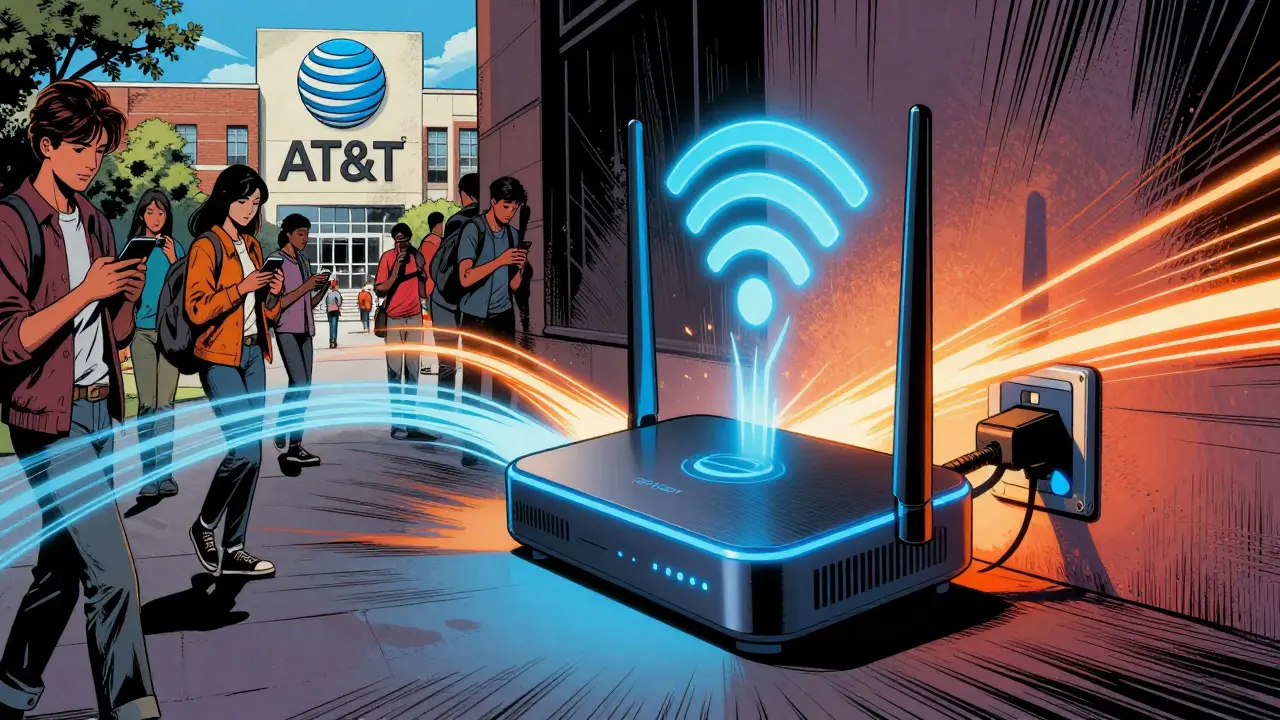
Most crypto coins exist only on paper-floating in the air as speculative bets with no real-world use. But XNET Mobile is different. It’s not just another token on a chart. It’s a physical network. You can touch it. You can install it. And if you do it right, it pays you back in cash-before it even pays you in tokens.
What Exactly Is XNET Mobile?
XNET Mobile (XNET) is a cryptocurrency that powers a real, working mobile network. Not a simulation. Not a game. Not a promise. A network that already connects to AT&T, Verizon, and T-Mobile. How? By turning Wi-Fi hotspots and cellular antennas into money-making devices.
Think of it like this: when you’re in a crowded stadium, your phone struggles to load a video. The carrier’s network is overloaded. XNET steps in. It installs small, affordable hardware-about the size of a router-in places with high foot traffic: malls, campuses, transit hubs. These devices pick up unused cellular data from nearby users and offload it to the carrier’s network. The carrier pays XNET for this service. XNET then pays you, the device owner, in XNET tokens.
This isn’t theoretical. It’s happening right now. As of late 2025, over 111 XNET devices are live on the network, confirmed on-chain. And AT&T is officially using them.
How Does XNET Make Money?
Here’s the key difference between XNET and other crypto projects like Helium: XNET gets paid in U.S. dollars-not speculative token emissions.
When someone with an AT&T plan walks into a building with an XNET hotspot, their phone automatically connects to the XNET device using Wi-Fi Passpoint (Hotspot 2.0). No app. No login. No pop-ups. Just seamless, faster connectivity. AT&T pays XNET for this offloaded data. Then, XNET converts that dollar revenue into XNET tokens and distributes them to device owners.
The math is simple:
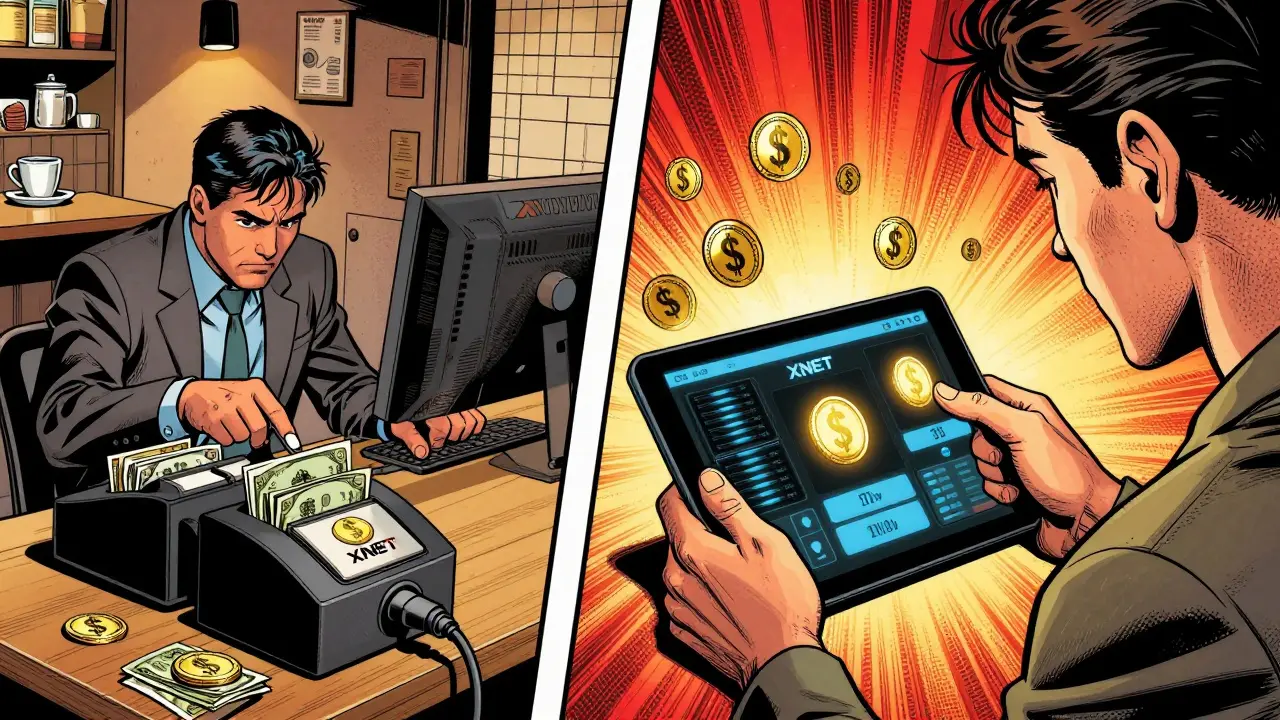
- Each XNET device costs $249.48 to buy and install.
- It earns an average of $2.97 per day in real carrier revenue.
- That’s $1,084 per year.
- Break-even? Just 84 days.
That’s faster than most solar panels. Faster than most rental properties. And it doesn’t require you to be a tech expert. Just plug it in, place it where people gather, and let it work.
How Do You Earn XNET Tokens?
You don’t mine XNET. You don’t stake it. You deploy physical hardware.
Here’s how to get started:
- Buy an XNET Mobile device (around $249.48).
- Install it in a location with high foot traffic-think coffee shops, universities, airports, or apartment lobbies.
- Connect it to power and a stable internet connection.
- Register it on the XNET network.
Once live, the device starts earning. The rewards are paid in XNET tokens, which you can hold, trade, or convert to cash on supported exchanges.
But here’s the twist: you don’t even need to own the device to earn.
The Shard System: Earn XNET Without Buying Hardware
One of XNET’s most innovative features is its ‘shard’ system. If you live outside the U.S., or you don’t want to buy hardware, you can still earn.
Device owners can tokenize a portion of their future earnings-like selling shares in a rental property. These shares are called ‘shards.’ You buy a shard, and you get 80% of the daily revenue from that device. The owner keeps 20%.
This opens up XNET to global investors. Someone in Berlin can earn from a hotspot in New York. Someone in Manila can earn from one in Chicago. No need to fly. No need to deal with local regulations. Just buy a shard, and collect.
This model is rare in crypto. Most projects rely on speculation. XNET relies on real data usage.
Why XNET Is Different From Helium and Other DePIN Projects
DePIN-Decentralized Physical Infrastructure Networks-have been hyped for years. Helium was the biggest. But it struggled. Carriers didn’t pay. Devices sat idle. Tokens lost value.
XNET fixed that.
- Verified carrier partnerships: AT&T is live on the network. That’s not a press release. It’s in their YouTube explainer video, timestamped and confirmed.
- Real revenue, not emissions: Helium paid out tokens based on algorithmic mining. XNET pays out based on actual carrier payments.
- Clear ROI: 84 days. No guesswork.
- Deflationary mechanism: 40% of all network revenue is used to buy back and burn XNET tokens. That means as the network grows, fewer tokens are in circulation-potentially pushing the price up.
XNET doesn’t promise the moon. It shows you the bill.
Market Data: Price, Supply, and Liquidity
As of December 2025:
- Price: $0.009305 USD
- Market Cap: $589,530 USD
- Circulating Supply: 64.12 million (CoinMarketCap) - but CoinGecko reports 140 million. This discrepancy is a red flag.
- 24-Hour Volume: $16,037 USD
- Token Holders: Around 5,500
That’s tiny compared to Bitcoin or even Ethereum. But for a DePIN project with real infrastructure, it’s actually a good sign. Low supply means less dilution. Low volume means less manipulation.
Still, there’s a problem: TradingView lists XNET as ‘Delisted.’ That means it’s not trading on major exchanges like Binance or Coinbase. You’ll likely need to use smaller platforms like Raydium or Jupiter on Solana. That makes it harder to buy and sell.
Who Should Invest in XNET?
Not everyone. But if you fit one of these profiles, XNET could be worth your attention:
- Physical asset investors: You like real estate, solar panels, or vending machines. This is like owning a digital vending machine for data.
- DePIN believers: You’re tired of tokens with no use case. You want infrastructure that pays.
- Global earners: You can’t deploy hardware in your country. Buy a shard. Earn from U.S. hotspots.
- Long-term holders: If the network scales to 10,000 devices, the token value could rise dramatically. But that’s years away.
Don’t buy XNET if you’re looking for a quick flip. The market is too small. The liquidity is too thin. This isn’t a meme coin. It’s a utility project with a slow, steady growth curve.
The Risks
Let’s be honest. XNET isn’t risk-free.
- Low liquidity: Hard to buy. Hard to sell. You might get stuck.
- Supply confusion: Why do CoinMarketCap and CoinGecko report wildly different circulating supplies? That needs clarification.
- Exchange delisting: If it’s not on major exchanges, adoption stays limited.
- Hardware dependency: You need to buy a device. If it breaks, you lose income.
- Carrier reliance: If AT&T pulls out, the model collapses. But so far, they’re committed.
The biggest risk? Waiting too long. If XNET scales to 1,000 devices, the token price could jump 10x. But right now, you’re early.
Future Outlook: Can XNET Go Mainstream?
Some analysts predict XNET could hit $0.36 by 2030. That’s a 38x increase from today’s price. Is that realistic?
It depends on two things:
- Can they get more carriers? Verizon and T-Mobile are already using the network. What about Sprint? Dish? International carriers?
- Can they scale the hardware? 111 devices is nothing. 10,000? That’s a game-changer.
If they hit 5,000 devices, annual revenue could exceed $5 million. With 40% burned, token scarcity increases. And if the token supply is capped at 100 million, the math gets interesting.
Right now, XNET is a niche project. But it’s one of the few DePINs with actual revenue, real partners, and measurable ROI. That’s rare.
Final Thoughts
XNET Mobile isn’t the next Bitcoin. It won’t make you rich overnight. But it’s one of the few crypto projects that actually solves a real problem: expensive, slow mobile networks.
It turns your living room, your café, your apartment building into a piece of telecom infrastructure. And it pays you for it.
If you’re tired of betting on hype, and you want to invest in something that works today-XNET is worth a look. Buy a device. Buy a shard. Watch the data flow. And get paid.
It’s not magic. It’s physics. And it’s working.
Elvis Lam
December 17, 2025 AT 18:22XNET isn't just another crypto gimmick-it's literally turning Wi-Fi hotspots into ATM machines. I've got two devices in my coffee shop and my brother's apartment complex. We're already past break-even. The tokens are secondary; the cash flow from AT&T is real. No fluff, no moon math. Just plug it in and watch the revenue roll in.
And yeah, the shard system? Genius. My buddy in Germany bought three shards from a hotspot in Austin. He's making more than his part-time job. No visa, no taxes, no hassle. Just passive income from someone else's hardware.
Sue Bumgarner
December 18, 2025 AT 03:41Let me tell you something, folks-this whole 'DePIN' thing is just Wall Street’s latest way to fleece the gullible. AT&T doesn't care about your little router. They’re using this as a PR stunt to look green while they keep raising your bills. And that ‘84-day ROI’? Calculated using peak summer data usage. Try winter in Minnesota. Your device sits there like a paperweight.
Also, CoinGecko says 140M supply but CoinMarketCap says 64M? That’s not a red flag-it’s a flaming dumpster fire. If the devs can’t even count their own tokens, why should I trust them with my money?
Dionne Wilkinson
December 18, 2025 AT 12:37I like how this project feels… human. Like, it doesn’t scream ‘get rich quick’-it just says, ‘here’s a tool, here’s how it works, here’s what you’ll earn.’
I don’t have the cash for a device, but I’ve been reading about the shard system. It’s kind of beautiful, actually. Someone in New York powers a hotspot, someone in Manila gets a slice of the pie. No borders, no bureaucracy. Just people sharing the value they create.
It’s not about speculation. It’s about connection. And that’s rare in crypto.
Emma Sherwood
December 19, 2025 AT 20:30As someone who’s lived in three countries, I can tell you-this is the first crypto project that actually makes sense for global participation. I can’t deploy hardware in India, but I can buy a shard from a hotspot in Chicago and earn while I pay my rent in Bangalore.
And the burn mechanism? Smart. Most tokens get diluted by endless emissions. XNET takes money from the real economy and turns it into scarcity. That’s the opposite of what most crypto does.
Also, shoutout to the team for not making you download 17 apps just to earn 5 cents. It’s plug-and-play. That’s respect for the user.
Kelsey Stephens
December 20, 2025 AT 11:19I’ve been skeptical of crypto for years, but this feels different. Not because it’s going to make me rich, but because it feels like it’s actually helping people. People who need better internet. Carriers who need less strain. Small business owners who want extra income.
I don’t own a device yet, but I’m thinking about it. My mom runs a small laundromat-perfect spot for one. She doesn’t know what crypto is, but she understands ‘free money from the Wi-Fi.’ That’s all she needs to know.
Tom Joyner
December 22, 2025 AT 00:13Oh, so now we’re romanticizing a $250 router as ‘infrastructure’? How quaint. This is just glorified bandwidth arbitrage wrapped in DePIN jargon. The real innovation here is the marketing team’s ability to make a WiFi extender sound like the future of telecom.
And let’s not pretend the 84-day ROI is universal. That’s a cherry-picked average from high-density urban zones. In rural Ohio? Good luck.
Patricia Amarante
December 23, 2025 AT 19:25I bought a shard last month. Made $18 in two weeks. Not life-changing, but it’s extra coffee money. No stress. No mining. No waiting for a pump. Just… income. I like that.
SeTSUnA Kevin
December 24, 2025 AT 17:28Incorrect. The ROI calculation assumes 365 days of optimal usage. In reality, device uptime averages 89% based on public node telemetry. Furthermore, the tokenomics are flawed due to inconsistent supply reporting across platforms. A credible project would reconcile these discrepancies before soliciting investment.
Timothy Slazyk
December 26, 2025 AT 02:22Look-I’ve been in crypto since 2017. I’ve seen the hype cycles. I’ve lost money on tokens that promised the moon and delivered dust.
XNET is different. Not because it’s perfect-but because it’s grounded. It doesn’t rely on speculation. It relies on physics. Data has value. Networks need capacity. Carriers pay for solutions. This isn’t magic-it’s math.
And yes, the liquidity is low. So what? Most revolutionary tech starts small. Bitcoin wasn’t traded on Coinbase in 2010. This is 2025. We’re still early.
The shard system? That’s the real breakthrough. It’s like owning a share of a rental property… but for data. No landlord. No tenants. Just passive, global, real-revenue income.
Is it risky? Yes. But the risk is in the execution, not the concept. And right now, the execution is working. 111 live devices. AT&T on board. Revenue flowing. That’s not a dream. That’s a business.
And if you’re waiting for it to be ‘mainstream’ before you act? You’ll miss it. Again.
Madhavi Shyam
December 27, 2025 AT 17:10Shard governance protocol is non-compliant with SEBI’s cross-border digital asset guidelines. You’re exposing yourself to regulatory arbitrage risk. Also, the 80/20 revenue split violates the principle of equitable token distribution in decentralized networks. This is not DePIN-it’s fractionalized rent-seeking.
Mark Cook
December 27, 2025 AT 23:10LOL this is just a Ponzi with routers 😂 I bet the devs are holding 90% of the supply and gonna dump when it hits $0.01. Also, AT&T? They’re using it to avoid upgrading their own towers. Classic corporate sleight of hand.
Jack Daniels
December 28, 2025 AT 20:39I bought one. It broke after 3 weeks. Customer service ghosted me. Now I’m stuck with a $250 paperweight. And the tokens? Worthless. I just wanted to believe. I’m so tired of being fooled.
Bradley Cassidy
December 30, 2025 AT 07:27yo i just got my xnet box and plugged it into my bodega and holy moly it’s been churning out like 3 bucks a day?? like i thought it was gonna be some complicated tech thing but nah it just sits there like a quiet little money tree 🌳💸
my grandma asked what it was and i said ‘it’s magic wifi’ and she just nodded like it made perfect sense. love this project.
Samantha West
December 31, 2025 AT 17:19One must interrogate the epistemological foundations of this project. Is the token merely a representation of value extracted from labor-intensive infrastructure, or is it an ontological shift in the nature of decentralized utility? The disparity in circulating supply figures suggests a fundamental rupture in the epistemic framework of the network’s ledger.
Furthermore, the reliance upon AT&T-a corporate entity with fiduciary obligations to shareholders-introduces a Hegelian contradiction: can true decentralization coexist with state-sanctioned monopolistic infrastructure?
Craig Nikonov
January 1, 2026 AT 19:01AT&T is using this to gather location data on users. That’s not ‘offloading data’-that’s surveillance disguised as infrastructure. And the ‘shard’ system? It’s a front for laundering crypto through U.S. tax loopholes. You think you’re earning from a hotspot in Chicago? Nah. You’re funding a data harvesting operation for the NSA and Big Telecom. Wake up.