
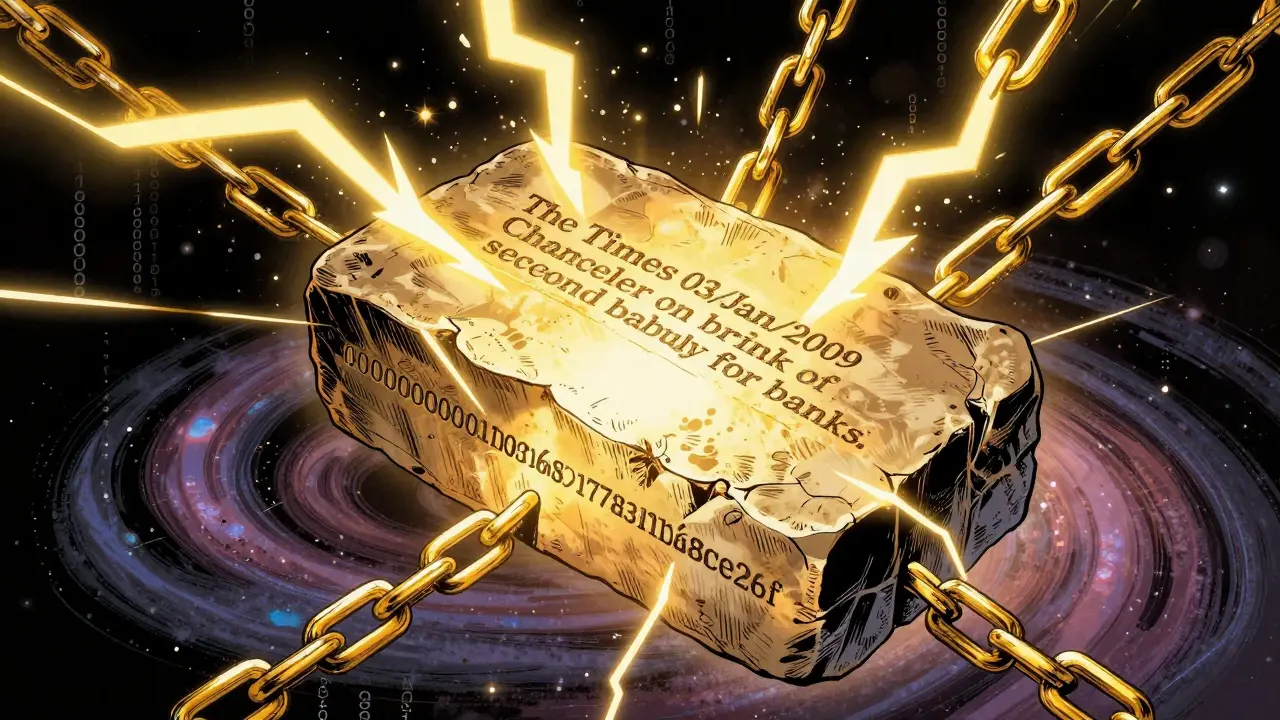
The genesis block is the very first block in any blockchain. Think of it as the seed from which an entire digital ledger grows. Without it, there’s no chain. No transactions. No Bitcoin. No Ethereum. Nothing. It’s not just the first block-it’s the only one that doesn’t point to another. Every other block in the chain traces its history back to this single, unchangeable starting point.
How the Genesis Block Was Born
The first genesis block was created on January 3, 2009, by someone using the name Satoshi Nakamoto. It wasn’t mined like later blocks. It was hardcoded into the Bitcoin software before anyone else even joined the network. This block, also called Block 0, contained the very first Bitcoin transaction: a reward of 50 BTC sent to an address no one can spend from. That’s right-the first Bitcoin ever created can’t be moved. It’s frozen in time.
Embedded in that block was a message: "The Times 03/Jan/2009 Chancellor on brink of second bailout for banks." It wasn’t random. It was a statement. A protest. A declaration that Bitcoin was built as an alternative to a financial system that had just crashed. That message is still there today, untouched, unaltered. It’s part of the block’s permanent record.
What Makes the Genesis Block Different?
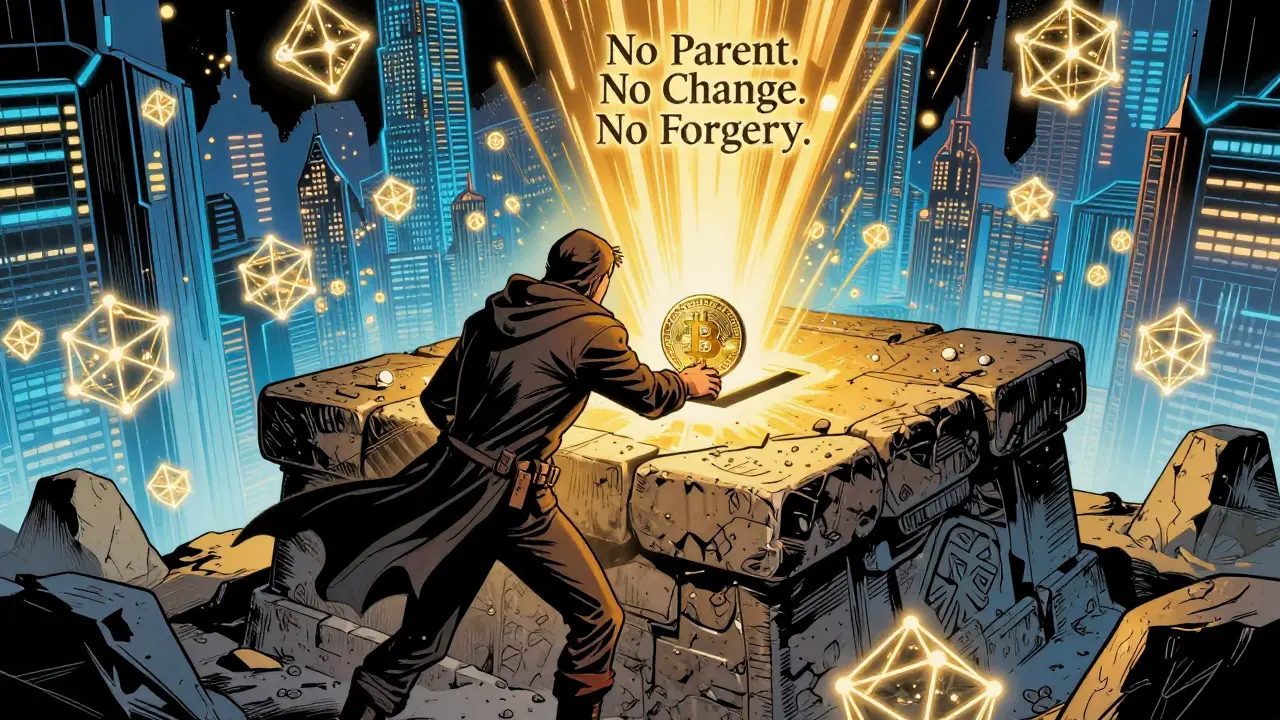
All other blocks in a blockchain link to the one before them. That’s how the chain works. Each block holds the cryptographic hash of its predecessor. But the genesis block has no predecessor. Its "previous block hash" field is empty. Zero. Null. That’s intentional. It’s the anchor.
Here’s what else sets it apart:
- It doesn’t come from mining. It’s pre-built into the software.
- It doesn’t have a parent block. No one mined it. It just… exists.
- Its hash is hardcoded into every Bitcoin client. If your software says the genesis block hash is different, you’re not on the real Bitcoin network.
- It can’t be changed. Ever. Not by anyone. Not by a supercomputer. Not by a government.
The Bitcoin genesis block’s hash is: 000000000019d6689c085ae165831e934ff763ae46a2a6c172b3f1b60a8ce26f. That’s not a random number. It’s the fingerprint of the entire Bitcoin system. Change that, and you change the whole history of Bitcoin.
Why It Matters for Trust
Blockchains don’t need banks or governments to work. They rely on trust built through math. The genesis block is the foundation of that trust. Every node in the network-every computer running Bitcoin software-agrees on the same genesis block. That agreement is what lets them all verify every transaction that comes after.
If someone tried to rewrite history-say, fake a transaction from 2010-the network would check back. It would trace every block backward, all the way to Block 0. If the chain doesn’t match the original genesis block, the whole thing gets rejected. That’s how tampering is impossible.
It’s like a birth certificate for the blockchain. No one can forge it. No one can erase it. Once you accept the genesis block, you accept the entire history that follows.
More Than Just Bitcoin
Bitcoin wasn’t the end of the story. Every new blockchain since then has its own genesis block. Ethereum’s, created in 2015, didn’t just start with a message. It included a public sale of Ether tokens. People bought ETH before the network even launched. That money helped fund development. Ethereum’s genesis block set the stage for smart contracts, DeFi, and NFTs.
Some blockchains embed jokes, quotes, or political slogans. Litecoin’s genesis block has a message about the future of digital currency. Dogecoin’s even has a Shiba Inu meme. These aren’t just fun-they’re traditions. A way for creators to say: "This is who we are. This is why we built it."
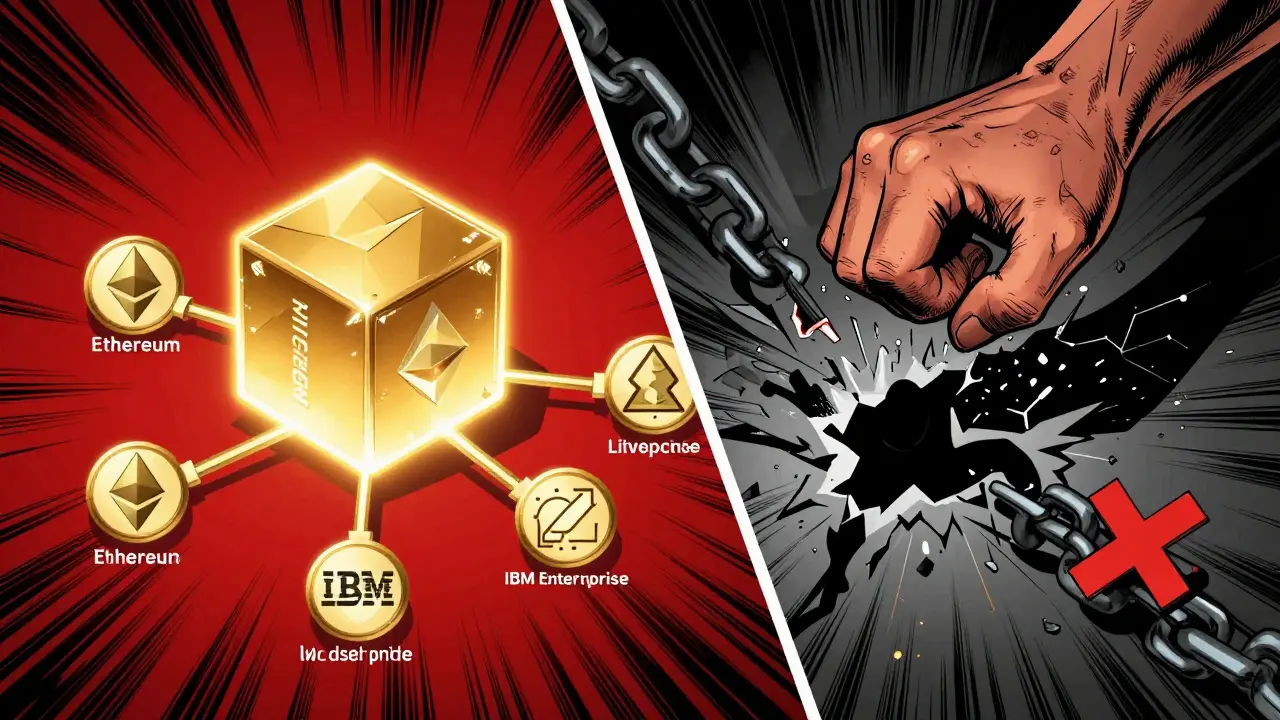
Even enterprise blockchains-like those used by Walmart or IBM-have genesis blocks. They’re not public. They’re private. But they still follow the same rule: one starting point. One unchangeable origin. That’s what makes them secure.
How It Shapes Token Distribution
The genesis block doesn’t just start the chain. It often starts the economy. In Bitcoin, the 50 BTC reward was never spent. But in Ethereum, the genesis block assigned tokens to early supporters who bought in during the 2014 crowdsale. Those addresses became the foundation of the network’s ownership.
Some blockchains pre-mine tokens and assign them to developers. Others use a public sale. Others still distribute them through airdrops. But no matter the method, the genesis block is where it all begins. It’s the ledger’s first page, and everything else is written after it.
Security and Immutability
Because the genesis block is hardcoded into the software, it’s the most secure part of the whole system. Even if every other block in the chain were somehow altered, the network would still reject it unless the genesis block matched. That’s why quantum computing hasn’t broken Bitcoin yet. The genesis block doesn’t rely on encryption that can be cracked. It relies on consensus.
Imagine trying to rewrite history by changing one brick in a wall. But every brick after it is glued to the one before. And the very first brick is bolted to the ground. That’s the genesis block. It’s not just the first link. It’s the foundation.
What Happens If It Changes?
It can’t. Not without breaking everything.
If someone somehow changed the genesis block’s data-even one byte-the hash would change. Every block after it would become invalid. All nodes would reject the chain. The network would split. One group would keep the original Bitcoin. The other would be stuck on a fake chain.
That’s why no one has ever tried. And why no one ever will. The cost of breaking the genesis block isn’t just technical. It’s social. It’s economic. It’s existential.
The Future of Genesis Blocks
As blockchain tech evolves, so do genesis blocks. Newer chains are starting to include quantum-resistant cryptography in their initial setup. Some are embedding zero-knowledge proofs right into the genesis block to enhance privacy from day one.
But the core idea stays the same: one unchangeable start. One shared truth. One anchor in a world full of doubt.
The genesis block isn’t just code. It’s a promise. A promise that records can’t be erased. That money can’t be controlled by a single entity. That trust doesn’t need a middleman.
It’s the first step. And it’s still standing strong-15 years later.
Can the genesis block be deleted or removed from a blockchain?
No. The genesis block cannot be deleted because every node in the network has a copy of it hardcoded into its software. Removing it would mean breaking consensus, and no node would accept a chain without it. The entire blockchain’s validity depends on this block being present and unchanged.
Is the Bitcoin genesis block’s 50 BTC reward spendable?
No. The 50 BTC reward from Bitcoin’s genesis block was sent to an address that has never been spent from. The private key to that address is unknown, and the transaction output is considered unspendable. This was intentional-either as a symbolic gesture or a technical limitation. The coins remain locked forever.
Do all blockchains embed messages in their genesis block like Bitcoin?
Not all, but many do. It became a tradition after Bitcoin. Ethereum included a timestamped message about decentralization. Litecoin and Dogecoin added their own slogans. Some enterprise blockchains leave it blank. But embedding a message is now a common way for creators to mark the network’s purpose or philosophy.
How is the genesis block hash calculated?
The genesis block hash is calculated the same way as any other block: by hashing the block header using SHA-256. The header includes the version number, the previous block hash (which is zero for the genesis block), the Merkle root of transactions, the timestamp, the difficulty target, and the nonce. Since it has no parent, the previous block hash is set to all zeros. The resulting hash becomes the unique identifier for the entire chain.
Can two blockchains have the same genesis block?
Technically, yes-if someone copied Bitcoin’s software exactly and launched a new chain with the same genesis block data. But that would create a fork, not a new blockchain. For a network to be considered separate, it must have its own unique genesis block with a different hash. Even minor changes to the block data-like changing the timestamp or nonce-will produce a completely different hash, making it a new chain.
karan narware
March 13, 2026 AT 18:46And yet-how many now treat it like a museum piece? A relic. As if the rebellion ended when the first coins were mined. The message remains. Unchanged. Unforgotten. Like a ghost in the machine, whispering: remember why you started.
Michael Suttle
March 14, 2026 AT 00:09Jenni James
March 15, 2026 AT 08:24Chelsea Boonstra
March 15, 2026 AT 14:50Alex Thorn
March 16, 2026 AT 03:15Howard Headlee
March 16, 2026 AT 15:39Julie Tomek
March 17, 2026 AT 23:06Brandon Kaufman
March 18, 2026 AT 16:39Craig Gregory
March 20, 2026 AT 15:04Anshita Koul
March 21, 2026 AT 16:07PIYUSH KOTANGALE
March 23, 2026 AT 01:09Jennifer Pilot
March 23, 2026 AT 16:35vishnu mr
March 24, 2026 AT 02:17Grace van Gent-Korver
March 25, 2026 AT 08:33