
You’ve probably heard the word “Merge” in crypto circles. Most people think of Ethereum’s massive upgrade from proof-of-work to proof-of-stake. But there is a completely different asset with that name: Merge (MERGE), a utility token for a platform called Project Merge. It is not an Ethereum upgrade. It is a standalone, micro-cap cryptocurrency with a very specific-and somewhat unusual-goal: letting you pay for services using only the interest earned on your tokens, without ever spending the actual coins.
If you are looking at MERGE because you saw it on a price tracker or heard about its unique payment model, you need to know exactly what you are dealing with. This is not a blue-chip asset like Bitcoin or Ethereum. It sits deep in the long tail of the crypto market, characterized by extremely low liquidity, confusing data discrepancies, and high risk. Here is everything you need to know to decide if this tiny project deserves even a fraction of your attention.
Quick Summary / Key Takeaways
- MERGE is not Ethereum: Do not confuse the MERGE token with Ethereum’s "The Merge" upgrade. They are unrelated.
- Micro-Cap Status: As of mid-2026, MERGE has a market cap of roughly $3,000-$5,000 USD, making it one of the smallest tracked cryptocurrencies.
- Unique Value Prop: The goal is to let users pay for services using staking rewards while keeping their principal tokens locked in escrow.
- Data Confusion: There are major discrepancies between exchanges regarding circulating supply, which skews valuation metrics.
- High Risk: With near-zero trading volume and no institutional coverage, MERGE is highly speculative and illiquid.
What Exactly Is Project Merge?
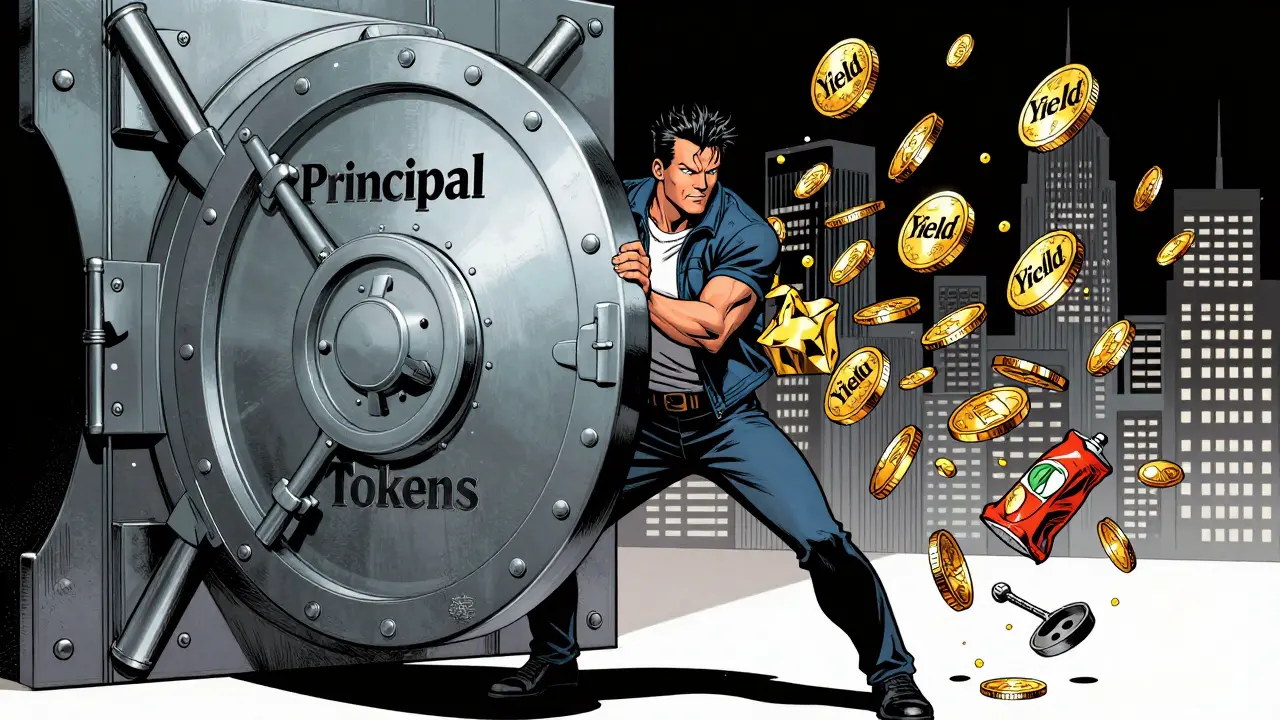
To understand the token, you have to look at the ecosystem it powers. Project Merge is a blockchain-based ecosystem designed to connect developers with users through a Software-as-a-Service (SaaS) marketplace. The core idea is simple but ambitious: instead of buying a service with cash or selling your crypto to pay for it, you lock your MERGE tokens in an escrow arrangement.
While those tokens are locked, they generate staking rewards. The platform then uses those rewards-the "yield"-to pay service providers for you. Once the service is complete, your original tokens are released back to you. Think of it like living off the interest of a savings account without touching the principal balance. The platform acts as a third-party intermediary, holding the collateral and facilitating the payment in yield.
The ecosystem includes several planned components:
- Merge Marketplace: A venue where users can access "life necessities" and other services paid for via yield.
- Membrane: A developer platform intended to help build blockchain-integrated apps.
- Native Wallets: Mobile (iOS/Android) and desktop (Windows) wallets for storing MERGE.
The concept appeals to those who want passive income streams to cover daily costs. However, the execution relies heavily on having enough service providers willing to accept MERGE yield and enough liquidity to make those transactions smooth.
The Naming Problem: Don’t Get Fooled
One of the biggest hurdles for new investors is SEO confusion. When you search for "Merge crypto," the first results will likely be about Ethereum’s Merge, which was the September 2022 upgrade that transitioned Ethereum to proof-of-stake. That event changed the entire landscape of the largest smart contract platform in the world.
Merge (MERGE), the token we are discussing here, is entirely separate. It has no technical relationship with Ethereum’s consensus mechanism. It runs on its own chain. This dual usage of the word "Merge" creates significant noise. Always check the ticker symbol. If you see ETH, you are looking at Ethereum. If you see MERGE, you are looking at this micro-cap utility token.
Tokenomics and Data Discrepancies
When evaluating any crypto, numbers matter. For MERGE, the numbers are messy. This is common for micro-caps, but it makes valuation difficult.
| Metric | CoinMarketCap Reporting | Coinbase Listing |
|---|---|---|
| Max Supply | 100,000,000 MERGE | 100,000,000 MERGE |
| Total Supply | 90.33 Million MERGE | 90.33 Million MERGE |
| Circulating Supply | ~59.58 Million MERGE (Self-reported) | ~90.33 Million MERGE (Implied fully circulating) |
| Estimated Market Cap* | ~$3,140 USD | ~$4,775 USD |
*Based on a hypothetical price of ~$0.00005. Actual prices fluctuate wildly due to illiquidity.
Why does this matter? Because market cap determines how "big" a project is. A discrepancy of 30 million tokens changes the perceived size of the economy significantly. In micro-cap projects, circulating supply is often self-reported by the team rather than audited by independent third parties. This means the "real" number of tokens available for trading might be somewhere in between, or potentially higher if locked tokens are dumped later.
The Fully Diluted Valuation (FDV)-what the project would be worth if all 100 million tokens were in circulation-is roughly $5,280 USD. To put that in perspective, that is less than the cost of a single high-end laptop. You are looking at a project with a total economic value measured in thousands of dollars, not billions.
Price History and Volatility Realities
If you look at historical charts for MERGE, you might see some alarming figures. Some aggregators list an All-Time High (ATH) of over $23,000 per token. Does that mean MERGE was once a premium asset? Absolutely not.
In thinly traded markets, a single outlier trade can skew data. An ATH of $23,000 on a token with a current market cap of $3,000 suggests a pricing error, a wash-trade, or a glitch in an exchange feed. It does not reflect sustainable demand. Conversely, the All-Time Low (ATL) hovers around $0.00002.
Current trading conditions are stark:
- Volume: Often reported as $0 USD over 24 hours. This means you might buy tokens, but finding a buyer when you want to sell could be impossible without crashing the price.
- Liquidity: Extremely low. Wide spreads mean the difference between the buy and sell price is huge.
- Holders: Approximately 533 addresses hold MERGE. Compare this to Ethereum’s tens of millions of holders. This is a niche community at best.
This lack of activity is the primary risk. Without volume, price discovery fails. You cannot rely on the chart to tell you where the price is going because there is no market consensus.
Technology: Hybrid PoW/PoS
Technically, Project Merge claims to use a hybrid consensus mechanism combining Proof-of-Work (PoW) and Proof-of-Stake (PoS). This design aims to merge the security of mining (energy-backed) with the efficiency of staking (capital-backed).
We have seen this model before. Decred (DCR) is a well-known cryptocurrency that successfully uses a hybrid PoW/PoS system for governance and block validation. Decred has survived for years because it has a strong community and clear utility. MERGE, however, lacks detailed public documentation on its specific hashing algorithms, block times, or validator requirements.
Without transparency on these technical metrics, it is hard to assess the network’s security. Is it resistant to 51% attacks? How fast are transactions? These answers are missing from public sources, which raises questions about the maturity of the underlying infrastructure.

How to Buy and Store MERGE (If You Choose To)
If you still want to experiment with MERGE, proceed with caution. You will not find it on major Tier-1 exchanges like Binance, Coinbase Exchange, or Kraken. It is listed on smaller, niche platforms.
- Verify the Contract: Always double-check the official links from reputable aggregators like CoinMarketCap. Scammers often create fake tokens with similar names.
- Get a Wallet: Project Merge offers native wallets for iOS, Android, and Windows. Ensure you download them only from the official source. Never trust third-party app store listings that look like games (e.g., "Bitcoin Mega Merge" is a puzzle game, not a wallet).
- Acquire Tokens: Use a decentralized exchange or a small centralized exchange that lists MERGE. Be prepared for high slippage.
- Secure Your Keys: Write down your seed phrase offline. Since this is a small project, there is no customer support to recover lost funds.
- Stake Carefully: If you intend to use the yield-payment feature, read the terms of the escrow agreement. Understand how long your principal is locked and what happens if the service provider defaults.
Risks You Must Consider
Before putting any money into MERGE, ask yourself if you can afford to lose it all. Here are the concrete risks:
- Illiquidity Trap: You might be able to buy, but unable to sell. With zero daily volume, exiting a position can take days or weeks, during which the price may drop further.
- Project Dormancy: Micro-caps often fade away. If the development team stops updating the wallet or the marketplace, the token becomes worthless. There is no institutional backing to keep it alive.
- Regulatory Uncertainty: As a utility token with investment-like features (staking yields), it exists in a gray area. If regulators classify it as a security, smaller exchanges may delist it immediately.
- Counterparty Risk: Using small, offshore exchanges increases the risk of hacks or fraud. There is no insurance on your deposits.
Is MERGE Worth It in 2026?
The concept behind Project Merge-paying with yield-is intellectually interesting. It aligns with broader DeFi trends where users seek to maximize the utility of idle assets. However, the current reality of the MERGE token does not support widespread adoption.
With a market cap under $5,000, fewer than 600 holders, and no visible ecosystem growth, MERGE remains a speculative experiment rather than a functional financial tool. It serves as a case study in how many small crypto projects launch with big ideas but struggle to gain traction against established giants.
If you are a developer interested in hybrid consensus models, studying the code might offer educational value. If you are an investor looking for returns, the risk-to-reward ratio is heavily skewed toward risk. Stick to assets with transparent data, high liquidity, and active communities unless you are specifically hunting for high-risk micro-cap gems.
Is Merge (MERGE) the same as Ethereum’s Merge?
No. Ethereum’s "The Merge" refers to the 2022 upgrade that switched Ethereum to proof-of-stake. Merge (MERGE) is a separate, standalone cryptocurrency token for the Project Merge ecosystem. They share a name but have no technical connection.
Can I buy MERGE on Coinbase?
Coinbase tracks the price of MERGE on its informational pages, but it does not list MERGE for trading on its regulated exchange. You must use smaller, niche exchanges to buy or sell the token.
Why is the market cap of MERGE so low?
MERGE is a micro-cap asset with very low trading volume and limited adoption. Its market cap reflects the total value of all circulating tokens, which is currently estimated at only a few thousand USD due to low demand and high illiquidity.
How does the staking yield payment work?
Users lock their MERGE tokens in escrow. The tokens generate staking rewards (yield). The platform uses this yield to pay for services on behalf of the user. Once the service is complete, the original locked tokens are returned to the user.
Is MERGE a good investment?
MERGE is considered high-risk and highly speculative. Due to its tiny market cap, lack of liquidity, and minimal institutional coverage, it is not suitable for conservative investors. Only allocate funds you can afford to lose entirely.
Larry Port
May 23, 2026 AT 01:05I have been looking into hybrid consensus models for a while now and this project seems to be missing the fundamental security proofs that Decred has. The idea of paying with yield is interesting in theory but without deep liquidity it is just a paper exercise. You cannot build a marketplace on thin air.
Bronwen Butler
May 23, 2026 AT 02:37everyone is sleeping on micro caps because they are scared of volatility which is exactly why they miss the early entry points before the whales dump on them later
Matt Davis
May 24, 2026 AT 17:54You are absolutely deluded if you think a market cap of three thousand dollars is an opportunity rather than a graveyard. This is not investing; this is donating money to a dead protocol. The lack of volume is not a feature, it is a fatal flaw that ensures you will never exit your position at a fair price.
Bronwen Butler
May 25, 2026 AT 06:08i am not donating anything i am buying supply when there is none left and waiting for the narrative to shift towards utility tokens again
Jocelyn Garcia
May 25, 2026 AT 19:44The tokenomics here are a mess. The discrepancy between CoinMarketCap and Coinbase listings regarding circulating supply is a huge red flag for any serious DeFi analyst. If you cannot trust the basic metrics of supply, how can you trust the staking yield mechanism? It feels like a classic pump-and-dump setup disguised as innovation.
Amit Varpe
May 27, 2026 AT 01:50Indian devs could do better than this copycat garbage 😡
Yash Lodha
May 27, 2026 AT 18:15Do you really believe the official narrative about the escrow system or do you suspect the team is using the locked tokens to manipulate the validator set from within? The opaque nature of the hybrid PoW/PoS implementation suggests hidden backdoors that only the insiders can exploit. I have seen similar structures used in rug pulls where the 'staking' was actually just a way to freeze user funds until the developers could siphon the value out through side channels.
Zara Zaman
May 29, 2026 AT 13:24This article is full of fear-mongering designed to keep average people away from real opportunities. You claim it is high risk but ignore the potential upside of being early. I am going to buy some regardless of what these so-called experts say because I know how this market works and I intend to profit from their hesitation.
Bianca Vilas Boas Lourenço
May 30, 2026 AT 02:45Oh look another person who thinks they are smarter than the market 🙄💀 Please tell me you aren't actually putting real money into this joke coin. It's cute how you think you're beating the system when you're just the liquidity for someone else's exit strategy. Don't come crying to us when your portfolio turns to dust lol 😂📉
Pauline Larocco71
May 30, 2026 AT 17:06i feel like ppl are being too harsh on the concept even tho the execution is kinda shaky right now its nice to see someone trying to solve the problem of spending crypto without selling it and maybe it will grow over time we should support small projects insted of just hating on them
beti macedo
May 31, 2026 AT 01:51It is truly inspiring to witness such innovative approaches to decentralized finance emerging from smaller communities. Although the current market capitalization may appear modest to some observers, the underlying technology holds significant promise for future development. We must remain optimistic and supportive of these pioneering efforts as they navigate the complex landscape of digital asset regulation and adoption.
Michelle Bonahoom
June 1, 2026 AT 11:55stop pretending this is innovation it is just a scam wrapped in buzzwords nobody wants to use this wallet and the team is clearly inactive just take your losses and move on instead of making excuses for failure
Ankush Pokarana
June 3, 2026 AT 04:27we often forget that every major protocol started as a tiny speck in the vast ocean of blockchain experiments and judging them solely by their current liquidity ignores the historical precedent of exponential growth in niche markets that eventually found their product market fit after years of obscurity and skepticism from the mainstream crowd who never understood the vision