
Think of money as something you can hold, count, and use to buy coffee, groceries, or a bus ticket. Now imagine that same money exists only as code on a computer - no physical form, no bank in the middle, just you and the person you’re paying, connected through a global network. That’s what payment cryptocurrencies are.
What Exactly Are Payment Cryptocurrencies?
Payment cryptocurrencies are digital coins built to move value directly between people. They don’t need banks, credit card companies, or payment processors to work. Instead, they rely on blockchain technology - a public, tamper-proof ledger that records every transaction ever made. The first and most famous one is Bitcoin, launched in 2009. Since then, dozens more have been created with the same goal: to be money you can send anywhere, anytime, with low fees and no middlemen.Unlike other types of crypto - like tokens used to run apps on Ethereum - payment coins are designed for one thing: spending. They’re meant to be exchanged, not locked up as investments. That’s why Bitcoin, Litecoin, Dogecoin, and Bitcoin Cash are often called payment cryptocurrencies. They’re the digital equivalents of cash in your wallet.
How Do They Work?
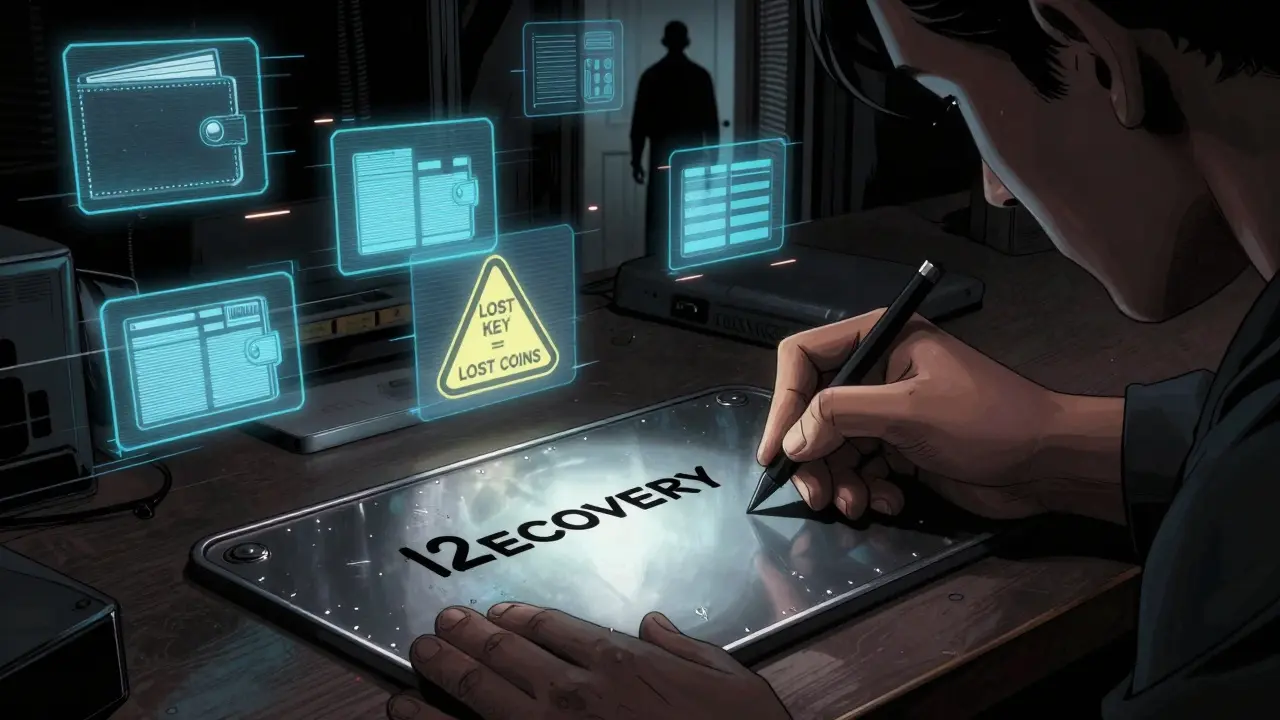
Every payment cryptocurrency runs on its own blockchain. When you send someone Bitcoin, that transaction is bundled with others into a block. Miners - people running powerful computers - verify the transaction by solving complex math puzzles. Once confirmed, the block is added to the chain, and the Bitcoin moves from your wallet to theirs. This process takes anywhere from a few seconds to 10 minutes, depending on the network.Each user has a digital wallet - not like an app on your phone, but a unique string of letters and numbers called a public address. You share this to receive money. To spend, you need a private key - a secret password only you should know. Lose it, and your coins are gone forever. No customer service can help you recover them.
Some payment cryptos, like Litecoin, were built to fix Bitcoin’s slow speeds and high fees. Litecoin uses a different algorithm that lets it process transactions faster and cheaper. Bitcoin Cash split off from Bitcoin in 2017 to increase block sizes, allowing more transactions per second. These tweaks show how the space is constantly evolving to become more practical for everyday use.
Top Payment Cryptocurrencies Today
Not all crypto is made equal when it comes to spending. Here are the most used payment coins right now:
- Bitcoin (BTC) - The original. Still the most recognized, but often slow and expensive for small purchases.
- Litecoin (LTC) - Designed as a lighter, faster version of Bitcoin. Confirms in about 2.5 minutes and costs pennies to send.
- Bitcoin Cash (BCH) - Bigger blocks mean more transactions per second. Popular in regions with limited banking access.
- Dogecoin (DOGE) - Started as a joke, but now used for tipping, small online purchases, and even charity donations.
- Monero (XMR) - Not for everyone. Built for privacy. Hides sender, receiver, and amount. Used by those who value anonymity over convenience.
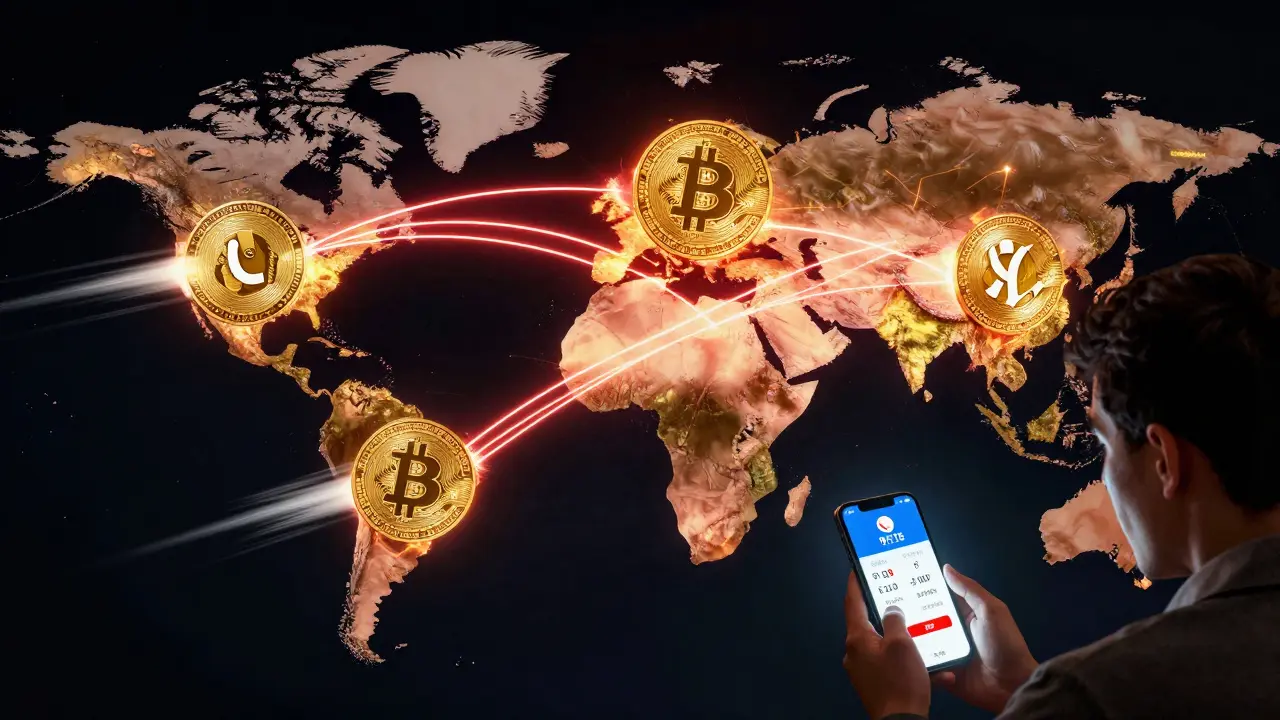
These aren’t just theoretical. In New Zealand, some local cafes and online stores accept Bitcoin Cash. In El Salvador, Bitcoin is legal tender. In parts of Africa, people use Litecoin to send money across borders without waiting days or paying 10% in fees.
Why They’re Different From Other Cryptocurrencies
Not all crypto is meant to be spent. Ethereum, for example, is a platform. Its native coin, Ether (ETH), powers apps, smart contracts, and decentralized finance tools. It’s more like electricity for a city than cash in your pocket.
Payment cryptocurrencies have a fixed supply. Bitcoin will never have more than 21 million coins. That scarcity makes some people see them as digital gold - something to hold onto. But that same scarcity also makes them volatile. If everyone suddenly wants to sell, prices crash. That’s why most people still use dollars to buy groceries, not Bitcoin.
Utility tokens, stablecoins like USDT or USDC, and NFTs all serve different roles. Payment coins are the only ones built from the ground up to be exchanged like money.
Real Benefits - And Real Problems
Here’s what payment cryptos do well:
- No middlemen - No bank delays, no credit card fees. Send $50 to someone in Japan and they get it in minutes.
- Low cost - Sending Litecoin across the world can cost less than 10 cents.
- Accessible - You don’t need a bank account. Just a phone and internet.
- Privacy - Monero and Zcash let you send money without anyone tracking who you paid or how much.
But here’s where they fall short:
- Price swings - If your Bitcoin is worth $50,000 today and $45,000 tomorrow, you’re not holding money - you’re holding a gamble.
- Not widely accepted - Less than 5% of online stores take crypto. Most merchants still prefer PayPal or credit cards.
- Hard to use - You need to understand wallets, keys, gas fees, and network congestion. One wrong click and your coins vanish.
- Regulatory uncertainty - Some countries ban them. Others tax them heavily. Many exchanges have delisted privacy coins like Monero because of compliance pressure.
Who Uses Them - And Why?
Most people don’t use crypto to pay for coffee. They use it to invest. A 2025 survey found that 78% of crypto holders bought Bitcoin or Ethereum to speculate on price, not to spend it. Only 12% use it regularly for purchases.
But there are real users:
- Remote workers in countries with unstable currencies who get paid in Bitcoin and convert it to local cash.
- Freelancers who avoid high international wire fees by accepting Litecoin.
- People in Venezuela, Nigeria, or Argentina who use crypto to protect savings from inflation.
- Gamers who tip streamers in Dogecoin.
- Activists and journalists who need to send money without government tracking - Monero’s main users.
It’s not mainstream yet. But for those who need it, it’s life-changing.
Getting Started With Payment Cryptocurrencies
If you want to try using payment crypto, here’s how to start safely:
- Choose a wallet - Use a non-custodial wallet like Exodus, Trust Wallet, or Electrum. Never leave coins on an exchange like Coinbase or Binance - you don’t own them there.
- Buy your first coin - Start with Bitcoin or Litecoin on a reputable exchange. Transfer it to your wallet immediately.
- Write down your recovery phrase - It’s 12 or 24 words. Store it offline. If your phone dies or gets stolen, this is your only way back.
- Find a merchant - Use BitPay or CoinMap to find stores that accept crypto. Start small - a coffee, a book, a gift card.
- Learn the fees - Bitcoin fees spike during busy times. Litecoin and Bitcoin Cash are cheaper and faster for daily use.
Don’t invest more than you can afford to lose. And never share your private key with anyone - not even someone claiming to be from support.
The Future: Will Payment Cryptocurrencies Replace Cash?
Probably not. But they don’t need to. They’re not trying to replace the dollar. They’re trying to replace the broken parts of the financial system.
Think of them as a new tool - like email didn’t kill letters, but gave people another way to communicate. Payment cryptos give people in unbanked regions a way to send money. They give freelancers a way to get paid faster. They give privacy-conscious users a way to transact without surveillance.
Technology will keep improving. Newer coins will get faster. Wallets will get simpler. Maybe one day, your phone will let you pay for groceries with Bitcoin the same way you use Apple Pay.
But for now? They’re still niche. Useful for some. Risky for others. Not magic. Not a scam. Just code - and the people who choose to use it.
Final Thoughts
Payment cryptocurrencies aren’t the future of money - not yet. But they’re already the present for millions who need a better way to move value. They’re faster than banks, cheaper than wire transfers, and open to anyone with a smartphone.
If you’re curious, try sending $5 in Litecoin to a friend. See how it feels. No middleman. No waiting. No fees. That’s the promise.
It’s not perfect. But for the right person, at the right time, it works.
Sammy Tam
December 17, 2025 AT 01:15Love how this breaks it down without the usual crypto bro hype. I’ve sent Litecoin to my cousin in Nigeria for his small business - took 90 seconds, cost 3 cents. No bank, no drama. Just works.
It’s not about replacing the dollar. It’s about giving people who’ve been locked out a way to breathe.
Also, Dogecoin tipping streamers? Genius. The internet needed this.
Keep it real, keep it simple.
Sally Valdez
December 18, 2025 AT 07:40Oh great another crypto cultist writing a manifesto. You think people in Venezuela use Bitcoin because it’s ‘accessible’? No, they use it because their government stole their savings. That’s not innovation, that’s desperation.
And don’t get me started on ‘digital gold’ - gold doesn’t crash 40% in a week because a billionaire tweets. Get real.
Sue Bumgarner
December 20, 2025 AT 05:34Stop romanticizing this. Bitcoin is a tool for tax evaders and criminals. The fact that you think it’s ‘for the people’ is hilarious. The US dollar is backed by the military. Crypto is backed by memes and delusion.
And Monero? That’s not privacy - that’s laundering. Don’t pretend it’s noble.
Dionne Wilkinson
December 20, 2025 AT 20:45I like how you said it’s not magic. It’s just code. That’s the truth.
I tried sending $5 in BTC once. Took 4 hours. Fees were $12. Gave up.
But then I used Litecoin for a digital art purchase - smooth. Fast. No questions asked.
Maybe it’s not for everyone. But for the quiet moments when you just need to move value? It’s beautiful.
Sean Kerr
December 21, 2025 AT 12:05YOOOOO this is fire!!! 🔥
Just sent my buddy 20 DOGE for his birthday and he cried 😭
NO FEES NO WAITING NO BANKS JUST PURE JOY
CRYPTO IS THE FUTURE AND I’M LIVING IT!!! 🚀💎
Kelsey Stephens
December 21, 2025 AT 21:11I’ve been using crypto to pay for freelance gigs for two years now. I’m not rich. I’m not a tech bro. I’m just a graphic designer in Ohio.
When I got paid in LTC instead of USD, I didn’t lose money to PayPal fees. I didn’t wait 3 days for a wire.
It’s not perfect. But it’s the first time I’ve felt like my work was valued without middlemen taking a cut.
Thank you for writing this without the hype.
Chevy Guy
December 23, 2025 AT 12:55They’re not trying to replace cash… they’re trying to replace the dollar… and the dollar is controlled by the Fed… which is controlled by the Bilderberg Group… which is controlled by the Illuminati…
Why do you think Monero was delisted? Because they know.
They don’t want you to have real privacy.
Wake up.
They’re coming for your coins next.
Elvis Lam
December 24, 2025 AT 00:53Let’s cut through the noise. Bitcoin’s fees and speed are terrible for daily use - that’s why Bitcoin Cash and Litecoin exist. They’re the real payment coins.
And yes, Dogecoin is a meme - but memes have power. People use it because it’s fun, fast, and free.
Wallets are the real barrier. If you don’t know how to back up your seed phrase, you shouldn’t touch crypto. Period.
But for those who do? It’s revolutionary.
Tom Joyner
December 25, 2025 AT 15:16The notion that this is ‘accessible’ is laughable. You need literacy in cryptography, risk tolerance, and technical discipline. Most people can’t even manage a password manager.
Calling this ‘financial inclusion’ is patronizing. It’s not a tool for the unbanked - it’s a toy for the overeducated.
Amy Copeland
December 27, 2025 AT 14:56Oh wow. A 10,000-word essay on how crypto is ‘just code.’ How original.
Did you also write a 5000-word piece on how water is wet?
Maybe next time, try writing something that doesn’t sound like a college paper written by someone who’s never actually used it.
Heather Turnbow
December 29, 2025 AT 10:50I appreciate the balanced tone. Most posts either glorify crypto or vilify it.
I’ve lost money to bad wallet choices. I’ve sent coins to the wrong address. I’ve cried over forgotten seed phrases.
But I’ve also sent money to my sister in Ukraine when the banks were down.
It’s not perfect. But it’s real. And sometimes, real is enough.
Rebecca Kotnik
December 30, 2025 AT 04:04The philosophical underpinnings of decentralized value transfer cannot be divorced from the historical evolution of monetary sovereignty. The emergence of permissionless ledgers represents a paradigmatic rupture in the epistemology of trust, shifting it from institutional authority to cryptographic consensus.
While the practical utility of Litecoin for cross-border remittances is empirically demonstrable, one must interrogate the ontological status of digital scarcity - is it a social construct, or a mathematical absolute?
The volatility of Bitcoin, far from being a flaw, may be its most profound feature: it forces participants to confront the fragility of value itself. In this sense, it is not a currency, but a mirror.
Furthermore, the regulatory hostility toward Monero reveals not a failure of compliance, but a failure of imagination - a centralized power structure unwilling to tolerate the erosion of its surveillance architecture.
Thus, payment cryptocurrencies are not merely tools for transaction, but artifacts of a nascent civilizational shift - one that demands not only technical literacy, but moral courage.
Jesse Messiah
December 31, 2025 AT 22:19Big thanks for this. I showed it to my mom and she actually got it. She’s 72, never used crypto before. Now she sends DOGE to her grandkids for birthdays.
She said, ‘If it’s just code and it works, why not?’
That’s the spirit.
And yes - backup your phrase. Write it down. Don’t trust your phone. Don’t trust the cloud. Paper and pencil. Old school.
Florence Maail
January 2, 2026 AT 00:51Of course you say it’s not a scam. You’re probably the same person who bought Dogecoin because Elon tweeted.
And now you’re pretending it’s ‘for the people’? Please. The only people benefiting are the early adopters and the exchanges.
It’s a pyramid. The only thing ‘open’ is the door to your bank account.
And don’t even get me started on ‘El Salvador’ - they’re being used as lab rats for Wall Street’s next bubble.
Wake up. It’s all rigged.
Kayla Murphy
January 2, 2026 AT 18:49For anyone scared to try this - start small. $5. Litecoin. Send it to a friend. Watch it arrive in 2 minutes.
That feeling? That’s freedom.
You don’t need to understand blockchain. You don’t need to invest your life savings.
Just try it. One tiny step. You might be surprised.
George Cheetham
January 2, 2026 AT 20:00This isn’t about replacing cash. It’s about replacing the idea that money must be controlled.
For centuries, power has been centralized - kings, banks, governments. Now, for the first time, a child in Kenya can send money to her grandmother in Ghana without asking anyone’s permission.
That’s not technology.
That’s justice.
Timothy Slazyk
January 3, 2026 AT 11:50Let’s be honest: payment cryptos are the only crypto that actually serve a real-world function. Ethereum is a platform. NFTs are JPEGs. Stablecoins are just IOUs with a blockchain wrapper.
But Bitcoin Cash? Litecoin? Dogecoin? They move value. Like cash. Faster. Cheaper. Globally.
Yes, they’re volatile. But so is the stock market. So is rent. So is inflation.
The difference? With crypto, you own it. No bank can freeze it. No government can devalue it overnight.
And yes - wallets are hard. But that’s changing. New apps are making it idiot-proof. We’re not stuck in 2013 anymore.
The real question isn’t ‘is this safe?’ It’s ‘can you afford not to try it?’
Patricia Amarante
January 4, 2026 AT 11:44My uncle in Mexico uses LTC to get paid from his US clients. No delays. No fees. No drama.
He doesn’t know what a blockchain is.
He just knows it works.
That’s all that matters.
Terrance Alan
January 6, 2026 AT 01:36Everyone acts like crypto is this noble revolution but the truth is most users are just gamblers chasing a quick buck
You think people in Venezuela use it to escape inflation or because they believe in decentralization
No they’re desperate and you’re just feeding the machine
And don’t even get me started on the environmental cost
Miners are burning coal in China to power your Dogecoin dreams
Wake up and smell the carbon footprint
It’s not freedom it’s just another way to lose money
SeTSUnA Kevin
January 8, 2026 AT 00:25Bitcoin’s energy consumption exceeds that of Argentina. Litecoin is 99% more efficient. Bitcoin Cash is better for microtransactions. Monero’s privacy is a legal liability. Dogecoin is a social experiment.
Use the right tool for the job.
Otherwise, you’re just a tourist in a warzone.
Jonny Cena
January 9, 2026 AT 23:35If you’re new to this - don’t be afraid. Start with $5. Use Litecoin. Send it to someone you trust. See how fast it goes.
Don’t try to understand everything at once.
Just feel it.
That moment when the money arrives - no bank, no waiting, no fees - that’s the spark.
It’s not about getting rich.
It’s about feeling free.
You’ve got this.
Samantha West
January 11, 2026 AT 01:25The romanticization of decentralized finance ignores the fundamental asymmetry of power that persists even within blockchain ecosystems. The miners, the wallet developers, the exchange operators - these are the new oligarchs.
And the notion that one can ‘own’ cryptocurrency is a legal fiction - your private key is only as secure as your physical environment, your cognitive discipline, and your resistance to social engineering.
Moreover, the environmental cost of proof-of-work systems, even in the case of Litecoin, remains ethically untenable in an age of climate emergency.
To frame this as liberation is not only inaccurate - it is profoundly irresponsible.
Greg Knapp
January 11, 2026 AT 23:04They say no one can track you with Monero but I know the government has backdoors
I read it on a forum
They have quantum computers now
They can crack anything
They’re watching you right now
Don’t trust your wallet
Don’t trust your phone
Don’t trust this post
They’re coming for your coins
And your cat
They know your cat’s name
Abby Daguindal
January 13, 2026 AT 17:24Wow. Another ‘crypto is the future’ sermon. How original.
Let me guess - you also think NFTs are ‘digital art’ and that Dogecoin is ‘community-driven’?
Newsflash: 95% of crypto users are losers who lost money.
And the other 5%? They’re the ones selling you the dream.
Grow up.