
For nearly a decade, Vietnam’s crypto scene lived in the shadows. You could buy Bitcoin on local exchanges, trade NFTs with friends, or use crypto for remittances - but no one could say for sure if it was legal. Courts couldn’t enforce crypto-related contracts. Banks froze accounts. Investors had no legal recourse if a platform vanished. It wasn’t illegal - just unregulated. That changed on January 1, 2026.
The Gray Area Is Officially Over
Before 2026, Vietnam’s stance on cryptocurrency was a mess. The State Bank of Vietnam had repeatedly warned that crypto wasn’t legal tender. The government didn’t ban it outright, but it didn’t protect it either. This created a dangerous middle ground: people traded, mined, and invested - but without any legal safety net. If you got scammed, you had no rights. If you sued someone over a crypto deal, courts often dismissed it because there was no law to apply. That changed with Law No. 71/2025/QH15 on Digital Technology Industry, passed by Vietnam’s National Assembly on June 14, 2025. For the first time, cryptocurrencies, NFTs, and digital assets are recognized as legal property under Vietnamese civil law. You can now own them, inherit them, and trade them - and the law will back you up if something goes wrong.How Crypto Trading Works Now (2026 Rules)
It’s not a free-for-all. Vietnam didn’t open the floodgates. Instead, it built a tight cage around crypto - and only licensed players can enter.- All trades must be in Vietnamese dong (VND) - no USDT, no BTC-to-ETH swaps. You buy crypto with VND. You sell crypto for VND. No foreign currency conversions allowed.
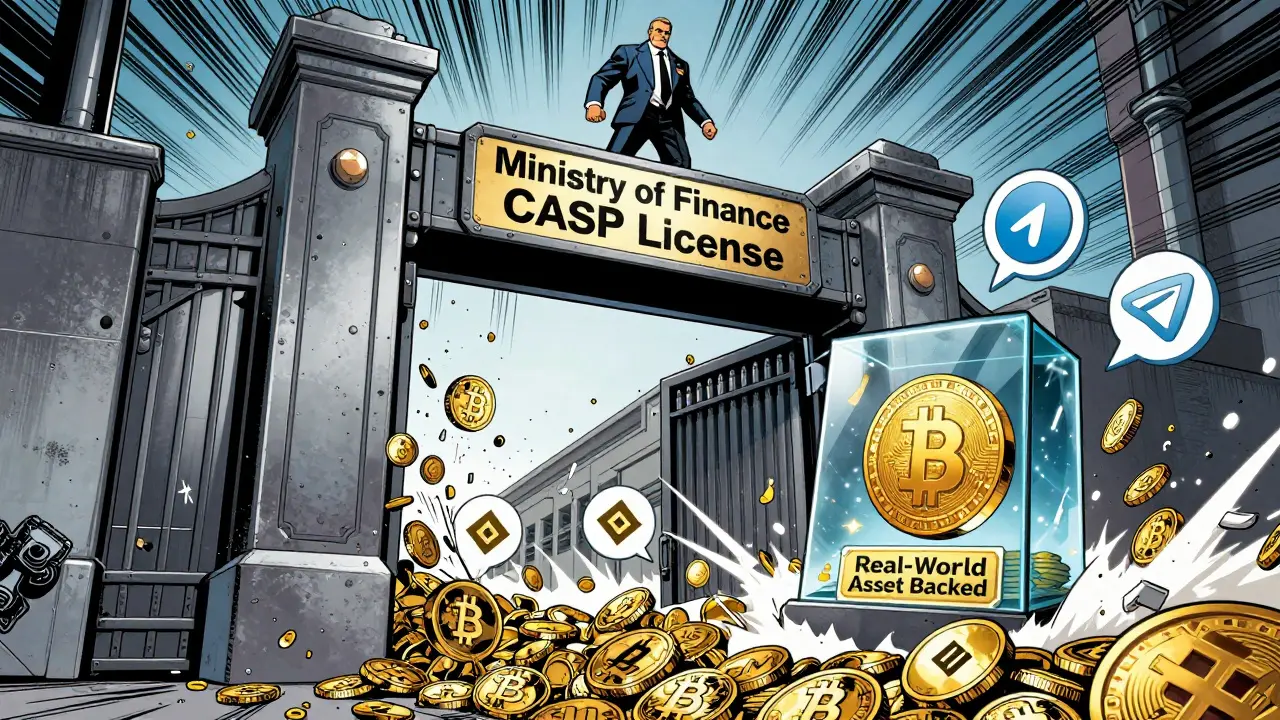
- Only licensed companies can offer services. These are called Crypto Asset Service Providers (CASPs). To become one, a company needs at least 10 trillion VND (about $400 million USD) in capital. That’s not a typo. This kills small exchanges and startups overnight.
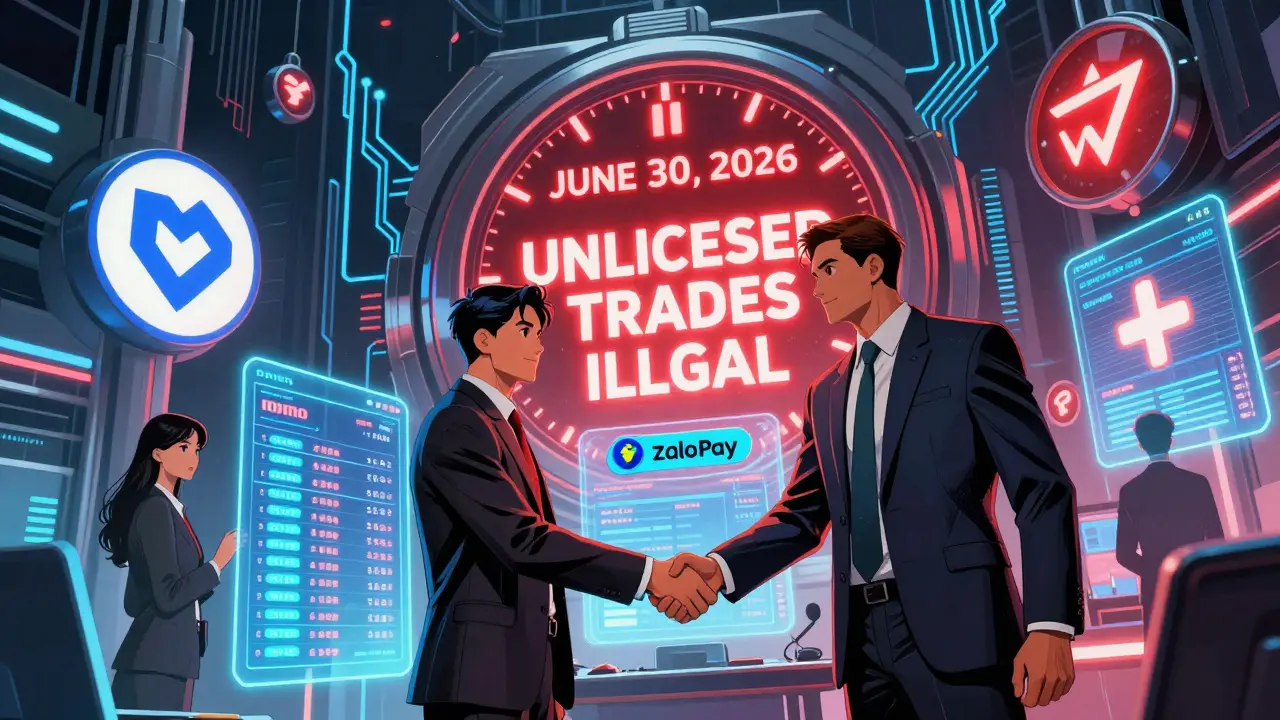
- Domestic users must use licensed CASPs. After a six-month grace period (ending June 30, 2026), any Vietnamese citizen trading crypto outside a licensed platform is breaking the law.
- Foreign investors can still trade, but only through licensed CASPs. They can’t use peer-to-peer apps or offshore platforms to bypass the rules.
- No fiat-backed or security-backed tokens. Stablecoins like USDT or USDC are banned. Tokenized stocks, bonds, or ETFs are also prohibited. Only crypto assets backed by real-world assets - like gold, real estate, or commodities - are allowed.
What’s Still Banned (And Why)
Vietnam’s regulators didn’t just set rules - they drew hard lines. Here’s what’s completely off-limits:- Stablecoins tied to USD, EUR, or other currencies - These are seen as threats to monetary sovereignty. If people start using USDT instead of VND, the central bank loses control.
- Tokenized securities - Stocks, bonds, or funds represented as tokens? No. Vietnam wants its financial markets under strict state control.
- Unlicensed mining operations - Mining isn’t banned, but you need a business license and must comply with energy use regulations. Large-scale mining farms are being monitored for electricity consumption.
- Peer-to-peer trading without intermediaries - You can’t use Binance P2P or LocalBitcoins to buy crypto from someone in Hanoi. All trades must go through a licensed CASP.
The goal? Prevent capital flight, stop money laundering, and keep the financial system stable. The government doesn’t want crypto to replace the banking system - it wants crypto to sit beside it, under strict supervision.
Who Wins and Who Loses
This new system isn’t neutral. It reshapes the entire market.Winners:
- Big Vietnamese fintech firms - Companies like Momo, ZaloPay, and VNPAY have the capital and infrastructure to apply for CASP licenses. They’ll dominate the market.
- Foreign institutional investors - Hedge funds and asset managers can now enter Vietnam legally. Before, they had to use offshore shells. Now, they can invest directly through licensed platforms.
- Legal crypto developers - Blockchain startups building real-world applications (supply chain tracking, land registry, digital IDs) now have clear legal footing.
Losers:
- Small P2P traders - People who made extra cash trading BTC for VND on Telegram groups or Facebook markets? They’re out of business unless they get licensed - and they can’t afford it.
- Unlicensed exchanges - Dozens of local platforms shut down in late 2025. Many disappeared without warning.
- Stablecoin users - Anyone relying on USDT for remittances or savings now has to convert to VND before trading. That means more fees, more delays, and more exposure to currency fluctuations.
What This Means for You
If you’re a Vietnamese citizen:- Stop using unlicensed apps or P2P platforms after June 30, 2026.
- Only trade through platforms that display their official CASP license number (issued by the Ministry of Finance).
- Keep records of all transactions. Tax authorities will start auditing crypto activity soon.
If you’re a foreign investor:
- You can now legally invest in Vietnam’s crypto market - but only through licensed CASPs.
- Don’t expect to trade BTC for ETH directly. All trades are VND-based.
- Watch for new platforms launching in Q2 2026. Expect big names from Singapore and South Korea to enter the market.
What Comes Next
This is a five-year pilot program. The government is watching closely. They’ll adjust rules based on:- How much money flows through licensed platforms
- How many complaints or fraud cases emerge
- Whether capital flight slows down
- How well the system prevents money laundering
By 2031, Vietnam could either extend this framework permanently - or tighten it further. Some experts believe the government will eventually allow limited stablecoin use for cross-border trade. Others think they’ll ban crypto entirely if it starts competing with the national banking system.
One thing is certain: Vietnam is no longer a gray area. It’s a laboratory. And the world is watching.
How to Stay Legal in 2026
Here’s your simple checklist:- Only use platforms with a Ministry of Finance CASP license number (check their website or app).
- Trade only in VND - no other currencies allowed.
- Keep records of every buy, sell, or transfer. Save screenshots, transaction IDs, and receipts.
- Don’t use offshore exchanges or P2P apps for domestic trades.
- Watch for tax announcements - crypto gains will likely be taxed like stocks by late 2026.
If you’re unsure whether a platform is licensed, go to the Ministry of Finance’s official website and search their CASP registry. No license? No trade.
Is Bitcoin legal in Vietnam in 2026?
Yes, Bitcoin is legal in Vietnam as of January 1, 2026 - but only if traded through licensed Crypto Asset Service Providers (CASPs). You can own, buy, and sell Bitcoin, but all transactions must be in Vietnamese dong and conducted through government-approved platforms. Using unlicensed exchanges or peer-to-peer apps after June 30, 2026, is illegal.
Can I use USDT or other stablecoins in Vietnam?
No. Vietnam explicitly bans stablecoins tied to foreign currencies like USD, EUR, or CNY. This includes USDT, USDC, and similar assets. The law requires all crypto assets to be backed by real-world assets (like gold or property), not fiat currencies. You can convert your USDT to VND on a licensed platform, but you cannot hold or trade stablecoins directly.
What happens if I trade crypto on Binance or P2P in Vietnam?
After June 30, 2026, using unlicensed platforms like Binance P2P, LocalBitcoins, or Telegram groups for crypto trades is illegal. You could face administrative fines, account freezes, or even criminal charges if authorities determine you’re involved in money laundering or large-scale unregulated trading. Your bank may also report your transactions to tax authorities.
Do I have to pay taxes on crypto gains in Vietnam?
Yes. While formal crypto tax rules are still being finalized, the government has confirmed that crypto gains will be taxed under existing securities tax rules until new regulations are issued. This means capital gains from selling Bitcoin or other crypto assets will likely be taxed at 20% - the same rate applied to stock profits. Keep detailed records of your buys and sells to calculate gains accurately.
Can foreigners invest in Vietnam’s crypto market?
Yes, but only through licensed CASPs. Foreign investors can buy crypto assets using VND or foreign currency converted to VND through approved platforms. They cannot trade directly on unlicensed exchanges or use P2P services. All foreign transactions must go through a Vietnamese-registered CASP that holds a valid license from the Ministry of Finance.
Are NFTs legal in Vietnam?
Yes. NFTs are explicitly recognized as legal digital assets under Vietnam’s 2025 law. You can buy, sell, and own NFTs - but only through licensed CASPs. NFTs must not represent securities, fiat-backed assets, or illegal content. The law protects NFT ownership rights, meaning you can legally inherit or transfer them like any other digital property.
kris serafin
January 10, 2026 AT 16:12Ritu Singh
January 10, 2026 AT 21:27Rahul Sharma
January 11, 2026 AT 07:18Gideon Kavali
January 11, 2026 AT 16:34Allen Dometita
January 12, 2026 AT 11:28Brittany Slick
January 13, 2026 AT 23:48Meenakshi Singh
January 15, 2026 AT 09:39Kelley Ramsey
January 15, 2026 AT 11:50Michael Richardson
January 16, 2026 AT 10:59greg greg
January 16, 2026 AT 18:16LeeAnn Herker
January 17, 2026 AT 07:12Calen Adams
January 19, 2026 AT 00:04Sarbjit Nahl
January 20, 2026 AT 01:12Paul Johnson
January 20, 2026 AT 17:28Frank Heili
January 20, 2026 AT 23:02Natalie Kershaw
January 21, 2026 AT 18:32Jacob Clark
January 22, 2026 AT 19:38Jon Martín
January 24, 2026 AT 10:40Mujibur Rahman
January 25, 2026 AT 05:11Tre Smith
January 26, 2026 AT 02:47Sherry Giles
January 26, 2026 AT 06:54Andy Schichter
January 27, 2026 AT 17:42Jordan Leon
January 29, 2026 AT 00:36Jordan Leon
January 29, 2026 AT 10:07Natalie Kershaw
January 30, 2026 AT 09:17Jordan Leon
February 1, 2026 AT 09:11