

Imagine waking up to find that your digital assets are technically illegal, yet thousands of people in your city are trading them every day through secret chats and cash meet-ups. That is the strange reality of Underground crypto trading in North Macedonia. For years, the country has existed in a legal twilight zone where the official word from the top is "no," but the actual practice on the street is a resounding "yes." If you're trying to navigate this market, you're not just fighting market volatility-you're dancing around a regulatory gray area that could shift at any moment.
The confusion starts with the National Bank of the Republic of Macedonia also known as the NBRM, is the central bank responsible for monetary policy and financial stability in North Macedonia. Back in 2017, the NBRM put out a clear prohibition on crypto trading. They didn't just say it was unregulated; they grouped it with restricted foreign securities. However, as the years passed, the gap between the law and reality widened. By 2023, the NBRM softened its tone, admitting that just because something isn't regulated doesn't necessarily make it illegal. This flip-flop is exactly why a "semi-underground" market has flourished.
The Shift from Prohibition to Virtual Assets
Things took a concrete turn on February 1, 2022. The government didn't suddenly announce that Bitcoin was the new national currency, but they did adopt amendments to the AML/CTF Draft-Law Anti-Money Laundering and Countering the Financing of Terrorism laws designed to prevent illegal financial flows. This was a massive pivot. For the first time, the law actually defined virtual assets as a type of property. It introduced terms like "virtual wallets" and Virtual Asset Service Providers entities that facilitate the exchange or transfer of digital assets.
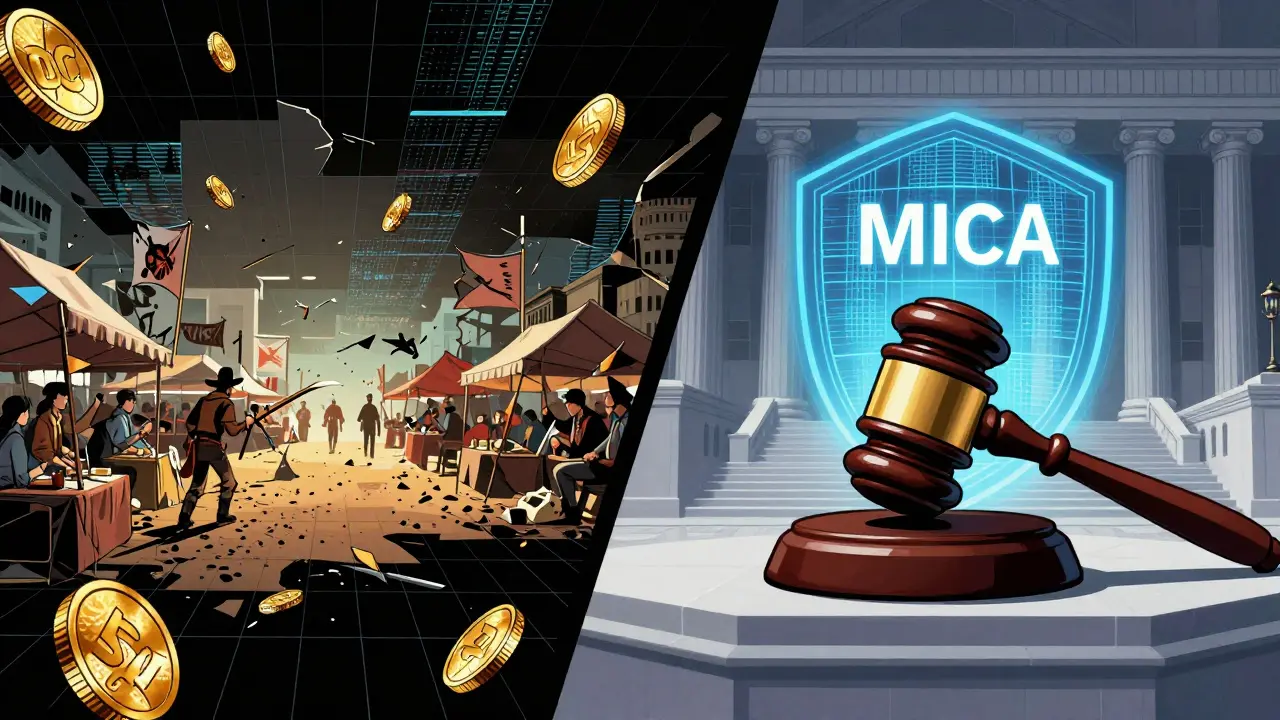
Why does this matter for the average trader? It means the government stopped pretending crypto didn't exist and started thinking about how to track it. While some reports, like those from CoinGecko, still label North Macedonia as one of the only European countries where crypto is explicitly illegal, the legislative reality is moving toward a framework similar to the EU's MiCA Markets in Crypto-Assets regulation, a comprehensive EU framework for digital asset oversight. We are essentially watching a slow-motion transition from a banned substance to a regulated financial product.
How the Underground Market Actually Works
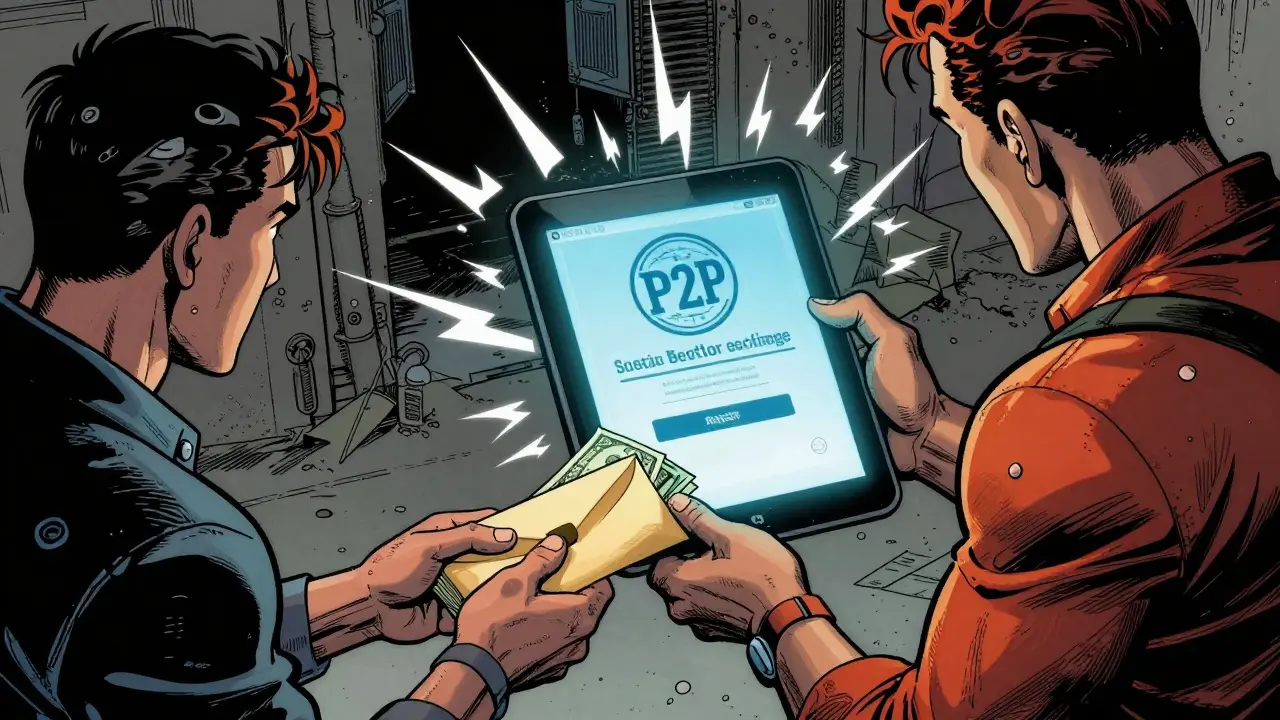
Since traditional banks in North Macedonia often block direct transfers to international exchanges, traders have turned to Peer-to-Peer (P2P) networks. These platforms act as the bridge, allowing two people to trade directly without a bank acting as a gatekeeper. The most popular method is the use of escrow services, where a third party holds the funds until both the buyer and seller confirm the deal is done.
Platforms like Symlix a P2P marketplace facilitating secure cryptocurrency trades via escrow wallets and LocalCoinSwap a global P2P trading platform offering numerous payment methods for crypto exchange are the primary tools for locals. On these sites, you'll find people offering to trade crypto for cash in person or through local payment apps. It's a high-trust environment; many users in the "MK Crypto" Telegram group-which had over 1,200 members by mid-2025-share lists of trusted traders and safe locations for cash meet-ups to avoid scams.
| Method | Primary Tool | Main Advantage | Biggest Risk |
|---|---|---|---|
| P2P Marketplace | Symlix / LocalCoinSwap | Cash payments, high privacy | Counterparty scam/Safety |
| International Broker | Swissquote / Interactive Brokers | Institutional security | High fees, bank blocks |
| Direct Swap | Telegram Groups | Zero fees, fast | No escrow, high risk |
The Broker Dilemma: Reliability vs. Cost
For those who prefer a more "corporate" feel over the wild west of P2P, international brokers are an option. According to 2025 data, Swissquote a Swiss investment bank and online broker providing cryptocurrency trading services is the most popular choice for about 42% of Macedonian users. They offer a solid selection of coins and reliable transactions, but they are notorious for high fees, especially for small-time traders.
On the other end of the spectrum, Interactive Brokers a global automated electronic brokerage firm is favored by those who want lower costs. The trade-off? They have a much more limited selection of coins and, crucially, no built-in crypto wallet. This means you can trade the price of the asset, but you can't easily move the coins to your own private storage. It's a choice between paying a premium for convenience or sacrificing features for a lower fee.
Common Pitfalls and Survival Tips
Trading in a gray market isn't without its dangers. The biggest headache for Macedonians isn't usually the police-it's the banks. There are numerous documented cases of users having funds frozen for weeks because a bank flagged a transfer to a known crypto-related entity. One user reported having €1,200 locked up for two weeks before they could resolve the dispute.
If you're entering this market, a few rules of thumb can save you from a total loss:
- Avoid local "exchanges": Many small, domestic operations pop up and vanish overnight. Stick to established P2P platforms with escrow.
- The "Test Trade" Strategy: Never send a large sum immediately. Send a tiny amount first to verify the wallet and the seller's responsiveness.
- Verify Identities: In P2P trades, some experienced users now insist on a quick video call to ensure the person on the other end is who they claim to be.
- Keep it off the bank radar: Whenever possible, use cash or P2P methods that don't trigger automated "crypto" keywords in bank transfer descriptions.
What the Future Holds for Macedonian Crypto
The trend is clear: the government is moving from "No" to "Yes, but with rules." With the 2022 AML/CTF laws as a foundation, the expectation is that North Macedonia will fully align with the EU's MiCA standards by 2026 or 2027. This would mean a formal licensing system for exchanges and better consumer protection.
Until then, the market remains a tale of two worlds. On one side, you have the institutional brokers like Swissquote providing a safe, albeit expensive, harbor. On the other, you have the vibrant, risky, and fast-paced world of P2P trading on Symlix and LocalCoinSwap. For now, the "underground" isn't really a hidden basement-it's more like a crowded marketplace where everyone knows the rules are vague, but the profit potential is too high to ignore.
Is cryptocurrency illegal in North Macedonia?
Technically, the NBRM issued a prohibition in 2017. However, later clarifications in 2023 and the 2022 AML/CTF law amendments suggest that lack of regulation does not equal illegality. In practice, trading is widespread, though it exists in a legal gray area.
What is the safest way to buy Bitcoin in North Macedonia?
The safest methods are generally considered to be regulated international brokers like Swissquote for high-security needs, or P2P platforms like Symlix and LocalCoinSwap that use escrow systems to protect funds during the trade.
Why do Macedonian banks block crypto transfers?
Banks often flag transactions to known cryptocurrency exchanges due to the historical 2017 prohibition and concerns over anti-money laundering (AML) compliance. This is why many locals prefer P2P cash trades.
What is the role of the AML/CTF Draft-Law?
The February 2022 amendments to the AML/CTF Draft-Law provided the first legal definitions for "virtual assets" and "virtual wallets" in North Macedonia, effectively acknowledging crypto as a form of property and paving the way for future regulation.
Who are the best crypto brokers for Macedonians in 2025?
Swissquote is often ranked as the top choice for reliability and coin selection, though it has higher fees. Interactive Brokers is a strong alternative for those prioritizing lower costs over a wide variety of assets.
Jessie Tayaban
April 14, 2026 AT 00:03Omg this is just wild!! 😱 I cant even imagine meeting a stranger for cash just to get some bitcoin... it sounds like a movie plot or something!! Hope everyone stays safe out there because the risk of geting scammed is sooooo high!!
Emily H
April 14, 2026 AT 06:20The transition toward MiCA standards is a prudent move for the region. Establishing a clear legal framework not only mitigates the inherent risks of the underground market but also invites legitimate institutional investment into the Macedonian economy.
EDOZIEM MICHAEL
April 15, 2026 AT 16:17money is just a tool and the government always tries to hold the handle but the people find a way through the cracks because freedom is the ultimate currency anyway
Samson Selleck
April 17, 2026 AT 08:32The asymmetry of information in these P2P networks is staggering. We are essentially seeing a primitive market structure where the lack of regulatory arbitrage has created a vacuum filled by high-risk counterparty exposure. It's a textbook case of systemic inefficiency where the retail participant bears all the volatility risk while the 'trusted' brokers extract rent through exorbitant fee structures. Frankly, the intellectual laziness of expecting a central bank to suddenly pivot to a decentralized ethos is amusing at best.
daniella davis
April 18, 2026 AT 10:27Ugh, please. Only a total amateur would use a telegram group for 'safe' meet-ups. Literal insanity. Like, do people not understand how easy it is to get social engineered? 🙄 a real pro would have a hardware wallet and a shred of common sense, but i guess that's too much to ask for some of you lol.
Stanly Hayes
April 19, 2026 AT 10:12Listen, the US does it way better. We've got the infrastructure and the laws to actually handle this stuff without people meeting in dark alleys. Get your act together!
Alan Seiden
April 19, 2026 AT 18:53What a joke. Only a failed state would have a 'legal twilight zone' for basic financial assets. Typical bureaucratic incompetence at its finest.
Lela Singh
April 21, 2026 AT 00:15P2P is a goldmine if you're savvy! 🚀 Just use escrow and stay sharp!
Rebecca Violette
April 21, 2026 AT 03:46my bank frozen my account once for something tiny and i literally cried for three days because i felt so helpless. its just so unfair how they treat us over nothing!!
Tyler Webb
April 22, 2026 AT 19:00That sounds really stressful for the people there. Hope they find a safer way soon. :)
Lane Montgomery
April 24, 2026 AT 15:27Who are you trading with?
Suzanne Robitaille
April 24, 2026 AT 19:21It is fascinating how the human spirit always finds a way to bypass the boundaries set by authority. There is a certain poetic beauty in the 'secret chats' and the shared trust of a community fighting for financial autonomy in a gray world. 🌟
william manes
April 26, 2026 AT 19:00USA #1 🇺🇸. Stop playing with fake money! 🤡
Terrance Hausmann
April 27, 2026 AT 10:07I think it's actually a great learning experience for a whole generation of traders to understand the plumbing of finance before the big corporations take over everything. When you have to manually verify a trade or handle cash, you actually understand the value transfer, which is something most people in the West have completely forgotten because we just click a button and trust the app to do the magic. It's a bit scary, sure, but that grit creates a much more resilient investor in the long run. Just be careful with those Telegram groups because that's where the sharks live.
Will Dixon
April 29, 2026 AT 09:41just use a cold wallet man. keep it simple.
Artavius Edmond
April 30, 2026 AT 07:27Love the energy here! Everyone just trying to make a way. I'm all for the P2P vibe, feels way more community-driven than those sterile brokers.
Jason Davis
April 30, 2026 AT 13:59Symlix is actually decent for this region, though you gotta watch the spreads. I've seen some weird stuff with local payment apps lately tho.
Agnessa Dale
May 1, 2026 AT 07:26It's so exciting to see the laws changing for the better! Keep going!
Prasanna Shembekar
May 1, 2026 AT 13:56this is just too much drama for me lol
Amanda Faust
May 2, 2026 AT 10:12basically just a slow pivot to taxation
Swati Sharma
May 3, 2026 AT 18:43Implementing a robust KYC/AML framework will definitely reduce the friction in the current onboarding process for new users. We should focus on the scalability of these virtual asset service providers to ensure they can handle the projected volume increase as we align with MiCA.
Jonathan Chamma
May 4, 2026 AT 22:03It's a bit of a wild ride, but I really believe that if people just look out for one another and share the right tools, the risk becomes manageable. Let's all just try to be helpful while we navigate this together!
logan bates
May 6, 2026 AT 15:00Typical. Another country trying to copy the West while failing at the basics. Just let the market run or shut it down, this middle ground is pathetic.