
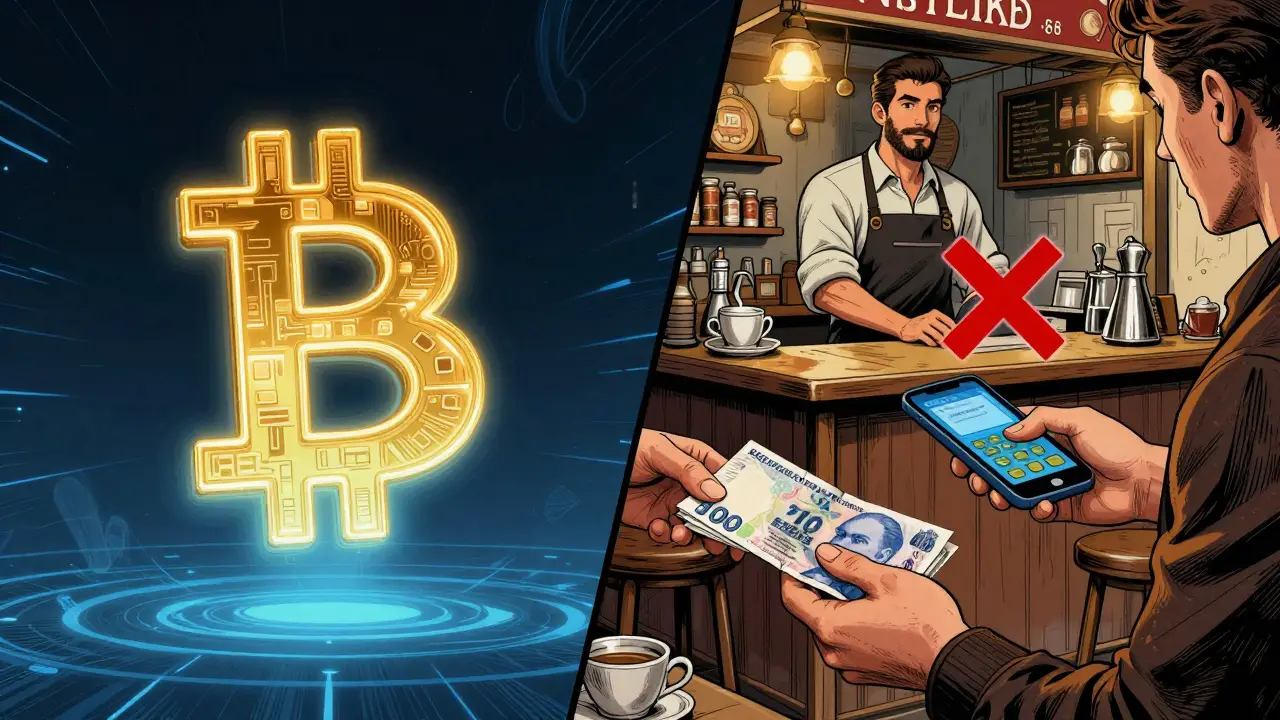
For those navigating this landscape, the rules aren't just about what you can buy, but how the government monitors your money. The Central Bank of Turkey (TCMB) has drawn a hard line in the sand, ensuring the lira remains the only legal tender for payments. If you are a trader or a business owner, understanding where the "investment" ends and the "payment" begins is the difference between a successful portfolio and a legal nightmare.
The Core Rules: Trading vs. Payments
To get a handle on the current state of affairs, you have to understand the split established back in April 2021. In Turkey, Cryptocurrency is not recognized as legal tender. This means that while the act of trading is legal, using these assets as a means of payment for goods or services is strictly prohibited.
Why the divide? The Central Bank of the Republic of Turkey (TCMB) wants to maintain total control over the monetary system and prevent the lira from being bypassed in daily commerce. This has led to a quirky market dynamic: people buy crypto to protect their savings from the lira's volatility, but they must convert those assets back into fiat currency to actually spend them.
If you are operating an exchange or a custodial service, the stakes are even higher. Since July 2024, the Capital Markets Board (CMB) has required all Crypto Asset Service Providers (CASPs) to be licensed. This isn't just a paperwork exercise; it's a massive financial hurdle. To get a license, an exchange needs at least 150 million Turkish lira (roughly $4.1 million) in capital, while custodians need a staggering 500 million lira ($13.7 million).
Who Is Watching Your Wallet?
You aren't just dealing with the CMB. There are two other heavy hitters in the regulatory mix that every trader should know. First, there is TÜBİTAK, the Scientific and Technological Research Council of Türkiye. They aren't interested in your profits; they are interested in your tech. They conduct mandatory audits of the technological systems used by exchanges to ensure they aren't leaky or prone to crashes.
Then there is MASAK (the Financial Crimes Investigation Board). If the CMB is the referee, MASAK is the detective. They enforce the Anti-Money Laundering (AML) and Know-Your-Customer (KYC) rules. If you're moving more than 15,000 Turkish lira, expect to show your ID. In fact, the government is moving toward even tighter control. New legislation is currently headed to the Grand National Assembly that would give MASAK the power to freeze crypto accounts instantly if they suspect illegal activity, such as "rented accounts" used for fraud or gambling.
| Entity/Role | Requirement | Regulating Body |
|---|---|---|
| Crypto Exchange (CASP) | 150 Million TRY Minimum Capital | CMB |
| Crypto Custodian | 500 Million TRY Minimum Capital | CMB |
| Individual Trader | ID Verification for >15,000 TRY | MASAK |
| Tech Infrastructure | Mandatory System Audits | TÜBİTAK |
How Turkey Differs From the Rest of the World
It is helpful to compare Turkey's approach to other regions. For example, the European Union uses the MiCA (Markets in Crypto-Assets) framework. MiCA provides a broad set of rules for consumer protection and allows for regulated crypto payments. Turkey, however, has taken a "hybrid" route. While the February 2025 regulations align Turkey with some of MiCA's compliance standards, the payment ban remains an absolute wall.
In the United States, you deal with a fragmented state-by-state system and a mix of SEC and CFTC oversight. Turkey's system is much more centralized. Once you have the CMB's blessing and MASAK's approval, you have a clear (though expensive) path to operating. The trade-off is that the capital requirements in Turkey are significantly higher than what you'd find for a similar license in most EU countries.

The Reality on the Ground: P2P and Grey Markets
When the government says "no payments," the people often find a way around it. Because the lira has been so volatile, many Turks view Bitcoin and stablecoins as a lifeboat. This has created a thriving grey market. Many users avoid formal exchanges entirely, opting for Peer-to-Peer (P2P) trading to bypass KYC requirements or to find better rates for lira-to-crypto conversions.
However, this is a risky game. The CMB has already started cracking down on unauthorized platforms. In July 2024, they blocked access to PancakeSwap and other decentralized exchanges (DEXs) that weren't playing by the local rules. The message is clear: the government is okay with you owning the asset, but they want to know exactly where it came from and who owns it.
Pitfalls and Pro Tips for Traders
If you are planning to trade in Turkey or launch a service there, don't underestimate the compliance burden. It typically takes 6 to 12 months to get fully licensed. You can't just wing it with a basic accountant; you need a dedicated risk management team and sophisticated transaction monitoring software that can flag suspicious patterns for MASAK.
- Avoid "Rented Accounts": Never pay someone to use their exchange account. MASAK is specifically targeting these to stop gambling and fraud, and they will freeze the funds.
- Document Everything: If you are a CASP, the CMB requires detailed records of even canceled or unexecuted transactions.
- Stay Updated on Taxes: As of late 2025, crypto profits are generally untaxed, but this is a hot topic in the Finance Ministry. Don't assume this will last forever.
- Check Platform Legality: Before using a DEX or a global exchange, check if it has been flagged or blocked by the CMB to avoid sudden loss of access.

The Road Ahead: Consolidation and Control
The future of the Turkish market looks like a consolidation play. With massive capital requirements for licenses, the smaller "mom and pop" exchanges are being squeezed out. We are seeing a shift where a few giant players, like BTCTurk and Paribu, dominate the landscape. These firms have the muscle to handle the TÜBİTAK audits and the MASAK reporting requirements.
We are also seeing a move toward restricting stablecoins. The Finance Ministry is drafting rules to limit stablecoin transfers to curb capital flight. Basically, the government wants the benefits of crypto (innovation and investment) without the risks (losing control of the national currency).
Is it illegal to own Bitcoin in Turkey?
No, owning and trading cryptocurrency is completely legal in Turkey. You can buy and sell digital assets through licensed exchanges without any legal issues.
Can I buy a product using crypto in a Turkish store?
No. The Central Bank of Turkey (TCMB) strictly prohibits the use of cryptocurrencies for payments. Doing so can lead to legal penalties for both the buyer and the seller.
What happens if I trade more than 15,000 Turkish Lira?
For transactions exceeding 15,000 TRY, mandatory identity verification is required. MASAK enforces these KYC (Know Your Customer) protocols to prevent money laundering.
Are crypto profits taxed in Turkey?
As of October 2025, cryptocurrency profits remain untaxed in Turkey, although the government is actively discussing new tax frameworks for the digital asset sector.
Who regulates crypto exchanges in Turkey?
The primary regulator is the Capital Markets Board (CMB), which issues licenses. Additionally, TÜBİTAK audits the technology, and MASAK oversees financial crimes and AML compliance.
Next Steps for Market Entrants
If you are a foreign company looking to enter the Turkish market, your first move should be a legal gap analysis. Compare your current compliance structure with the CMB's licensing requirements. You will likely need to establish a local entity with the required minimum capital and hire a Turkish-speaking compliance officer to handle the nuances of MASAK reporting.
For individual traders, the best approach is to use licensed, local exchanges. While P2P might seem attractive for privacy, the increasing power of MASAK to freeze accounts and the CMB's blocking of unauthorized platforms make the regulated route much safer in the long run. Keep a close eye on the Grand National Assembly's upcoming bills, as these will dictate the future of account security and wallet blacklisting.
James Bone
April 11, 2026 AT 21:37Classic state behavior. They love the "innovation" as long as they can keep their boot on the neck of the currency. It is actually hilarious that people think these licenses protect them. If the government decides your wallet is "suspicious," you are basically just donating your funds to the state. The whole system is just a facade for control disguised as regulation.
Amanda Faust
April 12, 2026 AT 04:28everyone knows the 15k limit is basically a joke since P2P is where the real volume is anyway
Omotola Balogun
April 13, 2026 AT 19:45The capital requirement for custodians is absolute madness. 500 million lira is just too high for most startup platforms to hnadle. Its basically a move to ensure only the big fish survive. Most peeple dont realize that this is just a way to kill competion in the name of "security" which is just a cover for cronyism.
Aaliyah BROTHERS
April 15, 2026 AT 04:26WAKE UP!!! This is exactly how the globalists operate!!! First they give you a "legal" way to trade and then they implement "audits" by groups like TÜBİTAK to map out exactly who owns what!!! It is a digital dragnet designed to strip us of our financial sovereignty!!! Turkey is just the testing ground for a total surveillance state where your coffee purchase is tracked by a supercomputer!!! DISGUSTING!!!
Heather Warren
April 15, 2026 AT 13:30It is really helpful to see the breakdown of the different regulatory bodies here. For anyone starting out, focusing on the CMB requirements first is definitely the way to go. It might seem like a lot of money, but having that license provides a lot of stability for your users in the long run. Keep pushing forward with the compliance steps!
Scott Fenton
April 15, 2026 AT 15:13I believe it is prudent to emphasize that the distinction between investment and payment is a critical legal boundary. Failure to adhere to these guidelines could result in severe professional repercussions. I suggest that any entity operating within this jurisdiction maintain a rigorous internal audit trail to satisfy MASAK's requirements.
Prasanna Shembekar
April 16, 2026 AT 08:04this is so stressful honestly i just want to buy some coin and not worry about some detective at MASAK
Adam Auksel
April 18, 2026 AT 02:42It is a tough balance to strike, but it is great to see a market evolving like this! 🚀 Just remember to stay patient with the process and help each other navigate the rules. We can all grow together if we just keep the communication open! 🌟
Jessie Tayaban
April 19, 2026 AT 00:48OMG i totally agree with the part about the grey market!!! its literally the only way some people can keep their money safe when the lira is just crashing everywhere!! i tried using a DEX once and it was such a mess lol but worth it for the privacy i guess!!
Tracie and Matthew Hartley
April 20, 2026 AT 23:15nah i bet the govt just wants to tax it soon and they're just pretending its untaxed to lure more people in.. such a scam lol
EDOZIEM MICHAEL
April 22, 2026 AT 21:36money is just a social construct anyway why worry about the lira when the blockchain is the true mirror of value
Alan Seiden
April 24, 2026 AT 10:53The sheer incompetence of these regulatory frameworks is staggering. Only a government obsessed with outdated centralized control would implement such absurd capital requirements. It is a pathetic attempt to stifle a technology that has already rendered their monetary policy obsolete. Truly a masterclass in failure.
Rob Mitchell
April 26, 2026 AT 02:55Good summary. Local licenses are the only safe bet now.
william manes
April 27, 2026 AT 21:02USA does it better. 🇺🇸 Stop trying to copy us and just let the market work 🤡
Tyler Webb
April 29, 2026 AT 11:17I can see why this would be frustrating for many people. It's a lot to handle. :)
Kieran Smith
April 30, 2026 AT 05:57it sounds like a bit of a headache but maybe it'll actually make things safer for the little guy once the dust settls
Surender Kumar
April 30, 2026 AT 15:10pretty chill approach if u just stick to the rules i guess... hope it works out for the traders there
Lane Montgomery
May 1, 2026 AT 17:03How much you making on this?
logan bates
May 2, 2026 AT 08:56Typical foreign interference in markets. Stick to your own borders.
Jonathan Chamma
May 2, 2026 AT 10:03It is all about finding a middle ground. While the rules seem strict, they are trying to protect the economy from a total collapse. Let's try to understand the perspective of the regulators while still supporting the freedom of the individual. It is a colorful journey for everyone involved!
Rebecca Violette
May 3, 2026 AT 16:40my heart just sinks thinking about all the people who had their accounts frozen by MASAK... its so unfair and just plain cruel to take peoples money like that
Stanly Hayes
May 4, 2026 AT 14:35You think this is strict? Try dealing with some other markets! But seriously, the payment ban is just a joke in a world that's moving to digital. Get with the times or get left behind!