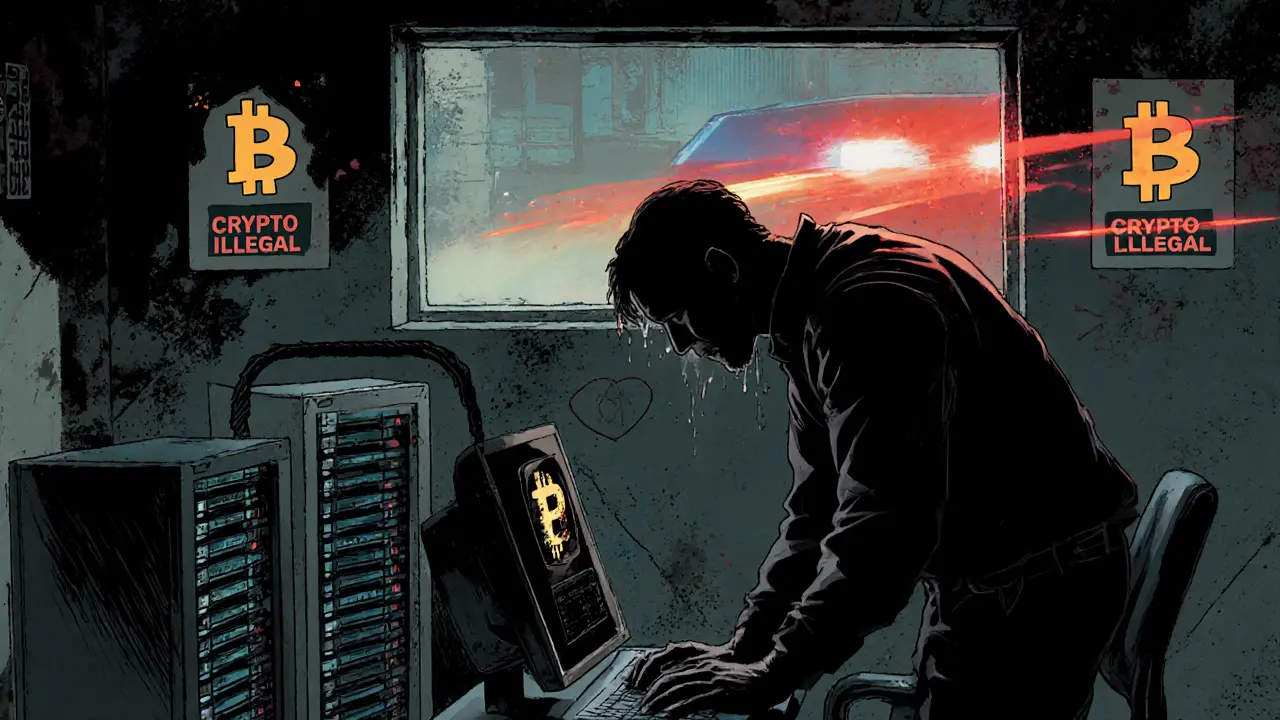
Crypto Illegal Countries: Where Bitcoin and Crypto Are Banned in 2025
When you think of cryptocurrency, you might picture decentralized networks, global access, and financial freedom. But in some places, simply holding or trading crypto can land you in serious legal trouble. crypto illegal countries, nations that have outlawed cryptocurrency use, trading, or ownership under national law. Also known as crypto prohibition zones, these governments treat digital assets like contraband—not innovation. This isn’t about taxation or regulation—it’s about total bans, with jail time, fines, and asset seizures as real consequences.
It’s not just one or two countries. Tunisia, a North African nation that criminalizes all crypto activity under strict penal codes punishes crypto traders with up to five years in prison. In Egypt, where the Central Bank enforces Law No. 194/2020, using Bitcoin for payments or exchanging it for fiat is illegal—even if you’re just holding it in a wallet. And it’s not just Africa. Countries like China, which shut down all domestic crypto exchanges and mining operations, and Morocco, where banks are forbidden from processing crypto transactions have built legal walls around digital currencies.
Why do these countries ban crypto?
It’s not about technology. It’s about control. Governments in these regions fear losing power over money, banking, and financial surveillance. They worry crypto enables capital flight, tax evasion, or black-market activity. Some, like Egypt, claim they’re protecting citizens from fraud—yet they still allow blockchain tech for government projects. That double standard tells you the real issue isn’t safety—it’s authority.
What’s worse? Enforcement is often vague. You might not get arrested for holding crypto in your wallet—but if you’re caught using it to pay for something, or if you transfer funds abroad, the penalties kick in. And there’s no gray area: no exceptions for long-term holders, no grandfather clauses, no leniency for small amounts.
Meanwhile, other countries like Japan and New York have built complex regulatory systems—licenses, compliance checks, reporting rules. But in crypto illegal countries, there’s no middle ground. It’s all or nothing. No BitLicense. No KYC exceptions. Just silence, fear, and the risk of prison.
What you’ll find below are real stories from people who’ve faced these bans, deep dives into the laws that made them, and reviews of exchanges that vanished overnight because they operated in the wrong place. These aren’t theoretical risks—they’re lived experiences. Whether you’re traveling, investing, or just curious about where crypto is truly outlawed, this collection gives you the facts without the fluff.