Legal Risks for Tunisian Crypto Users and Traders in 2025
Tunisia bans all cryptocurrency activity with penalties including up to five years in prison. Learn what's illegal, how enforcement works, and the real risks for traders and holders in 2025.

When crypto ban Tunisia, a government prohibition on using cryptocurrencies for payments and exchanges. Also known as Tunisian crypto restrictions, it was enforced by the Central Bank of Tunisia in 2018 to control capital flight and protect the national currency. Unlike outright blockchain bans, Tunisia didn’t shut down the technology—just its use as money. This distinction matters because people still run nodes, build dApps, and trade tokens privately. The ban targets exchanges, wallets used for spending, and peer-to-peer trading, not research or development.
Related entities like Central Bank of Tunisia, the official financial regulator that issued the crypto prohibition and blockchain legality Tunisia, the gray area where tech use is tolerated but financial activity is not show how the country walks a tightrope. Egypt’s similar ban under Law No. 194/2020 proves this isn’t an isolated case—many governments fear loss of monetary control, not the tech itself. Tunisia’s version is less strict than Nigeria’s full ban but more rigid than Japan’s regulated approach. Locals use VPNs, foreign exchanges, and OTC deals to bypass restrictions, but they risk fines or account freezes if caught.
The real impact isn’t on developers—it’s on everyday users. People who wanted to send remittances, buy Bitcoin for savings, or use stablecoins to dodge inflation now face legal uncertainty. Some turned to gold or foreign cash. Others joined underground crypto networks where trust replaces regulation. Meanwhile, Tunisian startups building on Ethereum or Solana continue operating, as long as they don’t process local payments. This split—tech allowed, money forbidden—creates a strange digital economy where innovation thrives in the shadows.
What you’ll find in the posts below are real-world examples of how crypto bans shape behavior. From Egypt’s enforcement tactics to how users adapt when exchanges vanish, these stories show the human side of regulation. You’ll see what works, what fails, and why some people still risk it all—even when the law says no.
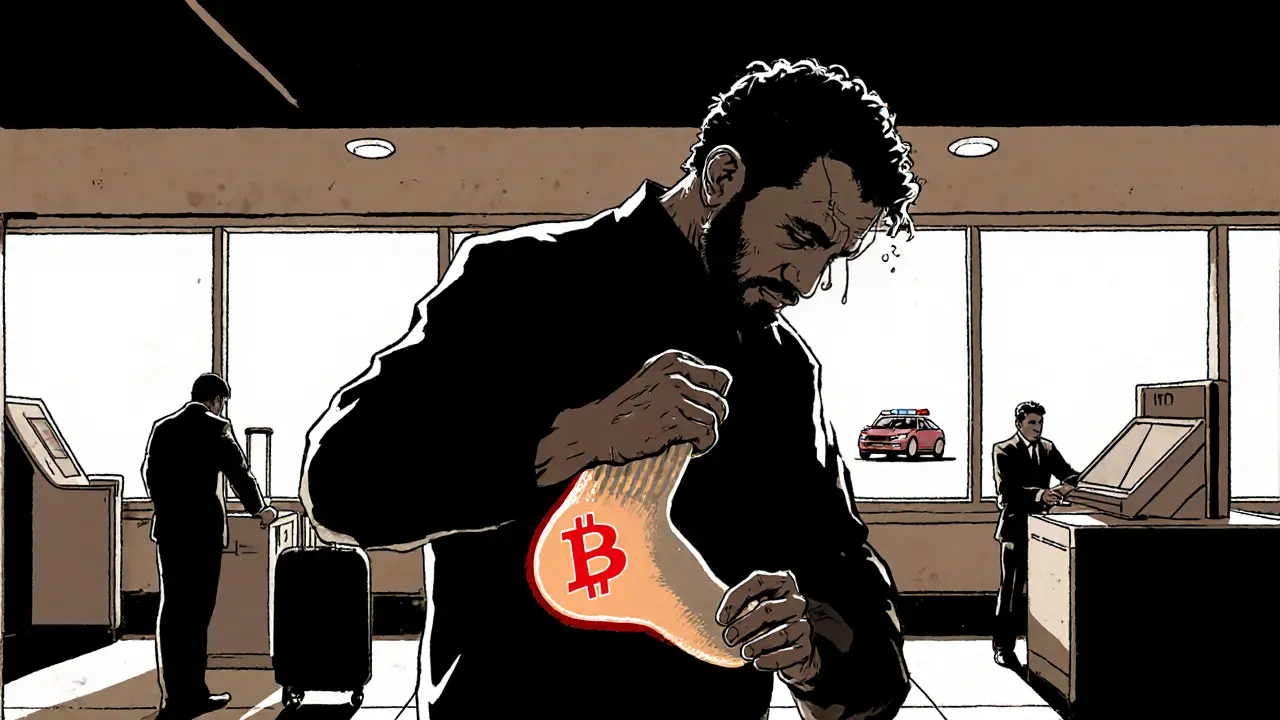
Tunisia bans all cryptocurrency activity with penalties including up to five years in prison. Learn what's illegal, how enforcement works, and the real risks for traders and holders in 2025.