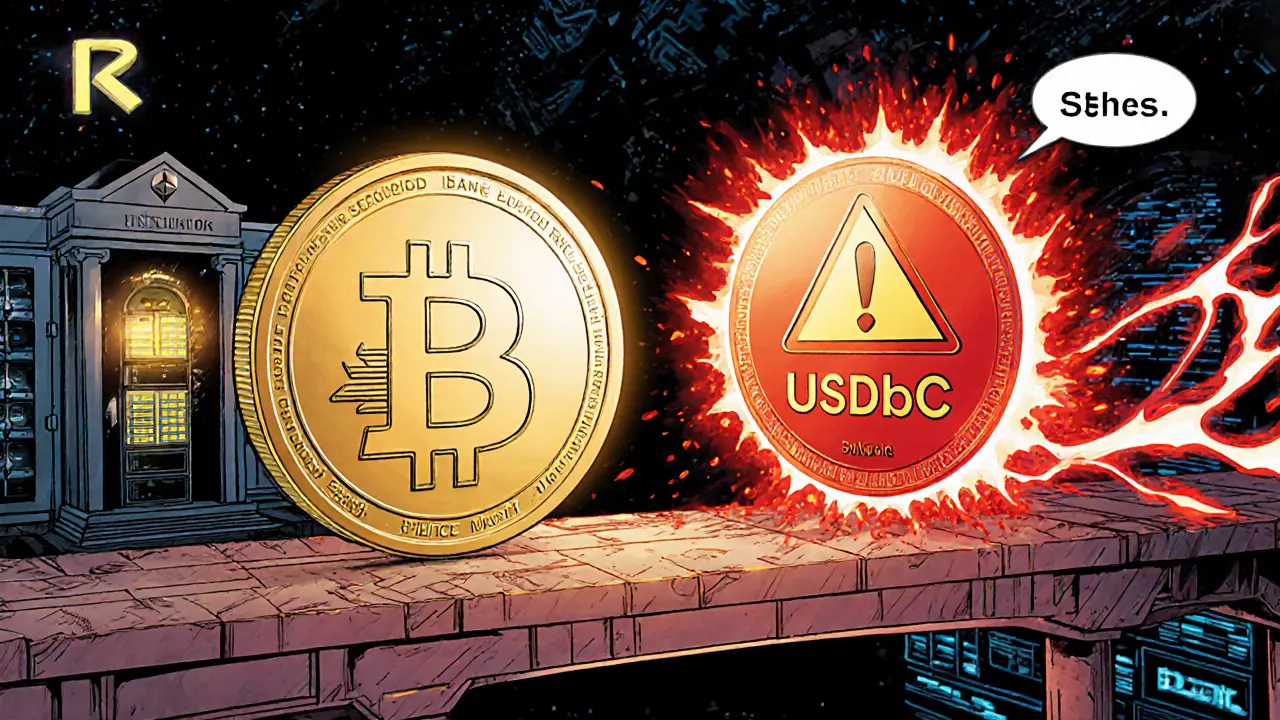
Bridged USDC: What It Is, How It Works, and Where to Use It Safely
When you see Bridged USDC, a version of USD Coin that’s been moved from one blockchain to another, often to take advantage of lower fees or faster speeds. Also known as USDC on Ethereum, Solana, or Avalanche, it’s not a new coin—it’s the same USDC, just wrapped and relocated. This isn’t magic. It’s a bridge—a smart contract system that locks your USDC on one chain and mints an equivalent on another. You get the same 1:1 value, but now you can trade it on a DEX that’s 10x cheaper or faster than Ethereum.
Bridged USDC is everywhere because blockchain bridges, tools that connect separate blockchains by locking and minting tokens solved a real problem: Ethereum’s high fees. If you want to use USDC on Solana, Polygon, or Arbitrum, you need a bridge. But not all bridges are safe. Some have been hacked for billions. The most trusted ones—like Circle’s official bridges or those built into major wallets—use multi-sig security and regular audits. The risky ones? They’re often anonymous, unverified, and offer crazy APYs to lure you in. That’s a red flag.
People use Bridged USDC for DeFi yields, cross-chain swaps, and NFT purchases. You’ll find it on PancakeSwap on BSC, mySwap on Starknet, or StellaSwap on Polkadot. But here’s the catch: if you bridge USDC to a chain with low liquidity, you might not be able to sell it when you want to. Or worse, the bridge might freeze. And if you’re using it for trading, remember—each bridge adds a layer of complexity. One wrong click, and your funds vanish. That’s why most experts say: only bridge to chains you actively use. Don’t bridge just because it’s cheap. Bridge because it’s useful.
Stablecoins, digital assets pegged to real-world currencies like the US dollar like USDC are the backbone of crypto. They’re the glue holding DeFi together. But Bridged USDC isn’t just about convenience—it’s about choice. It lets you move your money where the action is. Whether you’re swapping tokens on a low-fee DEX, staking in a new protocol, or buying an NFT on a faster chain, Bridged USDC gives you flexibility. But flexibility without safety is just risk.
You’ll find posts here that dig into the real-world risks of centralized exchanges holding your crypto, how blockchain fees impact your trades, and why some stablecoins on new chains vanish overnight. Some cover how bridges work under the hood. Others warn about shady DEXs that list Bridged USDC but have zero liquidity. This isn’t theory. It’s what happens when people treat bridges like ATMs instead of secure pipelines.
So if you’re thinking about using Bridged USDC, ask yourself: Which bridge am I using? Is it official? Is the destination chain active? And most importantly—can I get my money back if things go wrong? The answers aren’t always obvious. But the posts below break it down, no fluff, no hype. Just what you need to know before you click that bridge button.