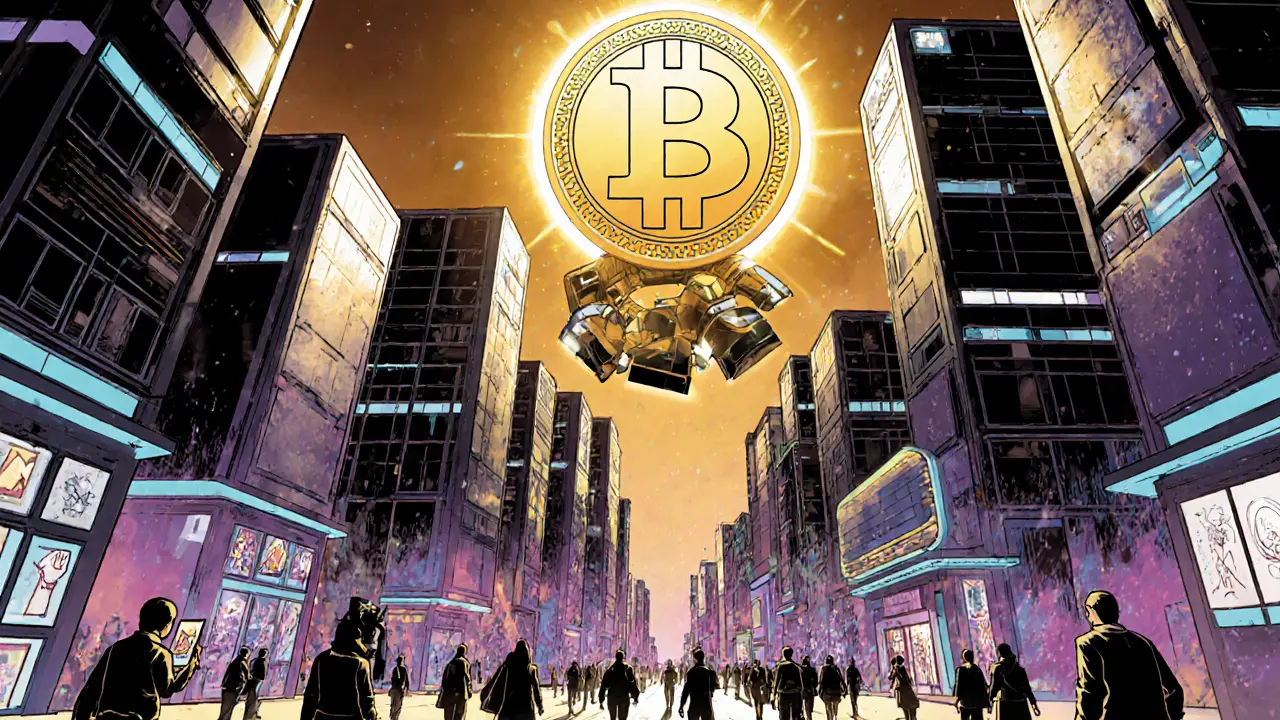
Blockchain Virtual Economy: How Digital Worlds Drive Real Value
When you buy a virtual land plot in a game, trade an NFT for real money, or earn tokens by playing a blockchain-based game, you’re participating in a blockchain virtual economy, a self-sustaining digital system where value is created, traded, and owned using blockchain technology. Also known as digital economy, it’s not just fantasy—it’s where people earn rent, pay taxes in crypto, and build businesses without a physical storefront. This isn’t sci-fi. It’s happening right now, and it’s backed by real transactions, real users, and real financial risk.
The DeFi, decentralized finance systems that replace banks with smart contracts are the engine behind most of this activity. Platforms like StellaSwap and Lifinity let users swap tokens, stake assets, and earn interest—all without a middleman. Meanwhile, NFTs, unique digital tokens that prove ownership of art, land, or in-game items turn virtual objects into tradeable assets. You can’t touch them, but you can sell them for thousands. That’s the power of verifiable scarcity on the blockchain.
These systems don’t exist in isolation. They connect. A player earns MCRT tokens in a play-to-earn game, trades them on a DEX like Lifinity, then uses those tokens to buy virtual land in a metaverse project. Someone else uses those same tokens to pay for a service in a Web3 app. It’s a loop—value moves between games, exchanges, wallets, and marketplaces. And it’s growing fast. Countries like Japan and New York are already regulating these spaces because they’re too big to ignore. Even Egypt and Tunisia have banned crypto, not because it’s fake, but because they can’t control it.
What you’ll find in this collection isn’t theory—it’s real examples. From how the blockchain virtual economy powers airdrops like Galaxy Adventure Chest and Binopoly, to why platforms like Thore Exchange fail to support real user activity, every post shows how this economy works—or doesn’t. You’ll see how tokenomics shape rewards, how scams exploit hype, and why some digital assets hold value while others vanish overnight. This isn’t about speculation. It’s about understanding the rules of a new kind of market—one built on code, not cashiers.