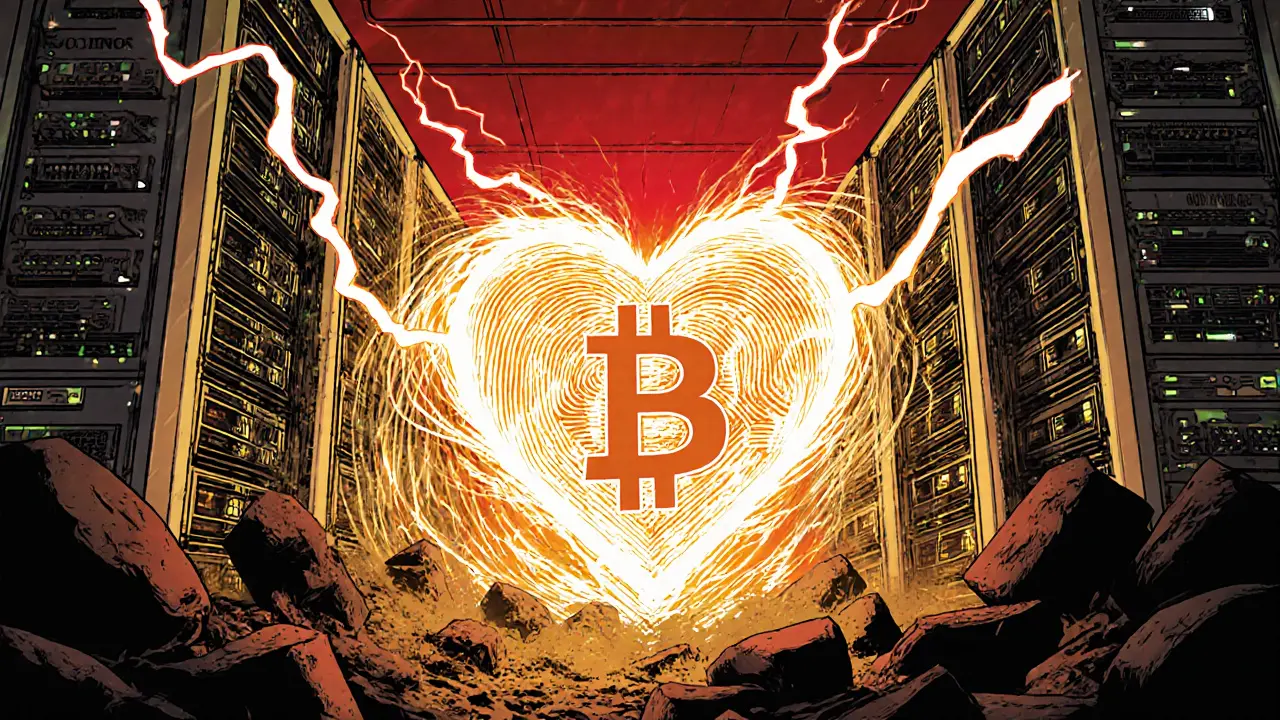
Bitcoin Mining: How It Works, Costs, and What You Need to Know in 2025
When you hear Bitcoin mining, the process of validating Bitcoin transactions and securing the network using powerful computers. Also known as crypto mining, it's the backbone of Bitcoin’s decentralized system. Unlike banks that rely on middlemen, Bitcoin uses miners to confirm trades and add them to the blockchain—every 10 minutes, a new block is locked in by someone who solved a complex math puzzle. This isn’t magic. It’s electricity, hardware, and competition.
At its core, ASIC miners, specialized hardware built only for Bitcoin mining. Also known as mining rigs, these machines are designed to run nonstop, burning through power to crack cryptographic hashes. In 2013, you could mine Bitcoin with a gaming PC. Today, you need a $5,000 ASIC miner just to compete. And even then, you’re racing against huge farms in Texas, Kazakhstan, and Georgia that run on cheap hydroelectric power. The days of mining from your basement are over—unless you’ve got access to near-free electricity, you’re likely losing money.
blockchain proof-of-work, the consensus mechanism that forces miners to prove they’ve done real computational work to earn Bitcoin. Also known as PoW, it’s what makes Bitcoin secure—but also energy-heavy. Every time someone mines a block, they’re not just earning new Bitcoin; they’re reinforcing the entire network’s integrity. Without miners, the blockchain could be hacked or altered. That’s why miners get rewarded—both with fresh Bitcoin and transaction fees. But here’s the catch: as Bitcoin’s price drops or mining difficulty rises, your profit vanishes fast. In 2025, many miners only break even because of rising electricity costs and hardware depreciation.
What you won’t see in YouTube ads is how few people actually make money from mining anymore. Most who try end up with a noisy, hot machine and a high electric bill. Even big players are shutting down rigs when Bitcoin dips below $30,000. The real winners? The companies selling ASICs and the energy providers. If you’re thinking about jumping in, ask yourself: Do you have access to under $0.05 per kWh? Do you know how to maintain hardware? Are you prepared to lose your initial investment? If not, you’re better off buying Bitcoin directly.
What’s left in the mining space today? A handful of professional operations, a few hobbyists with solar panels, and a lot of outdated gear gathering dust. The posts below dig into real-world mining setups, the hidden costs most guides ignore, how regulations are changing the game in the U.S. and Europe, and why some miners are switching to other blockchains just to survive. You’ll see what actually works, what’s a scam, and where the real money is made—not in buying a miner, but in understanding the system behind it.