
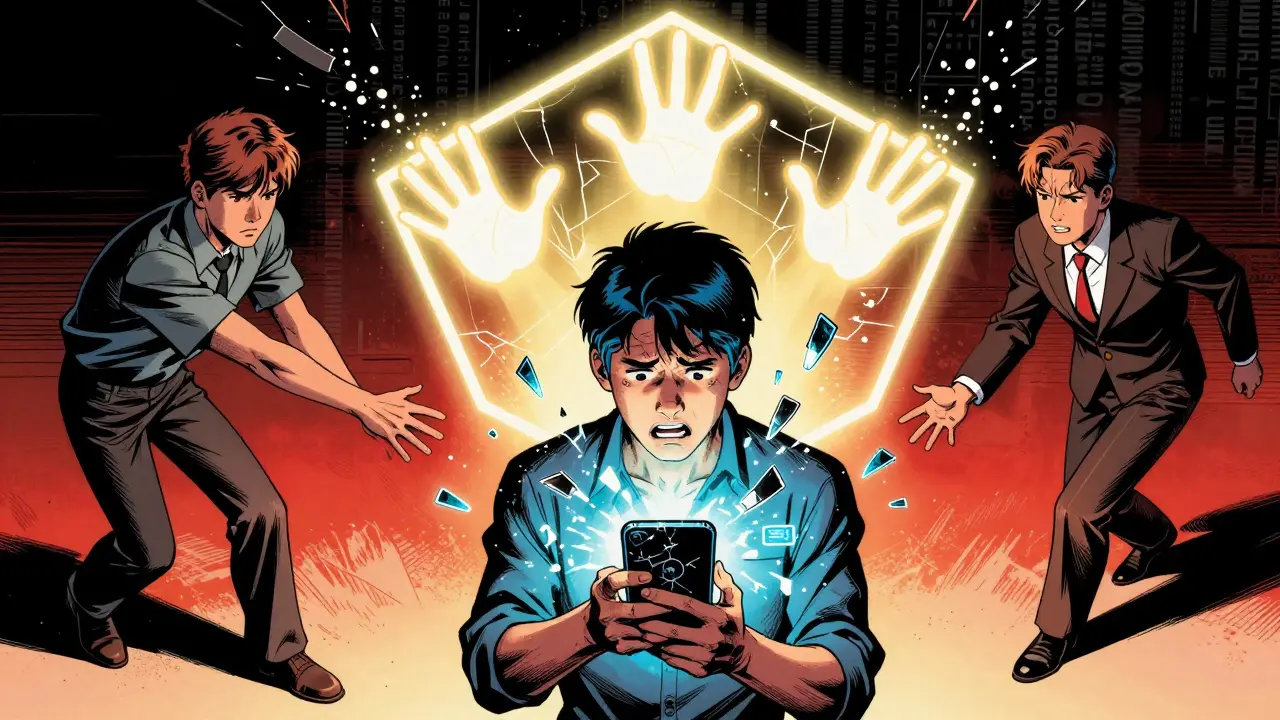
Imagine losing your phone, and with it, access to all your crypto. No seed phrase written down. No backup. No way to get back in. This isn’t a hypothetical nightmare - it’s the reality for 20% of all Bitcoin holders, according to Chainalysis. That’s over $20 billion locked away forever. And for most new users, the fear of losing their seed phrase is the #1 reason they avoid self-custody wallets altogether. But what if you could recover your wallet without ever memorizing 12 random words? What if you could use people you trust - a sibling, a friend, a lawyer - to help you get back in? That’s exactly what social recovery with account abstraction does.
What Is Account Abstraction?
Traditional crypto wallets rely on a single private key. If you lose it, your funds are gone. If someone steals it, your funds are gone. There’s no middle ground. Account abstraction changes that. It replaces these simple wallets - called externally owned accounts (EOAs) - with smart contract wallets. Think of it like upgrading from a basic lock to a smart door that can be programmed. Instead of just a key, this door can have rules: "Only let me in if two of my three trusted contacts approve," or "Wait 48 hours before letting anyone reset access."This isn’t science fiction. It’s live on Ethereum since March 2023, thanks to ERC-4337 a standard that defines how smart contract wallets operate using UserOperations, bundlers, and an EntryPoint contract. Wallets like Argent, Safe (Gnosis Safe), and Stackup now use this tech. You don’t need to understand the code to use it. You just need to pick who you trust.
How Social Recovery Actually Works
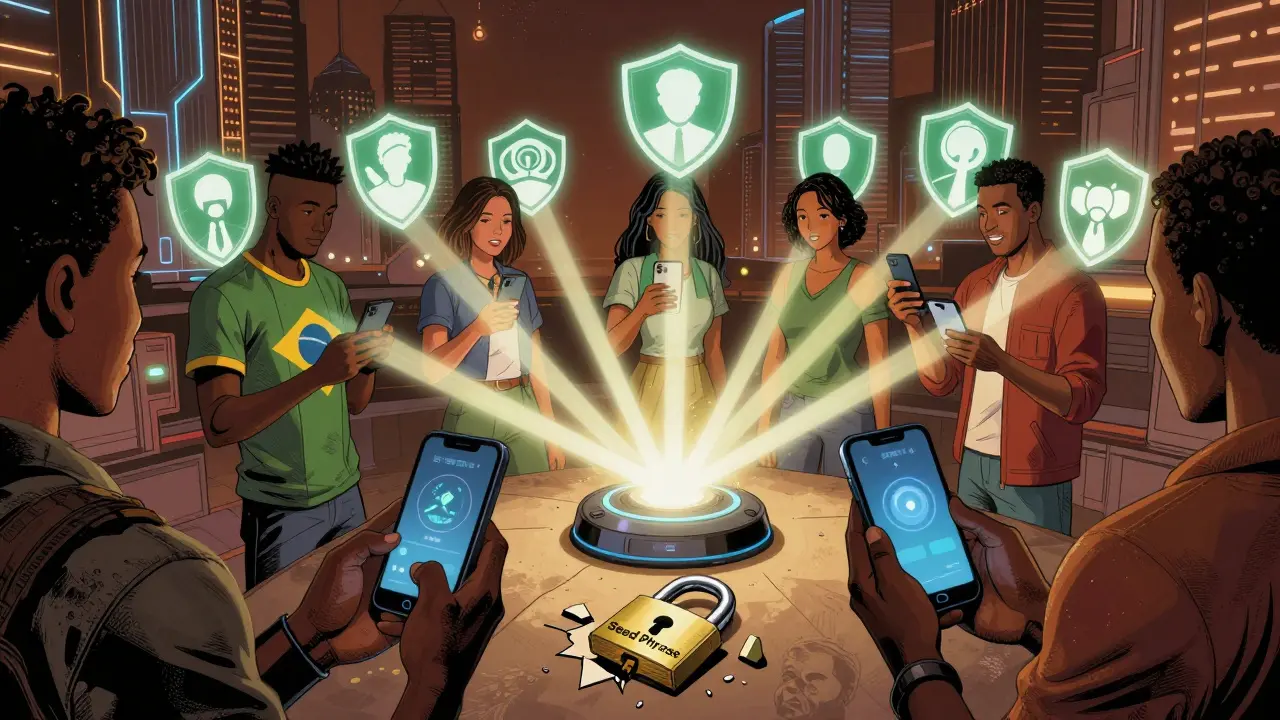
Social recovery is the smartest part of account abstraction. Here’s how it plays out in real life:- You set up your wallet and pick 3 to 5 people as your "guardians." These aren’t just contacts - they’re people who can help you recover your wallet if you’re locked out.
- You verify them through email, SMS, or even a quick video call with your wallet app.
- If you lose access, you request recovery. The system asks your guardians to sign off.
- For example, Argent uses a 2-of-3 system: any two of your three guardians must approve.
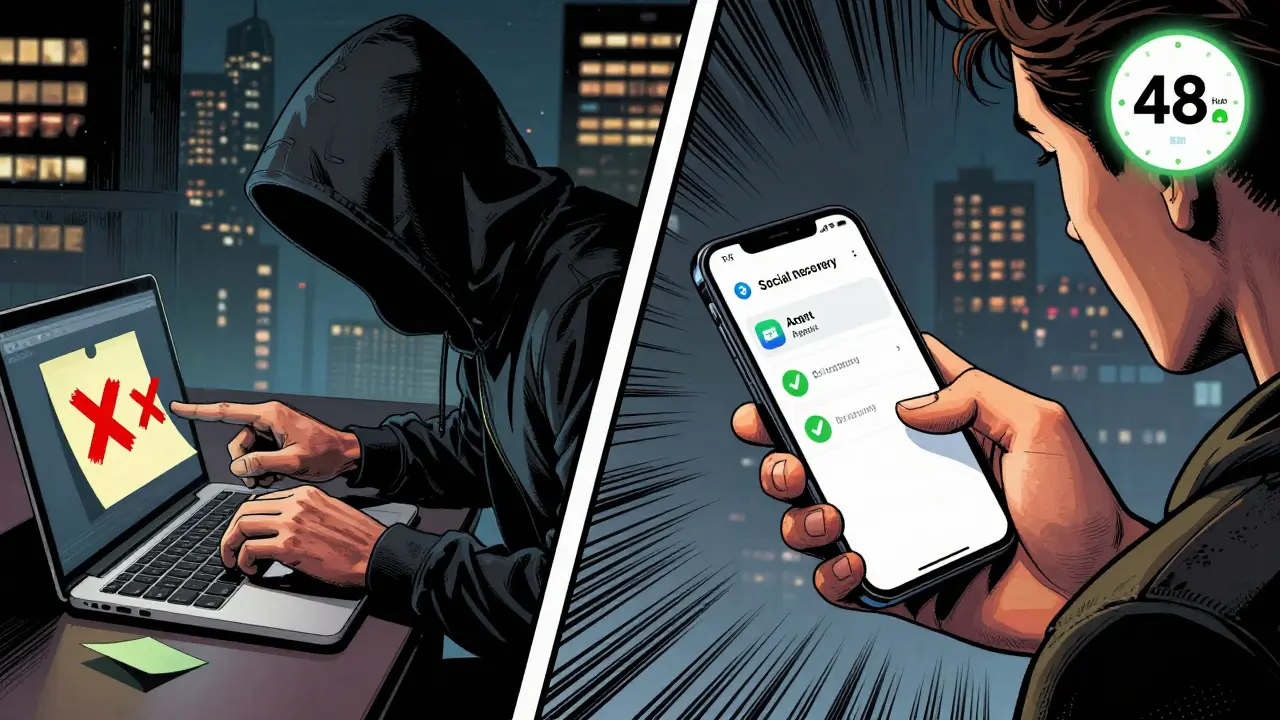
- A timer kicks in - usually 24 to 72 hours - to prevent rushed hacks.
- Once the timer ends and enough signatures are collected, your wallet is restored.
No seed phrases. No panic. No need to remember anything. Just call someone you trust.
Starknet’s version lets you set recovery times from 12 hours to a full week. This flexibility matters. A 12-hour delay might be fine if you forgot your password. But if your phone got stolen and you’re in a different country? A 72-hour window gives you breathing room to coordinate.
Why This Beats Seed Phrases
Let’s be honest: seed phrases are terrible for humans.- 97% of non-technical users store their seed phrases on phones, notes, or screenshots - places that can be hacked or lost.
- Most people write them down on paper and then misplace the paper.
- Even if you memorize it, stress, illness, or aging can make you forget.
A Blockchain@USC study of 1,200 people found that 78% of newcomers quit self-custody wallets because they were scared of losing their seed phrase. Social recovery removes that fear entirely. You’re not relying on perfect memory or perfect storage. You’re relying on relationships - something humans are already good at.
And compared to keeping crypto on exchanges? That’s even worse. In 2022 alone, over $3.8 billion was stolen from centralized exchanges. Social recovery keeps your funds under your control - no middleman, no single point of failure.
The Downsides - And How to Avoid Them
It’s not magic. There are real risks.1. Your guardians can be hacked. If someone tricks your sister into signing a recovery request, they could take your wallet. That’s happened. In Q2 2023, there were three documented cases on Ethereum where attackers used social engineering to fool guardians. Solution? Verify identities through multiple channels. Argent lets you confirm via Telegram video call. Use that feature. Don’t just rely on text.
2. Recovery takes time. The 24-72 hour delay is a security feature, but it’s also a pain if you’re in a real emergency. If your phone dies and you need access to pay rent tomorrow? You’re stuck. Solution? Pick guardians who are always reachable - not people who travel constantly. And always test recovery before you put real money in.
3. People disappear. What if one of your guardians moves away, changes their phone number, or just stops responding? That’s why you pick 3-5 people, not just 2. Argent lets you set backup contacts. If your first three don’t respond, the system tries the next tier. Always have a backup plan.
Who’s Using It - And Who Should?
Right now, social recovery wallets are used mostly by tech-savvy users. But adoption is growing fast. Argent has over 1.2 million monthly active users, and 67% of its positive reviews on Trustpilot mention social recovery as the reason they finally felt safe holding crypto.It’s not just for individuals. Enterprises are adopting it too. Companies using Squads.so on Solana use social recovery to manage treasury funds. Instead of trusting one person with a seed phrase, they assign recovery roles to CFOs, auditors, or legal teams. That’s institutional-grade security.
For emerging markets? This is revolutionary. In places like Nigeria, Brazil, and Indonesia, smartphone loss rates exceed 30% per year. Seed phrases are useless here. Social recovery isn’t a luxury - it’s a necessity.
What’s Next?
The tech is evolving fast. Here’s what’s coming:- Biometric login - Your face or fingerprint replaces password entry. Authereum is testing this for late 2024.
- Cross-chain recovery - Recover your Ethereum wallet if your Solana wallet gets locked. Squads.so is building this bridge.
- AI verification - Your wallet might ask: "Was this request made from your usual location? Did you speak normally during the call?" Consensys has a prototype.
- Regulation - The EU’s MiCA law may require guardians to be KYC-verified if they hold recovery power over $1,000+ in assets.
Gartner predicts that by 2025, 65% of new crypto users will use wallets with social recovery. That’s not a guess - it’s a projection based on current adoption curves.
How to Set It Up Today
You don’t need to wait. Here’s how to get started:- Download a wallet that supports social recovery: Argent (iOS/Android), Safe (browser or mobile), or Stackup.
- During setup, choose "Social Recovery" instead of "Seed Phrase".
- Add 3-5 trusted contacts. Use people you see often - not random friends.
- Verify each one using multiple methods: email, SMS, and a video call if possible.
- Test the recovery process. Send a small amount of ETH to the wallet, then simulate losing access. See if the system works.
- Store your guardians’ contact info somewhere safe - but not on the same phone as your wallet.
Most setups take under 10 minutes. And once you’ve done it once, you’ll wonder why anyone ever used a seed phrase.
Final Thought
Crypto’s biggest problem isn’t technology. It’s usability. Seed phrases were designed for engineers, not humans. Social recovery with account abstraction fixes that. It doesn’t weaken security - it makes it human. You don’t need to be a hacker to protect your money. You just need to know who to call.Can I use social recovery with Bitcoin?
Not directly. Bitcoin’s protocol doesn’t support smart contracts, so it can’t use ERC-4337 or account abstraction. However, wrapped Bitcoin (WBTC) on Ethereum can be stored in social recovery wallets. Some Bitcoin Layer-2 solutions are experimenting with similar ideas, but nothing is live yet. For now, social recovery is an Ethereum and EVM-compatible chain feature.
What happens if all my guardians disappear?
This is why you pick more than three guardians - and why you should set up backup tiers. Wallets like Argent and Safe let you add secondary contacts who only activate if your primary group fails. If you’ve set up backups and they’re all unreachable, you’re in a tough spot. That’s why testing recovery before storing large amounts is critical. Some wallets offer a time-based fallback (e.g., 30 days of inactivity triggers a self-recovery), but this is rare and not recommended as a primary method.
Is social recovery safer than a hardware wallet?
They serve different purposes. A hardware wallet is great for long-term cold storage - it’s air-gapped and immune to online attacks. But if you lose it, and don’t have the seed phrase, you’re stuck. Social recovery wallets are designed for daily use. They’re hot wallets with built-in recovery. For most people, social recovery is more practical. For large holdings, use both: keep the bulk in a hardware wallet, and use a social recovery wallet for spending funds.
Do I need to pay extra gas fees for social recovery?
Yes, but not as much as you think. A social recovery transaction costs about 15-25% more than a regular ETH transfer on Ethereum mainnet because it runs a smart contract. On layer-2 chains like Starknet or Polygon, the cost is only 5-10% higher. Some wallets even offer paymasters - third parties that cover the gas fee for you. Argent and Stackup use this to make recovery transactions free for users.
Can I change my guardians later?
Yes, and you should. Life changes - people move, relationships change, phones get lost. Most social recovery wallets let you update your guardians anytime, as long as you’re already logged in. You don’t need to involve anyone else. Just go into wallet settings, remove old contacts, and add new ones. Always update this after major life events.
Mary Scott
February 22, 2026 AT 20:5420% of Bitcoin holders lost funds? Yeah, because they’re dumb. Stop coddling people who can’t write down 12 words.
Shannon Holliday
February 23, 2026 AT 12:21Jeremy buttoncollector
February 24, 2026 AT 05:04But… what if the EntryPoint contract is compromised? Is this just replacing one centralized trust anchor with another?
Arya Dev
February 24, 2026 AT 08:47This is why crypto is a joke. You’re not securing assets-you’re creating emotional landmines.
Leslie Cox
February 25, 2026 AT 04:12Pathetic. If you can’t handle a seed phrase, you shouldn’t own crypto. Period.
Derek Sasser
February 25, 2026 AT 07:44Yes, there are risks. But so is keeping crypto on Coinbase. This is way better than paper backups that get shredded in a flood. Give it a shot before you trash it.
Nadia Shalaby
February 26, 2026 AT 15:12Maybe this isn’t perfect… but it’s the first time I didn’t feel like a hacker just to use my own money.
Fiona Monroe
February 26, 2026 AT 19:40Molley Spencer
February 28, 2026 AT 09:50‘Guardians’? Sounds like a cult. And ‘2-of-3’? That’s not security-that’s social engineering waiting to happen.
Meanwhile, real users are still getting hacked because wallets make it too easy to ‘trust’ people who shouldn’t have access.
John Fuller
March 1, 2026 AT 03:56Lucy Simmonds
March 1, 2026 AT 16:01And guess what? Facebook got hacked. Your ‘guardians’ will get phished. Your ‘recovery timer’? Irrelevant.
They’re not fixing security-they’re just making it look pretty while you sleepwalk into disaster.
Maggie House
March 3, 2026 AT 07:07This made me feel like I could actually do it. Thank you for explaining it so clearly.
Dana Sikand
March 4, 2026 AT 05:58Went through the recovery flow. Two of my three guardians approved. Got in within 36 hours.
I’m not gonna lie-I sobbed. I’ve never felt this safe with my money before. This isn’t tech. This is care.
Cameron Pearce Macfarlane
March 4, 2026 AT 21:04Real crypto users don’t need guardians. They need discipline.
And if you can’t write down 12 words? Maybe you shouldn’t be holding crypto at all.
Elizabeth Smith
March 6, 2026 AT 01:24Security isn’t about making things easier. It’s about making them unbreakable.
You can’t trust people. You can’t trust systems. You can only trust math.
Curtis Dunnett-Jones
March 6, 2026 AT 23:54Humans do not operate on private keys. Humans operate on relationships. This technology finally acknowledges that.
Sean Logue
March 8, 2026 AT 22:30She’s not gonna memorize 12 words. But she’ll remember Brother Ray’s number. This isn’t for techies. It’s for people.
Carl Gaard
March 9, 2026 AT 08:39It feels… human. Like I’m not alone in this.
Also, I cried when I tested it. Not because it worked. Because I realized I didn’t have to be scared anymore.
bella gonzales
March 11, 2026 AT 07:08So now I’m supposed to trust my ‘guardians’? What if they’re shady? What if they’re lazy? What if they just don’t care?
This isn’t security. It’s emotional labor.
Paul Reinhart
March 11, 2026 AT 22:56The real win? It decouples key management from physical possession. Your phone isn’t your wallet anymore. Your social graph is.
That’s profound. It’s not about convenience. It’s about redefining ownership in a world where devices are ephemeral.
And yes-there are risks. But the alternative? 20 billion locked up because people couldn’t write down a phrase? That’s the real tragedy.
Samantha Stultz
March 13, 2026 AT 10:28By design, social recovery shifts power from the individual to the network. Who’s auditing the guardians? Who’s verifying their identities?
And what happens when a guardian gets compromised? The system doesn’t care-it just trusts. That’s not innovation. That’s systemic fragility.
Robert Conmy
March 14, 2026 AT 13:10Real holders don’t need babysitters. They don’t need ‘guardians’. They have one thing: a seed phrase. And they know where it is.
Stop pretending this is progress. It’s just another way to get hacked.
Lilly Markou
March 14, 2026 AT 20:20What if my guardian dies? What if they move? What if they forget?
This isn’t security. It’s a time bomb wrapped in a warm hug. I’m going back to hardware wallets. At least with those, I know the risk is mine alone.
McKenna Becker
March 15, 2026 AT 14:03We stopped treating money like a tool and started treating it like a possession.
Account abstraction doesn’t fix wallets. It fixes our relationship with ownership.
Maybe we don’t need to control everything. Maybe we just need to know who to ask.