
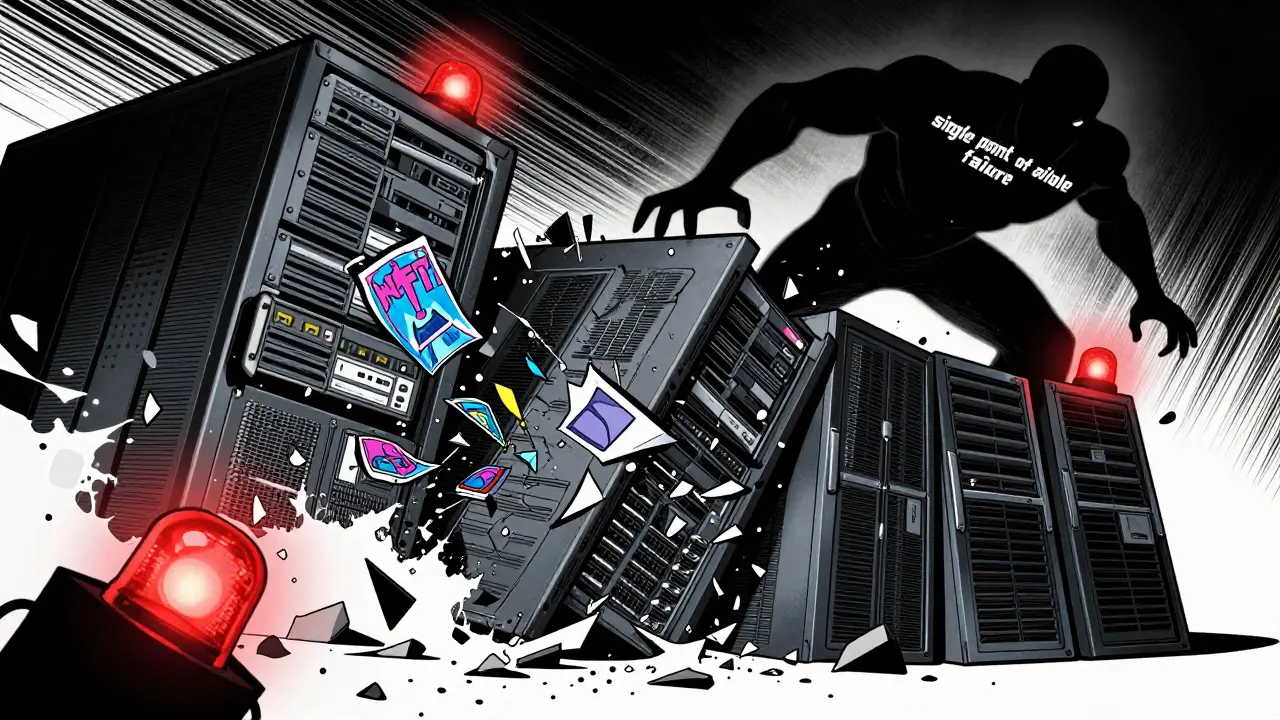
In early 2025, a major NFT marketplace outage left thousands of digital artworks missing. The problem? Off-chain metadata stored on a single server. This isn't just a technical issue-it's a survival risk for your NFT metadata storage. Let's break down the real differences between on-chain and off-chain storage so you can choose the right path.
What on-chain NFT metadata really means
On-chain metadata means the data is part of the blockchain itself. When you mint an NFT, the metadata-like image, attributes, description-is directly stored in the smart contract. For example, On-Chain NFT Metadata is stored directly within the blockchain's transaction data, ensuring it survives as long as the blockchain exists. Ethereum uses SVG or Base64 encoding for this. Before the Prague upgrade in 2024, storing 1KB cost 0.05-0.5 ETH. Now, costs dropped by 90%, making it feasible for more projects. Ethereum transaction data size is capped at 128KB, which limits complexity. But for high-value art, this is worth it.
Take Art Blocks as an example. Since their 2020 launch, every single piece has been fully on-chain. No server outages, no broken links. Their metadata is part of the blockchain forever. That's the ultimate guarantee for collectors.
Off-chain options: IPFS, Arweave, and centralized servers
Off-chain storage keeps metadata outside the blockchain. IPFS uses a peer-to-peer network, but it needs pinning services like Pinata. Here's the catch: 68% of Ethereum projects using IPFS rely on Pinata, creating a single point of failure. In 2022, Pinata's downtime affected 15% of their projects. Cost? $0.10-$0.50 per GB/month for pinning.
Arweave offers permanent storage with a one-time fee. At $0.015 per MB, it includes a 200-year data guarantee. Solana projects use it 90% of the time. But querying data is slower than cloud storage.
Centralized servers like AWS S3 cost $0.023 per GB/month. Sounds cheap, right? But they've caused major outages. In 2022, LooksRare's server issues made 47,000 NFTs disappear. Polygon's top projects have 61% centralized metadata-high risk.
Storage comparison: cost, reliability, speed
| Storage Type | Cost per MB | Reliability | Retrieval Speed | Best For | Worst For |
|---|---|---|---|---|---|
| On-Chain | $0.05-$0.50 | 99.99% (blockchain-dependent) | 12-15 seconds (block time) | High-value art, permanent collections | Large media files, frequent updates |
| IPFS | $0.0001-$0.0005 | 98% (with pinning) | 200-500ms | Decentralized projects needing cost efficiency | Projects without reliable pinning |
| Arweave | $0.015 | 99.5% (permanent storage) | 100-300ms | Solana NFTs, long-term archives | Projects needing frequent metadata changes |
| Centralized (AWS) | $0.000023 | 95% (single-point failure) | 50-200ms | Low-cost utility NFTs | High-value art, long-term collections |
Real projects using each method
Solana projects overwhelmingly use Arweave. Over 90% of their top NFTs store metadata there. This works because Solana's low fees make Arweave's one-time payment affordable. When the May 2022 network outage hit, Solana NFTs stayed intact while Ethereum projects suffered.
Meanwhile, Polygon's ecosystem has 61% centralized metadata storage. This created systemic risk. In 2023, a single server failure took down dozens of projects. The NFT Metadata Alliance (founded in September 2023) now pushes for hash-on-chain solutions to prevent this.
For high-value art, Art Blocks and CryptoPunks (after their 2022 migration) use fully on-chain. This ensures their metadata survives corporate failures. But it's expensive-$50-$500 per NFT before upgrades, now $5-$50 after Prague.
Hybrid solutions: the smart middle ground
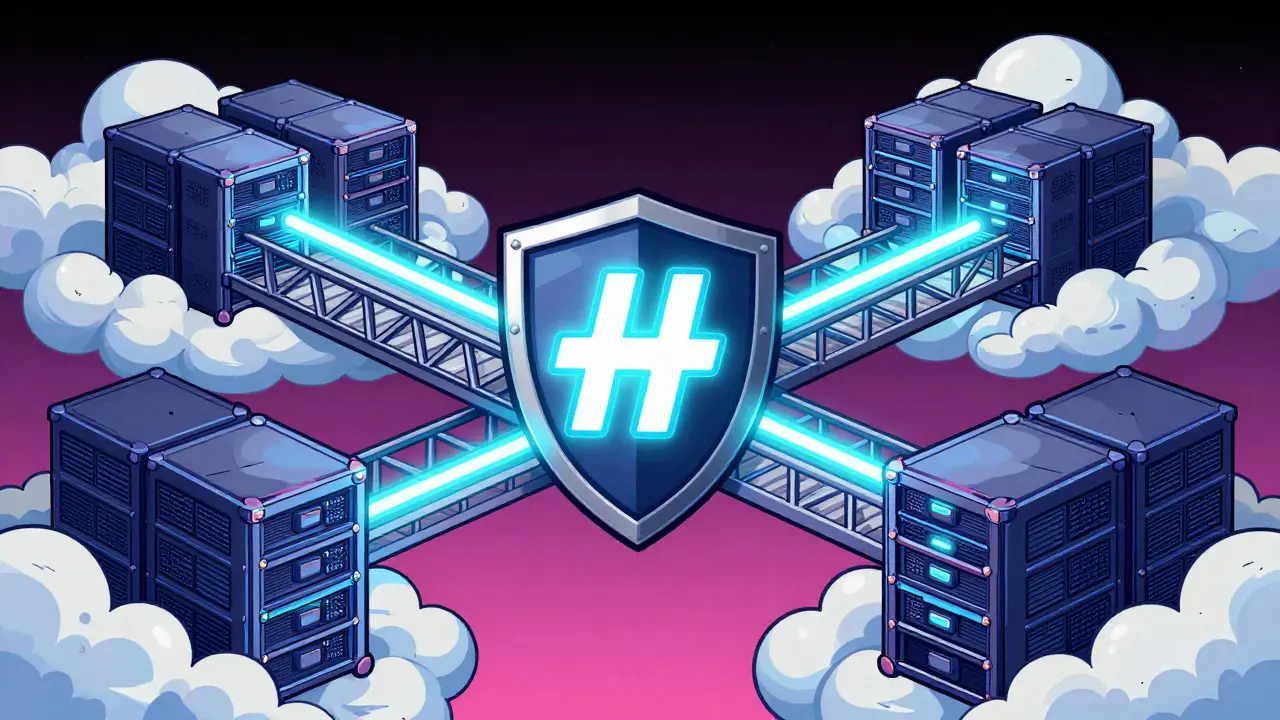
Most projects now use hybrid storage. Store a hash of the metadata on-chain, but keep the actual data off-chain. This gives 87% of security at 15% of the cost. Thirdweb and Moralis tools make this easy. Ethereum's top 100 projects use this approach for 22% of their collections.
Why? It solves the core tradeoff. You get censorship resistance for the hash, while off-chain storage handles large files. For example, OpenSea uses this method for most NFTs. It's the reason their platform stayed up during the 2023 Pinata outage.
What's changing in 2026
The EU's MiCA regulation (effective June 2024) now requires metadata immutability for financialized NFTs. This is pushing more projects toward on-chain or hybrid. Ethereum's Prague upgrade slashed on-chain costs by 90%, making it viable for more use cases.
Meanwhile, the NFT Metadata Alliance is standardizing "hash-on-chain" as the minimum requirement by Q4 2024. This means every NFT project will need to store at least a hash on-chain. It's a big shift from 2022's 61% centralized storage to today's 38% hybrid adoption.
Which solution is right for you?
Ask yourself these questions:
- Is your NFT high-value art? Use on-chain or hybrid. Art Blocks proves it's worth the cost.
- Do you need frequent updates? Off-chain with Arweave or IPFS (but with reliable pinning).
- Are you on Solana? Arweave is your best bet-90% adoption for a reason.
- On Polygon? Avoid centralized servers. Use Arweave or hybrid to avoid systemic risk.
- Building utility NFTs? Hybrid is the sweet spot-enough security without high costs.
Remember: metadata is part of your NFT's identity. If it disappears, so does your asset. Don't gamble with off-chain storage alone.
Frequently Asked Questions
What's the main difference between on-chain and off-chain NFT metadata?
On-chain metadata is stored directly in the blockchain's smart contract, making it immutable and permanent but more expensive. Off-chain stores metadata externally (like IPFS or AWS), which is cheaper but risks downtime if the service fails. For example, on-chain ensures your NFT survives even if a company goes bankrupt, while off-chain depends on third-party services.
Why did CryptoPunks switch to on-chain storage?
CryptoPunks moved to fully on-chain storage in April 2022 after server issues caused 23% of their NFTs to display blank images. By storing all metadata on Ethereum, they eliminated dependency on external servers. Now, every Punk's data is part of the blockchain forever-no more outages.
Is IPFS a safe off-chain storage option?
IPFS is decentralized but requires pinning services like Pinata. The problem? 68% of Ethereum projects using IPFS rely on Pinata, creating a single point of failure. In 2023, Pinata's downtime broke 15% of their projects' metadata. For true safety, use IPFS with multiple pinning services or switch to Arweave for permanent storage.
How does the EU's MiCA regulation affect NFT metadata?
MiCA (effective June 2024) requires metadata immutability for financialized NFTs. This means projects must store at least a hash on-chain. It's pushing the industry toward hybrid solutions-on-chain for security, off-chain for flexibility. Expect more NFTs to adopt this standard by 2026.
What's the best storage solution for Solana NFTs?
Solana projects overwhelmingly use Arweave-90% of top collections. Arweave's one-time fee and 200-year guarantee fit Solana's low-cost model. During the May 2022 network outage, Solana NFTs stayed intact while Ethereum projects suffered. It's the most reliable option for Solana.
Matthew Ryan
February 5, 2026 AT 12:05I've been working with NFTs for a few years. The storage methods discussed here have real-world implications. It's fascinating how different approaches affect asset longevity.
Michelle Anderson
February 5, 2026 AT 21:47Off-chain storage is a disaster waiting to happen. Those centralized servers are just ticking time bombs. Don't be naive.
Sharon Lois
February 5, 2026 AT 23:21On-chain? More like on-the-hook for scams. The government is controlling this. Period.
Kyle Pearce-O'Brien
February 6, 2026 AT 20:51Honestly, if you're not using a hybrid solution with on-chain hash, you're basically a crypto noob. 🤦♂️ #DeFi #Web3
Danica Cheney
February 7, 2026 AT 12:11idk why people care so much. just use whatever. it's all the same anyway.
Shruti Sharma
February 7, 2026 AT 17:15on-chain? pfft. they're just trying to make us pay more gas fees. and the whole 'permanent storage' thing is a lie. blockchain is just a scam. also, why are you even using ethereum? its so slow and expensive. i saw a post on twitter that says...
btw, the author is probably in on it. emotional vampire alert!
Robin Ødis
February 9, 2026 AT 16:13I've been studying this for years and let me tell you, most people don't get it. On-chain is the only way, but they're not telling you the real costs. It's all a scam. I've seen it. The gas fees are insane, and the blockchain is just a money grab. They're hiding the truth from us. You think you're saving money but you're not. It's all a facade. I've done the research. Trust me.
Udit Pandey
February 10, 2026 AT 11:48India has always been at the forefront of blockchain innovation. The global community should look to our solutions rather than these flawed Western approaches. Our regulatory framework is far superior.
Joshua Herder
February 10, 2026 AT 12:56Wait, what if the whole premise is wrong? What if we're all missing the bigger picture here? Like, maybe storage isn't even the issue. Maybe it's the entire concept of NFTs. Just thinking out loud. The whole industry is built on sand. Maybe we should be questioning the fundamentals instead of debating storage methods. It's all just a bubble waiting to pop. People are so focused on the technical details that they ignore the bigger picture. We need to step back and reconsider the entire ecosystem. It's not just about storage; it's about value, ownership, and the future of digital assets. If we don't address these core issues, all the technical solutions are meaningless. We're building on quicksand. Why are we so obsessed with permanence? Permanence isn't always better. Sometimes, the ephemeral nature of things has value. The idea that everything must be stored forever is a flawed concept. We're treating digital assets as if they're physical objects, but they're not. They're just data. And data changes. Maybe we should embrace change instead of trying to lock it down. The whole debate is missing the point. Let's talk about the real issues.
Brittany Novak
February 10, 2026 AT 17:23The fact that they're pushing on-chain storage without addressing the security vulnerabilities is alarming. I suspect this is part of a larger scheme to control digital assets. Every time there's a 'major' upgrade, there's hidden backdoors. The government and big tech are behind this. It's not just about storage; it's about control. They want to own everything. This is a classic power play. They're using blockchain to centralize control under the guise of decentralization. It's all a lie.
Jacque Istok
February 12, 2026 AT 06:38Oh sure, on-chain is great. Let's ignore the fact that storing a 1MB image on-chain costs $500 in gas fees. What a brilliant idea. But hey, if you're into wasting money, go for it. I'm just an expert who's been doing this for years. The truth is, most people don't understand the trade-offs. They see 'permanent' and think it's perfect, but they don't realize the costs involved. Ethereum's gas fees are a nightmare, especially for larger files. And don't even get me started on how slow the transaction times are. Meanwhile, off-chain solutions like IPFS are way more efficient, but they have their own issues. It's all about balance. But most projects don't even try to find that balance; they just go all-in on one side without considering the consequences. It's frustrating to see people make these decisions without understanding the full picture. I've seen too many projects fail because of poor storage choices. It's a lesson we should have learned by now.
Oliver James Scarth
February 12, 2026 AT 21:19The British approach to this matter is unparalleled. We have always championed robust and secure methodologies, unlike these half-baked solutions. This is a matter of national pride. We understand the importance of data integrity and security. Other countries should take note of our example.
Taybah Jacobs
February 13, 2026 AT 13:32It is imperative to consider the long-term implications of metadata storage choices. A well-informed decision will safeguard the integrity of your NFTs. This is something I've seen firsthand in my work.
Nathaniel Okubule
February 15, 2026 AT 03:34Thank you for the comprehensive guide. It's crucial to understand these storage options for long-term sustainability.
Brendan Conway
February 15, 2026 AT 05:57Hmm, i think both methods have their pros and cons. Maybe we can find a middle ground? Just a thought. Not sure though.
mahikshith reddy
February 15, 2026 AT 12:08On-chain is the only way. Anyone else is selling out. Period.
Deeksha Sharma
February 17, 2026 AT 08:40It's fascinating to see how the NFT space is evolving. Whether it's on-chain or off-chain, the key is to find a balance that works for everyone. Let's embrace innovation while staying mindful of the challenges. The future is bright!