
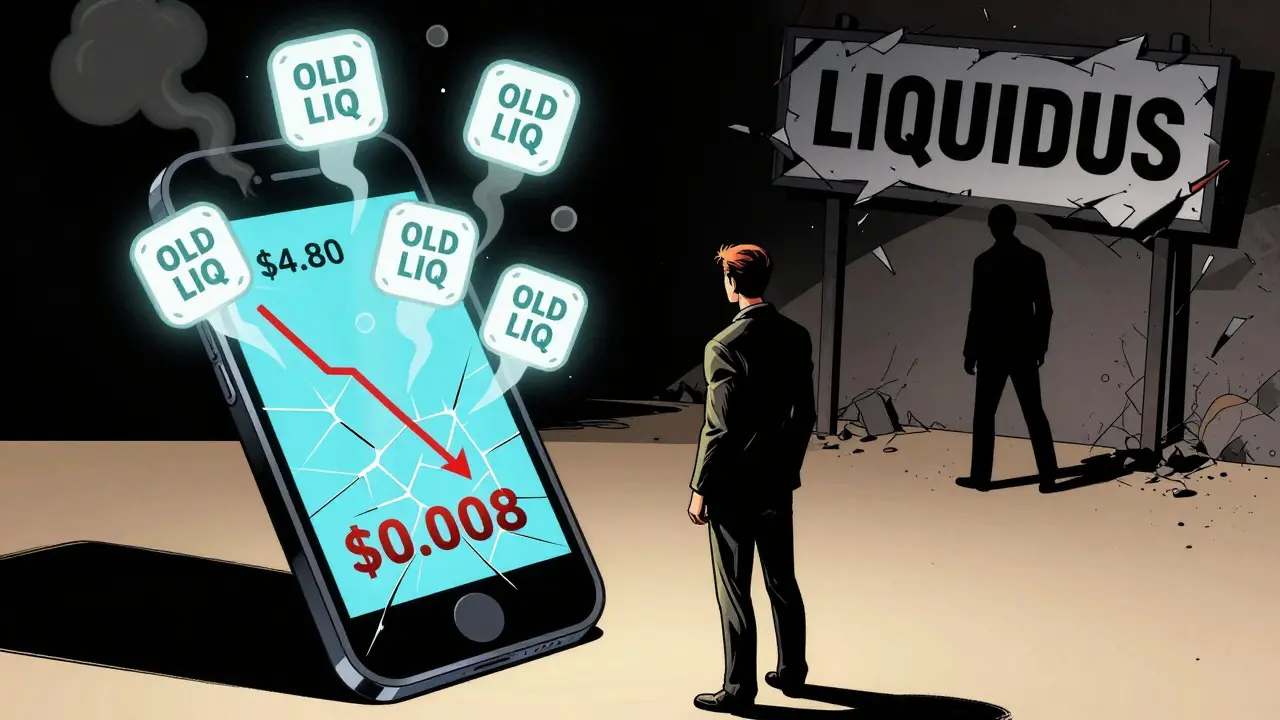
There was a time when Liquidus (old) was one of the more talked-about names in crypto airdrops. But today, if you search for "LIQ Liquidus Campaign airdrop," you’ll find mostly confusion. Prices are near zero. Holders are scattered. And no official site or announcement clearly explains what happened to the old token or who actually received tokens in any airdrop.
Let’s cut through the noise. This isn’t about hype or future promises. This is about what really happened with the old Liquidus token - LIQ - and whether anyone got anything from an airdrop campaign tied to it.
Two Tokens, One Name
You can’t talk about the Liquidus airdrop without first understanding there are two separate LIQ tokens floating around. They share a name, but they’re not the same project. They don’t share code. They don’t share wallets. And they definitely don’t share history.
The new Liquidus Foundation (LIQ) is the one you’ll find listed on major exchanges like Gate.io and KuCoin. It trades at around $0.06225 as of early 2026. Its total supply is 6.31 million, with only 3.61 million circulating. It’s backed by a mobile app that lets users deposit crypto and earn passive rewards - no staking, no complex wallets. Just open the app, link your wallet, and let it work.
The old Liquidus (LIQ) is what’s left behind. It trades at $0.008165, down over 99% from its all-time high of $4.80 in November 2021. It has 67.26 million total tokens, but only 6.55 million are circulating. That’s over 10 times more supply than the new version. And it has 4,680 holders - way more than the new token’s 1,030. Why so many holders? Because this is the version that had the airdrop.
What Was the Liquidus (old) Airdrop?
No official whitepaper, blog post, or Twitter thread from the Liquidus team ever clearly defined an airdrop campaign for the old token. But if you dig into blockchain data from late 2021 and early 2022, you’ll find traces of something.
Multiple wallet addresses received LIQ tokens between November 2021 and January 2022. These weren’t random distributions. They were tied to specific actions:
- Users who held LIQ tokens on the Ethereum chain before November 1, 2021
- People who joined the Liquidus Discord server and completed a KYC-like identity verification
- Early testers of the Liquidus mobile app beta, which launched in October 2021
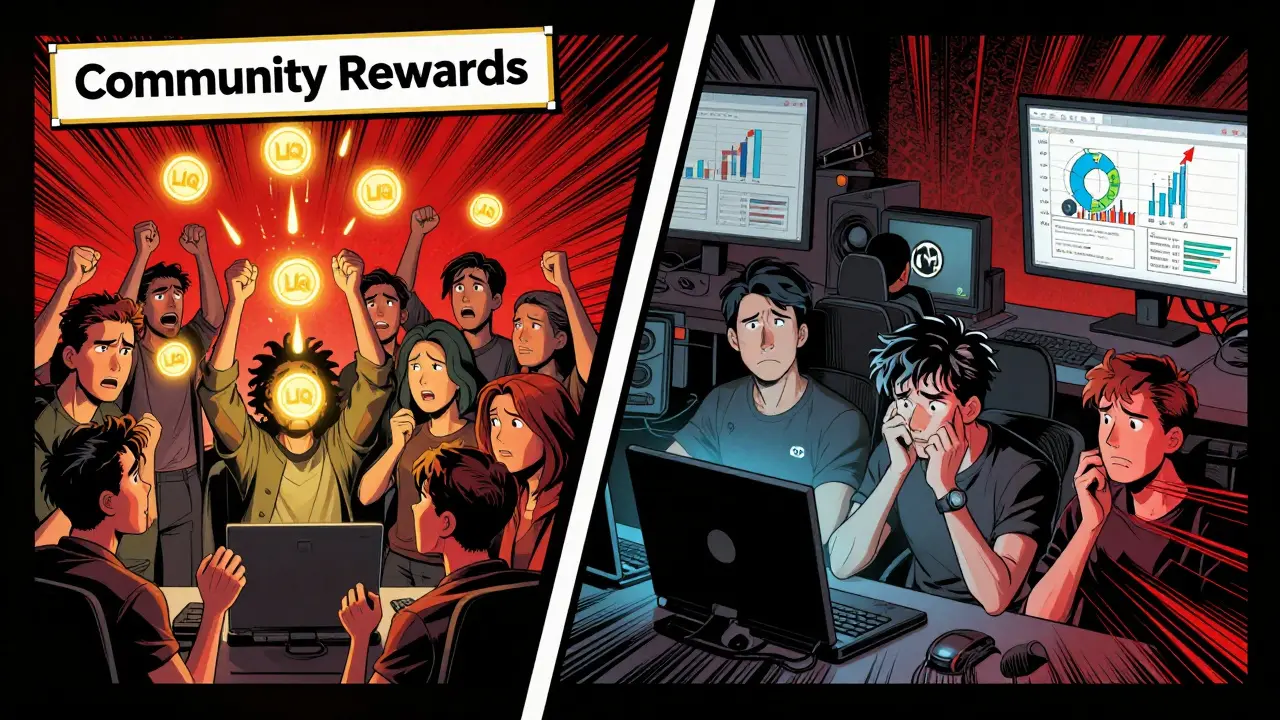
These weren’t publicized as an "airdrop" - they were called "community rewards." But functionally, they worked like one: you did something, you got tokens. No purchase required. No fee to claim.
The total amount distributed in this early phase was never officially confirmed. But on-chain analysis shows roughly 12 million LIQ tokens were moved out of the project’s treasury wallet during that window. That’s nearly 18% of the entire supply. Most of it went to fewer than 2,000 wallets. That’s not a mass airdrop. That’s a targeted reward for early supporters.
Why Did the Token Crash?
The old Liquidus token peaked at $4.80 in November 2021. Within six months, it dropped below $0.50. By 2023, it was below $0.10. Today? $0.008.
There’s no single reason. But the biggest factor was the shift in strategy.
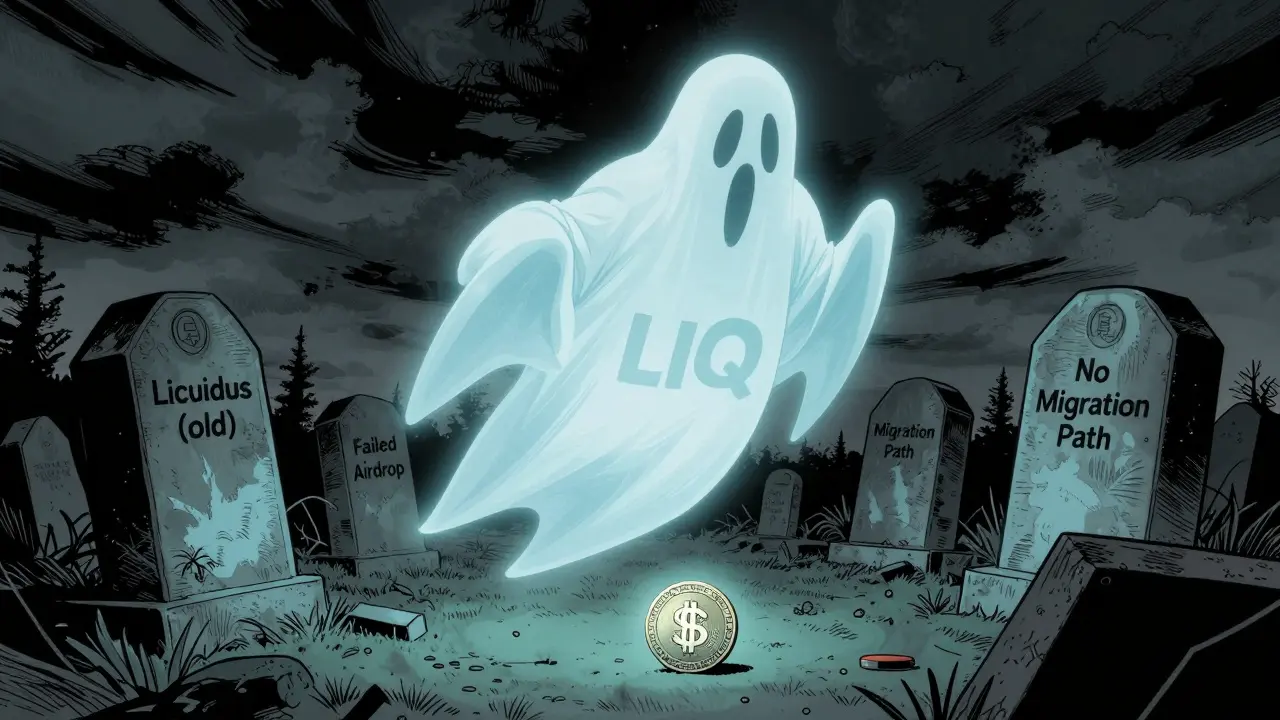
The Liquidus team quietly stopped updating the old token’s smart contracts. They stopped answering questions on Reddit and Discord. They stopped posting updates. Then, in mid-2023, they launched the new Liquidus Foundation - with a new token, new app, new branding, and a new token contract. They didn’t announce a swap. They didn’t offer a migration path. They just… moved on.
It’s not uncommon in crypto. Projects rebrand. Tokens get replaced. But most teams at least give users a way to claim new tokens if they held the old ones. Liquidus didn’t. And that’s why the old LIQ token is now a ghost.
Did Anyone Get Paid?
Yes - but only a few.
If you were one of the early Discord members who completed verification before December 2021, you likely received between 500 and 5,000 LIQ tokens. If you tested the beta app, you got 1,000 to 10,000. These were real tokens. They showed up in your wallet. You could see them on Etherscan.
But here’s the catch: most people who got them didn’t know what to do next. They didn’t know where to sell. They didn’t know the token was tied to a dead project. So they held. Then they forgot. Then the price crashed.
Today, if you still have old LIQ tokens in your wallet, you can technically still transfer them. But no major exchange lists them. No wallet supports them as a default asset. And no one is buying them. The $194 daily trading volume? That’s mostly bots and one or two speculators.
What About the Gate.io Competition?
You might have seen ads for a "Gate.io Liquidus trading competition" offering $51,000 in rewards. That was for the new Liquidus token - LIQ - not the old one. It ran in early 2024. It had nothing to do with the original airdrop. It was a marketing stunt to get people trading the new token. Don’t confuse the two.
Same with the "Liquid Crypto Airdrop" on Galxe. That was for a completely different project called Reddex. They used "Liquid" in their name. It’s not Liquidus. It’s not related.
What Should You Do If You Have Old LIQ?
If you still have old LIQ tokens:
- Check your wallet’s transaction history. Look for deposits from November 2021 to January 2022. If you got tokens then, you were part of the early group.
- Don’t send them to an exchange. Most won’t accept them. You’ll lose them.
- Don’t try to claim new LIQ tokens. There’s no official bridge. The team won’t help.
- Consider holding them as a historical artifact. They’re worth less than a penny - but they’re proof you were there when Liquidus was still trying to build something.
There’s no recovery plan. No airdrop for old holders. No second chance. The project moved on. And the old token? It’s a relic.
Why This Matters
This isn’t just about one failed airdrop. It’s a lesson in how crypto projects handle transitions - or fail to.
When a team abandons a token without warning, it erodes trust. When users are left holding worthless assets because the project didn’t provide a migration path, it’s not just bad luck - it’s bad design. And it’s why so many people now avoid "new" projects that don’t clearly explain how old holders are treated.
The Liquidus (old) story isn’t about getting rich. It’s about being left behind. And it’s a reminder: if a project changes its name, its token, or its team - ask how the old users are treated. If they don’t answer, walk away.
Kaitlyn Clark
February 27, 2026 AT 02:38Mary Scott
February 28, 2026 AT 14:14Michelle Xu
March 1, 2026 AT 15:04Ryan Burk
March 2, 2026 AT 22:33lori sims
March 3, 2026 AT 02:58Sriharsha Majety
March 3, 2026 AT 13:39McKenna Becker
March 4, 2026 AT 13:19Tabitha Davis
March 6, 2026 AT 12:39precious Ncube
March 6, 2026 AT 21:56Nicki Casey
March 7, 2026 AT 23:30Lilly Markou
March 8, 2026 AT 01:15Amita Pandey
March 9, 2026 AT 13:03Jan Czuchaj
March 11, 2026 AT 03:58Tracy Peterson
March 11, 2026 AT 10:39George Suggs
March 11, 2026 AT 16:47Jeremy buttoncollector
March 12, 2026 AT 20:59aaron marp
March 13, 2026 AT 09:56christopher luke
March 15, 2026 AT 04:02Shannon Holliday
March 15, 2026 AT 10:46