

The landscape of global digital security shifted dramatically in 2024 and 2025, moving away from United Nations-led oversight to a more agile coalition focused squarely on stopping state-sponsored financial theft. As of early 2026, we are looking at a world where the Multilateral Sanctions Monitoring Team is the primary body coordinating efforts to track and seize illicit funds generated by the Democratic People's Republic of Korea. This isn't just bureaucratic reshuffling; it represents a survival tactic for the global financial system against a sophisticated adversary that stole over $2 billion in cryptocurrency during the first half of 2025 alone. If you are wondering why your news feed keeps mentioning "DPRK cyber operations" alongside your portfolio updates, the answer lies in how quickly these state actors have moved from simple hacking to running a massive, multi-billion-dollar criminal enterprise.
The numbers tell a stark story about the urgency of this threat. Before the UN Panel of Experts was dissolved in May 2024, there was always some ambiguity about enforcement. However, post-dissolution reporting shows that the regime adapted quickly. According to data from the first nine months of 2025, North Korea accounted for approximately 35% of all global cryptocurrency thefts. This figure rose to 38.7% by October 2025. That dominance is built on a specific infrastructure. The operations aren't random; they are centrally directed by the the Reconnaissance General Bureau, specifically utilizing groups like the Lazarus Group. These actors didn't just steal coins; they perfected the art of laundering them through decentralized exchanges and privacy-enhancing technologies, making tracking a nightmare for standard compliance teams.
The New Enforcement Architecture
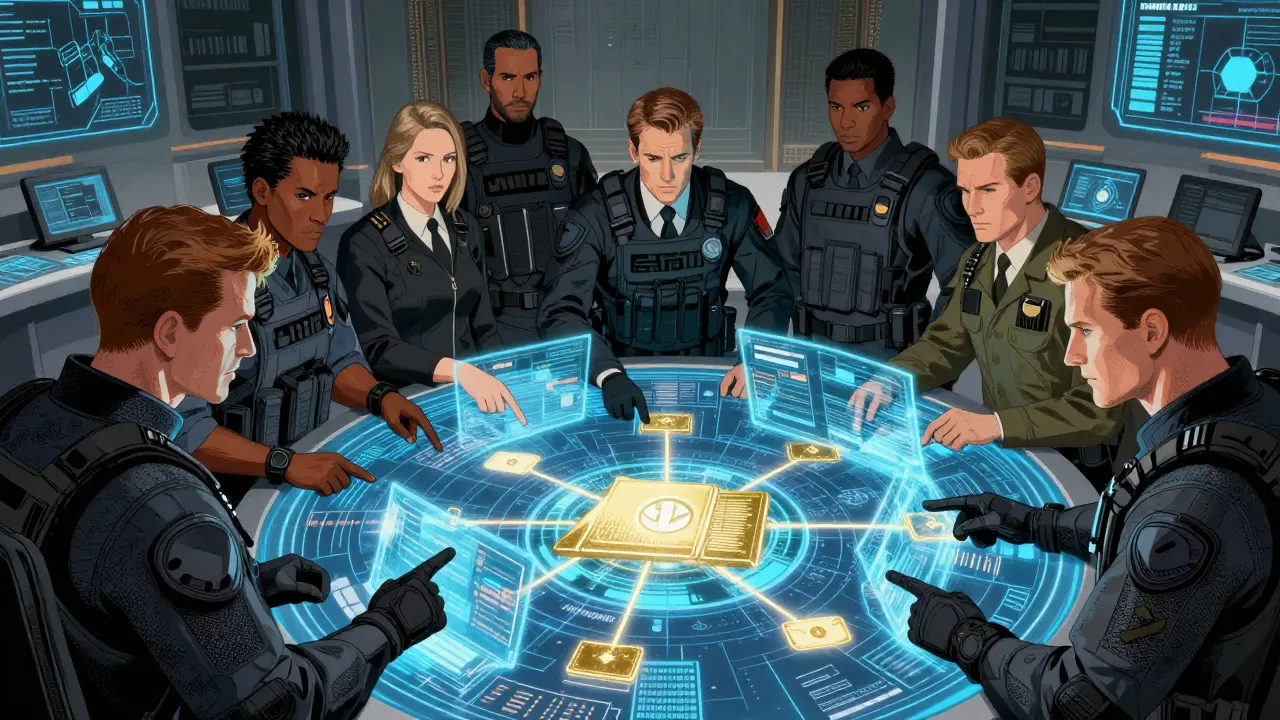
When the UN Panel ended its mandate, eleven nations stepped up to fill the void with the formation of the Multilateral Sanctions Monitoring Team in October 2024. This group includes the US, UK, France, Germany, and others, creating a "like-minded coalition" designed to bypass the gridlock of larger diplomatic bodies. Unlike the UN mechanism which relied on consensus, the MSMT operates on rapid intelligence sharing. Their joint statement from October 2025 explicitly describes North Korean cyber activity as a "global criminal enterprise." This distinction matters because it allows member nations to apply sanctions more aggressively without waiting for broad global approval.
This architecture relies heavily on technical attribution. You cannot sanction what you cannot identify. The MSMT has leaned on private sector partners like Chainalysis and Elliptic to bridge the gap between code and law enforcement. These firms don't just watch transactions; they provide the forensic evidence required for things like civil forfeiture. In June 2025, the U.S. Department of Justice seized $7.7 million in digital assets tied to a laundering network, an operation made possible only because blockchain analysts could link the stolen tokens back to DPRK-controlled wallets.
| Feature | UN Panel of Experts (Pre-2024) | Multilateral Sanctions Monitoring Team |
|---|---|---|
| Governance Model | Consensus-based | Coalition-based (Agile) |
| Primary Tools | Diplomatic Reporting | Real-time Intelligence Sharing |
| Focus Area | Broad Arms Embargo | Cyber Financial Crimes |
| Participating Nations | All UN Members | 11 Key Allies |
The transition wasn't seamless. The loss of UN universal participation created gaps, especially in regions where non-participating nations might still inadvertently host banking channels for DPRK operatives. However, the speed of response improved. In September 2025, a coordinated effort involving five MSMT nations managed to freeze $237 million in stolen funds from the LND.fi hack within 72 hours. That turnaround time was unheard of under the previous structure, proving that a smaller, highly aligned group can move faster than a large committee when dealing with crypto asset tracing.
Tactical Evolution and Tech Adaptation
If you think the threat is static, you are behind the curve. North Korean hackers have shown remarkable adaptability, particularly regarding technology adoption. By mid-2025, reports indicated that generative artificial intelligence was being deployed to enhance social engineering. These weren't just spam emails; they were highly convincing impersonations that bypassed security protocols at major tech firms. The goal was twofold: infiltrate IT departments to plant malware later, and simultaneously harvest credentials.
Laundering techniques evolved alongside attacks. In 2024, attackers primarily used centralized exchanges to cash out. In 2025, the trend shifted toward decentralized finance (DeFi) and cross-chain swaps to obfuscate trails. Privacy coins like Monero also saw increased usage, complicating the work of forensic firms. To counter this, the MSMT has invested in specialized training. By October 2025, participating nations had trained nearly 500 analysts specifically in recognizing DPRK transaction patterns. It takes six to eight months to train a specialist to this level, suggesting a serious commitment to long-term capability rather than quick fixes.
The private sector feels this pressure directly. For an exchange operator, the risk isn't just reputational; it's existential. Following the $1.5 billion breach of ByBit in February 2025, regulators accelerated requirements. The U.S. implemented Executive Order 14155 in April 2025, mandating enhanced due diligence for transactions over $10,000. This rule forces platforms to implement stricter identity verification and monitoring tools, often costing millions annually in compliance software alone. Smaller platforms struggle with these costs, while giants like Coinbase integrate the recommended protocols relatively easily.
Success Metrics and Recovery Realities
It is vital to manage expectations about recovery. While we hear headlines about billions stolen, the money doesn't usually come back. Civil forfeiture actions, such as the 17 cases filed by the DOJ in 2025, target hundreds of millions in value, but the actual recovery rate sits around 12.3%. Why so low? Because by the time legal proceedings conclude, funds often pass through dozens of mixers, Tornado Cash instances, and foreign jurisdictions where local laws protect the assets.
Despite the low recovery rate, the deterrent effect is real. The visibility of the MSMT's work discourages bad actors from using certain on-ramps. When blockchain analytics firms flag a wallet cluster, banks and exchanges globally tend to blacklist those addresses preemptively. This "crowding out" forces criminal groups to pay higher premiums to launder their money, raising their operational costs. It is a subtle form of warfare: not necessarily winning back the loot, but starving the enemy of easy access to the legitimate financial system.
What Comes Next in 2026?
As we settle into 2026, the roadmap points toward even tighter integration. The MSMT plans to establish a Cryptocurrency Intelligence Fusion Cell in the first quarter of this year, funded by an initial $85 million commitment. Think of this as a dedicated command center for cyber-financial crimes, modeled after counterterrorism structures. They aim for real-time monitoring across all participating nations' financial intelligence units by Q3 2026.
Europe is catching up too. The EU's MiCA II regulations took full effect on January 1, 2026, establishing a comprehensive framework for cross-border crypto monitoring. This ensures that even if assets flee U.S. jurisdiction, they face scrutiny when entering European financial gateways. The industry response suggests a consolidation of security spending. Global expenditure on blockchain analytics grew 63% year-over-year in 2025, reaching $2.8 billion. It is clear that defending against state-level threats is becoming a core cost of doing business for any significant financial platform.
Frequently Asked Questions
What is the Multilateral Sanctions Monitoring Team?
The MSMT is a coalition of 11 nations established in October 2024 to monitor sanctions violations by North Korea following the end of the UN Panel of Experts. It focuses specifically on tracking cyber-enabled economic activities.
How much crypto has North Korea stolen recently?
Reports indicate theft exceeding $2.17 billion in the first half of 2025 alone, with cumulative known thefts surpassing $6 billion since tracking began.
Why is recovering stolen funds difficult?
Recovery rates are typically low (around 12%) because stolen funds are quickly moved through privacy coins, decentralized exchanges, and different legal jurisdictions before authorities can freeze them.
Do private companies help track these crimes?
Yes, firms like Chainalysis and Elliptic provide critical blockchain forensics that governments use to attribute hacks to specific state actors like the Lazarus Group.
Are there new regulations coming in 2026?
The EU's MiCA II regulations became fully effective January 1, 2026, focusing on cross-border transaction monitoring, while the U.S. enforced strict KYC rules via Executive Order 14155 earlier.
Raymond K
March 30, 2026 AT 07:52Thats a real relief for us folks here knowing there is a team watching out for stuff like this. I hope they catch the bad guys soon before more money gets stolen away.
Lisa Walton
April 1, 2026 AT 03:40Oh great another gov agency trying to save the wallet instead of fixing the broken system first.
Shubham Maurya
April 2, 2026 AT 20:24lol true but still scary right 🤔😅👀 crypto world is wild rn
Markus Church
April 4, 2026 AT 00:05The transition to coalition-based enforcement represents a significant paradigm shift in international cyber security protocols. Efficiency appears improved compared to previous bureaucratic delays.
Cara Boyer
April 5, 2026 AT 19:05They want total control over everything dont think they r just watching crypto lmao 🕵️♀️🌐 the agenda is bigger
Justin Smith
April 5, 2026 AT 21:27Technical attribution remains the cornerstone of any successful sanctioning framework regarding illicit digital asset flows. Precision is key here.
Michael Nadeau
April 6, 2026 AT 15:34When we consider the philosophical implications of sovereignty versus financial security we see a conflict. Traditional borders do not hold weight in a decentralized ledger system anymore today. Nations attempt to reclaim control through monitoring cells which is a form of digital surveillance. It raises concerns regarding whether such justification holds weight in ethical frameworks. The cost of compliance for private entities grows higher with every new regulation layer added. We must ask ourselves who truly benefits from this centralized vigilance architecture. Perhaps it serves as a tool for economic dominance rather than pure justice alone. History teaches us that power structures adapt quickly to new technologies for enforcement. The speed of the Multilateral Sanctions Monitoring Team is impressive yet concerning for privacy advocates. Every transaction flagged becomes a potential liability for standard users holding legitimate funds. The transparency of these blacklists determines the trust the public places in banking systems globally. Transparency allows for accountability which prevents abuse of the powerful enforcement tools granted. Without checks even well intentioned coalitions risk overreach in the name of security measures. We stand at a crossroads where freedom of finance meets the necessity of global stability now. Time will reveal if this balance tips towards authoritarianism or necessary defense eventually.
Tiffany Selchow
April 7, 2026 AT 13:52Just ban them already why wait for reports. It takes way too long to get things done.
Ashley Stump
April 8, 2026 AT 06:57You always trust the big plans too much they watch you while they work 🚩👁️👄👁️ be careful friend
Leah Lara
April 9, 2026 AT 20:12Read the summary it is boring anyway.
Zackary Hogeboom
April 11, 2026 AT 02:15Hey everyone good info here hope we stay safe with our coins and wallets this year.
Disha Patil
April 11, 2026 AT 10:45I am so scared my whole portfolio went down because of one hack oh my god 😱📉 what do we do next
Callis MacEwan
April 11, 2026 AT 20:34The liquidity constraints imposed by cross-chain obfuscation mechanisms are becoming increasingly pronounced in Q2 2026 projections.
Addy Stearns
April 13, 2026 AT 11:47The discussion regarding liquidity constraints highlights a fundamental misunderstanding of modern asset flows. Cross-chain obfuscation mechanisms serve as critical barriers against immediate seizure attempts by authorities. Projections for the second quarter indicate increasing complexity in tracing illicit transfers effectively. Analysts often underestimate the speed at which bad actors migrate to new platforms during operations. Regulatory bodies struggle to keep pace with technological advancements in the privacy sector constantly. This arms race continues to escalate as both sides invest billions into defensive and offensive capabilities annually. The human element remains the weakest link in any otherwise secure chain of custody protocols. Training programs for specialists take months yet turnover rates undermine long term retention of skills. We see this clearly when major hacks occur despite enhanced due diligence standards being enforced. Compliance costs eat into profit margins forcing smaller operators to close shop inevitably. Consolidation leads to fewer gatekeepers controlling access to the broader financial ecosystem widely. Centralized power creates single points of failure that hackers target with renewed vigor regularly. Decentralization offers protection but also anonymity which criminal enterprises exploit with precision. Finding a middle ground requires innovation that respects privacy while ensuring auditability of records. The path forward demands constant adaptation from all participants involved in the digital economy.
joshua kutcher
April 14, 2026 AT 20:53It is tough dealing with these losses but we have to keep going together and learn from mistakes.
Justin Garcia
April 15, 2026 AT 12:16Stop making excuses losers lose money cry me a river nobody cares about your sad story.
athalia georgina
April 15, 2026 AT 16:01you guys never understand teh big picture reallly its deeper than this news lets
Katrina Tate
April 17, 2026 AT 06:46Statistics do not change based on your feelings about the situation here people.
Chris R
April 17, 2026 AT 13:32We must remain calm and observe the developments carefully without panic setting in too early.
Jamie Riddell
April 19, 2026 AT 03:49the changes are fast we just gotta roll with it tbh nothing else matters now
Jay Starr
April 21, 2026 AT 00:12Calm is easy to say when your money is gone i feel like screaming sometimes really honestly.
Alex Kuzmenko
April 22, 2026 AT 21:26good luck with new rules its gonna be hard for small guys to survive tho maybe lucky break