
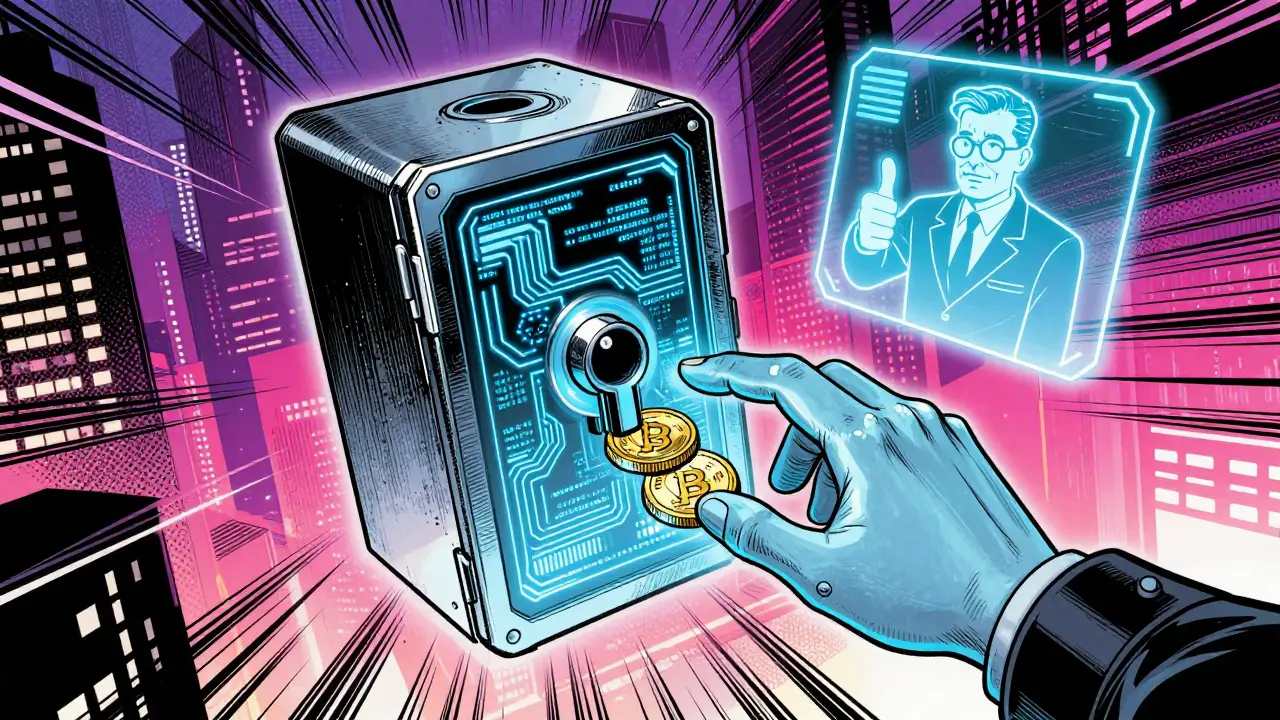
Imagine handing over your rent money to a digital lockbox that only opens when the landlord confirms the apartment is ready. No lawyers, no delays, no trust issues-just code doing exactly what it was told. That is the promise of smart contracts, which are self-executing agreements stored on the Ethereum blockchain.
If you have heard buzzwords like DeFi, NFTs, or DAOs, you already know these tools are everywhere. But how do they actually work under the hood? Are they really secure? And why can’t they just check the weather or pull data from Twitter? Let’s break down the mechanics without the jargon.
The Core Mechanism: If-Then Logic on a Global Computer
At its heart, a smart contract is simple programming logic. It relies on basic conditional statements: "If X happens, then Y executes." Unlike traditional contracts written in legal language, these are written in code and live on the Ethereum Virtual Machine (EVM), a global computer that runs on thousands of nodes worldwide.
When you interact with a smart contract, you aren’t talking to a single server. You are sending a transaction to the entire network. Every node verifies the conditions. If the conditions are met-for example, if you sent enough ETH-the contract automatically executes the result. This could mean transferring funds, updating a record, or minting a token. Because every node agrees on the outcome, the result is immutable. Once it’s done, it’s done.
This setup removes the need for intermediaries. In a traditional escrow service, a bank holds the money and releases it based on human verification. With a smart contract, the code itself acts as the neutral party. This reduces costs and speeds up processes, but it also means there is no customer support line to call if things go wrong.
Writing the Code: Solidity and Vyper
You don’t write smart contracts in Python or Java. The Ethereum ecosystem uses specialized languages designed for this specific environment. The most popular is Solidity, an object-oriented language similar to JavaScript. Another option is Vyper, which prioritizes security and simplicity by removing complex features that often lead to bugs.
A typical smart contract structure includes:
- State Variables: Data that persists on the blockchain, like a balance sheet or a user list.
- Functions: Actions the contract can perform, such as transferring tokens or changing ownership.
- Modifiers: Conditions that must be met before a function runs, like checking if the sender is the owner.
For instance, a function might use require(msg.sender == owner) to ensure only the creator can withdraw funds. If this condition fails, the transaction reverts, and nothing changes. This precision is crucial because you cannot edit the code once it is deployed.
Deployment and Gas Fees: The Cost of Computation
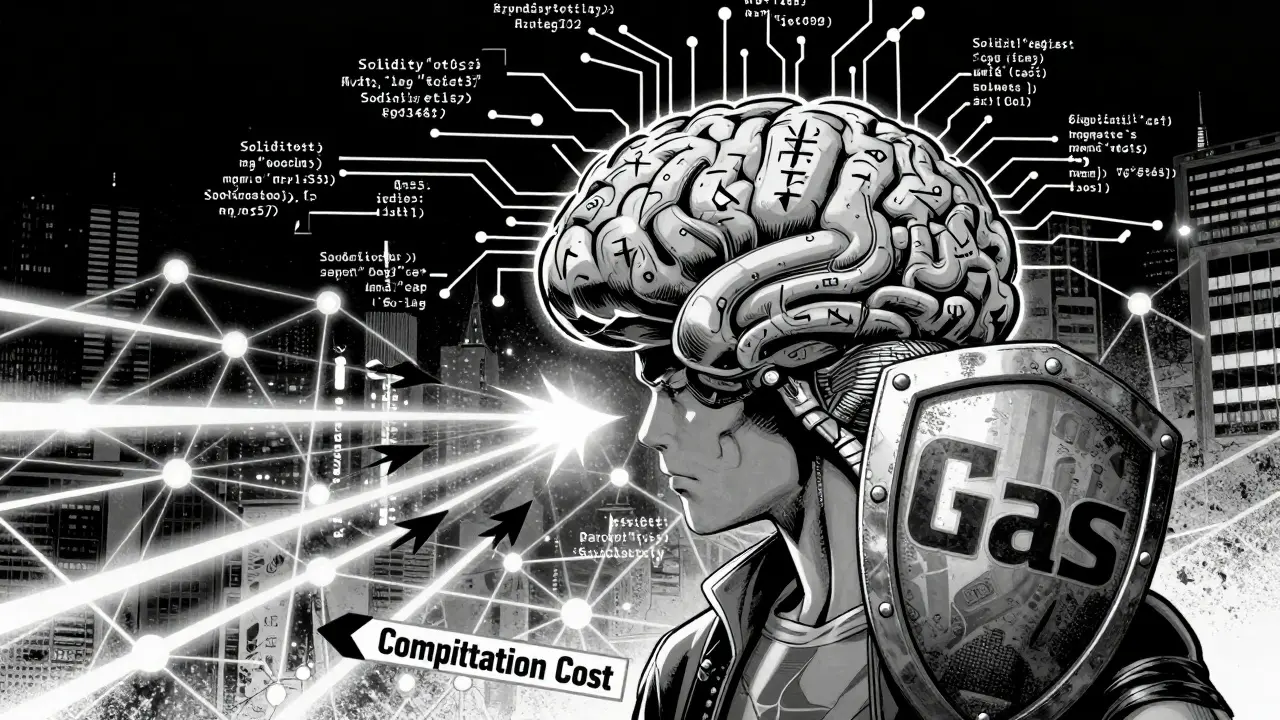
Deploying a smart contract is not free. Every operation on Ethereum requires computational power, which is paid for using Gas, a unit that measures the effort required to execute instructions. When you deploy a contract, you pay gas fees in ETH. Complex contracts cost more because they require more storage and processing.
Developers usually test their contracts on testnets like Sepolia before going live. These networks use fake ETH, allowing developers to catch bugs without losing real money. Tools like Remix IDE, a browser-based editor, Hardhat, and Foundry help compile and deploy code efficiently.
Once deployed, the contract receives a unique address on the blockchain. This address is permanent. You cannot delete the contract or change its code. This immutability is both a strength and a risk. It ensures transparency but means any bug is forever exposed.
The Oracle Problem: Connecting to the Real World
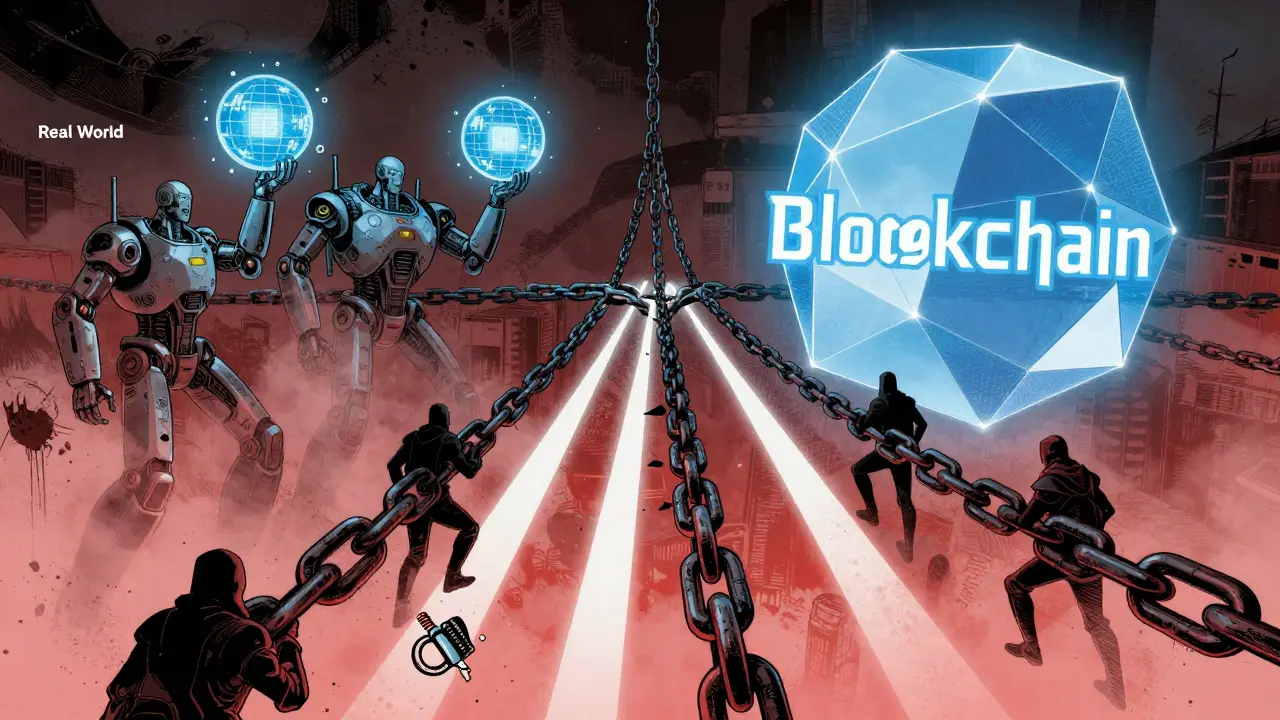
Here is the biggest limitation of smart contracts: they are isolated. They cannot access external data directly. A contract cannot check the price of Bitcoin, look up a sports score, or verify a physical delivery. This design choice protects the network’s consensus integrity. If nodes could fetch different data from the internet, they would disagree on the state of the blockchain.
To solve this, developers use Oracles, services that bring off-chain data onto the blockchain. Chainlink is the leading oracle network. It aggregates data from multiple sources and delivers it to smart contracts securely. Without oracles, DeFi platforms couldn’t offer loans based on crypto prices, and insurance contracts couldn’t pay out after natural disasters.
Token Standards: ERC-20 and ERC-721
Smart contracts enable the creation of digital assets. Two standards dominate the Ethereum ecosystem:
| Standard | Type | Use Case | Fungibility |
|---|---|---|---|
| ERC-20 | Fungible | Cryptocurrencies, governance tokens | Interchangeable (like dollars) |
| ERC-721 | Non-Fungible | NFTs, collectibles, real estate deeds | Unique (like房产证) |
ERC-20 tokens are identical and interchangeable. One USDT is worth another. ERC-721 tokens are unique. Each NFT has distinct metadata, making them suitable for art, gaming items, or identity verification. These standards ensure compatibility across wallets, exchanges, and dApps.
Composability: Money Legos
One of Ethereum’s superpowers is composability. Smart contracts can interact with each other seamlessly. Think of them as LEGO bricks. You can build a lending platform on top of an exchange, which sits on top of a stablecoin protocol. This interconnectedness creates powerful ecosystems.
For example, a user can deposit ETH into a liquidity pool, receive LP tokens, and then use those tokens as collateral for a loan-all in one transaction. This modularity accelerates innovation. Developers don’t need to rebuild basic functions; they can leverage existing contracts. However, it also increases complexity. A bug in one contract can cascade through the entire system, as seen in several high-profile hacks.
Security Risks and Best Practices
Smart contracts are only as secure as their code. Since they handle real value, they are prime targets for hackers. Common vulnerabilities include:
- Reentrancy Attacks: Exploiting the order of operations to drain funds.
- Integer Overflow: Manipulating numbers to bypass limits.
- Access Control Flaws: Allowing unauthorized users to execute admin functions.
To mitigate risks, developers follow best practices:
- Audits: Hire third-party firms to review code before deployment.
- Formal Verification: Use mathematical proofs to ensure correctness.
- Time Locks: Delay critical actions to allow time for intervention.
- Minimal Complexity: Keep contracts simple to reduce attack surfaces.
Remember, once code is on the blockchain, it cannot be patched easily. Upgrades often require deploying a new contract and migrating users, which is costly and risky.
Future Outlook: Scaling and Innovation
Ethereum continues to evolve. Layer-2 solutions like Optimism and Arbitrum process transactions off-chain and settle them on Ethereum, reducing fees and increasing speed. The EIP-4844 upgrade introduced proto-danksharding, further lowering costs for rollups.
As the ecosystem matures, we see more institutional adoption and regulatory clarity. Smart contracts are moving beyond speculation to practical applications in supply chain, healthcare, and voting systems. The technology is still young, but its potential to automate trust is undeniable.
Can I edit a smart contract after deployment?
No, smart contracts are immutable. Once deployed, the code cannot be changed. To update functionality, you must deploy a new contract and migrate users to it. Some developers use proxy patterns to allow upgrades, but the core logic remains fixed.
Why do smart contracts need gas fees?
Gas fees compensate validators for computing resources. Without fees, anyone could spam the network with infinite loops or useless transactions. Gas ensures efficient use of bandwidth and prevents abuse.
What happens if a smart contract has a bug?
If a bug exists, it remains on the blockchain. Hackers may exploit it to steal funds. There is no central authority to reverse transactions. Prevention through rigorous testing and audits is critical.
Are smart contracts legally binding?
Legally, it depends on jurisdiction. While the code enforces terms automatically, courts may view them as evidence rather than enforceable contracts. Always consult legal experts for high-stakes agreements.
How do oracles work?
Oracles fetch data from external APIs and deliver it to smart contracts. They use decentralized networks to aggregate data from multiple sources, ensuring accuracy and preventing manipulation.