
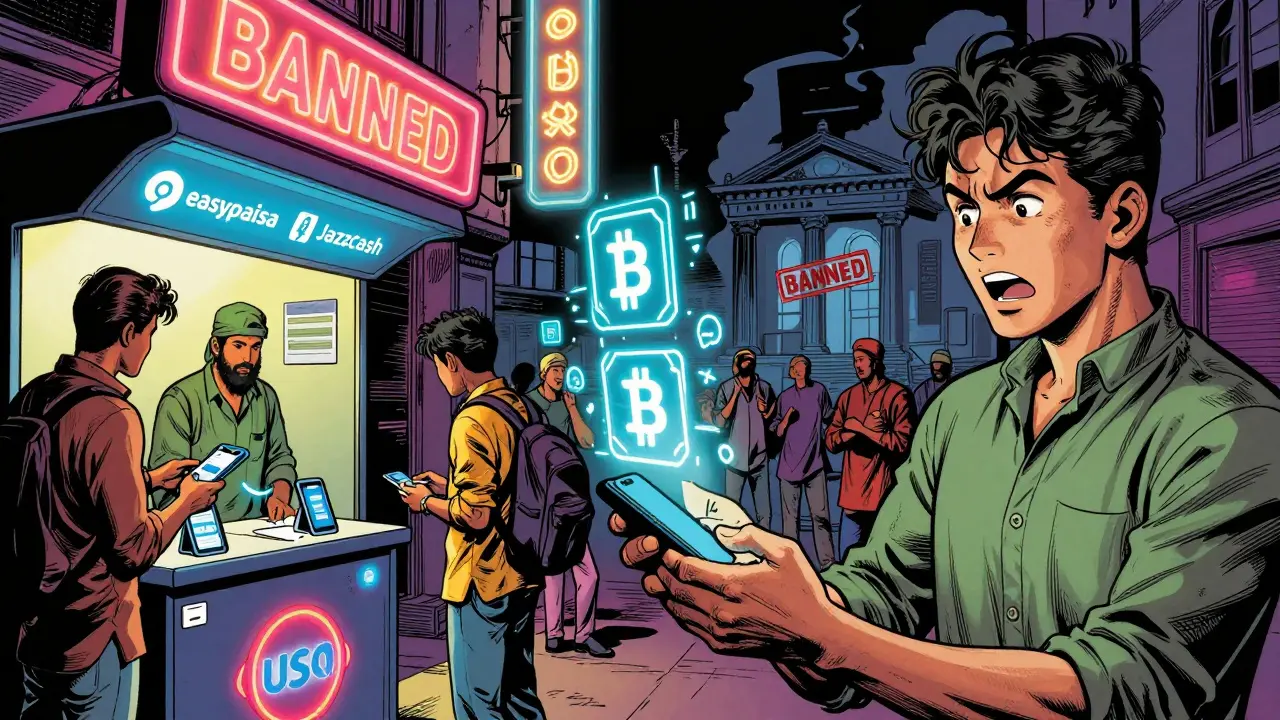
When the State Bank of Pakistan banned banks from handling cryptocurrency transactions in 2018, most experts thought it would kill the market. Instead, it forced Pakistan into becoming one of the most active crypto economies on the planet. By 2025, annual crypto trading volume in the country had jumped past $300 billion-a number that surprised even seasoned analysts. How did a country with strict financial controls and a struggling currency end up trading more crypto than most major economies?
Why Pakistan’s Crypto Market Exploded
It wasn’t because of government support. In fact, there was none. The explosion happened because people had no other choice. The Pakistani rupee lost nearly 60% of its value against the U.S. dollar between 2020 and 2025. Inflation hit 35% in 2024. Savings vanished. People needed something to hold value. Bitcoin, Ethereum, and especially USDT (Tether) became the new savings accounts. At the same time, traditional banking systems failed to serve millions. Sending money abroad through banks meant weeks of paperwork, high fees, and rejections. Freelancers in Lahore or Karachi working for clients in the U.S., Canada, or the UK turned to crypto. A single IT worker might earn $1,200 a month in crypto instead of waiting months for a wire transfer. This wasn’t speculation-it was survival.The Role of Peer-to-Peer Platforms
No banks? No problem. Pakistan’s crypto market runs on P2P (peer-to-peer) trading. Platforms like LocalBitcoins, Paxful, and dozens of local apps became the backbone of the ecosystem. Traders use Easypaisa and JazzCash-mobile wallets used by over 80 million Pakistanis-to buy and sell crypto directly. A person in Faisalabad can pay in rupees via a mobile app, and someone in Karachi sends them Bitcoin in minutes. No bank account needed. These transactions are hard to track. That’s why official numbers vary. CoinLaw says 18.2 million verified users. Other estimates, including unregistered P2P activity, put the number at over 40 million. That’s roughly 20% of Pakistan’s population. And it’s growing. In 2025 alone, 5.4 million new users joined the crypto space.What People Are Trading
Bitcoin dominates. It’s the go-to for long-term holding and cross-border value transfer. But stablecoins, especially USDT, are the real workhorse. With the rupee constantly dropping, people use USDT like cash. You can buy groceries, pay for internet, or send money to family in Dubai-all with USDT. One trader in Rawalpindi told a reporter: “I don’t hold rupees anymore. I hold USDT. It’s the only thing that doesn’t lose value overnight.” Ethereum is popular too, but not for trading. People use it to access DeFi apps, earn interest, or participate in global token sales. Many young Pakistanis now run small businesses on blockchain-based platforms, accepting crypto payments from international customers.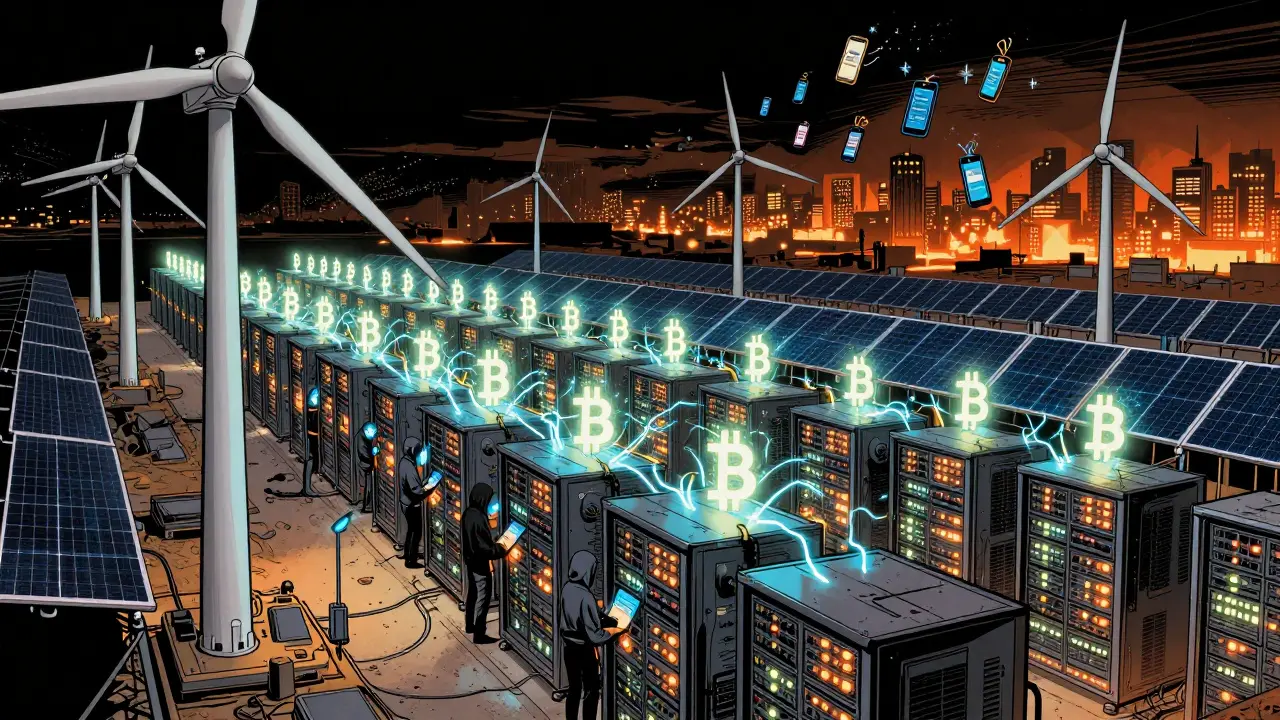
Why 0 Billion Isn’t Just a Number
The $300 billion figure isn’t from a single exchange. It’s the sum of all trading across dozens of international platforms (Binance, OKX, KuCoin) and hundreds of local P2P channels. It includes every Bitcoin bought, every USDT swapped, every Ethereum trade made over five years. It’s not all speculative. A huge chunk is used for remittances, freelance income, and inflation hedging. Compare that to India, which leads global adoption rankings. India’s crypto volume is higher, but Pakistan’s growth rate is faster. The Global Crypto Adoption Index 2025 ranked Pakistan third worldwide-behind only India and Vietnam. And Pakistan did it with less infrastructure, less regulation, and less access to formal finance.Energy, Mining, and the Government’s Quiet Shift
Here’s the twist: the government is quietly getting involved. In 2024, Pakistan allocated 2,000 megawatts of surplus electricity to Bitcoin mining. That’s enough to power a small country. Mining operations are still mostly informal, but they’re growing. Solar-powered rigs in rural Sindh and wind-powered farms in Balochistan are now quietly contributing to global hash rates. The State Bank hasn’t legalized crypto. But it’s no longer shutting down P2P platforms. Instead, it’s studying them. There are rumors of a national blockchain registry for crypto transactions. Some analysts believe Pakistan could become the first major emerging market to create a state-backed digital asset reserve-possibly backed by Bitcoin or a hybrid stablecoin.
The Real Challenge: Regulation Without Crushing Growth
The biggest threat to Pakistan’s crypto ecosystem isn’t the ban-it’s what comes next. If the government imposes heavy licensing fees, forces KYC on every P2P trade, or demands banks handle crypto again, it could kill the very system that made this growth possible. Traders fear a return to the old system: slow, expensive, exclusionary. They want clarity-not control. What they need is a legal framework that recognizes P2P as legitimate, protects users from scams, and allows crypto to flow without banking interference.What This Means for the Rest of the World
Pakistan’s story isn’t unique. It’s a blueprint. Countries with unstable currencies, weak banking systems, and young, tech-savvy populations-like Nigeria, Vietnam, and Argentina-are following the same path. Crypto isn’t just about getting rich. It’s about staying financially alive. The $300 billion figure might be debated. But the reality isn’t: millions of Pakistanis chose crypto because it worked when nothing else did. And that’s a powerful statement about how people adapt when systems fail.What’s Next?
The next 12 months will be critical. Will Pakistan pass a crypto law? Will it create a regulatory sandbox for P2P platforms? Will it partner with international exchanges to bring transparency? If it does, it could become the first country to successfully bridge grassroots crypto adoption with formal financial infrastructure. Until then, traders keep using their phones, their mobile wallets, and their networks. No bank. No permission. Just code, connection, and conviction.Is crypto legal in Pakistan?
Crypto is not officially banned in Pakistan, but it’s not legal either. The State Bank of Pakistan prohibited banks from processing crypto transactions in 2018, but it hasn’t outlawed individuals from buying, selling, or holding digital assets. As of 2025, trading continues through P2P platforms and international exchanges without direct government interference. The government is studying regulation but has not yet passed any formal law.
How do Pakistanis buy crypto without banks?
Most Pakistanis use mobile payment apps like Easypaisa and JazzCash to transfer rupees directly to traders on P2P platforms. A buyer sends money to a seller’s mobile wallet, and the seller sends crypto (usually Bitcoin or USDT) to the buyer’s wallet. This bypasses banks entirely. Over 80 million Pakistanis use these mobile wallets, making them the backbone of the crypto economy.
Why is USDT so popular in Pakistan?
USDT (Tether) is popular because it’s pegged to the U.S. dollar. With the Pakistani rupee losing value rapidly, people use USDT as a stable store of value. It’s used to pay for services, send remittances, and even buy goods online. Unlike Bitcoin, which is volatile, USDT doesn’t fluctuate much-making it ideal for everyday transactions.
Is crypto mining happening in Pakistan?
Yes, but mostly informally. In 2024, the government allocated 2,000 megawatts of surplus electricity to Bitcoin mining operations. Small-scale miners use solar panels, wind turbines, and cheap nighttime power to run rigs. These operations aren’t regulated yet, but they’re growing. Some analysts believe this could lead to formal mining zones in the future.
How many people in Pakistan use crypto?
Official estimates say 18.2 million verified users, but broader studies suggest over 40 million Pakistanis hold or trade crypto. The difference comes from unregistered P2P trades and informal wallets. Since most transactions happen outside exchanges, the real number is likely closer to 40 million-about 20% of the population.
Why is Pakistan ranked third in global crypto adoption?
The Global Crypto Adoption Index 2025 ranks countries based on usage patterns, not just volume. Pakistan scored high because of its massive P2P activity, high mobile wallet penetration, strong remittance demand, and youth-driven tech adoption. Even though its economy is smaller than India’s or the U.S.’s, the proportion of its population using crypto is among the highest in the world.
Can Pakistan’s crypto market survive government regulation?
It depends on how regulation is designed. If rules force crypto into banks or impose heavy KYC on every P2P trade, the market could shrink. But if regulators recognize P2P as a legitimate financial channel and create light-touch rules-like licensing platforms instead of blocking them-the market could thrive. The government’s current direction suggests it’s leaning toward the latter.
What’s the biggest risk for crypto users in Pakistan?
The biggest risk is scams and lack of legal recourse. Since there’s no official oversight, if you get scammed on a P2P trade, there’s no way to recover funds. Also, sudden regulatory crackdowns could freeze wallets or shut down platforms overnight. Users are advised to trade only on well-known platforms, avoid too-good-to-be-true offers, and never store large amounts on exchange wallets.
Jeremy Lim
February 13, 2026 AT 12:31Wow. Just... wow. 😅 I mean, I knew crypto was big, but 300 BILLION? In PAKISTAN? My bank still won’t let me buy Dogecoin without a notarized letter from my therapist. This is wild. I’m just here for the memes, but... okay, maybe I need to rethink my life choices.
kelvin joseph-kanyin
February 13, 2026 AT 20:19THIS IS WHY CRYPTO IS THE FUTURE 🚀🔥 People aren’t waiting for permission to survive. Pakistan didn’t ask for a seat at the table-they built their own table, lit it with solar panels, and started trading Bitcoin like it was grocery money. Respect. 💪
Elizabeth Choe
February 15, 2026 AT 07:42YASSSSSSS. I’m literally crying happy tears right now. 🥹💖 This is the kind of grassroots innovation that makes me believe in humanity again. People in Lahore using JazzCash to buy USDT so they can feed their families? That’s not crypto-that’s pure, unfiltered resilience. Someone please make a documentary about this. I’ll donate my Netflix subscription.
Grace Mugambi
February 16, 2026 AT 16:06It’s fascinating how systems collapse and human ingenuity rises-not as a rebellion, but as a natural response. The rupee didn’t fail because people were reckless. It failed because institutions stopped serving people. Crypto didn’t replace banking-it replaced abandonment. And in that gap, a new social contract formed: trust in code, not in bureaucracy. Maybe that’s the real revolution.
Crystal McCoun
February 17, 2026 AT 20:36Can I just say-this is one of the most beautifully documented cases of financial autonomy I’ve ever seen? The fact that 80 million people are using mobile wallets to bypass broken systems? That’s not a workaround. That’s a revolution in plain sight. And yet, Western media still treats this like a ‘black market’ thing. Please. This is economic justice in action. 🙌
Elijah Young
February 19, 2026 AT 15:18Interesting. But let’s not romanticize this. P2P trading is unregulated. Scams are rampant. People lose money daily. This isn’t innovation-it’s desperation dressed up as progress. The government should step in before someone gets hurt.
Beth Trittschuh
February 21, 2026 AT 05:49Imagine if we treated financial access like a human right instead of a privilege. 💭 Pakistan didn’t invent crypto. They just refused to let their people starve while waiting for permission. That’s not crypto adoption-it’s dignity. And honestly? We should all be asking: what are we waiting for?
Benjamin Andrew
February 21, 2026 AT 18:58Let’s be brutally honest: this isn’t ‘resilience.’ It’s a regulatory vacuum. You can’t build an economy on untraceable P2P trades and mobile wallets. This is a ticking time bomb. Money laundering. Terrorist financing. Tax evasion. And you’re celebrating it like it’s a TED Talk? Wake up. This isn’t freedom-it’s anarchy with a blockchain.
Donna Patters
February 23, 2026 AT 15:11300 billion? Please. That’s just the sum of delusional gamblers and crypto bros with Wi-Fi. Real economies have central banks, legal tender, and regulatory oversight. This is just... sad. And frankly, embarrassing for Pakistan. You don’t solve inflation by trading memes on Telegram.
Michelle Cochran
February 25, 2026 AT 03:03I’m so tired of people acting like crypto is some kind of moral victory. It’s not. It’s a tool. And tools can be used for good or evil. The fact that people are using it to survive doesn’t absolve the fact that they’re also enabling a system that’s unregulated, volatile, and ripe for exploitation. This isn’t empowerment-it’s a trap with a shiny interface.
monique mannino
February 25, 2026 AT 08:51As someone who’s worked in fintech across 5 countries, this is the most beautiful thing I’ve seen in years. 🌍✨ No bank? No problem. Just connect. Pay. Transfer. Survive. The real innovation isn’t Bitcoin-it’s the network of trust between strangers in Faisalabad and Karachi. That’s human connection at its purest. I’m sending this to every policymaker I know.
Desiree Foo
February 25, 2026 AT 17:36Look, I’m all for empowerment-but this is a mess. People are getting scammed left and right. No one’s getting justice. No one’s getting help. And you’re all acting like this is some kind of revolution? It’s a disaster. Someone needs to step in before it’s too late. This isn’t freedom-it’s chaos with a hashtag.
Santosh kumar
February 27, 2026 AT 11:52As an Indian, I’ve seen this play out too. We’re not that far behind. But what Pakistan did? Pure genius. No fancy tech. Just people. Phones. Trust. That’s the future. We need more of this, not less. 🙏
Claire Sannen
March 1, 2026 AT 11:13This is the most hopeful thing I’ve read all year. Not because of the numbers-but because of the quiet, stubborn determination of ordinary people. No one gave them permission. No one handed them a solution. They just... figured it out. That’s the definition of resilience.
Christopher Wardle
March 2, 2026 AT 16:31It’s not about crypto. It’s about agency. When institutions fail, people create alternatives. That’s not new. It’s human. But rarely do we see it happen at this scale, with this clarity. The real story here isn’t $300 billion-it’s 40 million people refusing to be invisible.
blake blackner
March 3, 2026 AT 04:14bro this is literally the most chill thing ever 😎 i mean, imagine being broke, rupee’s trash, and then you just… buy usdt with your phone? no bank? no paperwork? just vibes? i love it. if the gov tries to shut this down, i’m moving to lahore.
Andrea Atzori
March 5, 2026 AT 02:17This is a textbook case of decentralized resilience. What’s extraordinary is not the technology-it’s the social architecture. No central authority. No intermediaries. Just trust networks built on mobile wallets and shared need. This should be studied in every economics program on the planet. Brilliant.
Joe Osowski
March 6, 2026 AT 07:40So let me get this straight-Pakistan’s economy is collapsing, so they turn to Bitcoin? Wow. Just wow. You know what’s worse than a failed currency? A nation that’s too lazy to fix it and just plays crypto instead. This isn’t innovation. It’s surrender. And I’m sick of people glorifying it.