
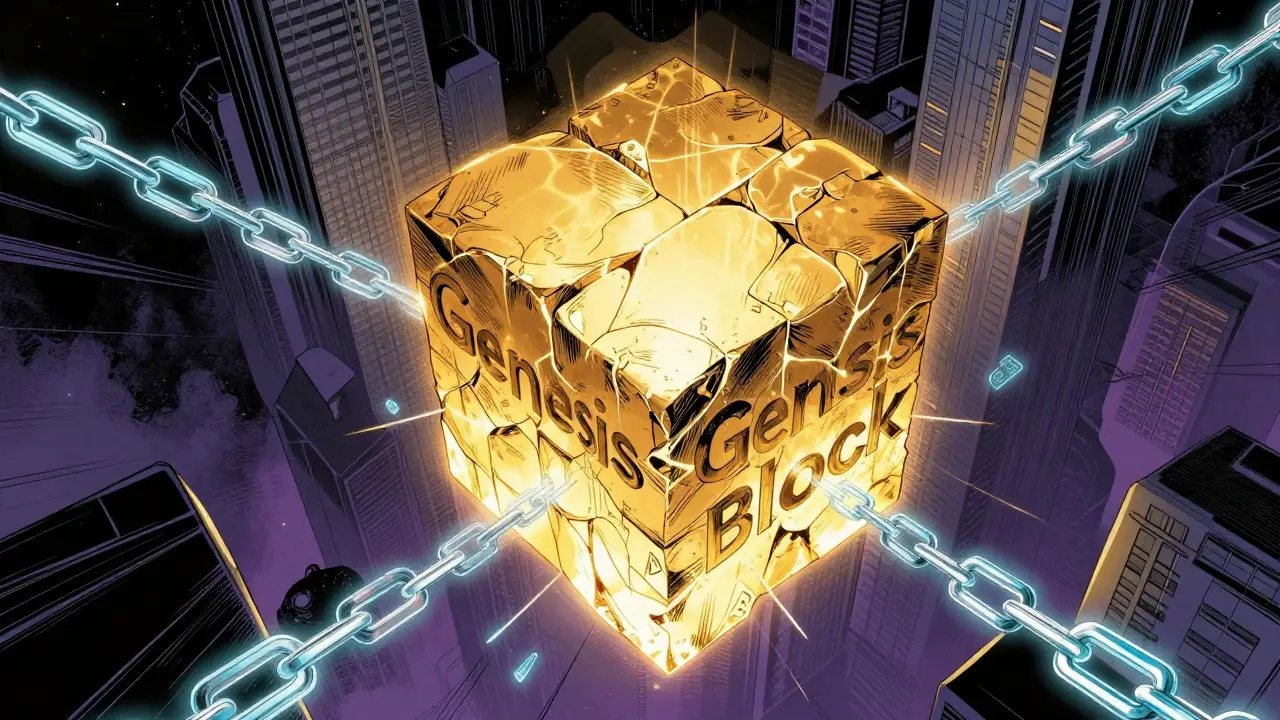
Imagine trying to build a skyscraper but having no ground to stand on. In the world of distributed ledgers, the genesis block is that ground. It is the very first block in a blockchain, the ancestral root that every subsequent block points back to. Without it, a network has no starting point, no initial rules, and no way to agree on who owns what. Since it's the first of its kind, it's the only block in the entire history of a chain that doesn't reference a previous block hash-because there was nothing before it.
The Role of the Foundation Block
A genesis block isn't just a placeholder; it's a configuration file written in stone. When a developer launches a network, they use this block to hardcode the essential DNA of the system. This includes the initial supply of tokens, the starting difficulty for miners, and the fundamental rules of the consensus mechanism. If you think of a blockchain as a giant accounting book, the genesis block is the first page where the opening balances are recorded and the rules of the book are established.
For example, in the case of Bitcoin, the genesis block (Block 0) contained a hidden message from Satoshi Nakamoto: "The Times 03/Jan/2009 Chancellor on brink of spending billions to bail out failing banks." This wasn't just a political statement; it served as a timestamp and a proof that the block was created on or after that specific date, adding a layer of authenticity to the chain's origin.
How Genesis Blocks Are Built in Proof of Work
In a Proof of Work (PoW) system, creating the first block is a mix of manual configuration and raw computing power. The process typically follows these steps:
- Parameter Definition: Developers decide on the block reward (how much crypto a miner gets) and the target difficulty. These are hardcoded into the software.
- Data Embedding: Any initial messages or "pre-mined" coins are added to the block's data field.
- Hashing: The software runs the block header and data through a cryptographic hashing algorithm (like SHA-256).
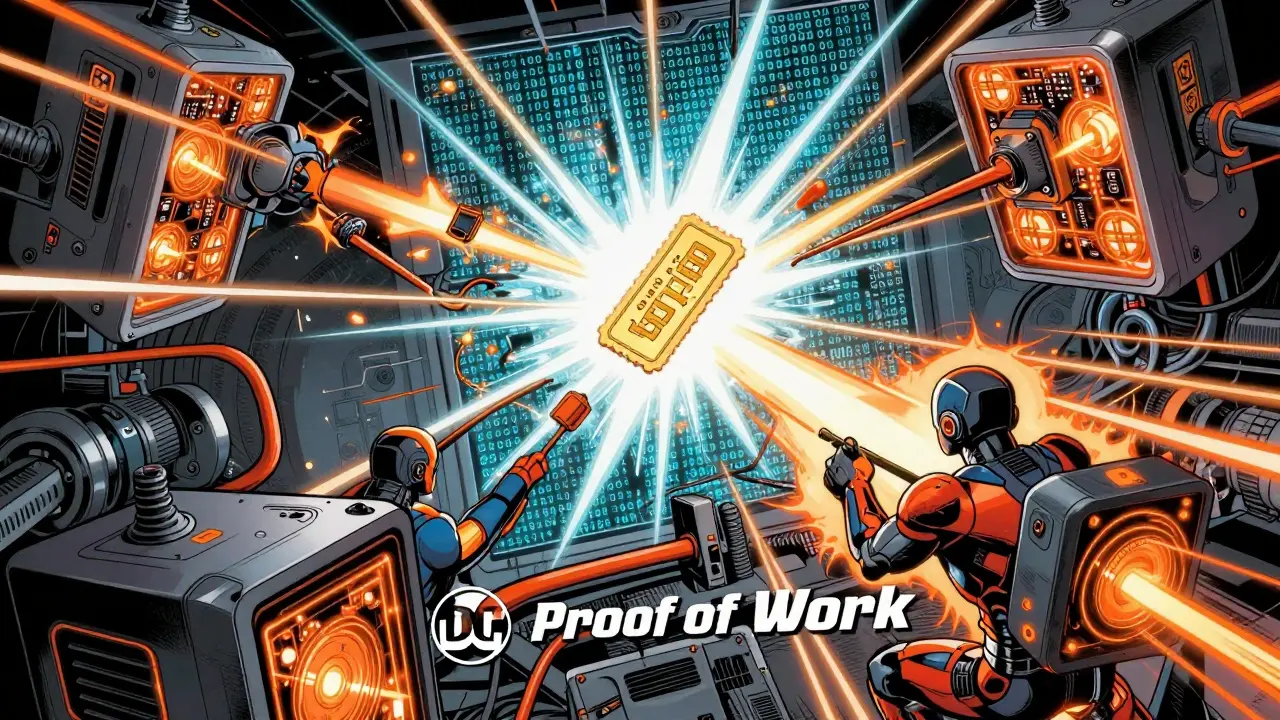
- Solving the Puzzle: Miners compete to find a hash that starts with a specific number of zeros. The first person to find this "golden ticket" successfully mines the genesis block.
- Network Propagation: Once found, the block is broadcast to all other nodes. They verify the hash and, once satisfied, accept it as the official starting point.
Because PoW requires physical hardware to solve the hash, the genesis block acts as the first "proof" that the network is operational and that the rules are being followed from second one.
The Proof of Stake Approach: Different Rules
If you're launching a Proof of Stake (PoS) network, you don't need miners to solve a puzzle. Instead, the genesis block focuses on distribution. Since there's no history of transactions, the network can't "know" who the trusted validators are based on past behavior. Therefore, the genesis block must explicitly list the initial set of validators and how many tokens they hold.
In PoS, the genesis block often includes an allocation table. This defines the starting balances for founders, early investors, or a community treasury. By requiring these participants to have a stake (tokens) right from the start, the block ensures that those securing the network have "skin in the game," aligning their incentives with the long-term health of the blockchain.
| Feature | Proof of Work (PoW) | Proof of Stake (PoS) |
|---|---|---|
| Primary Goal | Establish hash anchor & mining rules | Define initial stake & validator set |
| Creation Method | Computational mining (Solving a puzzle) | Pre-defined allocation in genesis file |
| Key Data | Difficulty target, Block reward | Account balances, Validator public keys |
| Example | Bitcoin (Hardcoded Block 0) | Ethereum 2.0 (Beacon Chain state) |
The Technical Toolkit: Genesis Files and JSON
Developers don't just "wish" a block into existence; they use specific configuration files. Most modern blockchain frameworks use JSON (JavaScript Object Notation) to define the state of the world at Block 0. These files act as the blueprint for the network.
A typical genesis configuration involves several key components:
- Network ID: A unique number that prevents your blockchain from accidentally connecting to a test network or a different coin using the same software.
- Chain ID: Used to prevent replay attacks, ensuring a transaction on one chain can't be blindly executed on another.
- Gas Limits: In smart contract platforms like Ethereum, the genesis block defines the maximum amount of computational effort (gas) allowed per block.
- Initial State: A map of addresses to balances. For instance,
"0x123..." : "1000 ETH".
Frameworks like Klayr take this further by using a variety of specialized files. They might use a config.json for general settings, a dev-validators.json to manage the keys of the people running the first nodes, and a genesis_block.blob, which is the actual binary data of the first block. This modular approach allows developers to tweak the network parameters and regenerate the genesis block quickly during the testing phase without rewriting the entire core logic.
Common Pitfalls in Network Initialization
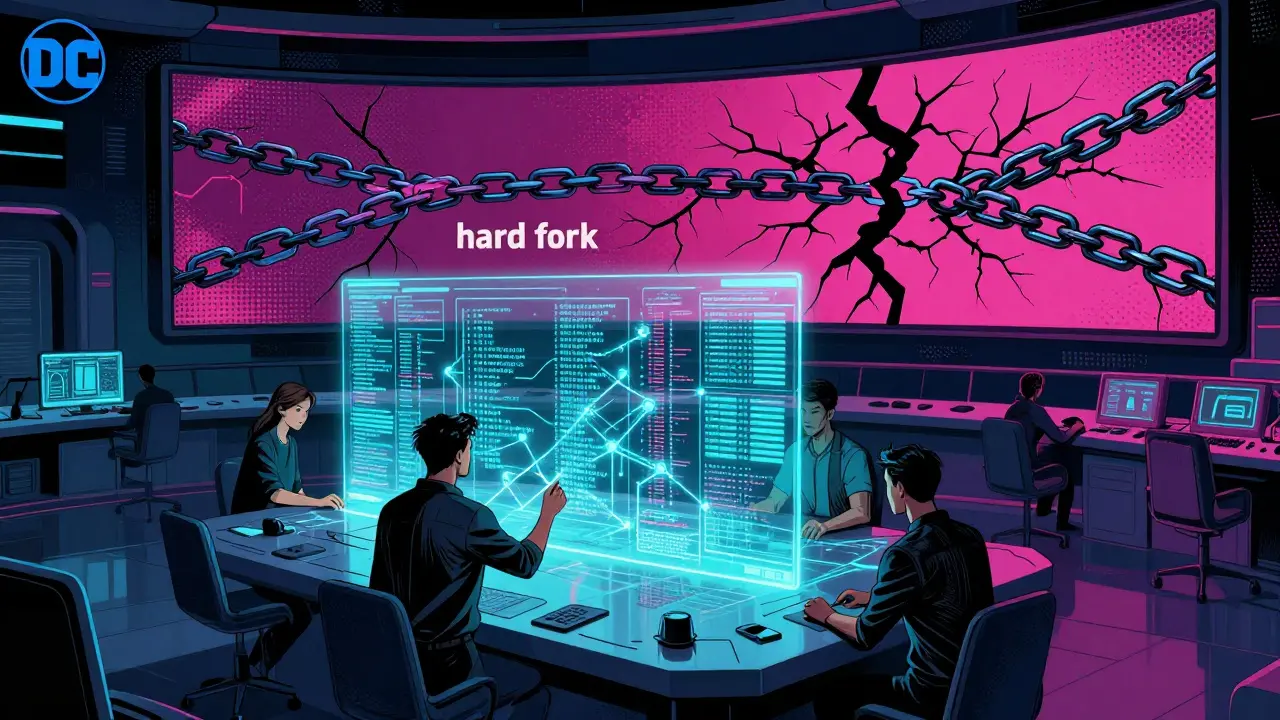
Getting the genesis block wrong can be a catastrophic mistake. Because the blockchain is immutable, once the genesis block is accepted by the community and nodes start building on top of it, changing the starting parameters is nearly impossible without a "hard fork"-which essentially means splitting the network into two different versions.
One common error is improper token distribution. If a genesis block allocates too many tokens to a small group of insiders, the network may suffer from centralization, making it vulnerable to manipulation. Another risk is setting the initial difficulty too high, which could prevent anyone from mining the second block, effectively killing the network in its cradle. This is why developers spend months in "testnet" environments, simulating the genesis process thousands of times before the actual "Mainnet" launch.
Can a genesis block be changed after the network launches?
No, the genesis block is immutable by design. If the community decides that the initial parameters were wrong, they must perform a hard fork. This involves creating a new version of the software with a different genesis block or a set of modified rules, effectively starting a new parallel chain.
Does every single blockchain have a genesis block?
Yes. Every distributed ledger needs a point of origin. Even if the block contains no transactions and only basic system settings, it serves as the necessary anchor (Block 0) that all other blocks refer to via their parent hash.
What is the difference between a genesis block and a pre-mine?
The genesis block is the technical container. A "pre-mine" is the act of allocating coins to specific addresses within that genesis block (or the blocks immediately following it) before the general public can start mining. Not all genesis blocks involve pre-mining; some use "fair launch" models where the first block contains zero tokens.
How does Ethereum's genesis block differ from Bitcoin's?
Bitcoin's genesis block was a simple PoW event with a specific message embedded. Ethereum's launch was more complex, involving a public crowdsale (ICO). The genesis block for Ethereum was generated based on the list of contributors who sent Bitcoin to the project's wallet, assigning them Ether in return.
What happens if a node has a different genesis block than the rest of the network?
The node will be unable to sync with the network. Since blockchain validation relies on a chain of hashes leading back to the genesis block, a mismatch in the starting block means the node's calculated hashes won't match the rest of the peers, and it will be rejected by the consensus mechanism.
Next Steps for Developers
If you are looking to build your own blockchain, start by experimenting with a private testnet. Use a framework like Geth (Go-Ethereum) or a specialized SDK to practice drafting your genesis.json file. Focus on your tokenomics first-decide if you want a fair launch or a pre-allocated distribution-as this is the hardest thing to change later. Once your parameters are set, run a local cluster of nodes to ensure that they can all agree on the genesis block and successfully mine the second block (Block 1) without errors.
Siddharth Bhandari
April 5, 2026 AT 20:37For those trying to implement this, remember that the genesis state is essentially the 'snapshot' of the world at block zero.
If you are using a framework like Geth, the
allocsection in the JSON is where you define the initial balance for addresses. It is crucial to double-check your hexadecimal conversions because a single typo here will lead to a chain mismatch across your nodes.Matthew Wright
April 7, 2026 AT 13:44The Bitcoin genesis message is such a legendary move... truly the ultimate timestamp!!
Arwyn Keast
April 7, 2026 AT 17:58Absolute rubbish. This reads like a primer for toddlers. If you're actually talking about network initialization, you're completely ignoring the Byzantine Fault Tolerance implications of the initial validator set in PoS. It's all just superficial fluff without discussing the actual cryptographic primitives involved in the state root hash.
Emma Pease-Byron
April 9, 2026 AT 05:12How quaint that some people actually find this "informative." The analogy of a skyscraper is painfully basic, yet somehow still manages to be imprecise. One would think the concept of a root hash is intuitive enough not to require a bedtime story.
Erica Mahmood
April 10, 2026 AT 23:42just a heads up for the devs here... make sure you check your chain id carefully in the json config. if you accidentally reuse an id from a popular testnet you'll get some weird behavior with your rpc calls and it's a pain to debug when the nodes wont sync because of a simple integer mismatch
Suzanne Robitaille
April 11, 2026 AT 23:26There is something so poetic about the idea of a single, unchangeable point of origin! It's like the cosmic microwave background radiation for a digital universe. The thought that every single transaction today relies on that one original heartbeat from years ago is just... breathtaking.
Sharhonda Walker
April 12, 2026 AT 03:58I tried setting up a private chain last week and totally messed up the genesis file... it took me hours to realize i had a comma in the wrong place in the json!! be careful with the syntax guys
Manisha Sharma
April 12, 2026 AT 20:08Typical western obsession with technicalities. In India we understand that the real power is in the decentralization of spirit, not just some json file. This whole apropach is too narrow, truly lacks the philosophic depth of real wealth redistribution.
Adriana Gurau
April 13, 2026 AT 14:30Imagine thinking this is a deep dive 🙄 the lack of detail on the Merkle root is just embarrassing. 💅
Emily 2231
April 14, 2026 AT 18:12The insistence that these blocks are immutable is exactly how they lock the backdoors into the system. Once the central authority defines the genesis, the game is rigged from the start. They tell you it is a blueprint but it is actually a cage constructed by the elites to ensure the currency can never truly be free from their surveillance.
Robert Coskrey
April 15, 2026 AT 01:27I find the comparison between PoW and PoS genesis blocks to be quite illuminating... it provides a clear distinction for those of us entering the field!!
Trish Swanson
April 15, 2026 AT 10:35Hard forks are brutal!! Is there any way to prevent them during the initial launch phase?
Diana Martín Prieto
April 16, 2026 AT 05:55The best way to avoid a hard fork right after launch is to spend as much time as possible on your testnet. I'd suggest running a multi-node setup with simulated latency to see if the genesis block propagates correctly before you hit the big red button on the mainnet.
akash temgire
April 17, 2026 AT 08:18Explain the specific mathematical difference in hash verification for Block 0 versus Block 1.
Bruce Micciulla Agency
April 17, 2026 AT 18:59this is basically just a tutorial for people who dont know how to read a whitepaper and it barely scratches the surface of how actually shitty most pre-mines are in reality because the founders just dump on retail the second the chain goes live and the airdrop logic is usually flawed and the gas limits are always set too low at the start anyway
gladys christine
April 17, 2026 AT 20:18Omg this is such a great start for anyone wanting to build their own dream project!! Keep pushing forward everyone you got this!
June Coleman
April 19, 2026 AT 02:49Oh sure, just "run it on a testnet" for a few months. Because that always solves every single catastrophic failure in human nature and greed. How helpful!
Lauren Gilbert
April 19, 2026 AT 08:20It is interesting to ponder the genesis block as a metaphor for the human condition, where we are all born with a certain set of 'hardcoded' parameters that we spend the rest of our lives trying to navigate or overwrite through our own experiences. Just as the blockchain cannot escape its original state without a violent rupture like a hard fork, perhaps we too are tethered to our origins in ways that are both comforting and restrictive, creating a deterministic path that we mistake for free will while simply iterating on the initial code provided by our ancestors.
Evan Borisoff
April 20, 2026 AT 17:50The sheer audacity of ignoring the American influence on the early development of these cryptographic protocols is staggering and quite frankly an insult to the engineers who pioneered the SHA-256 standard which is the very bedrock upon which the Bitcoin genesis block was forged into existence using the most advanced computing infrastructure known to man at the time of its inception in 2009.