

Crypto Transaction Checker
Transaction Details
China doesn’t just ban cryptocurrency-it makes sure you can’t even pay for it. Since 2021, the government has outlawed all crypto trading, mining, and payments within its borders. But the real enforcement doesn’t come from court orders or police raids. It comes from your phone. Specifically, from Alipay and WeChat Pay, the two apps nearly every Chinese citizen uses to buy coffee, pay rent, or send money to family. These platforms aren’t just payment tools-they’re the frontline of a nationwide digital blockade against crypto.
How the Ban Works in Practice
If you try to send money to a crypto exchange through Alipay or WeChat Pay, the transaction dies before it leaves your screen. The system doesn’t ask you why. It doesn’t warn you. It just blocks it. No explanation. No appeal. The payment fails with a simple message: “Transaction declined due to regulatory restrictions.” This isn’t a glitch. It’s by design. Both platforms are legally required to scan every transaction in real time, looking for signals tied to crypto. That includes keywords like “BTC,” “ETH,” “exchange,” or wallet addresses. Even sending money to a merchant who accepts crypto-even if they don’t say it out loud-can trigger a block. The system flags patterns: sudden large transfers to unfamiliar accounts, repeated payments to the same foreign address, or transfers timed right after a crypto price spike. Behind the scenes, the People’s Bank of China (PBOC) and the National Administration of Financial Regulation (NAFR) feed these platforms a constantly updated list of blocked entities: crypto exchanges, OTC desks, mining farms, and even websites that sell crypto-related hardware. Alipay and WeChat Pay don’t just block known addresses-they use machine learning to spot new ones. If five users send money to the same new wallet within an hour, it gets flagged. If a user suddenly starts sending small payments to ten different foreign accounts, the system raises a red flag.Why These Apps Are So Powerful
No other country has a payment system this dominant. In China, Alipay and WeChat Pay handle over 90% of all mobile payments. Banks, small businesses, street vendors, even temple donations-they all route money through these two apps. That means the government doesn’t need to monitor every bank account. It just needs to control these two gateways. State-owned banks work hand-in-hand with them. If your bank account tries to send funds to a crypto service, the bank blocks it. If Alipay blocks it, your WeChat Pay account might get flagged too. It’s a closed loop: no crypto can enter the system without touching one of these platforms. And if you try to bypass it? You risk being labeled a “high-risk user.” That means your account gets reviewed, your spending limits drop, or worse-you get asked to prove your income source. For most people, that’s not worth the hassle.The WeChat Loophole
But there’s a crack in the wall. WeChat isn’t just a payment app. It’s a messaging app. And messages are encrypted. That’s where things get messy. Criminals and crypto users have figured out how to use WeChat’s chat feature to coordinate trades without touching the payment system directly. Someone in Shanghai might message a contact in Bangkok: “Send 0.5 BTC to this wallet: 1A1zP1eP5QGefi2DMPTfTL5SLmv7DivfNa.” Then they use WeChat Pay to send $2,000 to a friend’s account in Thailand-no mention of crypto. That friend cashes out the money and sends the BTC back via an offshore exchange. The payment flow looks like a normal overseas transfer. The crypto transfer happens outside the system. Law enforcement knows this is happening. But they can’t see the messages. WeChat doesn’t share encrypted chat logs with Chinese authorities, let alone foreign regulators. Even if they could, tracing the money is nearly impossible. The crypto moves on-chain, the cash moves through WeChat Pay, and the two never touch inside China’s system. It’s a hybrid loophole that’s hard to plug without breaking the privacy of millions of legitimate users.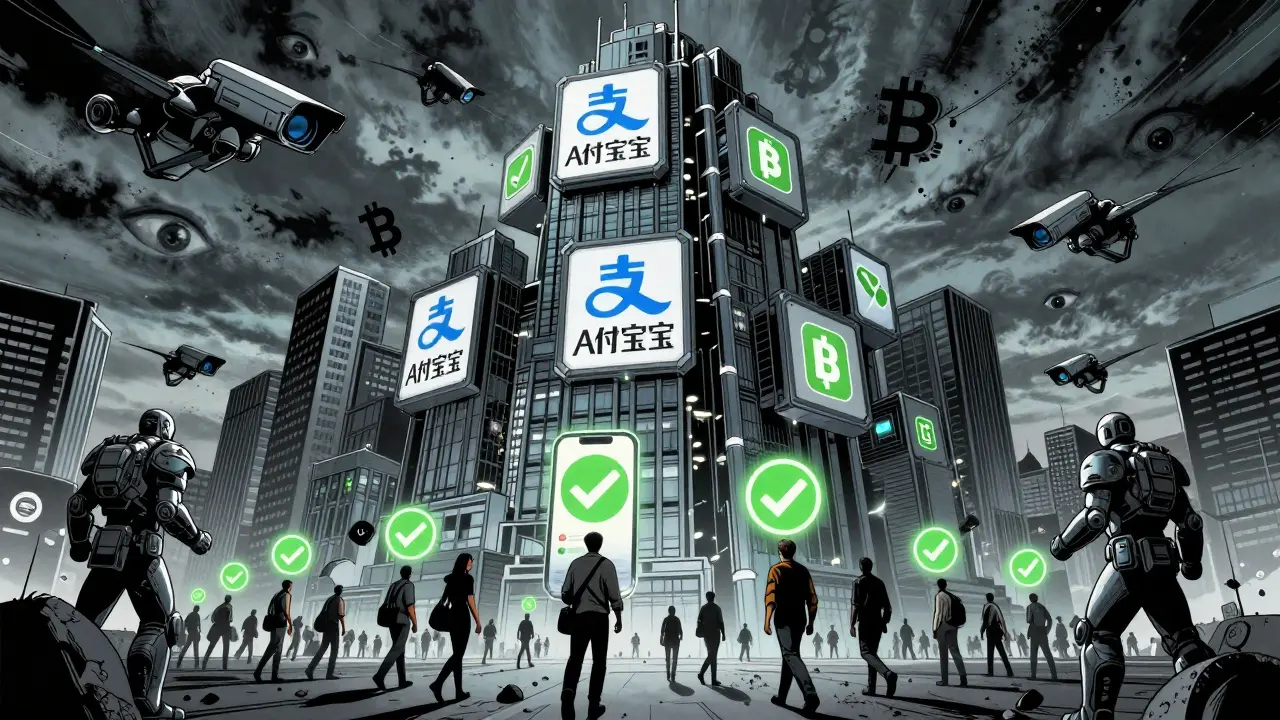
What About Stablecoins and Cross-Border?
Stablecoins like USDT or USDC? Banned. No exceptions. Even if you try to use them to pay for an online service, Alipay will block it. The only exception is China’s own digital currency, the e-CNY. It’s not blockchain-based. It’s not decentralized. It’s a government-controlled digital yuan, distributed through Alipay and WeChat Pay. You can use it to pay taxes, buy groceries, or get your salary. But you can’t trade it. You can’t send it abroad. You can’t convert it to Bitcoin. It’s designed to replace cash, not compete with crypto. Cross-border transactions are another gray zone. The mBridge project-led by China, Hong Kong, Thailand, and the UAE-lets central banks settle payments using digital currencies. But this isn’t for regular people. It’s for banks and big corporations. You can’t use it to buy crypto on Binance. It’s strictly for official, state-approved trade flows.Who’s Getting Caught?
Most people just stop trying. But some don’t. In 2024, Shanghai authorities arrested 127 people for using WeChat to coordinate crypto OTC trades. The charges? Illegal fund transfer and operating an unlicensed financial service. One man was sentenced to three years for using his WeChat group to match buyers and sellers of Bitcoin, collecting a 2% fee. He didn’t hold any crypto himself. He just connected people. That’s enough to land you in jail. Even casual users get caught. A student in Chengdu sent $500 to a friend’s overseas wallet to pay for a crypto course. The transaction was flagged. His account was frozen for 45 days. He had to submit bank statements, proof of income, and a signed statement saying he wasn’t involved in crypto. He never tried again.
Ike McMahon
December 15, 2025 AT 12:20Kathleen Sudborough
December 17, 2025 AT 05:17It's like the system doesn't even need to convince you. It just makes the option disappear.
Vidhi Kotak
December 17, 2025 AT 13:37Kurt Chambers
December 19, 2025 AT 02:44Kelly Burn
December 20, 2025 AT 08:11John Sebastian
December 21, 2025 AT 19:51Jessica Eacker
December 21, 2025 AT 21:14Andy Walton
December 23, 2025 AT 13:41also i think wechat is spying on me now i swear i searched 'how to mine dogecoin' once and now it keeps suggesting me crypto ads
Candace Murangi
December 25, 2025 AT 12:43Jessica Petry
December 27, 2025 AT 08:46Anselmo Buffet
December 28, 2025 AT 22:25Patricia Whitaker
December 30, 2025 AT 08:47Joey Cacace
December 31, 2025 AT 00:03Taylor Fallon
January 1, 2026 AT 11:16also i just sent my mom 200 yuan for her birthday and it went through instantly. no fees. no waiting. that's magic.
Sarah Luttrell
January 2, 2026 AT 15:03PRECIOUS EGWABOR
January 4, 2026 AT 13:17Kim Throne
January 6, 2026 AT 10:30Caroline Fletcher
January 8, 2026 AT 00:35Heath OBrien
January 10, 2026 AT 00:09Taylor Farano
January 11, 2026 AT 10:18Toni Marucco
January 12, 2026 AT 08:50This isn't control. It's predation of intent. And it's working. Brilliantly. Terrifyingly. But brilliantly.