

As of July 2025, Algerians cannot legally access cryptocurrency exchanges - not because of technical barriers, slow internet, or lack of apps, but because the government made it a crime. Law No. 25-10, published on July 24, 2025, bans every single activity related to digital assets: buying, selling, holding, mining, trading, promoting, or even discussing crypto as an investment. This isn’t a gray area. It’s a full criminal prohibition, and it’s being enforced with real jail time and heavy fines.
What the Law Actually Says
Law No. 25-10 doesn’t just restrict crypto - it erases it from Algeria’s financial landscape. The law defines cryptocurrencies as "virtual instruments used as means of exchange via a computer system, without support from a central bank." That’s it. No exceptions. No loopholes. Not even for Bitcoin, Ethereum, or stablecoins like USDT. The government made it clear: if it’s digital, decentralized, and not controlled by the central bank, it’s illegal.
The penalties are harsh and specific. Individuals caught using or holding cryptocurrency face between two months and one year in prison. Fines range from 200,000 to 1,000,000 Algerian dinars - roughly $1,540 to $7,700 USD. Repeat offenders can see those fines doubled. If authorities link your crypto activity to money laundering or organized crime, the punishment gets even worse. There’s no warning. No first-time leniency. One violation, and you’re in legal trouble.
How It Was Before the Ban
Just a year before the ban, Algeria was one of the fastest-growing crypto markets in North Africa. A Chainalysis report from mid-2024 ranked the country among the top five in the MENA region for peer-to-peer (P2P) crypto trading. Thousands of Algerians were using platforms like Paxful and LocalBitcoins to buy Bitcoin with cash or bank transfers. Young entrepreneurs were building DeFi projects. Developers were learning Solidity. Crypto meetups were common in Algiers and Oran.
The government had warned about crypto risks since 2018, but enforcement was weak. People knew it was technically against regulations, but no one got arrested. That changed in 2025. The shift wasn’t gradual - it was sudden. Within days of the law’s publication, social media groups shut down. Telegram channels vanished. Wallet apps stopped working. The entire ecosystem collapsed overnight.
How the Government Enforces the Ban
Algeria didn’t just pass a law - it built a surveillance system to catch violators. Law enforcement now uses digital monitoring tools to track transactions linked to cryptocurrency wallets. ISPs are required to log and report suspicious traffic patterns. Banks monitor transfers to known P2P platforms. Even using a VPN to access Binance or Kraken can trigger an alert.
Authorities have also cracked down on anyone helping others access crypto. Running a local exchange service? Illegal. Helping someone set up a MetaMask wallet? Illegal. Posting a YouTube video explaining how to buy Bitcoin? Also illegal. The law criminalizes not just users, but anyone who enables or promotes usage - including educators and content creators.
What People Are Doing Now
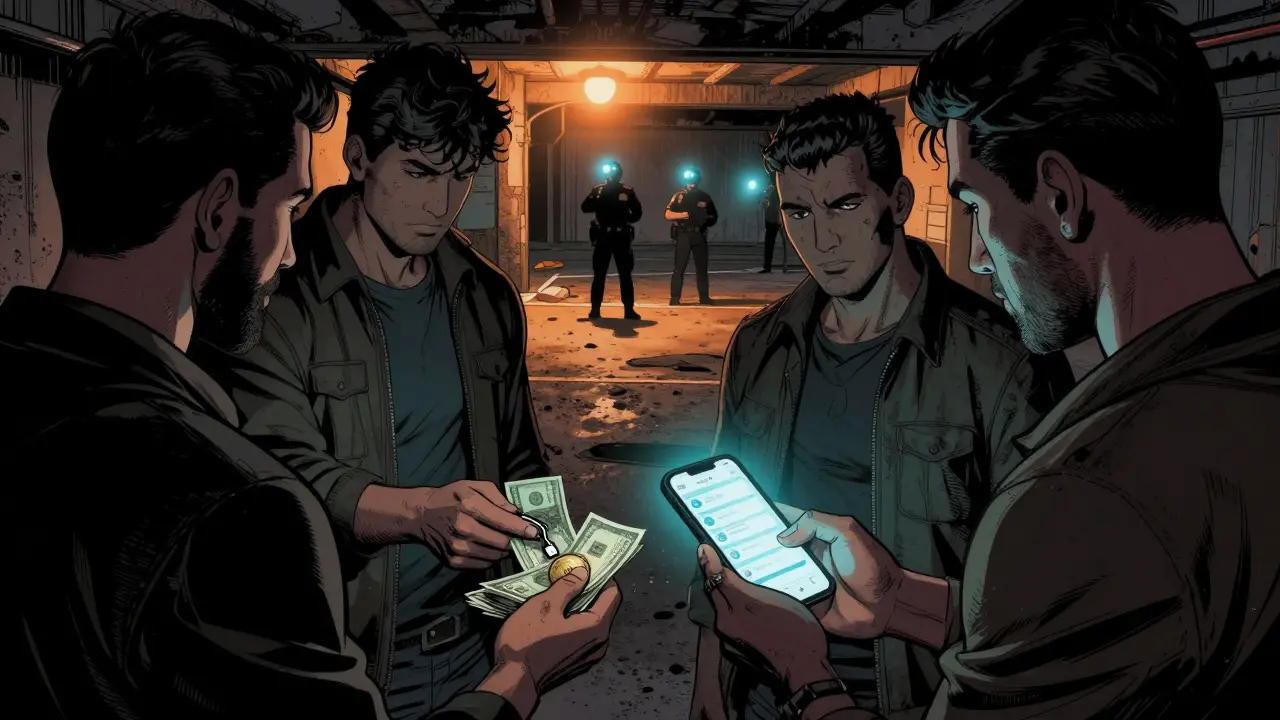
Despite the risks, some Algerians still find ways to access crypto. The most common methods are underground and dangerous:
- Using VPNs to connect to foreign exchanges like Binance or Coinbase. But Algerian authorities can now detect encrypted traffic patterns linked to known crypto domains.
- Peer-to-peer trading via encrypted apps like Signal or Telegram, where buyers and sellers meet in person to exchange cash for crypto. These deals happen in parking lots, cafes, or private homes - but they’re high-risk. Arrests have been made after cash transfers were traced.
- Decentralized exchanges (DEXs) like Uniswap or PancakeSwap, accessed through mobile wallets. Since DEXs don’t require KYC, they’re harder to track - but the government monitors blockchain analytics firms that can trace wallet activity back to Algerian IP addresses.
None of these methods are safe. There’s no guarantee of anonymity. The government has partnered with international blockchain analysis firms to identify users. In late 2025, at least 17 people were arrested for using DEXs - their wallet addresses traced back to Algerian mobile networks.
Why Algeria Took This Path
The government says it’s about protecting financial stability. Officials claim crypto threatens the Algerian dinar, fuels inflation, and enables money laundering. They point to FATF guidelines as justification. But critics argue this is about control, not protection.
Unlike countries like Nigeria, Kenya, or even Egypt - where crypto is regulated but allowed - Algeria chose total prohibition. This puts it in the same category as China and a handful of other nations that see decentralized finance as a threat to state power. The result? A brain drain. Blockchain developers, crypto analysts, and fintech startups have left the country. Tech hubs that once buzzed with innovation are now quiet.
The Bigger Picture
Algeria’s ban isn’t just about crypto - it’s about isolation. While the rest of the world moves toward clear rules for digital assets - with licensing, taxation, and consumer protection - Algeria is locking itself out of the future. Young people can’t learn blockchain skills. Entrepreneurs can’t build Web3 businesses. Even remittances using crypto are blocked, cutting off a potential lifeline for families abroad.
There’s no indication the law will change. The government has doubled down, calling crypto a "financial weapon" and warning that any future amendments would require full parliamentary approval - which is unlikely in the current political climate.
What This Means for Algerians
If you’re an Algerian citizen, the truth is simple: you cannot legally access cryptocurrency exchanges. Any attempt to do so carries serious legal consequences. There are no licensed platforms. No legal wallets. No government-approved apps.
Some may risk it. Others may wait. But until the law changes, the only "access" available is through underground channels - and every click, every transfer, every message carries the weight of a criminal offense.
Joshua T Berglan
March 21, 2026 AT 01:58Kevin Da silva
March 22, 2026 AT 18:24Kayla Thompson
March 23, 2026 AT 05:13Brijendra Kumar
March 24, 2026 AT 08:06Ananya Sharma
March 26, 2026 AT 02:37Florence Pardo
March 27, 2026 AT 03:23Alicia Speas
March 27, 2026 AT 20:20Tammy Stevens
March 29, 2026 AT 00:01Justin Credible
March 29, 2026 AT 21:12Dheeraj Singh
March 30, 2026 AT 16:56Mike Yobra
April 1, 2026 AT 14:52Mansoor ahamed
April 2, 2026 AT 22:46Nicolette Lutzi
April 4, 2026 AT 14:55Domenic Dawson
April 6, 2026 AT 03:00Sam Harajly
April 6, 2026 AT 09:48Alice Clancy
April 7, 2026 AT 10:08Shana Brown
April 8, 2026 AT 11:37Marie Mapilar
April 9, 2026 AT 07:29