
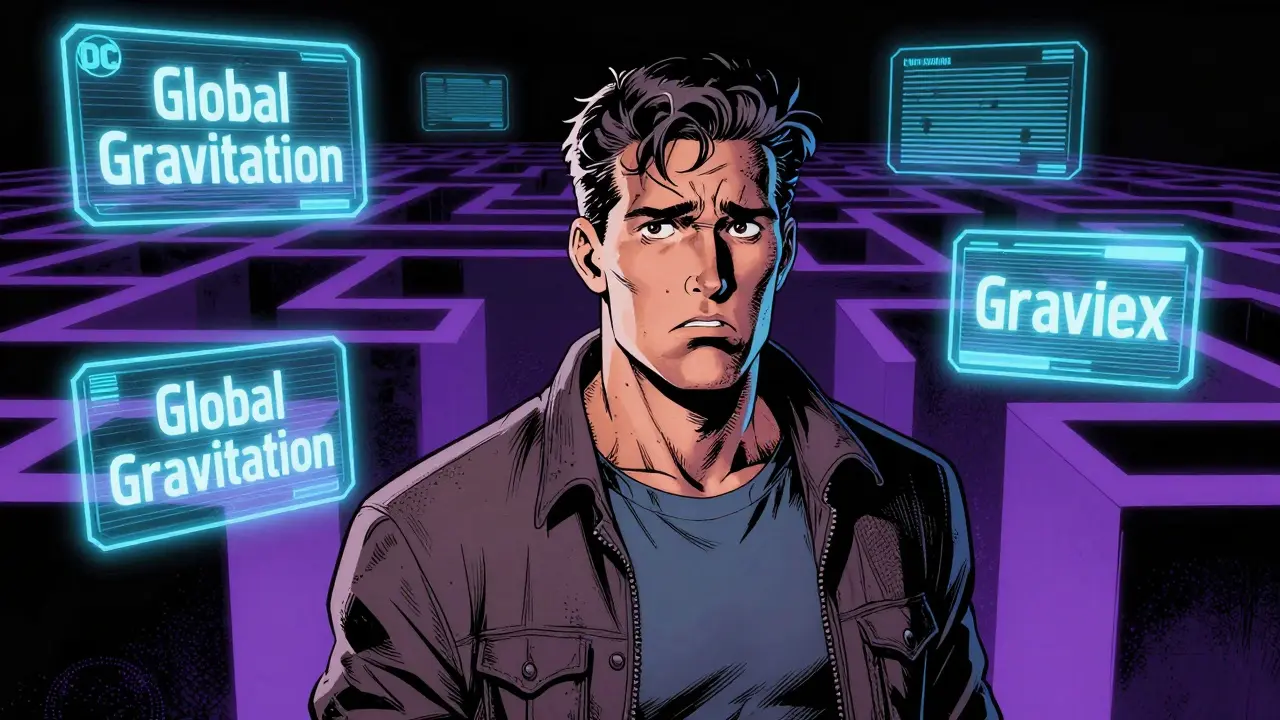
Searching for a new place to trade Bitcoin often leads to a maze of platforms with similar names. If you've come across Global Gravitation, you might be wondering if it's a hidden gem or a red flag. The tricky part is that there isn't a widely recognized, regulated entity by that exact name in the major financial registries. In the crypto world, when a platform lacks a clear trail of licensing and a verifiable history, your caution should be at an all-time high.
Often, users confuse new or obscure sites with established players. For instance, many people mistake this for Graviex, a Malta-based exchange launched in 2018. While Graviex is a real platform, it has its own set of baggage, including low scores from industry analysts and reports of withdrawal headaches. If the site you're looking at claims to be "Global Gravitation" but looks like a clone of another service, you're likely dealing with a phishing site or an unregulated broker.
The Red Flags: How to Spot a Fake Exchange
When a platform like Global Gravitation appears without a clear corporate structure, you need to look at the fundamentals. A legitimate exchange doesn't just provide a trading interface; it provides transparency. If you can't find a physical address, a registered license in a jurisdiction like Malta, Estonia, or the Seychelles, or a clear Terms of Service that isn't copy-pasted from another site, your money is at risk.
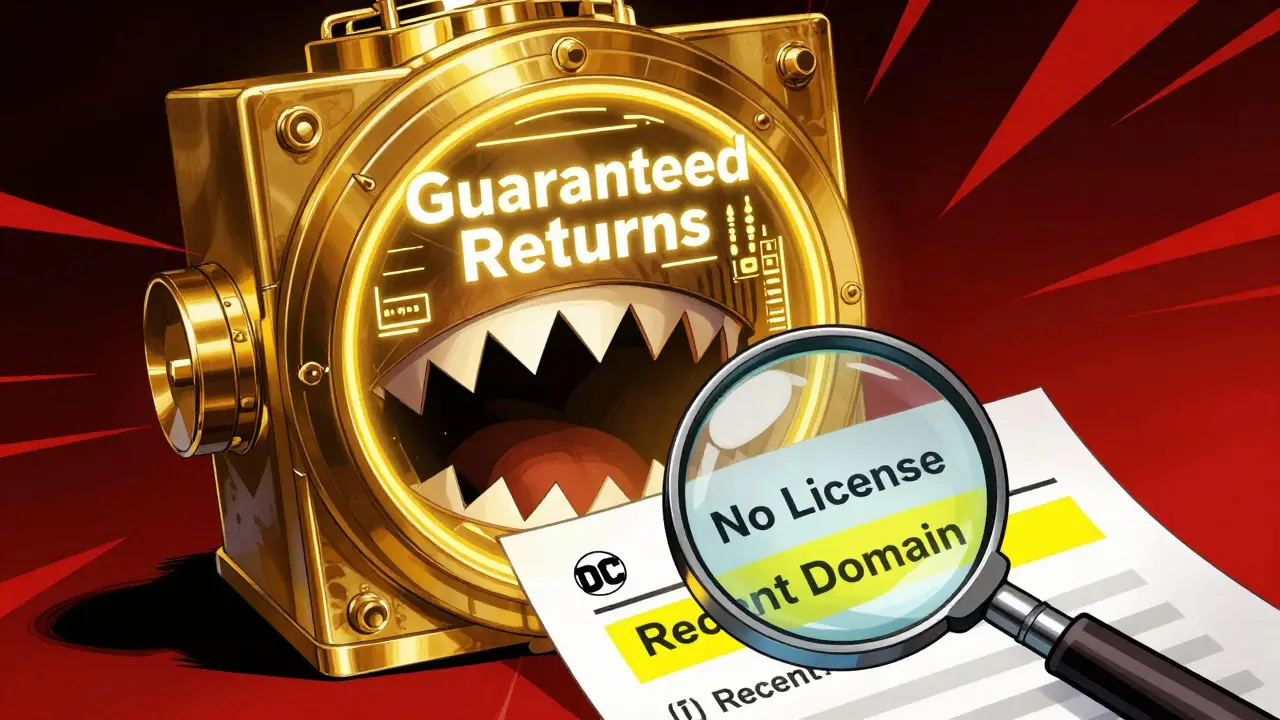
One common tactic for these "ghost" exchanges is to offer unrealistic bonuses or guaranteed returns. Legitimate trading involves risk. Any platform promising that you can't lose money is lying. Furthermore, check the domain age. If the site was registered only a few weeks ago but claims to have years of experience, it's a classic sign of a scam.
Comparing Graviex: A Real-World Alternative
Since many people searching for "Global Gravitation" are actually looking for Graviex, it's worth looking at how a mid-level exchange actually operates. Graviex is a spot trading platform that focuses on a wide variety of pairs, including some very obscure coins. However, it's far from perfect.
| Feature | Details | Verdict |
|---|---|---|
| Min Deposit | $40 USD | Accessible |
| Trading Pairs | 110+ Cryptocurrencies | Diverse |
| Commission | 0.2% per order | Competitive |
| Leverage | 1:1 | Low Risk/No Margin |
| Liquidity | Reportedly Low | Warning Sign |
As you can see, while the fees are low and the interface is clean, the liquidity is a major issue. In crypto trading, liquidity is everything. If there aren't enough buyers and sellers, you might find yourself unable to exit a position at the price you want, or worse, facing "technical errors" when trying to withdraw your funds. This is exactly why experts often give such platforms low scores, sometimes as low as 1.69 out of 10.
The Role of Proprietary Tokens and Rewards
Many exchanges try to lock you into their ecosystem using a native token. In the case of Graviex, they use the GIO token. The logic is simple: if you hold GIO, you get lower trading fees and potential dividends. For example, holding 50,000 GIO can slash your fees by 50%.
But here is the catch: holding a proprietary token of a low-liquidity exchange is a gamble. You are essentially betting on the survival and growth of that specific company. If the exchange fails or gets flagged for fraud, your GIO tokens become worthless overnight. It's a high-risk strategy that often lures beginners with the promise of "passive income" through dividend programs.
Navigating the "Gravity" Confusion
To make matters more confusing, there is a Gravity token (G) created by Galxe. It's important to understand that Gravity is a digital asset, not a trading platform. You don't "trade on Gravity"; you trade the Gravity token on other exchanges like Binance.
If a website claims to be the "Global Gravitation Exchange" and tells you to deposit funds to earn "Gravity tokens," they are mixing two different concepts to confuse you. This is a common social engineering trick. They use a real token name (Gravity) and a generic-sounding company name (Global Gravitation) to create a veneer of legitimacy.
How to Safely Move Your Bitcoin
If you're looking for a place to trade Bitcoin, stick to the "Big Three" logic: Liquidity, Regulation, and Reputation. A platform that allows you to deposit via Payeer or other third-party processors without strict KYC (Know Your Customer) might seem convenient, but it often means the platform is operating in a legal gray area.
Before sending any crypto to a new address, follow this checklist:
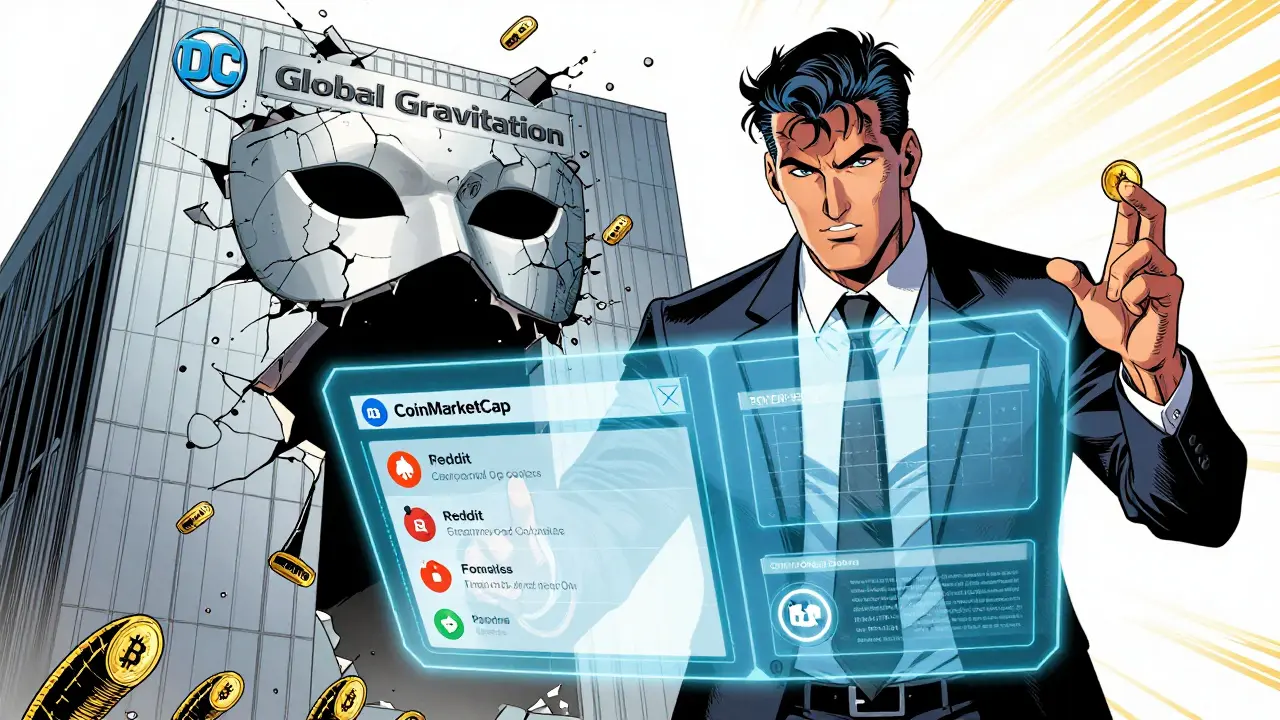
- Search for the exchange name + "scam" or "withdrawal issues" on Reddit and Trustpilot.
- Check if the platform is listed on CoinMarketCap or CoinGecko. If it's not listed, stay away.
- Verify the URL. Scammers often use "global-gravitation-trade.com" instead of a legitimate corporate domain.
- Start with a tiny test deposit. If the withdrawal process is difficult for $10, it will be impossible for $10,000.
The Bottom Line on Global Gravitation
Is Global Gravitation a safe place for your Bitcoin? Based on the lack of verifiable corporate data and the prevalence of similarly named tokens and mid-tier exchanges, there is no evidence that this is a secure, top-tier trading environment. In the 2026 market, where institutional adoption is high and regulation is tightening, there is no reason to use an obscure platform when highly liquid, regulated options are available.
Don't let the lure of low fees or "hourly rewards" blind you to the risks. In the world of cryptocurrency, if you can't find the CEO's name, the company's registration, and a history of successful large-scale withdrawals, the platform is not a tool-it's a trap.
What is Global Gravitation?
Global Gravitation does not appear to be a widely recognized or regulated cryptocurrency exchange. It is often confused with Graviex, a Malta-based exchange, or Gravity (G), a token by Galxe. Users should be extremely cautious of any platform by this name that lacks clear licensing.
Is Graviex a safe alternative?
Graviex is a functioning exchange, but it has received low ratings from professional reviewers due to liquidity issues and poor customer support. It is generally considered a high-risk platform compared to industry leaders.
How can I tell if a crypto exchange is a scam?
Check for a lack of regulatory licenses, unrealistic promises of guaranteed returns, a very new domain registration date, and reports of withdrawal freezes on community forums like Reddit.
What is the GIO token?
GIO is the native token of the Graviex exchange. Holding it can reduce trading fees and allow users to participate in a dividends program, but its value depends entirely on the success of the Graviex platform.
Should I use an exchange that doesn't require KYC?
While non-KYC exchanges offer privacy, they are often less regulated and more prone to fraud or sudden shutdowns by government agencies. Always weigh the privacy benefit against the security risk of your funds.
Aaron Zeiler
April 30, 2026 AT 00:46always check the domain age with whois first it saves so much time and headache
Bevon Findley
April 30, 2026 AT 13:22Simply basic. Only a novice would even consider such a platform :)
Gabrielle Danis
May 1, 2026 AT 18:34The distinction between a native exchange token and a standalone utility token is a critical point that many beginners overlook. One is an equity-like bet on the infrastructure, while the other is a bet on a specific project's utility.
Rachel S
May 2, 2026 AT 16:27Absolutely catastrophic! 😱 It is truly disheartening to see how many people fall for these naming traps. Always ensure the regulatory license is verifiable on the official government portal, not just a screenshot on their website! 🛡️
Michael Repak
May 2, 2026 AT 18:34I completely agree with the checklist provided!!! It's so important to be thorough!!!
its me
May 4, 2026 AT 15:56One must wonder if the desire for easy money has simply eroded our collective capacity for critical thought. We are all just ghosts in a machine of our own greed, aren't we?
Carli Bates
May 5, 2026 AT 18:59imagine thinking a site called global gravitation is actually a thing lol. some people really love losing money
Iestyn Lloyd
May 7, 2026 AT 14:55From a UK perspective, the FCA has been quite strict. If it's not registered here or in a reputable jurisdiction, it's generally a non-starter for serious capital.
Abhishek Verma
May 8, 2026 AT 13:09Oh wow, a guide on how to not get scammed. Groundbreaking stuff. I'm sure the scammers are shaking in their boots right now.
Sri Astuti
May 10, 2026 AT 03:28The sheer incompetence of the average trader is just staggering, really, because they ignore every single warning sign just to chase some fake 2% hourly return and then they come crying to the forums when their funds are locked, and frankly, it is exhausting to even analyze these patterns because the cycle never ends and the scams just get slightly better at pretending to be legit while remaining fundamentally broken and predatory 🙄
Rushell Perry
May 11, 2026 AT 16:40just remember that a small test deposit is your best friend in this space. if the money doesnt come back it's a cheap lesson
Elle Kharitou
May 13, 2026 AT 11:45It really makes you think about the nature of trust in a digital age, doesn't it? 🌟 We are all just searching for a safe harbor in a sea of volatility. I always tell my students that the best investment is actually your own education because no one can steal the knowledge from your head 📚✨. If you take the time to understand how blockchain verification works, these ghost exchanges become so obvious that they almost look like jokes 🌈. Let's all support each other by sharing these red flags so the community can grow stronger and more resilient together! 🇦🇺💖
edie rosa
May 13, 2026 AT 23:56The lack of KYC is just a mask for money laundering and theft. People who claim privacy is more important than security are just admitting they are okay with being robbed.
April D Thompson
May 15, 2026 AT 19:34Listen, honey, if it sounds too good to be true, it is! We've got to stop pretending there's a shortcut to wealth. The universe doesn't just hand out free Bitcoin to people who click on random links! 💅
Kara Spadone
May 17, 2026 AT 09:35The energy of this platform is completely off. If you can't feel the fraud in your gut, you're not paying attention 🙄
Amanda Macy
May 17, 2026 AT 18:01The intersection of linguistic ambiguity and financial fraud is a fascinating study in human psychology. The use of the word 'Global' often provides a false sense of scale.
Ipsita Seal
May 19, 2026 AT 15:16too many words for something that's obviously a scam