
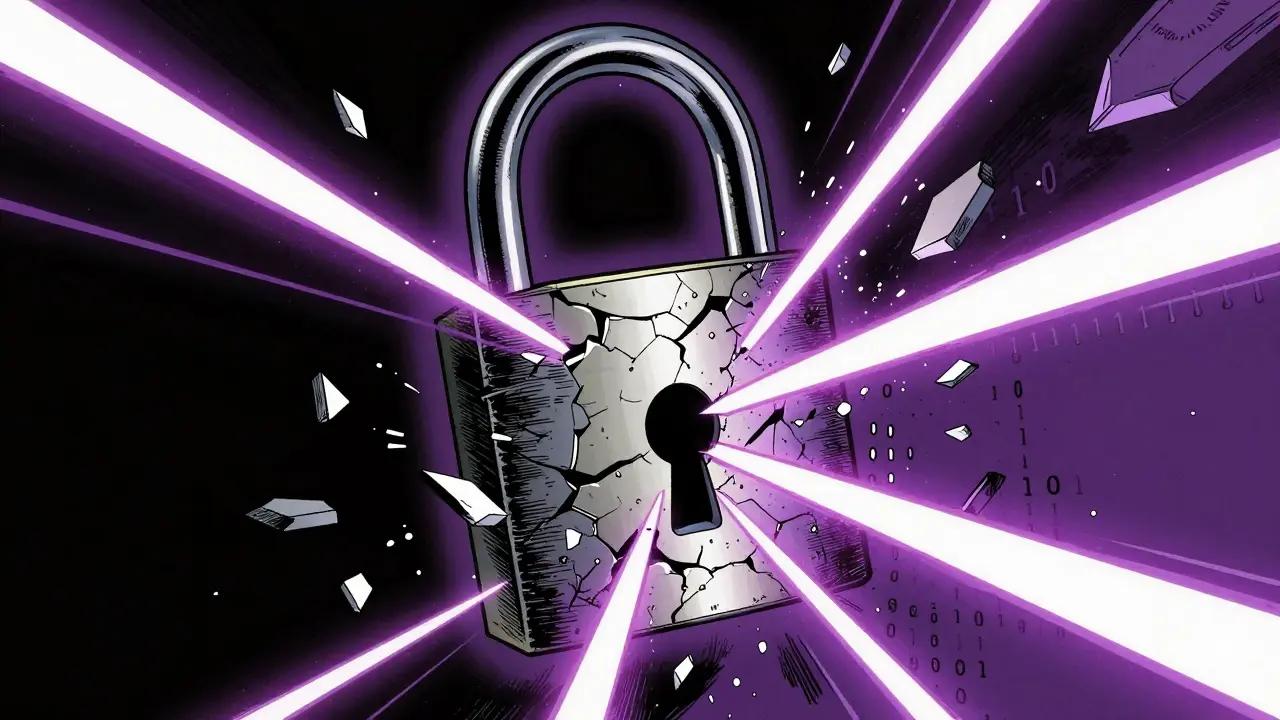
The Death of Passwords in Digital Assets
If you still rely on a simple text string to protect your Bitcoin wallet or exchange account, you are playing a dangerous game. Recent analysis shows that nearly half of all security breaches in the financial sector stem from compromised credentials. In the world of cryptocurrency, where there is no bank to reverse a transaction, this statistic translates to lost funds. The landscape changed drastically last year when Post-Quantum Cryptography, often abbreviated as PQC, moved from theory to standardization by organizations like NIST. We are standing at the edge of a new era where the traditional login method is obsolete.
The urgency is driven by the looming threat of quantum computing. While we aren't facing full-scale quantum decryption today, experts estimate the window of vulnerability opens between 2030 and 2035. However, preparing for this threat requires action now. The National Institute of Standards and Technology (NIST) finalized three critical PQC algorithms in late 2025, providing the mathematical foundation necessary for long-term security. These new standards mean cryptographic keys will eventually become obsolete if not upgraded. For crypto holders, this isn't just about convenience; it is about the survival of their assets against future computational power.
The Rise of Hardware-Bound Security
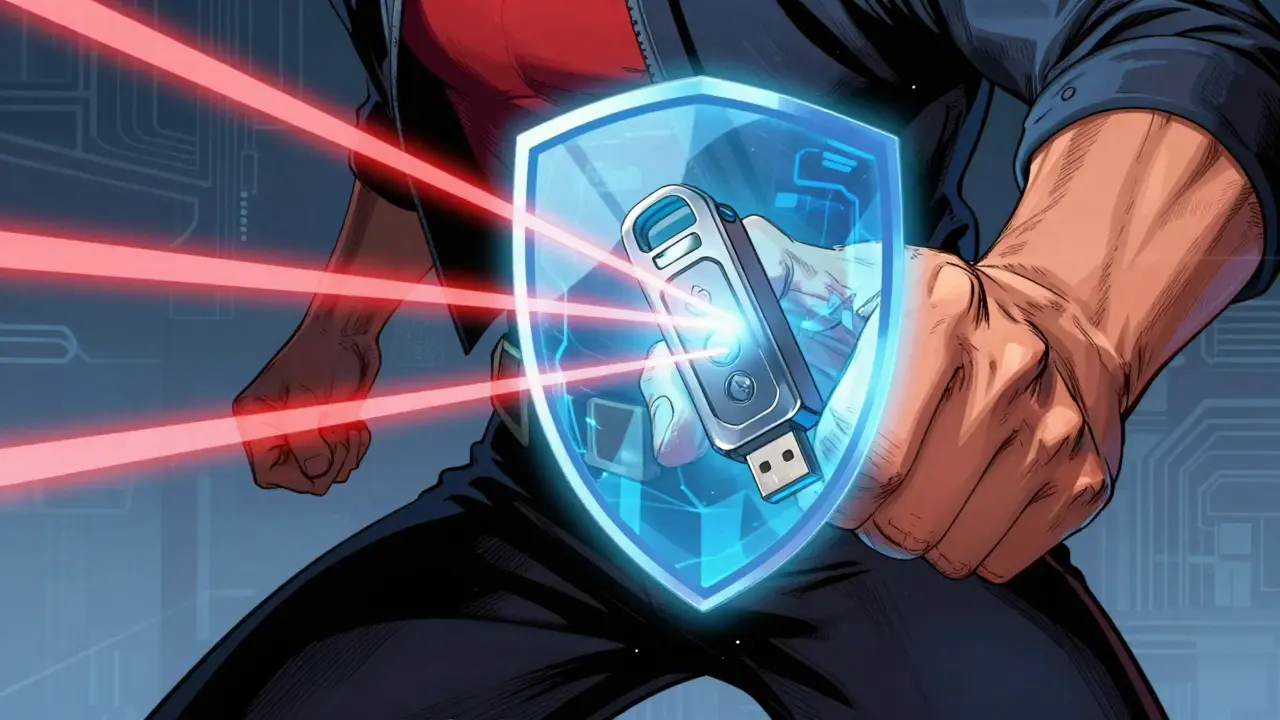
To combat the weaknesses of text-based secrets, the industry has pivoted toward hardware-bound solutions. This shift centers on technologies that tie your identity directly to a physical device you own, rather than something you memorize. FIDO2 Alliances have been instrumental here. By using public-key cryptography stored on secure elements within your phone or security key, these systems ensure that authentication happens locally. The server never sees the secret, making remote hacking virtually impossible.
This approach effectively neutralizes phishing. Traditional scams trick users into typing passwords into fake sites. With hardware-bound authentication, even if a user enters their credentials on a fraudulent website, the cryptographic challenge cannot be completed because the device verifies the domain authenticity before responding. Statistics from 2025 show that enterprises adopting certificate-based Multi-Factor Authentication (MFA) saw a 97% reduction in account takeover incidents. For an individual holding significant digital assets, this level of security is becoming the baseline expectation rather than a luxury feature.
| Method | Security Rating | User Friction | Phishing Resistant |
|---|---|---|---|
| Traditional Password | Low | Low | No |
| SMS-Based 2FA | Medium | Low | No |
| FIDO2 Passkey | Very High | Low | Yes |
| Hardware Wallet Sign | High | Medium | Yes |
| Post-Quantum Sig | Very High | Variable | Yes |
Self-Sovereign Identity and Decentralized Credentials
As we move deeper into the 2020s, the concept of owning your identity is gaining traction. Decentralized Identifiers (DIDs) allow users to store credentials on the blockchain or in personal digital wallets rather than trusting a central authority. In a practical scenario, this means proving you are over 18 to access a DeFi platform without revealing your actual birthdate or government ID. This relies heavily on privacy-preserving math known as Zero-Knowledge Proofs.
The beauty of this system is selective disclosure. You can prove a statement is true without revealing the underlying data. For instance, a cryptocurrency exchange might require proof of residency to comply with regulations. Instead of uploading a passport photo, a user could present a cryptographically signed credential issued by a trusted third party that simply confirms the validity of the claim. In 2025, major credential management systems began integrating directly with Apple and Google Wallets, smoothing the user experience significantly. Enterprise platforms report that users prefer this method because it consolidates security tokens across multiple applications, reducing the cognitive load of remembering which key belongs to which service.
The Hidden Challenges of Advanced Auth
Despite the clear security benefits, widespread adoption faces friction points. One of the most common complaints from users involves recovery processes. When you lock your security key behind biometric encryption or complex hardware signatures, what happens if your device breaks or is lost? Surveys from late 2025 indicated that roughly 28% of negative reviews for crypto wallets cited excessive difficulty in recovering access after a device failure. Unlike a forgotten password which can sometimes be reset via email, hardware-bound keys often require social recovery mechanisms or physical backups that many users fail to set up correctly.
Another hurdle is interoperability. While WebAuthn provides a solid standard, different wallet providers handle key storage differently. Transferring a passkey from one ecosystem to another can sometimes result in broken credentials. Developers are working on universal portability standards to mature between 2025 and 2030, but until then, users must be careful when migrating between providers. Additionally, implementing these systems requires technical expertise. Companies moving to quantum-safe environments reported needing 80 to 120 hours of specialized training for their development teams, a barrier for smaller projects.

Regulatory Push and Market Momentum
The transition isn't happening solely due to security needs; regulation is forcing the pace. By mid-2025, nearly 80% of major cryptocurrency exchanges were mandated to implement FIDO2 or equivalent phishing-resistant measures to operate in compliant jurisdictions. Regulatory bodies understand that the cost of a single large-scale breach outweighs the implementation costs of new authentication systems. The global market for this type of security grew rapidly, hitting $4.7 billion in Q2 2025 alone.
We also see a distinct split in market adoption patterns. Large enterprise custodians favor certificate-based Multi-Factor Authentication due to its auditability and strict compliance controls. Meanwhile, retail users on decentralized finance platforms lean toward biometric passkeys for ease of use. Both sides acknowledge that the old model is dead. Continuous verification is emerging as a standard requirement. Security is no longer a one-time event at login; it must persist throughout the session. If you log out and back in, or change networks, the system re-verifies trust dynamically.
What Should You Do Today?
Given the trajectory of these technologies, passive observation is not a strategy. If you hold significant amounts of cryptocurrency, auditing your current security setup is essential. Switch to passkeys for your exchange accounts immediately. Most modern browsers and smartphones support them natively. For self-custody wallets, consider hardware devices that explicitly support open standards and have backup recovery options that are easy to manage physically.
Keep an eye on your software providers. Are they announcing support for NIST's updated encryption standards? If not, their longevity might be in question as the quantum threat draws closer. The timeline suggests we have a few years before quantum computers pose a direct threat to elliptic curve cryptography, but the migration process takes time. Waiting until the last minute creates unnecessary risk. Adopt the new standards now while they are stabilizing.
What exactly is Post-Quantum Cryptography?
Post-Quantum Cryptography refers to encryption algorithms designed to be secure against attacks from quantum computers. Standard encryption used today (like RSA or ECC) could be broken by powerful quantum machines once they mature. PQC uses math problems that are difficult even for quantum computers to solve, ensuring long-term security for digital data.
Are passkeys safer than passwords for crypto?
Yes, passkeys are significantly safer. They utilize public-key cryptography tied to your device and cannot be phished like passwords. If a hacker tricks you into entering a password, they get it. If they try to trick you into a passkey authentication, the browser validates the site URL first, rendering the scam useless.
Can I recover my crypto if I lose my hardware key?
It depends on your setup. If you have a seed phrase written down securely, you can restore access to software wallets. Hardware wallets often require the original device plus PIN, though some offer backup PIN recovery. Always keep your seed phrase backed up in multiple physical locations to prevent permanent loss.
Do I need to worry about quantum computing right now?
You do not face immediate risks from quantum decryption today, as current quantum computers lack sufficient qubits. However, "harvest now, decrypt later" attacks are real. Hackers steal encrypted data today hoping to decrypt it later. Updating to quantum-safe standards protects your long-term asset safety.
What is a Decentralized Identifier (DID)?
A DID is a unique string generated by you, not an administrator, that serves as your digital identity anchor. It allows you to verify who you are without relying on a central company's database. It supports self-sovereignty and enables privacy through selective disclosure of information.
Ashley Stump
March 31, 2026 AT 11:32This whole quantum thing is just hype until your stuff actually gets stolen
Disha Patil
March 31, 2026 AT 19:18I feel so unsafe reading all this honestly my wallet feels like it's burning in my pocket right now
Why does everyone say wait but I am scared already that they might come for me tonight
Callis MacEwan
April 2, 2026 AT 14:40The narrative surrounding post-quantum cryptography is fundamentally misaligned with current computational realities
Elliptic curve cryptography remains robust against classical attacks indefinitely without hardware breakthroughs
NIST standards are bureaucratic artifacts designed to create urgency rather than actual security requirements
We are seeing a conflation of theoretical risk vectors with practical deployment timelines
The transition costs alone would bankrupt smaller custodians attempting compliance immediately
Hardware keys rely on supply chains that are inherently vulnerable to state actors embedding backdoors
FIDO2 is merely a transport layer improvement and does not solve backend vulnerability surfaces
Zero-knowledge proofs are computationally expensive for edge devices lacking specialized co-processors
Interoperability remains a fantasy given the proprietary fragmentation of current wallet ecosystems
Recovery mechanisms described are overly optimistic regarding average user behavior patterns
The assumption that biometric encryption cannot be bypassed ignores deepfake attack surface expansion
Decentralized identifiers lack legal enforceability in most jurisdictions currently operating
User adoption friction cited is negligible compared to the cognitive load required for key management
Continuous verification creates performance bottlenecks in latency-sensitive financial applications
Enterprise reports on reduction percentages rely on self-reported metrics without third party audits
Regulatory mandates accelerate exposure to new attack vectors before stabilization occurs
We must prioritize legacy system maintenance over speculative future proofing strategies
Quantum resistance is a marketing term used to justify unnecessary infrastructure overhauls
The mathematical models supporting PQC algorithms face significant scrutiny from peer review channels
Adoption should remain voluntary until clear threat intelligence confirms vector activation
Alex Kuzmenko
April 3, 2026 AT 22:15I think you are to harsh on the recovery part bro it can be fixed if you just write things down somewhere safe
My dad told me once that paper is better than electronics for backups
Elizabeth Akers
April 5, 2026 AT 06:33Crypto auth is getting cool though we just need to ride the wave together
No stress no panic
Alex Lo
April 7, 2026 AT 03:02You guys really neeed to wake up because this is the biggest shift in technology ever seen in human history
Think about how many passwords you have stored in your head right now that are weak garbage
Imagine if all of those vanished tomorrow and you had nothing left to log into anywhere
That is why we must embrace the hardware solutions immediately before the window closes forever
It feels scary to change everything but staying static is actually way more dangerous for everyone involved
I have been testing passkeys myself and the experience is seamless almost magical even
Your phone just knows who you are without typing anything which feels like magic for sure
We cannot ignore the math saying quantum computers will break current locks eventually for real
Every delay in updating systems is just giving hackers more time to harvest data today for later
The industry is moving fast and if we stand still we get left behind in the dust completely
Security teams are working overtime to patch these holes and we should trust their progress
Don't let fear stop you from upgrading your digital life to something better and stronger soon
This is about protecting your life work and savings from potential theft by supercomputers later
Start small by enabling passkey support on your main exchange account today and see the difference
Learning new tech is hard at first but once you do it you will never want to go back
Let's build a secure future together by taking these steps one by one carefully and smartly
Jay Starr
April 9, 2026 AT 01:05The optimism here is noted but the risks outweigh the benefits significantly
Lisa Walton
April 11, 2026 AT 00:40Another article scaring people into selling crypto for safety gear profits
Katrina Tate
April 12, 2026 AT 07:25Analysis suggests the market manipulation angle is statistically probable given recent volume spikes
Liam Robertson
April 12, 2026 AT 18:08You can do this and stay safe with the right tools
Zackary Hogeboom
April 14, 2026 AT 13:55It seems like we all agree that better security helps us sleep better at night
I notice the community wants simpler ways to manage these complex keys too
Michael Nadeau
April 15, 2026 AT 10:53The philosophical implication of owning identity suggests a return to individual sovereignty lost in web two zero
Trustless systems require trustless verification methods to function effectively without central oversight
History shows centralized authorities fail inevitably when burdened with managing private secrets for users
Delegation of authority back to the individual aligns with broader trends in digital autonomy movements
Self-sovereign identity represents the next evolutionary step beyond simple cryptographic signing schemes
This shift requires rethinking how we perceive value ownership in a digitized global economy context
Mechanisms for dispute resolution become crucial when identity is no longer anchored to government records
The tension between privacy rights and regulatory demands will define the next decade of tech development
Ronald Siggy
April 16, 2026 AT 13:05Great points made about sovereignty we need to protect our own info now
Focus on backing up your seeds securely before making any changes to accounts
You got this capability to secure your assets if you follow basic hygiene rules daily
Sean Carr
April 17, 2026 AT 11:24Use a FIDO key and rotate credentials annually
Matt Bridger
April 18, 2026 AT 10:11Amateurs fail to grasp the nuance of lattice-based cryptography parameters
Implementation flaws negate algorithmic strength regardless of standard adoption
Lisa Miller
April 18, 2026 AT 15:11Hey there you are doing great by learning all this new stuff
Security is a journey and every bit you read helps you protect your world
Keep going you are building a safer future for yourself and your family
Joy Crawford
April 19, 2026 AT 06:07i feel like im watching the world burn down around me while everyone argues :
why cant they just fix it already i am so tired of worrying about losing everything
Beverly Menezes
April 20, 2026 AT 22:10It is okay to feel scared but we can find peace in knowing we are preparing properly
Shaira Vargas
April 21, 2026 AT 01:20I just know my life would be over if I lost access to my funds like that ever
Please tell me there is a way to save me if this happens to me someday
Samson Abraham
April 22, 2026 AT 16:00Proper seed backup protocols exist to mitigate total loss scenarios effectively
Redundancy in storage locations ensures continued access even during hardware failures
Ashley Stump
April 24, 2026 AT 10:13They still lose keys anyway
Callis MacEwan
April 25, 2026 AT 07:54The redundancy model discussed assumes physical stability in storage environments that rarely exists in practice