
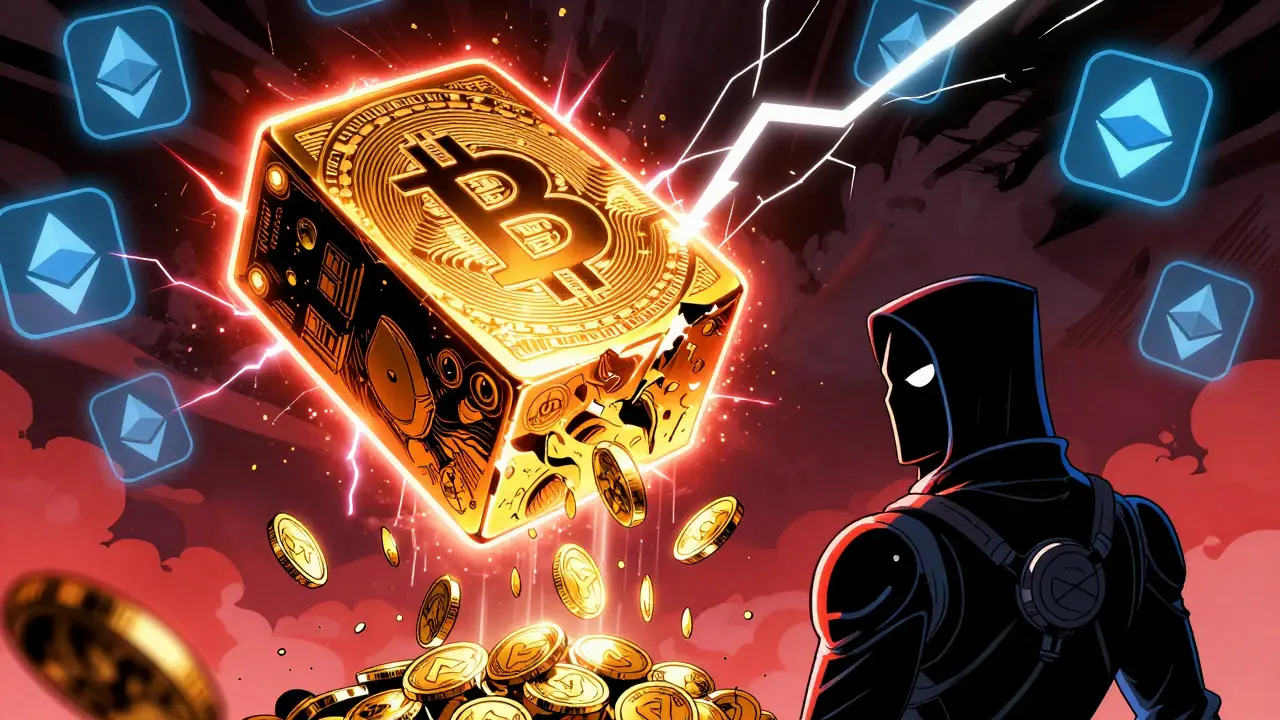
Halvings aren’t just technical updates-they’re economic earthquakes. Every few years, the reward for mining new blocks on major blockchains gets cut in half. That means less new supply flooding the market. And history shows that when supply shrinks while demand holds steady-or grows-prices tend to rise. But the next few halvings aren’t just repeating the past. They’re a perfect storm: Bitcoin’s fifth halving, Bittensor’s first, and Ethereum Classic’s big cut all happening within three years. This isn’t a repeat of 2020 or 2024. It’s something new.
What Exactly Is a Halving?
A halving is a built-in rule in the code of proof-of-work blockchains like Bitcoin and Ethereum Classic. Every 210,000 blocks (roughly every four years), the number of new coins miners earn for validating transactions drops by 50%. It’s a hard cap on inflation. Bitcoin’s total supply is capped at 21 million coins. Halvings are how the system slowly reaches that limit without crashing the economy.
When Bitcoin launched in 2009, miners got 50 BTC per block. After the first halving in 2012, it dropped to 25. Then 12.5 in 2016, 6.25 in 2020, and 3.125 in 2024. The next one, in April 2028, will drop it to 1.5625 BTC per block. That’s it. No more increases. No more exceptions. Just a steady, predictable decline until 2140, when the last Bitcoin is mined.
It’s not just Bitcoin. Ethereum Classic, which still uses proof-of-work, is set to halve on July 23, 2026, at block 25,000,001. Its reward will drop from 3.2 ETC to 1.6 ETC per block. And then there’s Bittensor, a newer, more complex network, scheduled to halve sometime between December 2025 and February 2026. This one’s different. It’s not just about one token. It’s about dozens of subnets, each with their own tokens, all tied to TAO’s value.
Bittensor’s Halving: A Wildcard in the System
Bittensor’s halving is unlike anything seen before. Most blockchains have one token. Bittensor has TAO as the base token, and over 70 subnets, each with their own Alpha tokens. Miners earn TAO for contributing computing power to the network. But those subnets? They pay out in Alpha tokens, which are only valuable if people want them. And those Alpha tokens are tied to TAO’s price and liquidity.
When TAO’s issuance drops, less new TAO flows into the system. That means less money to buy Alpha tokens. Subnets that relied on cheap, newly minted TAO to fund rewards might suddenly struggle. Some could collapse. Others might raise fees or reduce payouts. That could trigger a chain reaction: miners leave, subnets shrink, Alpha tokens crash, and TAO holders panic-sell.
Right now, about 9.4 million TAO are in circulation. The halving triggers when 10.5 million are circulating. That could happen as early as December 13, 2025-but it depends on how many tokens get locked up in subnet registrations, cold wallets, or recycled from inactive miners. No one knows for sure. That’s the problem. There’s no historical data. This is the first time a multi-token, decentralized AI network is undergoing a supply shock. The market has no playbook.
Bitcoin’s Fifth Halving: The Old Giant, Still Strong
Bitcoin’s halvings follow a pattern. The price doesn’t spike the day it happens. It usually takes six to twelve months. After the 2024 halving, Bitcoin hovered around $60,000 for months. It didn’t hit $110,000 until January 2025-nine months later. That delay isn’t a bug. It’s a feature. It gives miners time to adjust, institutions to buy, and retail traders to catch up.
The next halving in April 2028 will cut rewards from 3.125 BTC to 1.5625 BTC. That’s a 50% drop in new supply. But this time, the context is different. Bitcoin isn’t just a speculative asset anymore. It’s a macroeconomic hedge. Institutions like ARK Invest bought $37.7 million in Bitcoin after the 2024 halving. ETFs now hold over 1 million BTC. That’s not going away.
Some analysts think the four-year cycle is stretching. Global interest rates are higher. Debt cycles are longer. Money supply growth isn’t as explosive as it was in 2020-2021. So the big rally might not come until 2026 or even 2027, not right after the halving. But the long-term projections still hold: $175,000 by 2025, $900,000 by 2030. Why? Because supply is shrinking while demand-especially from central banks, sovereign funds, and family offices-is rising.
Ethereum Classic: The Forgotten Chain With a Big Moment
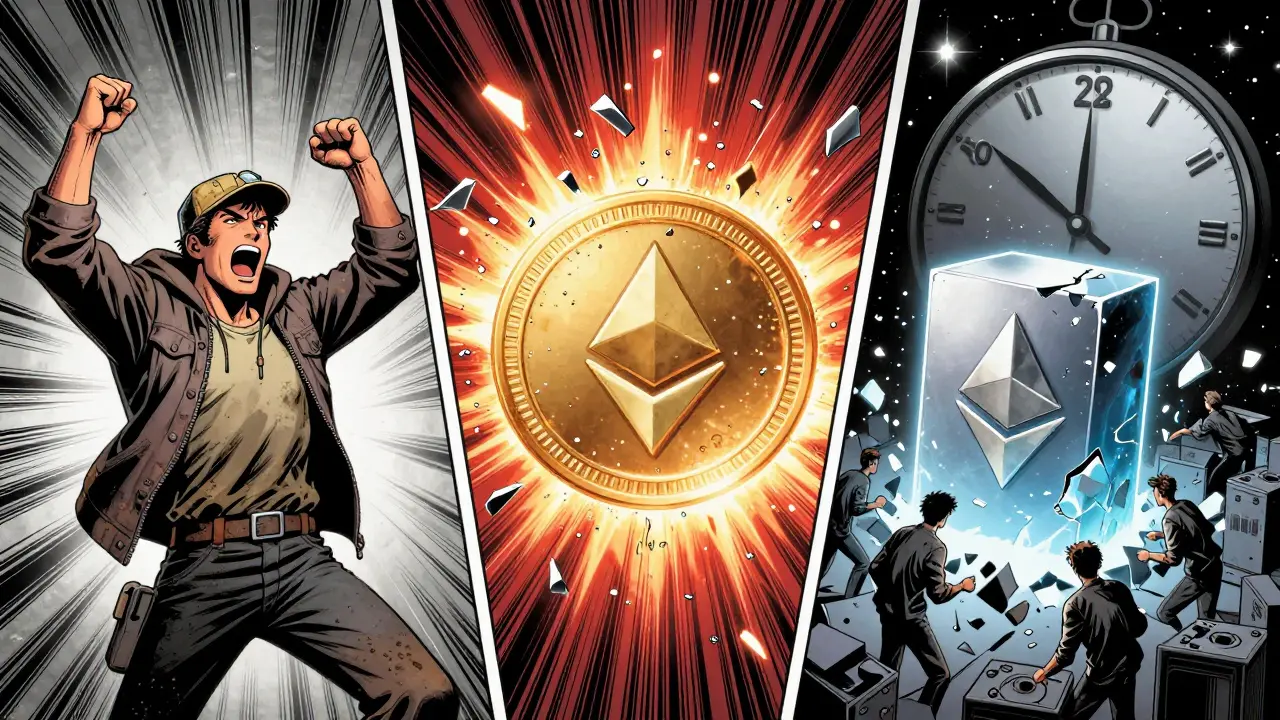
Ethereum Classic doesn’t get much attention. But its halving on July 23, 2026, is a major event. It’s one of the last major proof-of-work chains still running. While Ethereum switched to proof-of-stake and stopped issuing new coins, ETC kept mining. Its halving will cut block rewards in half-from 3.2 to 1.6 ETC.
That’s a big deal for miners. Their revenue drops. If the price doesn’t rise enough to compensate, some miners will shut down. That weakens network security. But ETC has a loyal community. And unlike Bitcoin, it’s not competing with ETFs or institutional buyers. Its value comes from being a pure, unaltered version of the original Ethereum chain. That matters to purists, developers building on it, and those who distrust Ethereum’s post-merge direction.
The timing is interesting. It lands between Bittensor’s halving and Bitcoin’s. That means three major supply shocks in 30 months. The market has never seen this. If all three trigger price surges, the cumulative effect could be explosive. If one fails, it could drag others down.
What Happens When Supply Drops and Demand Stays the Same?
Basic economics: less supply + same demand = higher price. That’s the theory. But in crypto, it’s messier. Demand isn’t static. It reacts to news, regulation, fear, and FOMO. Still, the data supports the theory.
After the 2020 halving, Bitcoin rose from $8,000 to $60,000 in 18 months. After 2016, it went from $600 to $20,000. The pattern is clear. Halvings create scarcity. Scarcity creates value. And with Bitcoin’s next halving cutting issuance by half again, the math is even stronger.
But there’s a catch: miners need to stay profitable. Right now, they make 3.125 BTC per block. If the price stays flat after April 2028, many will go bankrupt. That could lead to a temporary drop in hash rate. But history shows the market adjusts. When miners exit, the network difficulty drops. The remaining miners make more per unit of power. And if the price rises, they thrive.
That’s why transaction fees matter more now. In 2024, fees made up 12% of miner revenue. In 2028, that number will be higher. By 2030, fees could be the main income source. That’s the real long-term shift: Bitcoin isn’t just a digital gold. It’s becoming a fee-based network. And that’s sustainable-if users keep transacting.
The Bigger Picture: Halvings as Market Signals
Halvings aren’t just about coins. They’re signals. They tell you: the system is working. The code is enforced. The scarcity is real. That’s why institutional investors watch them closely. They’re not gambling on hype. They’re betting on a predictable, algorithmic reduction in supply.
Exchange reserves are falling. Bitcoin sitting on exchanges dropped below 10% of total supply in late 2024. That means holders are moving coins to cold wallets. They’re not selling. They’re holding. That’s a classic accumulation phase. And it always precedes big moves.
Global liquidity matters too. When central banks print money, Bitcoin often rises. The M2 money supply grew by over 15% in 2020-2021. Bitcoin surged. In 2023-2024, money growth slowed. Bitcoin stagnated. Now, with inflation returning in 2025, global liquidity is expanding again. That’s a tailwind.
What to Watch Over the Next Three Years
- December 2025-February 2026: Bittensor halving. Watch TAO price, subnet activity, and Alpha token liquidity. Any major drop in subnet revenue could signal trouble.
- July 23, 2026: Ethereum Classic halving. Monitor miner hashrate. If it drops more than 20%, expect price volatility.
- April 2028: Bitcoin’s fifth halving. Watch exchange reserves, ETF inflows, and fee trends. If fees rise above 20% of miner income, Bitcoin’s transition to a fee-based model is complete.
Don’t just watch prices. Watch behavior. Who’s buying? Who’s selling? Are miners holding or dumping? Are subnets shutting down? Those are the real indicators.
Long-Term Impact: Beyond Price
The biggest impact of halvings isn’t the price spike. It’s the structural shift. Bitcoin will eventually rely on transaction fees, not block rewards. That means the network needs volume. More users. More apps. More real-world use.
Bittensor’s halving could force a reset in decentralized AI. If subnets can’t pay miners, the whole AI training ecosystem might collapse-or evolve into a new model. Ethereum Classic’s halving could solidify its identity as the last true proof-of-work chain.
Halvings force adaptation. They weed out weak projects. They reward those who build for the long term. That’s why they matter-not because they make you rich overnight, but because they prove the system can survive without inflation. And that’s the whole point of crypto.
When is the next Bitcoin halving?
The next Bitcoin halving is expected in April 2028, around block 1,050,000. This will reduce miner rewards from 3.125 BTC to 1.5625 BTC per block. Halvings occur roughly every four years, or every 210,000 blocks.
How does a halving affect Bitcoin’s price?
Historically, Bitcoin’s price doesn’t spike immediately after a halving. It usually takes 6-18 months for the full effect to show. That’s because it takes time for reduced supply to meet growing demand. The 2024 halving was followed by a price surge to $110,000 in January 2025, nine months later.
What makes Bittensor’s halving different from Bitcoin’s?
Bittensor’s halving affects TAO, the main token, but also dozens of subnets with their own Alpha tokens. Reduced TAO issuance could starve subnets of liquidity, causing some to fail. Unlike Bitcoin’s simple reward cut, Bittensor’s ecosystem is complex and untested, making its halving unpredictable.
Will halvings still matter if Bitcoin becomes a fee-based network?
Yes. Even as block rewards fade, halvings still reduce new supply. That scarcity drives price. Plus, the halving signals long-term predictability, which attracts institutional investors. By 2030, fees may replace rewards entirely-but the halving cycle will still shape market psychology.
Is now a good time to buy before the next halving?
Historical patterns suggest buying 12-18 months before a halving has worked well. But with institutional buying and macroeconomic factors playing bigger roles now, timing is harder. Focus on accumulation: buy small amounts regularly, hold long-term, and ignore short-term noise.
dayna prest
December 28, 2025 AT 14:27This whole halving thing is just crypto mumbo jumbo dressed up like economics. You think scarcity creates value? Tell that to the 10,000 useless tokens that died last year. The only thing halvings prove is that people will believe anything if it’s coded in a blockchain.
Prateek Chitransh
December 29, 2025 AT 22:24Oh look, another ‘economic earthquake’ post. Let me grab my popcorn and wait for the next ‘this time it’s different’ headline. 2021 called, it wants its FOMO back. The real story? Miners are already hedging. Institutions aren’t buying because of halvings-they’re buying because they’re out of other places to hide.
Mike Reynolds
December 30, 2025 AT 03:48I get the theory, but have you actually talked to a miner lately? They’re not waiting for halvings to get rich-they’re just trying to keep their rigs from melting. The real shift isn’t price-it’s that miners now have to rely on fees. And most people still think crypto is about buying and selling, not paying to send a transaction.
Alex Strachan
December 30, 2025 AT 12:01Bitcoin’s gonna hit $900K? Cool. I’ll believe it when I can buy a coffee with it without paying $12 in fees. 🤡
Ian Koerich Maciel
December 31, 2025 AT 03:34The structural shift is real. The block reward is a relic. Transaction fees are the new mining incentive. And when fees become the primary revenue stream, Bitcoin transforms from digital gold to digital infrastructure. That’s not speculation-it’s inevitability. The market just hasn’t priced in the operational shift yet.
Rajappa Manohar
January 1, 2026 AT 14:54halvings are cool but whats up with bittensor? i dont even know what subnet is. someone explain like im 5
christopher charles
January 1, 2026 AT 22:12Wait-so Bittensor’s halving affects 70+ tokens? That’s not a halving, that’s a financial ecosystem implosion waiting to happen. One subnet goes dark, and suddenly the whole AI mining chain collapses. This isn’t crypto-it’s a decentralized Ponzi with extra steps.
Andy Reynolds
January 2, 2026 AT 12:51Bro, I’ve been holding BTC since 2017. I’ve seen three halvings. The price doesn’t jump on the day. It jumps when everyone else finally wakes up. Right now? Everyone’s still sleeping. The rally’s coming-but not because of code. Because of fear. People are scared of inflation again. And Bitcoin’s the only safe harbor left.
Kenneth Mclaren
January 4, 2026 AT 05:24They’re all lying. The halvings are controlled by the same banks that run the Fed. They let Bitcoin exist so people think they have freedom. Then they crush it when it gets too big. The next halving? It’s a trap. They’ll crash the market right after to buy the dip. They always do.
Brooklyn Servin
January 6, 2026 AT 03:08Look, I don’t care if it’s Bitcoin, ETC, or Bittensor’s weird AI spaghetti-when supply drops and people are still buying, prices go up. That’s not magic. That’s math. The only question is: who’s buying? If it’s retail, it’s a bubble. If it’s sovereign funds? Then we’re building a new monetary system. And I’m not betting against the latter.
Ryan Husain
January 7, 2026 AT 10:43Halvings are the closest thing crypto has to a central bank policy. Predictable. Transparent. Unstoppable. That’s why institutions love them. They’re not gambling on hype-they’re hedging against fiat collapse. The real story isn’t the price spike-it’s that global capital is quietly shifting into an asset that can’t be inflated away.
nayan keshari
January 8, 2026 AT 18:29Bitcoin halving in 2028? More like 2030. The network will delay it. They always do. And Bittensor? It’s a scam. 70 subnets? More like 70 ghost tokens. Nobody cares about Alpha. TAO’s just a shell for pumpers.
Rick Hengehold
January 9, 2026 AT 05:54Miners will adapt. Difficulty drops. Fees rise. The network survives. This isn’t a crisis. It’s evolution. The real risk isn’t the halving-it’s that people still think crypto is a get-rich-quick scheme. It’s not. It’s a protocol. And protocols outlast trends.
Phil McGinnis
January 10, 2026 AT 18:11It’s amusing how Western analysts treat halvings like sacred rites. Meanwhile, China banned mining. Russia taxes it. India regulates it. The ‘global macro’ narrative is a fantasy. This isn’t a worldwide monetary shift. It’s a niche asset class with a cult following and a very loud blog.
Antonio Snoddy
January 12, 2026 AT 16:06Think about it. What if halvings aren’t about scarcity at all? What if they’re about control? Every time the reward drops, the miners become more dependent on the network’s value. And who controls the network? The developers. The wallets. The exchanges. The halving isn’t a reset-it’s a leash tightening. We’re not becoming free from fiat. We’re becoming dependent on a new kind of authority. And we’re cheering for it.
Vernon Hughes
January 13, 2026 AT 07:30ETC is the last real PoW chain. Bitcoin’s becoming institutional. Ethereum’s dead. But ETC? Still running on the same code as 2015. No compromises. No merge. No lies. Its halving isn’t a market event. It’s a statement. We’re still here. And we’re not bending.
Michelle Slayden
January 13, 2026 AT 11:04The mathematical elegance of halvings is unparalleled in monetary history. A predetermined, algorithmic deflationary mechanism, embedded in decentralized consensus, executed without human intervention-this is not merely financial innovation; it is epistemological sovereignty. The market’s delayed reaction is not inefficiency-it is the necessary temporal lag of institutional cognition adapting to a non-state monetary paradigm.
alvin mislang
January 14, 2026 AT 00:26They’re lying about the dates. The halving was moved. The blockchain is being manipulated. The real supply drop is already happening in private OTC markets. You think you’re watching the chain? You’re watching the show. The real action’s in the dark pools. And when it drops? You’ll be holding bagged TAO while the whales laugh.
Johnny Delirious
January 14, 2026 AT 15:56Stop overthinking this. Halvings = less coins. Less coins = more value. Simple. If you need a 2000-word essay to understand why your Bitcoin might go up, you shouldn’t own it. Buy. Hold. Shut up. Let the math do the talking.
Bianca Martins
January 15, 2026 AT 13:30Just a heads up: if Bittensor’s subnets start collapsing, the AI training models on them will degrade. That means the whole ‘decentralized AI’ dream gets a little less… intelligent. We’re not just talking about token prices here-we’re talking about whether AI can be trained without central servers. That’s the real stake.
Monty Burn
January 16, 2026 AT 18:12Halvings are just a distraction from the fact that nobody uses crypto for anything real. People are just flipping numbers while the world burns. The next halving won’t change that. It’ll just make the charts look prettier before the next crash.
Haritha Kusal
January 17, 2026 AT 22:34im not smart enough to get all the subnet stuff but i know one thing-when my friend bought btc in 2020 he was broke. now he bought a house. so maybe halvings work? idk but i keep buying little by little 😊
Jackson Storm
January 19, 2026 AT 06:19Hey, if you’re looking at halvings as your investment thesis-you’re missing the point. The real opportunity isn’t the price spike. It’s the infrastructure. The wallets. The APIs. The apps built on top. Buy the tool, not the hype. The halving just makes the tool more valuable over time.
Jack and Christine Smith
January 20, 2026 AT 04:30my husband says halvings are magic but i think its just supply and demand. also why is everyone so obsessed with bitcoin? what about the other chains? like ehtereum classic? its still alive? cool. i think we should support it. 🤗
Brandon Woodard
January 21, 2026 AT 17:50Let’s be clear: this isn’t about Bitcoin. It’s about the death of inflationary fiat. Halvings are the countdown to a new monetary order. The fact that central banks are quietly accumulating Bitcoin? That’s not coincidence. That’s strategy. The next three years? They’re not about price. They’re about legitimacy.