
The European Union’s new crypto rule doesn’t care if you’re sending €1 or €1 million. Starting December 30, 2024, every cryptocurrency transfer between regulated platforms in the EU must carry full sender and receiver details - no exceptions. This is the world’s first and only true zero-threshold Travel Rule for crypto, and it’s already live.
What Exactly Is the EU Travel Rule?
The Travel Rule isn’t new. It started in traditional banking decades ago, requiring banks to share sender and receiver info for wire transfers over $3,000. The FATF, the global money laundering watchdog, later said the same should apply to crypto. Most countries followed with a $1,000 or $3,000 threshold. The EU said no. They went all the way to €0. Under Regulation (EU) 2023/1113 and MiCA (Regulation (EU) 2023/1114), every crypto transaction between two registered crypto asset service providers (CASPs) must include:- Full name of sender
- Sender’s account number or wallet identifier
- Sender’s physical address or national ID number
- Full name of recipient
- Recipient’s account number or wallet identifier
Why Did the EU Go So Far?
The official reason? To stop money laundering and terrorist financing. But here’s the twist: crypto isn’t the biggest problem. The World Bank estimates less than 0.3% of all crypto transactions involve illicit activity - far lower than cash or real estate. So why €0? The answer isn’t just about crime. It’s about control. The EU wants total visibility. They don’t want loopholes. They don’t want gray areas. If you’re using a regulated exchange in France, Germany, or Spain, they need to know exactly who you are and who you’re sending money to - every single time. Some countries like France and the Netherlands were already doing this before the EU rule. So for big exchanges already operating there, the change wasn’t a shock. But for smaller platforms, it meant a complete overhaul of their systems overnight.What Happens If Data Is Missing?
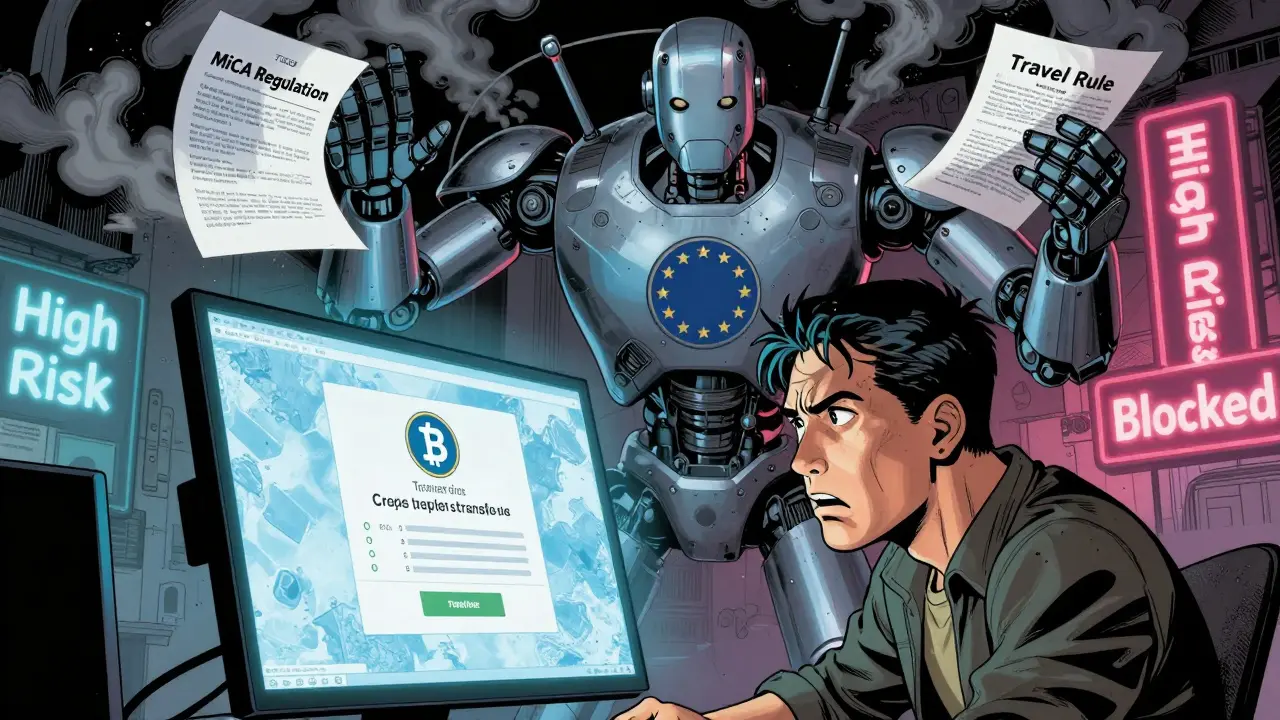
This is where things get real. If a transaction arrives without full details, the receiving CASP doesn’t have to accept it. They can:- Block the transfer
- Return the funds
- Suspend the account
- Report the sender to regulators
What About Cross-Border Transfers?
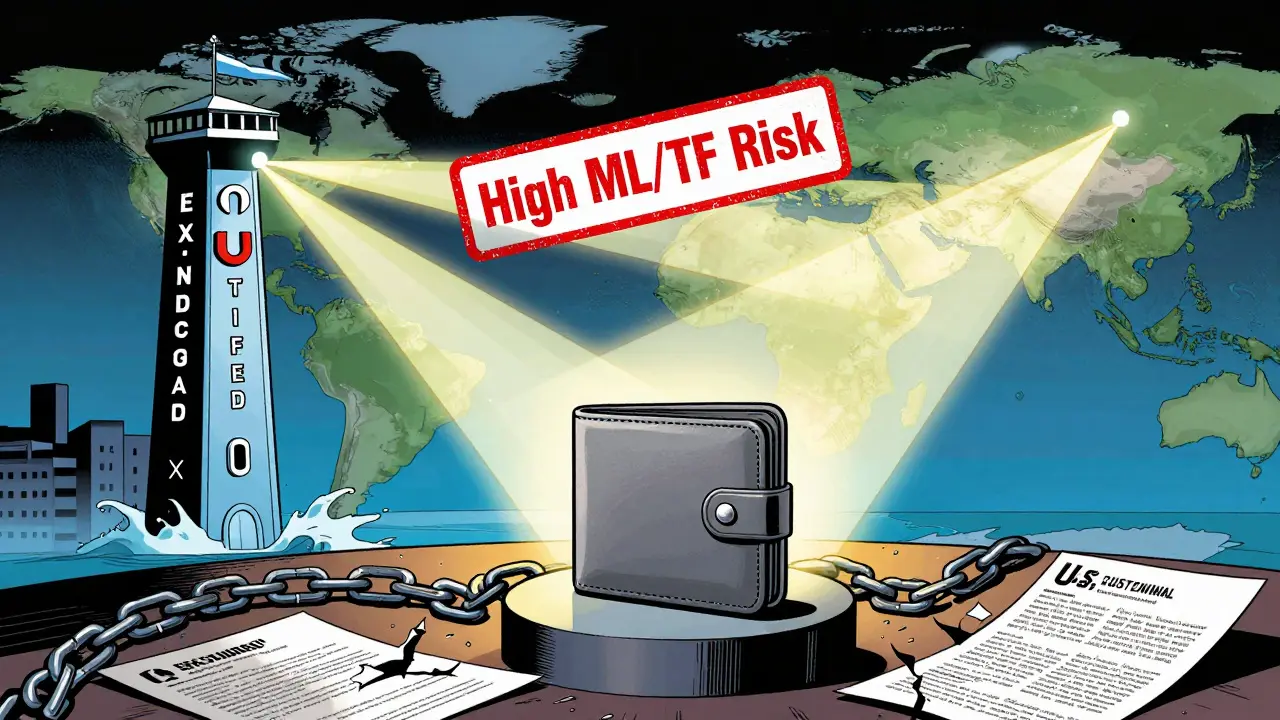
Here’s the messy part. The EU rule only applies when both sides are regulated CASPs. If you send crypto from a French exchange to a U.S. exchange, and the U.S. exchange doesn’t collect full sender info (because they only follow the $3,000 rule), the EU side treats it as a high-risk transaction. The European Banking Authority says these are transfers to “high ML/TF risk jurisdictions.” That means the EU platform must apply extra scrutiny. They might delay the transfer, ask for more documentation, or even refuse it. This creates friction for users sending crypto internationally - even if they’re doing nothing wrong. And if you’re sending from a non-regulated exchange, like a peer-to-peer platform or a wallet that doesn’t follow MiCA? The EU CASP will likely treat it as suspicious by default. Your transaction might get stuck or rejected without warning.How Are Platforms Handling This?
Big exchanges like Binance, Kraken, and Bitstamp had months to prepare. They built systems to automatically collect, validate, and send required data using standardized protocols like the Travel Rule Information Exchange (TRIE) or proprietary APIs. Some use third-party tools like KYCAID, which handles wallet authentication, AML screening, and data logging in one place. These platforms now have:- Real-time verification of counterparty CASPs
- Automated AML checks against sanctions lists
- Secure encrypted channels for data exchange
- Logs stored for at least five years, as required
- Systems that flag mismatched or incomplete data
What Does This Mean for You?
If you’re just holding crypto in a personal wallet and sending to another personal wallet? The rule doesn’t touch you. It only applies when both sides are regulated platforms. But if you’re using any EU-based exchange - Coinbase, Bitpanda, Kraken EU, etc. - here’s what you’ll notice:- Transfers might take longer - sometimes hours - while data is verified
- You may be asked to confirm your identity again before sending
- Some small transfers might get rejected if the recipient platform doesn’t support full Travel Rule compliance
- You won’t be able to send crypto to non-compliant platforms without risk of loss or delay
What’s Next?
The EU is already looking ahead. They’re testing ways to extend the rule to decentralized exchanges (DEXs) and non-custodial wallets - even if those platforms aren’t regulated yet. There are talks about requiring wallet providers to embed compliance data directly into transactions, like a blockchain version of a bank wire memo. Other countries are watching closely. The UK is considering a similar zero-threshold model. Singapore and Japan are tightening their rules. The U.S. remains stuck at $3,000 - but pressure is growing. The EU didn’t just set a rule. They set a global benchmark. Whether you agree with it or not, crypto transactions in Europe are now the most transparent in the world. And that’s not going to change.What Happens If You Don’t Comply?
For users? Nothing directly. The rule targets platforms, not individuals. But if your exchange gets fined or shut down for non-compliance? Your funds could be frozen. Your ability to trade could vanish. For platforms? The penalties are severe:- Fines up to 5% of annual turnover
- Temporary suspension of operations
- Revocation of their license to operate in the EU
- Public naming by regulators
Does the EU Travel Rule apply to peer-to-peer crypto trades?
No. The rule only applies when both parties are regulated crypto asset service providers (CASPs), like exchanges or custodial wallets. If you’re sending crypto directly from your personal wallet to someone else’s personal wallet - even if it’s a friend - the rule doesn’t apply. But if you’re using a platform like Coinbase or Kraken to send to another platform, then yes - full data is required, no matter the amount.
Can I still send crypto to a U.S. exchange from the EU?
Yes, but it’s risky. If the U.S. exchange doesn’t collect full sender info (because they follow the $3,000 threshold), the EU platform will treat the transfer as high-risk. They may delay it, ask for extra verification, or block it entirely. To avoid issues, make sure both sides are fully compliant with the EU’s Travel Rule requirements.
Do I need to give my address every time I send crypto in the EU?
You won’t be asked directly, but the exchange you’re using must collect and send your address (or national ID) to the receiving platform. If you’ve already verified your identity with them, that info is stored and automatically included with every outgoing transaction. You don’t need to re-enter it - but you can’t opt out.
What if I send crypto to a non-EU wallet that’s not regulated?
Your EU-based exchange will likely block the transaction or flag it as high-risk. They’re required to avoid sending funds to platforms that don’t comply with the Travel Rule. If you proceed anyway - say, by using a non-custodial wallet - you risk losing your funds if the receiving platform doesn’t recognize the transaction or if your sending platform reverses it due to compliance concerns.
Is there a way to avoid the EU Travel Rule?
Not if you’re using regulated platforms in the EU. The rule is mandatory and enforced at the platform level. The only way to avoid it is to use non-custodial wallets and peer-to-peer transfers without involving any EU-registered exchange. But that means giving up features like instant fiat on-ramps, customer support, and insurance protections.
steven sun
January 19, 2026 AT 23:56so like... u just cant send 0.50 eth to your friend without the gov knowing who u r and who they r?? like wtf happened to privacy?? i thought crypto was supposed to be free??
tim ang
January 20, 2026 AT 07:58lol i just tried sending 1 euro in usdc and it took 4 hours. exchange kept saying 'pending compliance check'. i thought i was sending crypto, not filing taxes. why do they need my address for a coffee tip??
Bonnie Sands
January 21, 2026 AT 18:27this is just the beginning. next they’ll put microchips in wallets. mark my words - this is how they track every single purchase you make. they’re building a financial surveillance state and you’re all just clicking 'accept'.
Margaret Roberts
January 23, 2026 AT 11:57the eu is just jealous they can’t tax crypto like they tax everything else. if you’re not paying them, they’ll make it impossible to use. classic power grab disguised as 'anti-money laundering.'
Jen Allanson
January 24, 2026 AT 18:14It is both prudent and ethically imperative that regulatory frameworks prioritize the integrity of financial systems over convenience. The absence of thresholds eliminates exploitable loopholes that have historically facilitated illicit activity. This is not overreach-it is responsible governance.
Taylor Mills
January 24, 2026 AT 19:35eu thinks they run the world. us exchanges dont play by these dumb rules. why should i waste time with their paperwork? if they want to be a police state, fine. but dont expect me to use their broken system.
Shamari Harrison
January 24, 2026 AT 20:03For users who are unaware, this rule only applies when both endpoints are regulated CASPs. If you're using a non-custodial wallet like Phantom or Metamask and sending directly to another personal wallet, the rule doesn't touch you. The burden is on exchanges, not individuals. Don't panic - just know where your funds are held.
Mark Estareja
January 25, 2026 AT 01:05the infrastructure costs alone for small exchanges are astronomical. they’re spending millions on trie-compliant apis, aml screening engines, data retention systems… and for what? to move 0.50€? the regulatory capture here is obscene. this isn’t about crime - it’s about market consolidation.
Athena Mantle
January 25, 2026 AT 05:42imagine if your soul had a blockchain ledger... every thought, every donation, every tiny transfer logged forever. this is it. the eu didn't just create a rule - they created a digital confession booth. 🌌🪞
Matthew Kelly
January 25, 2026 AT 22:14hey, i get it - it’s annoying. but honestly? if you’re using kraken or coinbase, they already had your info anyway. this just makes sure it’s passed along properly. it’s not perfect, but it’s better than random freezes from sketchy platforms. 💪
carol johnson
January 27, 2026 AT 15:51they’re coming for us. first it was taxes, then it was KYC, now it’s your 0.20€ tip. next they’ll demand a video of you holding your passport every time you send a satoshi. i’m moving to serbia. 🌍💔
Mike Stay
January 28, 2026 AT 09:25From a global governance perspective, the EU’s zero-threshold approach represents a paradigm shift in regulatory philosophy - one that prioritizes systemic transparency over fragmented compliance. While the operational burden on smaller institutions is non-trivial, the long-term effect will be a more resilient, interoperable, and accountable global crypto infrastructure. This is not merely regulation - it is institutional maturation.
Adam Fularz
January 29, 2026 AT 03:55they say 'no exceptions' but i bet binance got a backdoor. if you're big enough, you get to write the rules. this isn't fairness - it's protectionism dressed up as compliance. the little guys get crushed while the giants sip champagne.
Arnaud Landry
January 30, 2026 AT 07:15you know what’s funny? the same people screaming about 'freedom' are the ones who still use centralized exchanges. if you really wanted privacy, you'd be running a node and using p2p. this rule doesn't affect you - it affects the middlemen who want to control you.
Sara Delgado Rivero
February 1, 2026 AT 03:36if you think this is bad wait till they make wallets embed your id in the tx itself like a blockchain passport nobody asked for nobody wants this is just the start of the digital serfdom