

When you sell, trade, or even spend cryptocurrency in Australia, the tax man isn’t just watching-he’s counting every dollar. The Australian Taxation Office (ATO) treats crypto not as money, but as property. That means every time you move it, you might trigger a Capital Gains Tax (CGT) event. It’s not complicated, but it’s easy to mess up if you don’t know the rules.
What Triggers a CGT Event?
You don’t need to cash out to owe tax. Any time you dispose of crypto, the ATO sees it as a sale. That includes:- Selling crypto for Australian dollars
- Trading one crypto for another (like BTC for ETH)
- Spending crypto to buy goods or services
- Gifting crypto to someone who isn’t your spouse
- Paying a transaction fee using crypto (yes, even that counts)
Let’s say you bought 0.5 BTC for $20,000 in March 2023. In January 2025, you trade half of it for ETH worth $15,000. That’s a CGT event. You didn’t get cash, but you still made a gain. The ATO wants to know the value in AUD at the time of the trade, your original cost base, and whether you held it long enough to qualify for the discount.
The 50% CGT Discount-Your Biggest Advantage
If you hold your crypto for more than 12 months, you get a 50% discount on your capital gain. That’s huge. For example:- You bought 2 SOL for $1,200 in June 2023
- You sold them in August 2024 for $4,000
- Your capital gain: $4,000 - $1,200 = $2,800
- Because you held it over 12 months: $2,800 × 50% = $1,400 taxable gain
If you’d sold after only 11 months, the full $2,800 would be added to your taxable income. At a 37% marginal tax rate, that’s $1,036 extra in tax. Wait 30 more days, and you save $518. That’s why so many Australian investors hold through the 12-month mark-even if the market dips.
Who Gets Taxed as a Trader (and Loses the Discount)
The ATO doesn’t treat everyone the same. If you’re buying and selling crypto regularly-say, 50+ trades a year, using leverage, or treating it like a business-you might be classified as a trader, not an investor. That changes everything.Traders don’t get the 50% CGT discount. Instead, all profits are taxed as ordinary income. That means:
- No discount, even if you held for 5 years
- Full gain added to your salary, bonuses, and other income
- Higher tax rate-up to 45% plus 2% Medicare levy
The ATO looks at behavior: frequency, volume, time spent, and whether you’re using trading strategies. If you’re day trading Solana or leveraged ETH positions on Binance, you’re at risk. The 2024 AAT case Commissioner of Taxation v Bitcoin Trader confirmed this: even if you call yourself an investor, the ATO will look at what you actually did.
Cost Base: The Hidden Math That Trip People Up
Your capital gain isn’t just sell price minus buy price. You need to calculate your cost base correctly. It includes:- Price you paid for the crypto
- Transaction fees paid in AUD
- Costs of buying or transferring (like exchange fees)
Here’s where people get burned: if you pay a network fee in crypto, that’s a separate CGT event. Say you send 0.1 ETH to pay a $40 gas fee. You bought that 0.1 ETH for $200. Now you’ve triggered a $160 capital gain ($200 - $40). You didn’t sell anything-but you still owe tax on $160.
And if you bought crypto at different times and prices? The ATO requires specific identification. You can’t just average it out. You must track which coins you sold, when you bought them, and what you paid. That’s why tools like Koinly and CoinTracker are so popular-managing 200+ transactions manually is a nightmare.

What Doesn’t Count as a CGT Event
Not every crypto move is taxable. Here’s what’s safe:- Buying crypto with AUD
- Transferring crypto between your own wallets
- Receiving crypto as a gift from a spouse
- Mining or staking rewards (these are ordinary income, not CGT)
Staking rewards and airdrops? They’re taxed as income when you receive them. If you get 5 ADA worth $150 as a reward, you pay tax on $150 as ordinary income. Later, if you sell that ADA, you’ll pay CGT on any gain above $150.
Personal Use Exemption-A Trap for the Uninformed
There’s a $10,000 exemption for personal use assets. Sounds great, right? But it’s not what you think.The ATO says: if you buy crypto to use it for personal goods or services-like buying a laptop with BTC-and you spend it within a year, you might qualify. But if you bought BTC as an investment, then later spent $8,000 of it on a vacation? That’s not personal use. It’s a disposal. The ATO doesn’t care why you spent it-they care why you bought it.
Most people don’t qualify for this exemption. It’s rarely useful for investors. Don’t assume you’re covered just because you didn’t cash out.
Record Keeping: What the ATO Demands
The ATO doesn’t just ask for records-they require them. You must keep:- Date of every transaction
- Type of transaction (buy, sell, trade, etc.)
- Value in AUD at time of transaction
- Counterparty (exchange or wallet address)
- Cost base and any fees
Most people don’t realize how much time this takes. A CoinLedger survey found it takes the average investor 15-20 hours just to document a year of crypto activity. And if you use multiple exchanges, DeFi platforms, or hardware wallets? That time doubles.
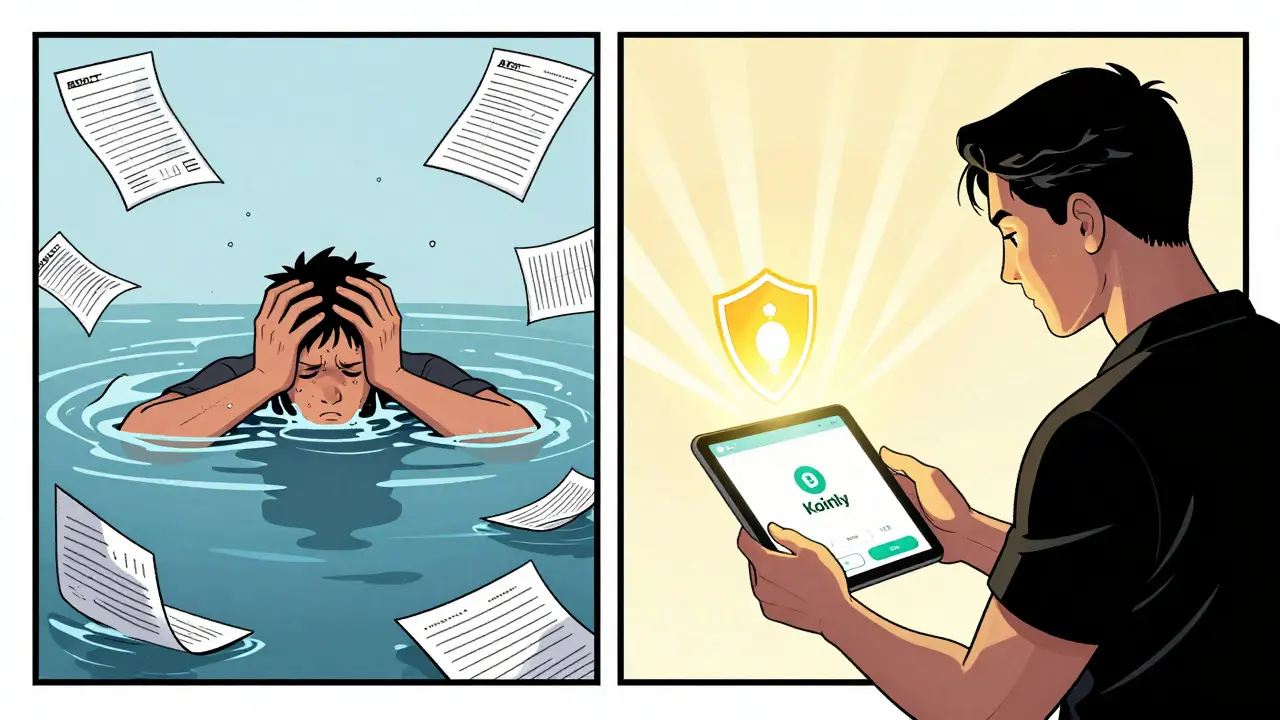
The ATO offers a free online tool, but it’s basic. Most users with more than 10 transactions use software. In 2025, 67% of Australian crypto investors used Koinly, CoinTracker, or CryptoTaxCalculator. The market for these tools is growing fast-$28.5 million in 2025, up 22% from last year.
What’s Changing in 2025-2026
The ATO isn’t slowing down. In February 2025, they started direct data sharing with Australian exchanges like Swyftx, CoinSpot, and Independent Reserve. That means they now get your transaction history automatically-no need for you to report it.By mid-2026, they’ll integrate with the Digital Asset Data Exchange, which will track all crypto transfers above $10,000. Compliance rates are expected to jump from 65% to over 85%.
They’re also cracking down on frequent traders. Assistant Commissioner Kath Anderson said in April 2025: “We’re focusing on those with 100+ transactions per year who may not be correctly applying the CGT discount.”
Future changes? DeFi staking, liquidity pools, and NFTs are still grey areas. PwC predicts clearer rules by 2026. But the 50% discount? That’s safe. As EY’s Jane Kelly said in June 2025: “It’s politically popular. It’s not going anywhere.”
Real Stories: What Works and What Doesn’t
On Reddit, u/CryptoHodlerDownUnder saved $7,000 by holding ETH for 14 months. “The discount knocked my tax bill from $1,400 to $700,” they wrote. That’s the power of patience. But on Trustpilot, someone wrote: “Sold SOL after 11 months. Got hit with full tax. Wish I’d waited 30 days.” They lost $300+ because they rushed. One investor used $35,000 in losses from failed NFT projects to offset crypto gains. That’s legal. The ATO lets you offset capital losses against capital gains. But you can’t use them to reduce salary income. You can carry losses forward, but you can’t get cash back.Final Advice: Plan Ahead, Don’t Panic
Australia’s crypto tax system isn’t perfect. It’s built for stocks and property, not 24/7 volatile digital assets. But it’s clear, and it’s enforceable.- Hold for 12+ months if you can. The discount is real.
- Track every transaction-even gas fees.
- Use software. Don’t rely on spreadsheets.
- If you trade often, get professional advice. You might be a trader, not an investor.
- Don’t assume personal use exemptions apply. They rarely do.
The ATO isn’t trying to punish you. They’re just making sure you pay what you owe. If you do your homework, you’ll pay less, stress less, and sleep better.
Do I pay tax if I just buy crypto with AUD?
No. Buying crypto with Australian dollars is not a taxable event. You only trigger CGT when you sell, trade, spend, or gift it. Keep your purchase receipt though-you’ll need it to calculate your cost base later.
What if I lose crypto due to a scam or exchange collapse?
You can claim a capital loss if you can prove the crypto is permanently lost-like a wallet with no private keys, or an exchange that went bankrupt and you can’t access your funds. You need evidence: screenshots, news articles, or official statements. You can use this loss to offset future capital gains, but not reduce your salary income.
Are airdrops and staking rewards taxable?
Yes. When you receive airdrops or staking rewards, they’re treated as ordinary income. You pay tax on their AUD value at the time you receive them. Later, if you sell them, you’ll pay CGT on any gain above that value. Keep a record of the date and market price when you received them.
Can I offset crypto losses against my salary?
No. Capital losses from crypto can only be used to reduce capital gains from other investments. You can’t use them to lower your wage, bonus, or business income. But you can carry unused losses forward to future years to offset future crypto gains.
Do I need to report crypto if I didn’t sell any?
If you only bought crypto with AUD and didn’t trade, spend, or transfer it out of your wallet, you don’t need to report it. But if you received staking rewards, airdrops, or paid fees in crypto, you still need to declare those as income or capital gains. The ATO now gets data directly from exchanges, so it’s safer to report everything.
Emily L
January 3, 2026 AT 09:47Josh Seeto
January 5, 2026 AT 02:04Jordan Fowles
January 5, 2026 AT 05:54Willis Shane
January 6, 2026 AT 23:38Mandy McDonald Hodge
January 8, 2026 AT 08:11Andrew Prince
January 8, 2026 AT 14:08Prateek Chitransh
January 9, 2026 AT 07:07Adam Hull
January 9, 2026 AT 10:10Mike Reynolds
January 10, 2026 AT 20:48Antonio Snoddy
January 11, 2026 AT 02:08Jacky Baltes
January 11, 2026 AT 17:11Bruce Morrison
January 13, 2026 AT 09:58christopher charles
January 15, 2026 AT 08:24Haritha Kusal
January 16, 2026 AT 13:34Michelle Slayden
January 17, 2026 AT 04:12Amy Garrett
January 18, 2026 AT 08:00Gavin Hill
January 20, 2026 AT 02:37