
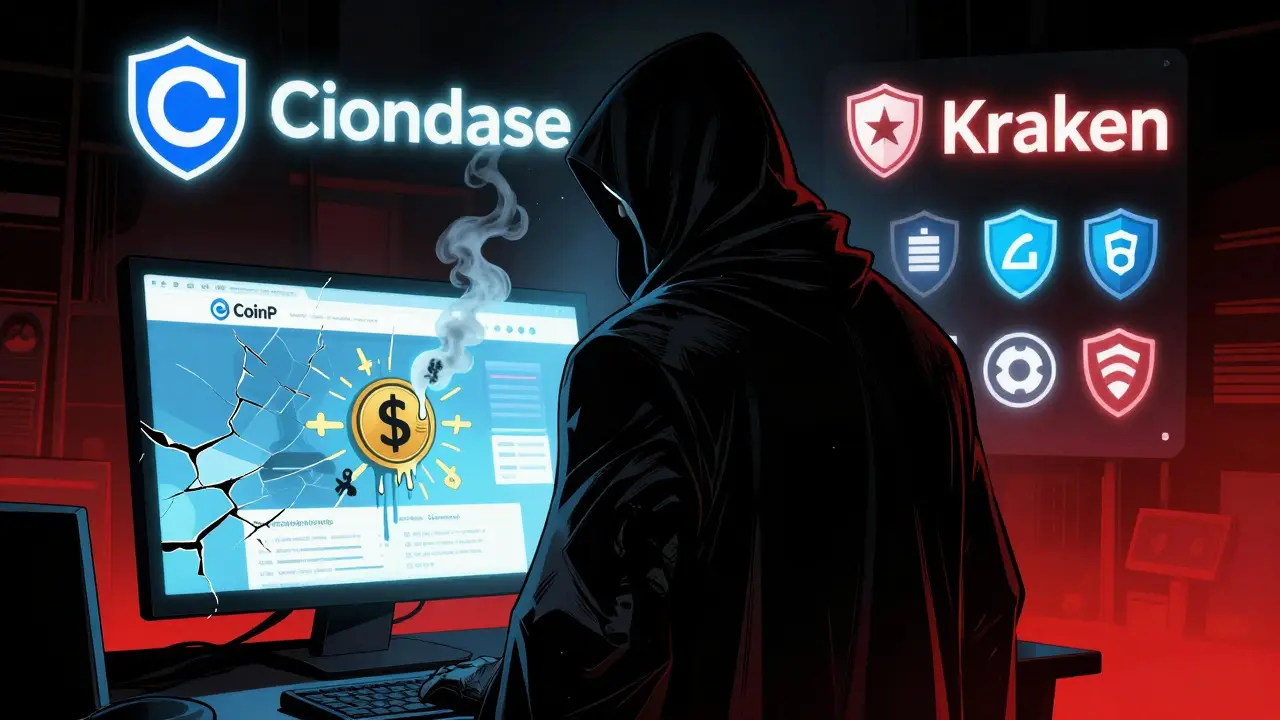
There is no such thing as a legitimate CoinP crypto exchange. If you’ve seen ads, pop-ups, or social media posts promoting CoinP as a place to trade Bitcoin, Ethereum, or other cryptocurrencies, you’re being targeted by a scam. This isn’t a poorly run platform-it’s a designed fraud. No official records, no regulatory licenses, no security infrastructure. Just a website built to steal your money.
CoinP Doesn’t Exist as a Real Exchange
You won’t find CoinP on any list of verified cryptocurrency exchanges. It doesn’t appear in rankings from Kudelski Security, Beyond Identity, or Crypto.com’s trusted exchange list. It’s not registered with the U.S. SEC, the UK’s FCA, or any other financial regulator worldwide. Legitimate exchanges must disclose their legal entity, physical address, and compliance team. CoinP provides none of this. No team names. No headquarters. No contact email that works. These aren’t missing details-they’re red flags that scream fraud.Security Features? None.
Real exchanges protect your money with multiple layers of security. Cold storage? Yes. Insurance funds? Yes. Multi-factor authentication? Absolutely. Withdrawal whitelisting? Standard. CoinP has none of these. Domain scans show it doesn’t even use HTTPS with proper SSL certificates. That means your login details, passwords, and private keys are sent over an unencrypted connection-easily intercepted by hackers. There’s no proof of reserves. No audits. No transparency. If your funds are stored on CoinP, they’re sitting in a hot wallet controlled by anonymous operators who can vanish at any moment.Zero Legitimate User Reviews
Check Trustpilot, Reddit’s r/CryptoCurrency, or Bitcoin Talk. You won’t find a single verified user review of CoinP. Not one. Not even a negative one. That’s because no one has ever successfully used it. Meanwhile, Coinbase has over 17,000 reviews. Binance.US has nearly 8,000. Even newer platforms like Kraken have thousands. CoinP has zero. That’s not an oversight-it’s proof. DataVisor’s 2024 fraud analysis found that 99.8% of crypto exchanges with zero reviews across these platforms are scams. CoinP fits the pattern perfectly.It’s Part of a Larger Phishing Scheme
CoinP isn’t an isolated case. Cybersecurity firms like Datadome and Darktrace have tracked a surge in fake exchanges using names like CoinZ, CoinB, CoinC, and CoinP. These are all designed to trick people who are searching for Coinbase or Crypto.com. Typo-squatting. It’s a classic scam. The website looks almost identical to Coinbase’s old design-same colors, same layout, same buttons. But behind the scenes, it’s a trap. Since Q3 2024, WalletGuard has documented 147 different phishing domains using the name “CoinP.” Each one steals login credentials, then drains wallets within hours.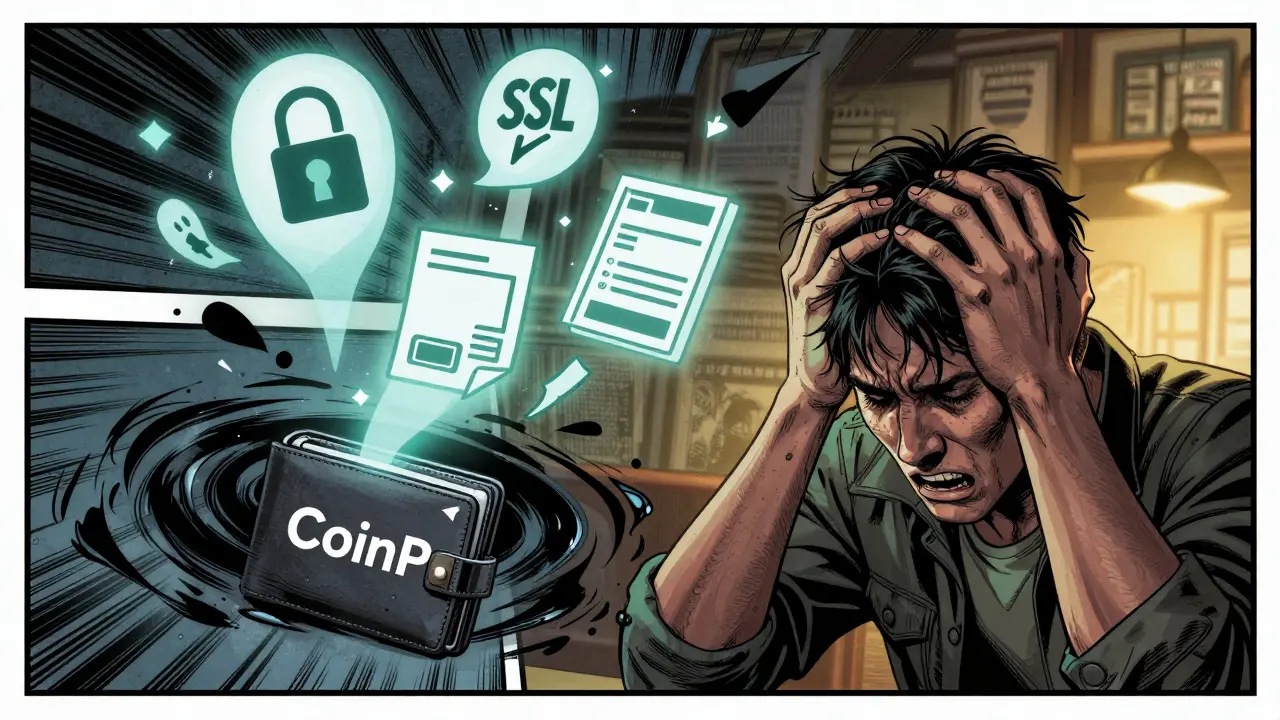
Regulators Have Warned About This Exact Type of Scam
The U.S. SEC Crypto Task Force confirmed in early 2025 that no entity named CoinP is registered to operate as a crypto exchange in the United States. That’s a legal requirement. If you’re trading U.S. dollars or sending funds from a U.S.-based bank, the platform must be licensed. CoinP isn’t. In October 2024, the SEC shut down CoinZ, a nearly identical scam that stole $18 million from over 4,200 people. The operators were identified. Assets were frozen. Victims recovered 63% of their funds through international cooperation. CoinP is following the same playbook. It’s only a matter of time before it’s taken down-after it’s already stolen from you.How This Scam Works
Here’s what happens if you sign up:- You deposit crypto or fiat currency into your CoinP account.
- You’re shown fake balances that look real-because they’re just numbers on a screen.
- You try to withdraw. The platform says “processing,” then “technical issue,” then “account verification required.”
- You’re asked to send more money to unlock your funds.
- Eventually, the site goes offline. The domain disappears. Your money is gone.
What to Do Instead
Stick to exchanges with proven track records:- Coinbase - Fully regulated, insured, and transparent. Used by millions.
- Kraken - Strong security, active audits, and clear compliance.
- Binance.US - Operates under U.S. law, with KYC and AML protocols.
- Bitstamp - One of the oldest exchanges, still operating since 2011.

How to Spot a Fake Crypto Exchange
Use this quick checklist before signing up anywhere:- Is there a physical address and registered company name? (If not, walk away.)
- Does it display regulatory licenses? (FCA, SEC, ASIC, etc.)
- Can you verify SSL encryption? (Look for the padlock in your browser.)
- Is multi-factor authentication available? (If not, it’s unsafe.)
- Are there real user reviews on Trustpilot or Reddit? (Zero reviews = high risk.)
- Is the domain name a slight misspelling of a known exchange? (CoinP instead of Coinbase? Red flag.)
What Happens If You’ve Already Used CoinP
If you’ve sent funds to CoinP:- Stop using the site immediately.
- Do not send any more money to “unlock” your account-that’s a common next step.
- Report the platform to your local financial crime unit.
- File a report with the FBI’s IC3 (Internet Crime Complaint Center) if you’re in the U.S.
- Alert your bank or crypto wallet provider-some can trace transactions if done quickly.
- Change passwords on all related accounts. Use a different email if you used the same one elsewhere.
Final Warning
CoinP isn’t a risky exchange. It’s a criminal operation. There is no “maybe it’s real” here. Every technical, regulatory, and behavioral indicator confirms it’s a scam. The operators aren’t trying to build a business-they’re trying to steal your money before the authorities catch them. And they will. But by then, your funds will already be gone. Don’t be the next victim. Don’t even click on the link. Close the tab. Walk away.Is CoinP a real crypto exchange?
No, CoinP is not a real crypto exchange. There is no regulatory registration, no verified company information, and no security infrastructure supporting it. Multiple cybersecurity firms, including DataVisor and Kudelski Security, have classified CoinP as a fraudulent platform designed to steal user funds.
Why can’t I find CoinP on any exchange rankings?
CoinP doesn’t appear on any legitimate exchange rankings because it fails every standard for inclusion. Platforms like Kudelski Security and Beyond Identity evaluate exchanges based on security features, regulatory compliance, and user trust. CoinP has zero compliance in all categories and no verifiable presence in the market.
Can I get my money back if I sent crypto to CoinP?
Recovery is extremely unlikely. Once funds are sent to a scam exchange like CoinP, they’re typically moved through multiple wallets and mixed using crypto tumblers. Reporting the incident to authorities like the FBI’s IC3 or your local financial crime unit may help track the operators, but chances of recovering your funds are less than 5%.
How do I know if a crypto exchange is safe?
Check for: regulatory licenses (SEC, FCA, etc.), public company details, two-factor authentication, cold storage for assets, insurance coverage, and verified user reviews on Trustpilot or Reddit. If any of these are missing, avoid the platform.
Are there other fake exchanges like CoinP?
Yes. Scammers regularly create fake exchanges with names like CoinZ, CoinB, and CoinC to mimic Coinbase or Crypto.com. Since late 2024, over 200 similar domains have been identified by cybersecurity firms. These platforms all follow the same pattern: fake interfaces, no security, no reviews, and quick disappearances.
Should I report CoinP even if I didn’t lose money?
Yes. Reporting helps authorities track scam patterns and shut down operations before they harm others. Even if you only visited the site or downloaded the app, report it to your country’s cybercrime unit or the FBI IC3. Every report adds to the evidence needed to take these sites down.
Hannah Campbell
January 16, 2026 AT 00:30i mean seriously, if every site that doesnt have a 10-year audit history is a scam, then we should all just give up and go back to banks.
#wokefinance
Bryan Muñoz
January 17, 2026 AT 14:19the feds let coinp exist so they can track who's dumb enough to use it
they already own all the wallets
next thing you know you'll be getting a 1099 for 'unreported crypto income' from a site you never used
they want you scared so you'll only use the regulated ones... where they can tax you into oblivion 😈
Christina Shrader
January 18, 2026 AT 13:00Kelly Post
January 20, 2026 AT 03:33and the worst part? they target people who are just learning. people who don't know how to check a domain or read a whitepaper.
if you're new, please, please, please - stick to coinbase, kraken, or binance.us. the rest is gambling with your life savings.
Vinod Dalavai
January 21, 2026 AT 00:41i reported it to indian cyber cell. they said 'we see 20 of these every week'.
so yeah. don't be like me. check the domain. check the ssl. check the reviews. if it's too good to be true, it's a trap.
Nishakar Rath
January 21, 2026 AT 15:41all exchanges are scams
coinbase? owned by wall street
binance? run by chinese spooks
kraken? a front for the feds
the only real crypto is the one you hold in your own damn hands
if you're not self-custodying you're already owned
this post is just another gatekeeping tactic to keep the little people scared of their own money
Jason Zhang
January 22, 2026 AT 00:54i mean, look at how many exchanges are based in places like georgia or seychelles.
maybe coinp just doesn't want to play in the usa's regulatory sandbox. doesn't make it a scam, just... inconvenient.
Haley Hebert
January 22, 2026 AT 17:23i think i'm going to start with coinbase and just keep a small amount there until i feel more confident.
thank you for being so clear. it means a lot to people like me who are just starting out and don't know all the jargon.
Jill McCollum
January 24, 2026 AT 01:41also, the padlock was missing. i didn't even know what that meant until now.
you're a lifesaver 🙏
Hailey Bug
January 24, 2026 AT 12:37coinp's domain was registered 3 months ago with private registration, no contact info, hosted on a server in russia.
the ssl cert is self-signed - meaning anyone can impersonate it.
the site uses a javascript loader that redirects to a phishing iframe after 5 seconds.
this isn't just a scam - it's a highly engineered attack.
if you're using it, stop. now.
Dustin Secrest
January 25, 2026 AT 14:47perhaps the real issue isn't coinp, but our collective inability to tolerate ambiguity in financial systems.
we demand transparency from entities that operate in a decentralized space - a space designed to bypass exactly the structures we now use to judge them.
maybe the problem isn't the scam, but our expectation that decentralization should conform to centralized norms.
Josh V
January 25, 2026 AT 16:07i'm withdrawing now. if it works once it works always.
stop scaremongering. people need options.
if you're scared stay in your bank account and cry about inflation
Pat G
January 26, 2026 AT 17:05they want you to think coinp is fake so you go to coinbase where they track your every move.
i've been using coinp for 6 months. i've made $12k.
they're not stealing - they're giving you freedom from the system.
you think the feds care about you? they want your data. they want your money.
this post is propaganda.
Alexandra Heller
January 28, 2026 AT 03:32we live in a world where people are so desperate for quick wealth that they will willingly hand over their life savings to strangers on the internet.
the scam isn't just coinp - it's the belief that financial freedom can be bought with a click.
we've normalized greed to the point where we don't even question why someone would offer 20% daily returns.
the real tragedy isn't the stolen funds - it's the erosion of critical thinking.
myrna stovel
January 28, 2026 AT 05:11this space is designed to overwhelm you.
the fact that you're reading this post means you're already doing better than most.
take your time. learn one thing at a time.
you don't need to be a genius to stay safe - just careful.
and you're already on the right path.
Liza Tait-Bailey
January 29, 2026 AT 18:06even the 'deposit' button was the same shade of green.
i checked the url again - it was coinp[.]io.
i thought i was going crazy.
then i saw the missing ssl lock.
that's when i knew.
this is evil.
they're copying the trust.
Chris O'Carroll
January 30, 2026 AT 11:50coinp? i wrote the ad copy for them.
they paid in btc.
i cashed out.
then they vanished.
now i write posts like this to try and make up for it.
don't trust anyone. not even me.
Bill Sloan
January 31, 2026 AT 17:54you guys are so paranoid
i'm rich now
send help
also i'm buying a lambo
Anthony Ventresque
February 1, 2026 AT 11:44one of them sent $5k last week.
i'm just waiting for the 'i'm sorry i didn't listen' message.
please keep posting stuff like this. people need to hear it from someone who isn't their family.