
Crypto Exchange Risk Calculator
Cofinex Security Assessment
Based on the article's findings: 455 vulnerabilities including stolen credentials, SSL issues, and critical security flaws.
Your Risk Assessment
When you're looking for a crypto exchange that feels safe, fast, and legal, Cofinex pops up in search results with big claims: Cofinex crypto exchange says it handles 400,000 trades per second, supports 670+ coins, and is fully licensed by the Czech National Bank and India’s Financial Intelligence Unit. Sounds impressive, right? But here’s the catch - behind those numbers, there’s a serious security problem that could cost you more than just a bad trade.
Who Is Cofinex, Really?
Cofinex isn’t another anonymous offshore platform. It’s run by Minos Blockchain s.r.o., a company registered in the Czech Republic with a clear regulatory stamp: VASP license #145973395 from the Czech National Bank. That’s rare. Most crypto exchanges operate in legal gray zones, but Cofinex actually jumped through the hoops. It’s also registered with FIU-India, making it one of the few exchanges legally allowed to serve users in both Europe and India. This isn’t just marketing fluff - it’s compliance that matters when governments crack down on unlicensed platforms. The founder, Sarvesh Agrahari, claims Cofinex is building a full blockchain ecosystem, not just a trading site. That means you get spot trading, futures, margin trading, a crypto-powered Mastercard, a wallet, a launchpad for new tokens, and even lending services. It’s designed to be your one-stop shop. But having a lot of features doesn’t mean they’re all safe or reliable.What Can You Trade? And How Fast?
Cofinex offers trading pairs for over 670 cryptocurrencies, including Bitcoin, Ethereum, Solana, and smaller altcoins. If you’re into niche tokens, you’ll find more options here than on many mid-sized exchanges. It also supports fiat deposits in EUR, GBP, USD, and INR - a big plus for users in Europe and India who don’t want to convert through a third party. The platform claims to process 0.4 million orders per second. That’s faster than most major exchanges. For context, Binance reportedly handles around 1.4 million per second, but Cofinex’s speed is still in the top tier. In real-world terms, this means fewer delays when you’re scalping or trading during volatile news events. If you’re an active trader, that speed matters. But speed without stability is useless. There’s no public data on order book depth, slippage during high volume, or uptime during market crashes. The numbers look good on paper, but without real user reports or third-party stress tests, it’s hard to say if the system holds up under pressure.The Security Problem No One Talks About
Here’s where Cofinex falls apart - hard. Business Digital Index did a deep security audit in September 2024 and found 455 vulnerabilities. That’s not a typo. 455. Among them: 14 corporate login credentials were already stolen and leaked online. 67% of employees reused passwords that had been exposed in past breaches. There were 299 SSL configuration issues - meaning your connection to the site might not be encrypted properly. And four of those vulnerabilities were labeled “critical,” meaning attackers could potentially steal user data or drain wallets. CER.live, another security rating service, gave Cofinex a “D” grade - just 16% security score. Why? Because it has no approved penetration test, no bug bounty program, and no public record of fixing known flaws. Compare that to Coinbase or Kraken, which both have “A” ratings and pay hackers to find holes before criminals do. Cofinex says it has $100 million in insured assets. That sounds reassuring - until you realize they never say who the insurer is, what’s covered, or what the exclusions are. Most insurance policies don’t cover losses from poor security practices. If your funds are stolen because an employee reused a password, you’re probably out of luck.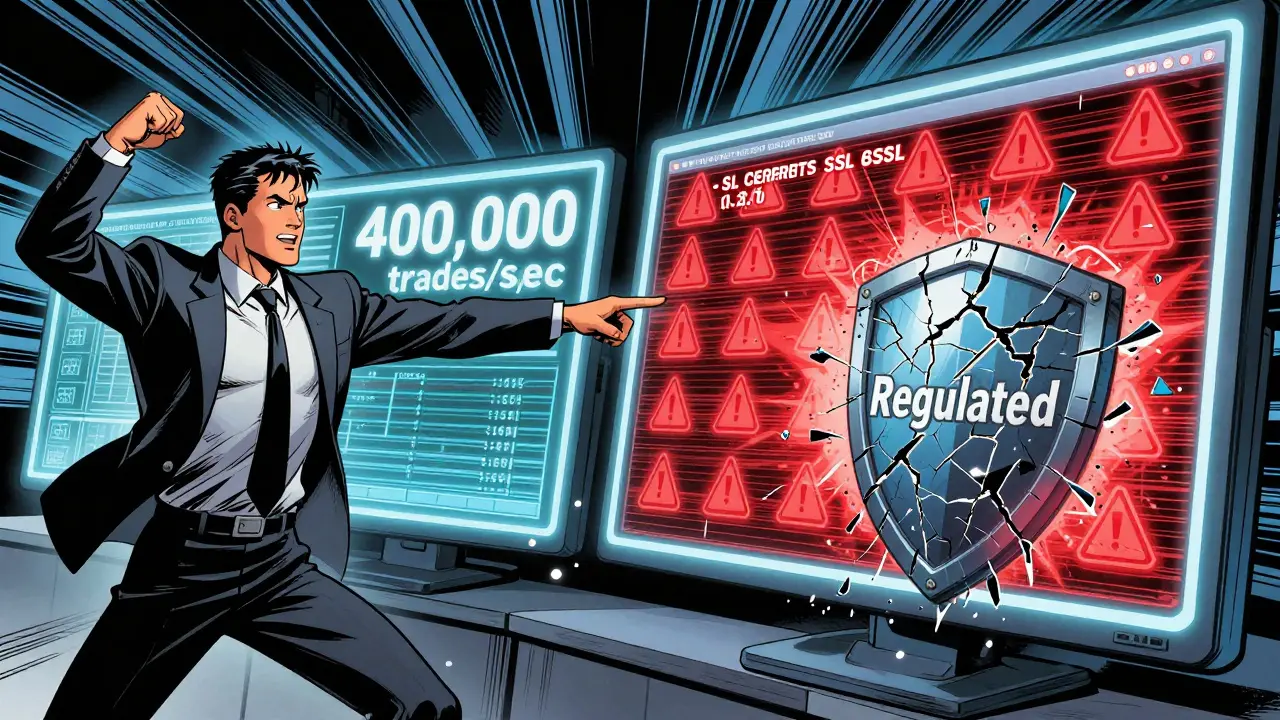
Is Cofinex Safe for Beginners?
The interface is described as “user-friendly,” and the platform does offer educational resources and market analysis. That’s good. But safety isn’t just about how easy it is to click a button. If you’re new to crypto, you might not know to check for penetration tests or bug bounties. You might trust the “regulated” label and assume that means your money is safe. It doesn’t. Regulation means they follow anti-money-laundering rules. It doesn’t mean they’ve built a secure system. Think of it like a bank with a fancy building but broken locks on every door. The government says it’s legal - but your cash is still at risk. If you’re a beginner, stick with platforms like Coinbase or Kraken. They’re slower to add new tokens, but they’ve spent years fixing security gaps. Cofinex is still in the “fix everything” phase.Who Is Cofinex Actually For?
Cofinex isn’t for everyone. It’s not for security-focused traders. It’s not for people who want peace of mind. It’s for a very specific group: users in the EU or India who need direct fiat access and are willing to accept high risk for access to a wide range of tokens and fast execution. If you’re a trader who needs to move quickly between altcoins and doesn’t hold large sums long-term, Cofinex might work - as long as you treat it like a temporary trading tool, not a storage wallet. Withdraw your profits regularly. Don’t leave large balances on the platform. It’s also a good fit for users who want to use the Cofinex Mastercard to spend crypto directly. That’s a real feature, and it works. But again - only if you’re comfortable with the underlying risk.
How Does It Compare to the Big Players?
Let’s put it in perspective: - Binance: 150+ million users, massive liquidity, but has faced regulatory crackdowns globally. No official EU license.- Coinbase: Fully licensed in the EU and US, strong security, fewer coins, slower execution.
- Kraken: A-rated security, good fiat support, regulated in multiple countries, but limited altcoin selection.
- Cofinex: Licensed in EU and India, 670+ coins, fast execution, but critical security flaws, no public bug bounty, unverified insurance. Cofinex’s only real edge is its dual-regulation and token variety. Everything else? It’s behind.
The Road Ahead: Can Cofinex Fix Itself?
Cofinex says it’s working on Cofinex Chain (CNX-20), a DeFi ecosystem, and an academy for crypto education. That’s promising. But building new features won’t help if your foundation is crumbling. The company claims it’s backed by private investors and aims to hit 2 million users by 2026. That’s ambitious. But with a current user base of just 115,000 and a security rating that’s worse than most shady exchanges, growth feels unlikely unless they fix their core issues. Industry analysts agree: regulatory compliance is now the #1 factor for institutional investors. But security is #2. Cofinex has #1. It’s missing #2. And in crypto, missing #2 can mean losing everything.Final Verdict: Use With Extreme Caution
Cofinex is not a scam. It’s licensed. It has real features. It’s not hiding anything. But it’s also one of the most poorly secured exchanges you’ll find with official regulatory backing. If you’re a casual investor holding Bitcoin long-term - don’t use Cofinex. Use Coinbase or Kraken.If you’re an active trader who needs fast execution and deep altcoin access - you can use it, but only as a trading account, not a wallet. Withdraw your profits daily. Never leave more than you can afford to lose.
If you’re looking for safety, trust, or peace of mind - walk away. The 455 security issues aren’t a glitch. They’re a warning. Cofinex could become a major player. But right now, it’s a high-risk experiment. And you’re the one testing it.
Is Cofinex a legitimate crypto exchange?
Yes, Cofinex is legitimate in the legal sense. It holds a VASP license from the Czech National Bank and is registered with India’s FIU-India. This means it follows anti-money laundering rules and operates under government oversight. But legitimacy doesn’t mean safety. Many regulated exchanges still get hacked due to poor security practices.
Can I trust Cofinex with my crypto?
Only if you understand the risks. Cofinex has serious security flaws - 455 identified vulnerabilities, stolen employee credentials, and no bug bounty program. If you must use it, treat it like a trading account, not a storage wallet. Withdraw your funds to a personal hardware wallet after every trade. Never leave large amounts on the platform.
Does Cofinex have a good mobile app?
The platform offers mobile apps for iOS and Android, with a clean interface and access to all trading features. However, user reviews are scarce, and there’s no public data on app performance, crash rates, or security updates. Since the web platform has known vulnerabilities, assume the mobile app carries the same risks.
What are Cofinex’s trading fees?
Cofinex claims to have “one of the industry’s most competitive trading fees,” but it doesn’t publish exact fee schedules on its website. Based on industry patterns, spot trading fees are likely around 0.1% to 0.2%, with lower fees for high-volume traders. However, without official confirmation, you should assume fees could change without notice - and always check your trade confirmation before executing.
Can I buy crypto with fiat on Cofinex?
Yes. Cofinex supports direct fiat deposits in EUR, GBP, USD, and INR. You can deposit via bank transfer or possibly card payment, depending on your region. This is one of its strongest features, especially for users in Europe and India who want to avoid third-party converters. However, deposit limits and processing times aren’t clearly stated - expect delays during high volume.
Is Cofinex better than Binance or Coinbase?
No, not overall. Binance offers more liquidity and coins. Coinbase has far better security and customer support. Cofinex’s only advantages are its dual-regulation (EU + India) and faster trade execution. But those don’t outweigh its critical security flaws. For most users, Binance or Coinbase are safer, more reliable choices.
What happens if Cofinex gets hacked?
If Cofinex is hacked, your funds are at high risk. The $100 million insurance claim is vague - no insurer name, no policy details, no proof of coverage. Most insurance policies exclude losses from poor security, which Cofinex clearly has. If your crypto disappears, you likely won’t get it back. That’s the biggest risk of using this platform.
Alex Warren
December 13, 2025 AT 18:08Cofinex’s 455 vulnerabilities aren’t just a red flag-they’re a full-blown fire alarm. No bug bounty, no penetration tests, and employee passwords leaked since 2021? That’s not negligence, that’s institutional arrogance. Regulation doesn’t equal security. It just means they paid the paperwork fee.
Steven Ellis
December 15, 2025 AT 14:21I get why people are drawn to Cofinex-670 coins, fiat access in INR and EUR, lightning-fast execution. But let’s be real: if your exchange has more vulnerabilities than features, you’re not trading crypto, you’re playing Russian roulette with your portfolio. I’ve seen platforms like this collapse overnight. The $100M insurance? Vague. Unverifiable. Probably a marketing footnote buried in the T&Cs.
Use it for small, short-term trades if you must. But treat it like a public bathroom-quick in, quick out, never linger.
amar zeid
December 16, 2025 AT 18:29As someone from India, I appreciate the INR support. But this is exactly why I’ve avoided Cofinex. I’ve seen too many local exchanges promise ‘global standards’ and then vanish after a hack. The fact that they have no public security roadmap is terrifying. If you’re going to serve Indian users, you owe them transparency-not just regulatory paperwork.
Taylor Fallon
December 18, 2025 AT 03:52It’s heartbreaking, really. Here’s a platform trying to do something bold-bridge Europe and India, offer real innovation-and it’s being buried under its own incompetence. Maybe they’re just overworked? Underfunded? But that doesn’t excuse ignoring 455 security holes. We need more platforms like this… but only if they fix their foundation first. 🤕
Claire Zapanta
December 19, 2025 AT 09:15Of course it’s insecure. Who else would let a Czech company with an Indian branch handle crypto? This is why we need borders. Real security comes from nations that actually care about sovereignty-not some multinational shell game where the ‘regulators’ are just glorified accountants.
And don’t get me started on ‘D’ ratings. That’s a compliment compared to what Coinbase’s backdoors look like.
Sue Gallaher
December 20, 2025 AT 04:45Why are we even talking about this? If you’re not using a hardware wallet you’re already losing. Cofinex is just the latest distraction. The real problem is people thinking exchanges are banks. They’re not. They’re glorified ATMs with bad locks. Withdraw. Always. Stop trusting.
PRECIOUS EGWABOR
December 20, 2025 AT 17:14Let’s be honest-Cofinex is the crypto equivalent of a Tesla with no airbags. Looks sleek, goes fast, and if you crash, you’re dead. The dual-regulation is just lipstick on a pig. They’re not building trust-they’re building a facade. And the worst part? People are falling for it.
Ian Norton
December 21, 2025 AT 14:08115k users and 455 critical vulnerabilities. That’s a 1:1.5 risk-to-user ratio. You’re not investing-you’re volunteering as a test subject. The fact that they haven’t been shut down yet is a regulatory failure, not a win. If this were a bank, the FDIC would’ve seized it last year.
Jeremy Eugene
December 23, 2025 AT 09:42Thank you for this detailed breakdown. I’ve been considering Cofinex for my altcoin trades due to the speed and token variety, but after reading this, I’m pulling back. I’ll stick with Kraken for now. Safety isn’t glamorous, but it’s the only thing that lasts.
Joey Cacace
December 23, 2025 AT 11:30Just wanted to say I’m so glad someone finally called this out. I’ve been quietly avoiding Cofinex since last summer, even though my friends were all jumping in. I just couldn’t shake the feeling that something was… off. You’ve put into words exactly what I felt. Thank you.
Kathryn Flanagan
December 25, 2025 AT 03:43Hey, I know it’s tempting to think that if it’s regulated, it’s safe. But that’s like saying a car with a license plate is safe to drive-even if the brakes are broken. Regulation is about tracking money, not protecting your crypto. If you’re holding more than a few hundred bucks on Cofinex, you’re not being smart-you’re being hopeful. And hope doesn’t pay for lost coins. Just withdraw. Every night. Even if you think you’re ‘just holding.’ It’s not a habit. It’s a survival tactic.
Nicholas Ethan
December 26, 2025 AT 16:40455 vulnerabilities. D grade. No bug bounty. That’s not a risk profile. That’s a suicide note written in JSON.
Sarah Luttrell
December 27, 2025 AT 04:00Oh honey. You really think the Czech National Bank gives a damn about your Bitcoin? They’re just checking if Cofinex paid their taxes. Security? That’s for people who still believe in fairy tales. This isn’t finance-it’s a carnival ride with no seatbelts. And you? You’re the clown holding the ticket.