

There’s a new name popping up in crypto circles: Bitrus. You’ve seen the ads, maybe clicked the waitlist, or heard someone mention it in a Discord group. But here’s the truth - as of March 2026, Bitrus isn’t a crypto exchange you can actually use. It’s not live. It’s not trading. It’s not even beta-tested. All you’ll find is a website asking you to sign up for "early access." This isn’t how legitimate exchanges launch. Platforms like Coinbase, Kraken, or even Bitrue didn’t just drop a landing page and hope for the best. They built trust over years - with audits, licenses, real users, and transparent fee structures. Bitrus? It’s still in the waiting room. Let’s cut through the noise. What do we actually know about Bitrus? And more importantly, should you care?
Bitrus Isn’t Live - And That’s the Biggest Red Flag
Go to bitrus.com right now. What do you see? A clean, modern page asking for your email. That’s it. No trading interface. No wallet login. No deposit options. No withdrawal instructions. No mobile app. No API documentation. No live support chat. Not even a blog explaining what the platform does. Compare that to Bitrue - yes, the name is similar, but it’s a real exchange. Bitrue supports over 150 cryptocurrencies, offers staking, lending, and leveraged trading, has a mobile app with over a million downloads, and publishes its security certifications publicly. Bitrus? Zero public features. Zero trading data. Zero user activity. A real exchange doesn’t ask you to join a waitlist. It invites you to trade. Bitrus is stuck in pre-launch purgatory. And if a company can’t even show you how it works after months of promises, what’s the chance it ever will?
The BTRS Token: A Mystery Without a Purpose
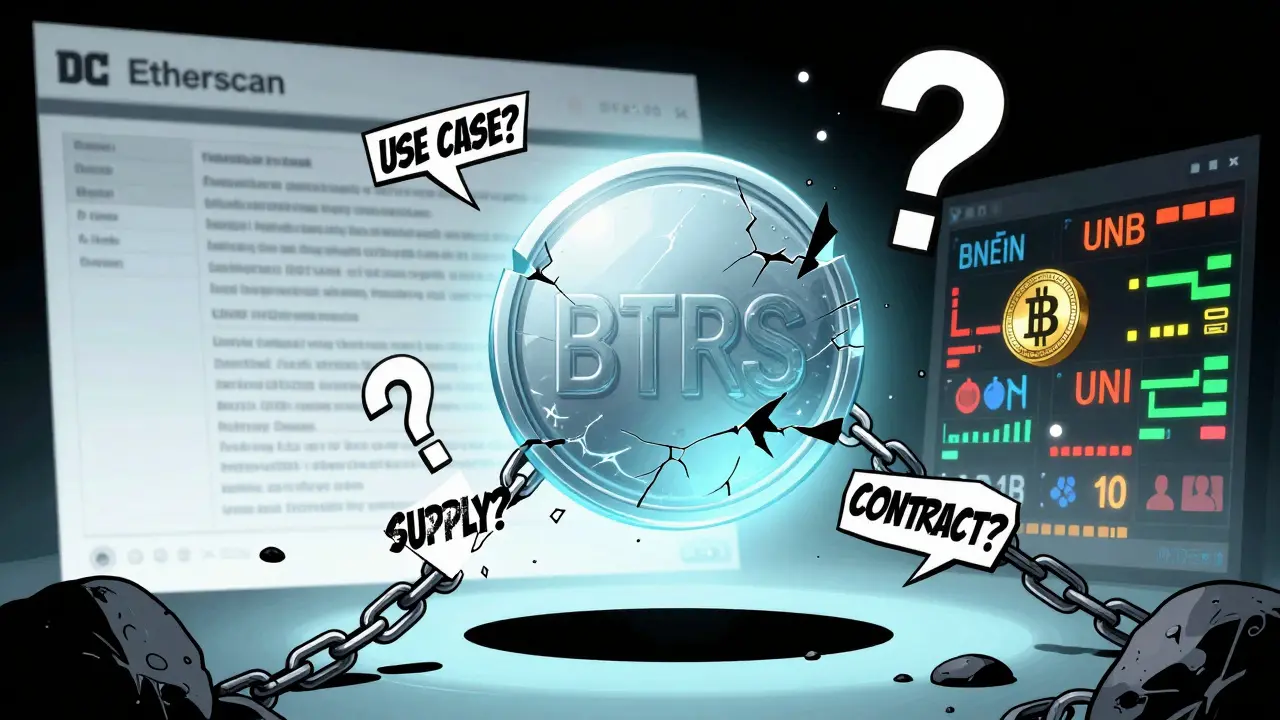
Bitrus mentions a native token called BTRS. That’s the only concrete detail they’ve shared. But here’s the problem - no one knows what it’s for. Is it for fee discounts? Like Binance’s BNB? Is it for staking rewards? Like Coinbase’s ETH staking? Is it a governance token? Like Uniswap’s UNI? We don’t know. There’s no whitepaper. No tokenomics breakdown. No supply cap. No distribution plan. No roadmap. Not even a contract address you can check on Etherscan. A token without a use case is just a number on a page. And if the platform doesn’t exist yet, how can the token have value? It’s not listed on any exchange. It’s not tradable. It’s not even claimable. It’s a ghost asset tied to a ghost platform.
No Team. No Transparency. No Trust
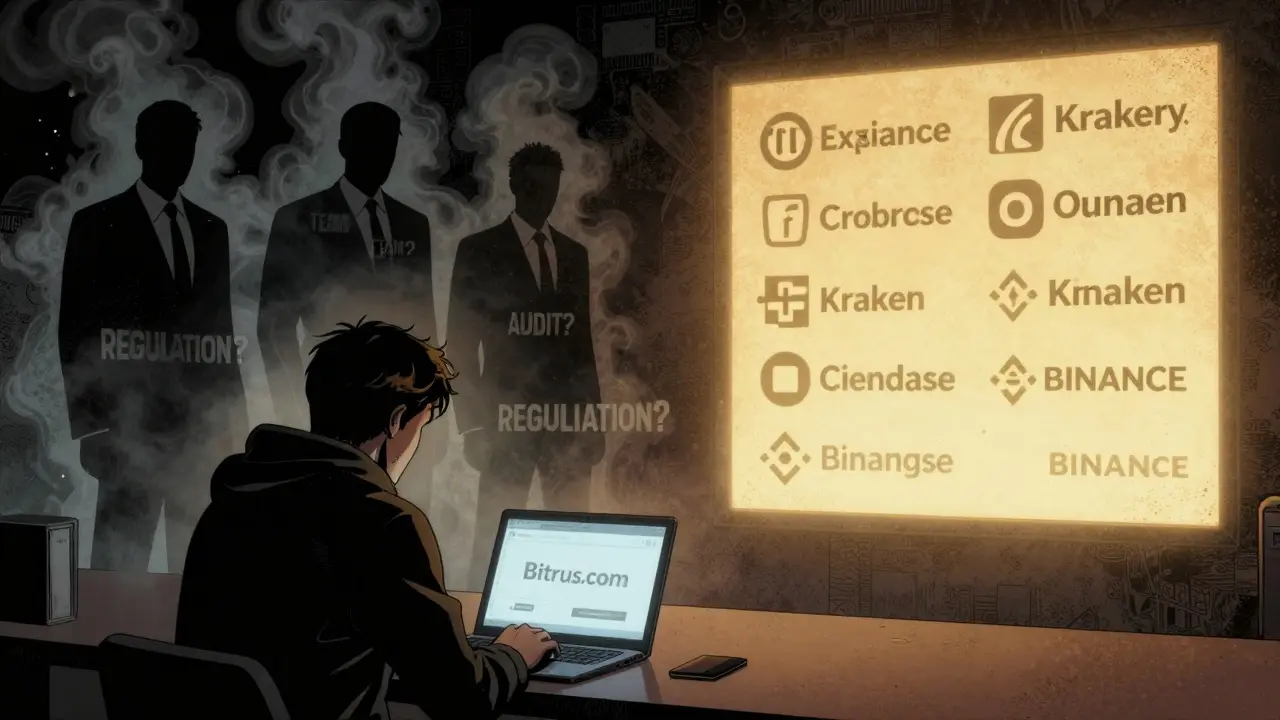
Who runs Bitrus? The website doesn’t say. No founders. No team bios. No LinkedIn profiles. No press releases. No interviews. No past projects. No public statements. That’s not unusual for a startup - but it’s deadly for a crypto exchange. Your money isn’t just being traded. It’s being held. Locked. At risk. And if you don’t know who’s holding it, how can you sleep at night? Compare that to Kraken. You can look up their CEO, their compliance officers, their legal team. You can read their audit reports. You can see their licenses in New York, Canada, and the EU. Bitrus? Nothing. Silence. In crypto, anonymity isn’t privacy - it’s a warning sign.
Security? Regulatory? What About Those?
Every trustworthy exchange publishes its security measures. Two-factor authentication? Check. Cold storage? Check. Insurance fund? Check. Third-party audits? Check. Bitrus doesn’t mention any of this. Not a single word. No mention of custody partners. No insurance coverage. No SOC 2 or ISO 27001 certifications. No KYC or AML policies. No jurisdiction. No regulatory body overseeing them. That’s not just a gap - it’s a canyon. If Bitrus ever launches, your funds could be sitting on a server with no backup, no oversight, and no legal protection. That’s not speculation. That’s the default state of a platform with zero transparency.
Why This Matters: The Bigger Picture
Bitrus isn’t an isolated case. It’s part of a growing trend: fake crypto platforms built on hype, not substance. They use sleek websites, buzzwords like "AI-powered trading" or "decentralized liquidity," and waitlists to create false urgency. They don’t need to deliver. They just need you to give them your email. Then what? Sell your data. Launch a scam token. Vanish. Rinse. Repeat. The crypto industry is full of real innovation. Decentralized exchanges like Uniswap. Layer-2 networks like Arbitrum. Stablecoins like USDC. These projects have public codebases, active communities, and verifiable track records. Bitrus? It’s the opposite. It’s a digital mirage.
What Should You Do?
If you’re considering signing up for Bitrus - don’t. Not now. Not ever, unless they prove otherwise. Here’s what real due diligence looks like:
- Can you trade on the platform today? If not, walk away.
- Can you find the team? If their LinkedIn profiles are empty or fake, walk away.
- Is there a whitepaper? If not, walk away.
- Are there user reviews? If every review is from 2025 and says "waitlist only," walk away.
- Is the token listed anywhere? If it’s not on CoinGecko or CoinMarketCap, walk away.
Alternatives That Actually Work
If you’re looking for a reliable exchange, here are real options with real track records:
- Bitrue - Supports 150+ coins, staking, lending, mobile app, verified security.
- Kraken - Regulated in the US, EU, and Canada. Audited. Insured. Trusted for over a decade.
- Coinbase - Publicly traded. Strong compliance. Easy for beginners.
- Binance - Highest volume globally. Wide asset selection. Advanced tools.
- Bybit - Strong derivatives trading. Transparent fee structure. Active community.
Final Verdict: Don’t Wait. Don’t Sign Up.
Bitrus isn’t the future of crypto. It’s a warning sign dressed up as an opportunity. There’s no evidence it will ever launch. No proof it’s safe. No clarity on what it offers. And no reason to believe it’s anything other than a speculative project with no substance. If you’ve already signed up? Cancel your waitlist. Delete your email from their system. Don’t wait for a notification that may never come. Crypto is risky enough without adding fake exchanges to the mix. Stick with platforms that earn your trust - not ones that beg for it.
Is Bitrus a scam?
There’s no definitive proof Bitrus is a scam - yet. But it displays all the warning signs: no live platform, no team, no security details, no token utility, and no third-party reviews. Many crypto scams start this way - as a waitlist that never turns into a real product. Treat it as high-risk until proven otherwise.
Can I trade on Bitrus right now?
No. As of March 2026, Bitrus has no trading functionality. The website only offers a signup form. You cannot deposit, withdraw, or trade any cryptocurrency. Any claims of active trading are false.
What is the BTRS token?
BTRS is the name Bitrus gives its native token, but there’s no official documentation on its purpose, supply, or how to use it. It’s not listed on any exchange, and no contract address has been published. Without this information, BTRS has no verifiable value or utility.
Is Bitrus regulated?
There is no public information indicating Bitrus is regulated by any financial authority. No jurisdiction, no license, no compliance documentation. This is a major red flag. Legitimate exchanges are regulated in at least one country - Bitrus offers no such proof.
Should I sign up for the Bitrus waitlist?
No. Signing up gives your email to a platform with no proven track record. You risk spam, phishing attempts, or future scams tied to your data. Even if they launch later, there’s no guarantee they’ll be safe or reliable. Better to use established exchanges that already operate transparently.
How does Bitrus compare to Bitrue?
Bitrue is a real, operational exchange with over 150 supported cryptocurrencies, staking, lending, and a verified mobile app. Bitrus is not Bitrue. They are completely separate. Bitrue has been active for years. Bitrus has never launched. Confusing the two is common, but dangerous - Bitrue is legitimate; Bitrus is not.