
The world of cryptocurrency is full of confusing names. You want the BIRD airdrop, but which bird are you actually looking at? In early 2025, the market was buzzing about potential distributions, yet as we move into 2026, clarity remains elusive. Many investors find themselves trapped between legitimate protocol incentives and copycat scams using similar branding. To navigate this safely, you need to understand exactly what Bird Finance promised, how their unique tokenomics work, and why verifying your eligibility requires extra caution compared to standard airdrops.
Understanding Bird Finance and the BIRD Token
Before chasing the drops, you must distinguish the core project from its lookalikes. Bird Finance is a decentralized finance platform designed for automatic yield mining and cross-chain liquidity management. It operates primarily by deploying algorithms that seek out optimal reward pools across different blockchains. The goal was always to simplify DeFi yield farming for users who lack the time to manually monitor dozens of protocols.
The native asset driving this ecosystem is the BIRD is the governance and utility token used for staking, voting, and fee distribution within the Bird Finance protocol. Unlike many memecoins that rely purely on hype, this token was engineered with specific economic functions. It powers the transaction fees, liquidity incentives, and governance rights for the platform. When people ask about the "BIRD airdrop," they are almost exclusively referring to the initial distribution of these utility tokens intended to reward early adopters and community members.
The Deflationary Mechanism: How BIRD Works
What makes Bird Finance stand out isn't just the promise of free tokens, but the complex mechanism behind its value retention. The team implemented a hyper-deflationary model right from the launch phase. Here is how the math plays out in real transactions:
- Blackhole Allocation: At inception, 50% of the total supply was sent to a dead address forever. This permanently reduces the circulating supply.
- Transaction Tax: Every trade incurs a 6% fee.
- Fee Distribution: That 6% isn't just lost; 2% goes to liquidity providers, 2% supports DAO governance, and 2% is redistributed to existing holders.
This structure creates upward pressure on price theoretically. However, high taxes often discourage trading volume. The effectiveness of this strategy relies heavily on whether the protocol actually gains traction with active miners and liquidity providers. For airdrop claimants, understanding this tells you that holding BIRD after claiming might have different implications than trading a low-tax asset immediately.
| Fee Recipient | Allocation Percentage | Purpose |
|---|---|---|
| Liquidity Pool | 2% | Boosts DEX liquidity stability |
| DAO Governance | 2% | Funds community proposals and voting |
| Holder Rewards | 2% | Distributed proportionally to wallets |
Airdrop Timeline and Eligibility Status (2026)
Here is where things get tricky. Originally, reports indicated listing dates around November 2024 or early 2025. As we sit in March 2026, that timeline has passed without definitive public confirmation of mass execution. This silence is common in crypto; delays happen due to regulatory scrutiny, technical audits, or strategic pivots. If you are still trying to join, the eligibility criteria generally revolve around three pillars:
- Wallet Connection: Linking a verified Web3 wallet to the official dApp interface.
- Community Engagement: Following social channels and completing tasks via bot systems.
- Asset Holding: Maintaining minimum thresholds of partner assets or specific legacy tokens.
The risk here is that scammers mimic these requirements. They set up fake forms asking for seed phrases under the guise of "verification." A legitimate protocol never asks for your private keys or seed phrase. Always verify the URL matches the official contract address provided on trusted aggregators before interacting with any smart pool features.
Navigating the "Bird" Confusion: Scams vs. Real Projects
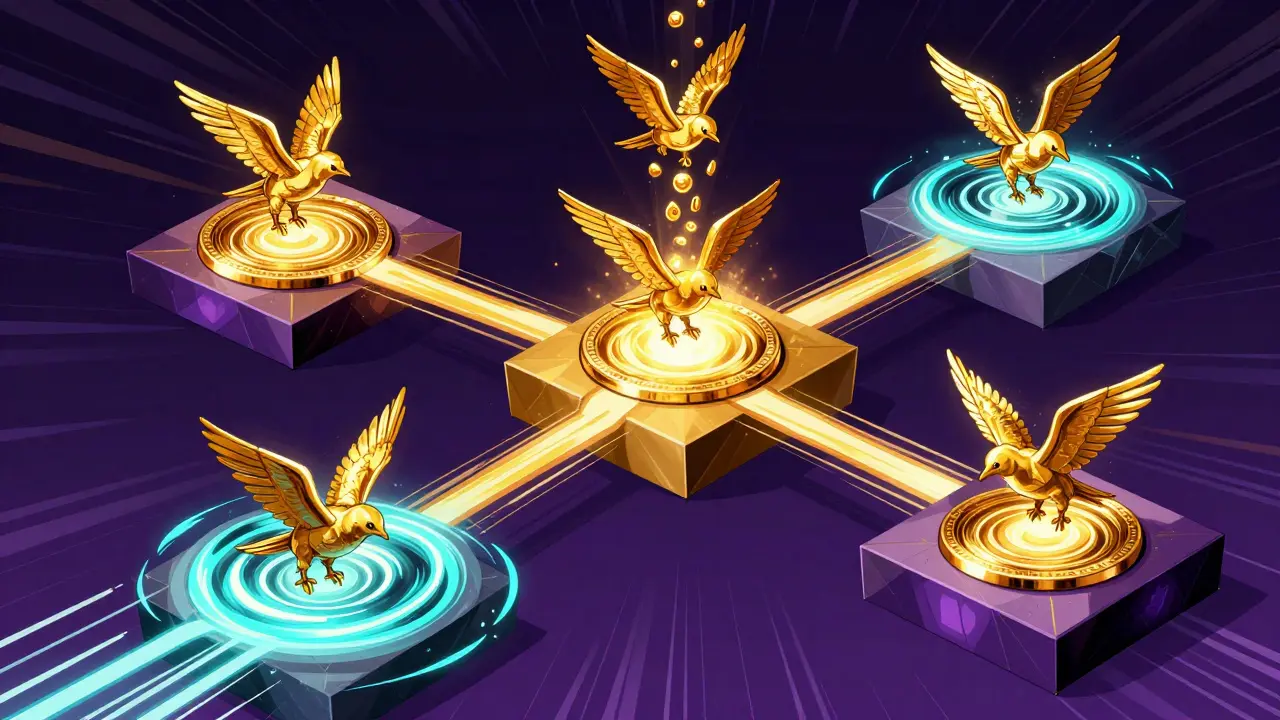
One of the biggest hurdles in this space is the sheer number of similarly named projects. There is Birdchain, a messaging application, and a Telegram Mini App called "Birds" on the Sui blockchain. These projects also issued tokens or distributed rewards, creating a fog of war for investors.
If you received a notification about a "BIRD airdrop," double-check the source. Is it coming from a Telegram group with admin accounts created last week? Or is it from the official documentation repository? The Birdchain project distributed 1 million tokens separately, while the Telegram game offered different entry points. Mixing these up can result in wasted gas fees or exposure to phishing sites designed to drain your wallet.
Risk Management and Safety Checks
Participating in cross-chain airdrops involves inherent risks beyond just missing out on rewards. Smart contracts governing the distribution process could harbor vulnerabilities. Before connecting your primary wallet, consider using a "burner" wallet with limited funds. Additionally, be wary of regulatory uncertainty. Some jurisdictions classify certain token distributions as securities offerings, which could trigger compliance freezes or clawbacks years later.
Volatility is another factor. Even if you secure an allocation, the token price might be subject to immediate selling pressure once unlocks occur. The deflationary burn helps, but market sentiment drives short-term valuation. Diversifying your portfolio prevents a single airdrop event from becoming a financial liability rather than an opportunity.
Key Takeaways
- Verify Sources: Confirm the exact project name and contract address. Don't trust generic links in comments.
- Understand Tokenomics: High taxes mean less liquidity for immediate trading.
- Watch Timelines: Delays in Q1 2025 suggest ongoing development, not necessarily cancellation.
- Security First: Never share private keys to claim rewards.
Frequently Asked Questions
Is the Bird Finance airdrop officially launched?
As of early 2026, there is no universally confirmed public distribution date. The original Q1 2025 timeline was postponed. Participants should check official announcement channels for updates before proceeding.
How do I qualify for BIRD tokens?
Qualification typically requires connecting a wallet, engaging with social media campaigns, and potentially holding partner assets. Always verify requirements on the official website to avoid phishing attempts.
Is the BIRD token safe to hold?
Like any crypto asset, it carries volatility risk. The 6% transaction tax and deflationary burns add complexity. Review the smart contract audit reports before committing significant capital.
What is the difference between Bird Finance and Birdchain?
They are separate projects. Bird Finance focuses on DeFi yield farming and lending, while Birdchain is a decentralized messaging app. Their token distributions and utilities differ entirely.
Do I need to pay gas fees to claim?
Yes, claiming usually requires network interaction which incurs gas fees. Be prepared to have ETH, SOL, or other chain-native tokens in your wallet to facilitate the transfer.
Leah Lara
March 30, 2026 AT 01:07Looks like another rugpull waiting to happen honestly.
Wade Berlin
March 31, 2026 AT 12:18Wow thanks for the brilliant insight nobody asked for regarding the obvious nature of crypto markets.
Ashley Stump
April 1, 2026 AT 10:39This looks like a setup to drain wallets eventually. The devs are definitely watching your wallet connections right now to harvest keys.
Alex Lo
April 2, 2026 AT 02:04I read through the whole guide here and it seems really detailed about the mechanicss.
The blacckhole allocation part actually makes sense if you think about supply shock.
Most people just rush to claim without reading the terms properly though.
You see so many fake sites copying the branding exactly like mentioned.
If you connect a burner wallet it keeps your fundds safe basically.
Gas fees are going to eat into profits early on for sure.
I tried to link my wallet yesterday but the site kept timing out repeatedly.
Maybe they are filtering traffic to stop bots from sniping.
The deflationary tax model sounds good on paper but liquidity is key.
Without buyers the price goes down regardless of burns happening.
Community engagement tasks seem like waste of time mostly.
Social media bots usually do that work for projects now anyway.
Verification steps need to be super careful to avoid phishing links.
Holding the token requires understanding the unlock schedule clearly.
Smart contracts can always hide malicious code until someone notices.
I hope this turns out better than the last yield farm scam.
Still keeping my funds off chain for safety reasons mostly.
Better to miss out than lose everything in one trade.
Justin Smith
April 2, 2026 AT 14:31Your analysis of the smart contract risk is valid but slightly outdated regarding standard security practices today.
Callis MacEwan
April 3, 2026 AT 02:12SLP mechanisms are fundamentally flawed when paired with high transaction taxes like this 6% structure proposed.
Sean Carr
April 4, 2026 AT 16:07For those new to DeFi you might want to read more about impermanent loss before engaging.
Matt Bridger
April 6, 2026 AT 09:11The implications are clear.
Lisa Miller
April 7, 2026 AT 02:32Totally agree but sometimes we take risks for potential gains too! Just gotta stay safe.
Alex Kuzmenko
April 8, 2026 AT 00:06dang i wish i claimed earlier but i was busy workin
Elizabeth Akers
April 8, 2026 AT 19:39you got me excited about checking my wallet but im scared to click links
Disha Patil
April 10, 2026 AT 16:13OMG everyone is talking about this drop why am I not getting notifications!! It feels like they are ignoring normal people.
Liam Robertson
April 12, 2026 AT 02:40Don't worry they usually open it up wider later if it delays.
Markus Church
April 12, 2026 AT 17:46The timeline discrepancies noted in the article require further verification from primary sources.
Michael Nadeau
April 13, 2026 AT 09:44This article provides a comprehensive overview of the current market confusion surrounding the Bird token distribution system.
Many investors struggle to differentiate between legitimate opportunities and fraudulent schemes operating under similar names.
The distinction between Bird Finance and other similarly named entities like Birdchain is crucial for asset protection strategies.
Early adopters were promised significant utility within the governance framework of the platform itself.
Understanding the deflationary mechanics helps clarify why holding the token differs from standard meme assets.
Transaction taxes are often misunderstood by participants who prioritize immediate liquidation over long term value accrual.
Liquidity providers receive incentives directly through the fee structure which stabilizes the exchange pools effectively.
Governance rights allow holders to vote on future protocol adjustments regarding fee distribution parameters.
Delays in launch dates are common within the blockchain industry due to auditing requirements and regulatory checks.
Scammers frequently exploit this period of uncertainty by creating deceptive claim forms asking for private keys.
Security best practices dictate utilizing isolated wallets specifically designed for interacting with unverified smart contracts.
Volatility remains a primary concern even after successful claim procedures due to market sentiment shifts.
Regulatory classification of tokens may change retroactively impacting investor liability and tax obligations significantly.
Diversification prevents catastrophic losses if the project fails to gain traction in the wider ecosystem.
Always verify contract addresses against official repositories before initiating any transaction requests.
Patience is essential when navigating these complex financial instruments in the evolving space.
Risk management should prioritize capital preservation above speculative gain expectations.
Jay Starr
April 15, 2026 AT 01:41This is way too much text to get the point across simply.