

Crypto Transaction Risk Calculator
This tool calculates whether your cryptocurrency transaction exceeds Nepal's legal threshold of 10 million NPR (approximately $74,000 USD). Transactions exceeding this amount can result in up to 3 years in prison under Nepal's Foreign Exchange (Regulation) Act, 1962.
Risk Level: Low Risk (Below Threshold)
Legal Consequences:
Transactions exceeding 10 million NPR can result in:
• Up to 3 years imprisonment
• Asset seizure (laptop, phone, crypto wallet)
• Fines up to 3x transaction value
• Multiple charges under different laws
Important Notes
Note 1: Even transactions below 10 million NPR can lead to prosecution under other laws.
Note 2: Police have charged people for transactions as low as $5,000 (under 10 million NPR).
Note 3: Blockchain value volatility means the transaction value could be calculated differently at the time of seizure versus transaction.
Note 4: Asset seizure can happen without a warrant - police may take your devices without notice.
If you send or receive more than 10 million Nepalese Rupees (NPR) in cryptocurrency in Nepal, you could face three years in prison. It doesn’t matter if you’re trading, mining, or just helping a family member abroad send money. The law doesn’t care about your intent. It only sees the number on the blockchain.
How the Law Works
The ban isn’t new. Nepal Rastra Bank (NRB) first warned against cryptocurrency in 2017. But it wasn’t until the Foreign Exchange (Regulation) Act, 1962, was enforced with teeth that things got serious. Section 12 of that law says any unauthorized foreign exchange transaction over 10 million NPR - roughly $74,000 USD - triggers mandatory imprisonment for up to three years. That’s not a fine. That’s jail time. On top of that, the government can seize everything tied to the transaction: your laptop, phone, crypto wallet, even bank accounts. Fines can be up to three times the amount involved. And if you can’t pay? You go back to jail - for up to four more years. It’s not just one law either. Police can charge you under multiple statutes at once: the Nepal Rastra Bank Act, the National Penal Code, and the Electronic Transaction Act. One person might get hit with three different charges for the same transaction. That’s not legal clarity. That’s legal chaos.Who Gets Caught?
You might think only big traders get targeted. But that’s not true. In 2023, the Central Investigation Bureau (CIB) arrested 17 people for sending $5,000 to $10,000 in Bitcoin to relatives overseas. That’s less than half the legal threshold. Yet they were charged anyway. Why? Because the law doesn’t have a minimum for enforcement - only a maximum. Police are under pressure to show results, so they go after anyone they can. One man from Kathmandu, reported on Reddit, saw his father jailed for two years after receiving 5.2 million NPR in crypto - under the 10 million NPR limit. The judge called it an “aggravating circumstance.” No explanation. No precedent. Just a prison sentence. Even small remittances - the kind families rely on to pay for medicine or school fees - are being treated like organized crime. Chainalysis estimates 210,000 Nepalis used crypto in 2022. Most weren’t speculators. They were people trying to avoid NRB’s 1% fee on traditional remittances. Now, they’re facing pretrial detention, asset seizures, and court dates they can’t afford.How Enforcement Works
When police suspect crypto activity, they don’t wait for a warrant. They show up, seize devices, and start digging. Forensic tools like Cellebrite UFED are used to extract wallet keys from phones and laptops. In one 2023 case, police confiscated a man’s laptop with 2.3 BTC (worth $78,000 at the time) for a $5,000 transaction. He spent 18 months in jail before trial, even though the transaction was below the legal threshold. The problem? Blockchain values swing wildly. In the Kalopul case, police used the Bitcoin price at the time of seizure ($38,500) instead of the price when the transaction happened ($41,200). That dropped the value below 10 million NPR - but they still prosecuted. The law doesn’t say how to value crypto. So police pick the number that gets them the most jail time. And there’s no training. Most officers don’t understand blockchain. Prosecutors don’t know how to interpret wallet addresses. Defense lawyers rarely specialize in crypto. According to Onesphere Law Associates, 78% of defendants have no legal help with digital forensics. That means people plead guilty just to get out of detention.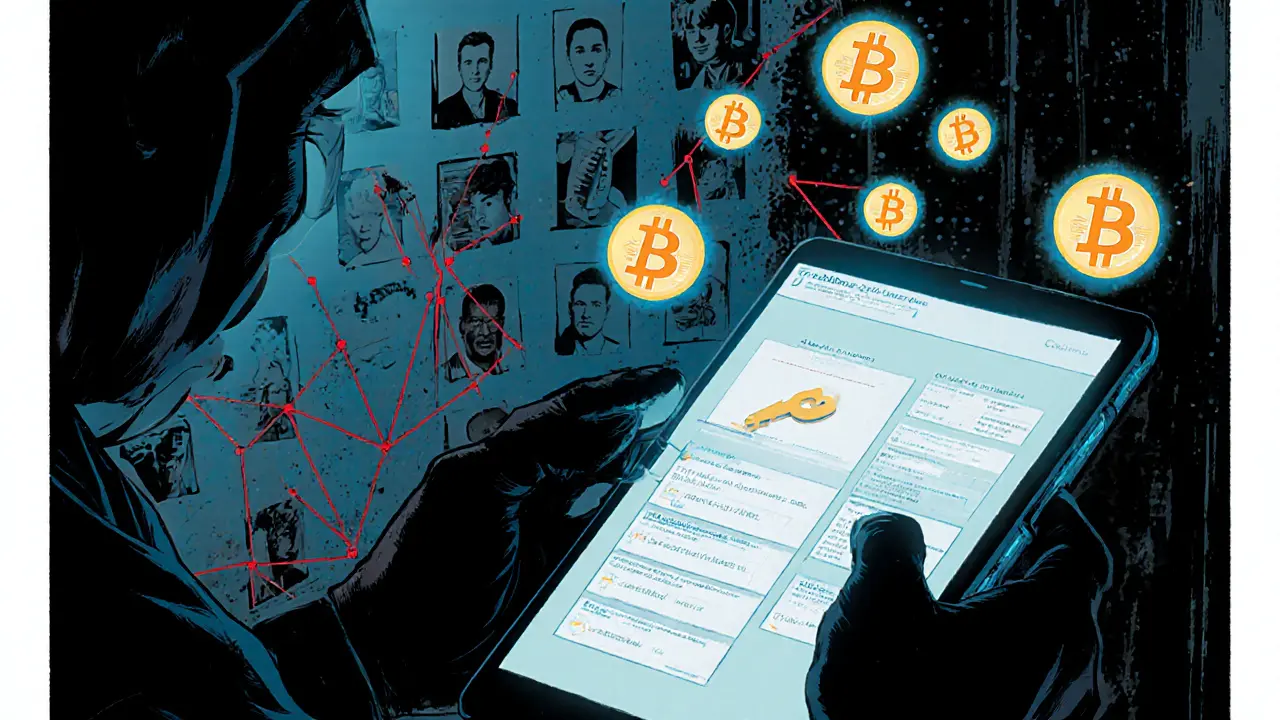
Why Nepal Took This Path
NRB says the ban is about protecting the economy. They claim crypto caused $20.8 million in unauthorized forex outflows in 2021. They point to 1,247 fraud cases totaling $31.8 million in 2022. But the numbers don’t add up. Nepal receives over $2 billion in remittances every year - 23% of its entire GDP. Only 5.7% of that - about $119 million - went through crypto. That’s less than 1% of total remittances. Yet the punishment for crypto is far harsher than for any other form of money movement. Compare that to India. They tax crypto at 30% but let people trade freely. China banned exchanges but doesn’t jail individuals for holding Bitcoin. Thailand and Singapore have licensed platforms. Nepal is one of only 12 countries in the world that criminalizes crypto use with prison time. The real motive? Control. NRB wants to keep all foreign exchange flowing through its system. Crypto bypasses their fees, their monitoring, their power. So they made it a crime.What’s Being Done About It?
There’s growing pushback. Legal experts say the law is unconstitutional. Dr. Prakash Kafle, a professor at Tribhuvan University, calls it “disproportionate punishment - treating crypto like narcotics.” Senior advocate Ramesh Dahal argues it violates Article 26 of Nepal’s Constitution, which protects economic freedom. The Supreme Court is currently reviewing a constitutional challenge (Writ No. 0804/080). A ruling is expected by late 2024. Meanwhile, some judges are starting to apply “proportionality” - reducing sentences for small transactions. But enforcement hasn’t stopped. In March 2024, CIB arrested nine people for $85,000 in crypto transfers - all charged under the 10 million NPR rule, even though most transactions were below that. NRB Governor Maha Prasad Adhikari said in a February 2024 interview: “The three-year imprisonment provision will remain until we establish foolproof monitoring.” Meanwhile, the International Monetary Fund called the policy “economically counterproductive.” The World Bank noted it pushes remittances further underground. And the Nepal Bar Association called it “legal schizophrenia” - prosecuting the same act under five different laws.
What This Means for You
If you’re in Nepal and using crypto - even for $100 - you’re at risk. Police don’t need proof of fraud. They don’t need to show you broke the law. They just need to find a wallet on your phone and a transaction over a certain amount. That’s enough. If you’re sending money to Nepal, don’t use crypto. Use licensed services like Western Union or MoneyGram. Even if it costs more, it’s safer. There’s no appeal if you’re arrested. If you’re a Nepali abroad and receive crypto from home, understand the risk. That money could be traced. Your family could be jailed. No one is immune. And if you’re a business? Forget crypto payments. Nepal’s banking system won’t touch it. Any company accepting crypto is signing up for legal trouble.Is There Any Hope for Change?
Maybe. The 2023-24 budget kept the ban. But pressure is building. The Nepal Bankers’ Association supports the law - but 92% of financial professionals surveyed in 2023 said they’d support a regulated system, not a ban. Many believe Nepal will follow India’s path: tax crypto, license exchanges, and stop jail time. But until then? The law stays. The arrests continue. And the fear lingers. There’s no gray area. No loopholes. No exceptions. If you move crypto in Nepal, you’re playing with fire. And the punishment isn’t just financial. It’s personal. It’s your freedom.Is cryptocurrency completely illegal in Nepal?
Yes. All cryptocurrency activities - including trading, mining, payments, and even holding - are banned under Nepal Rastra Bank regulations. The ban is enforced under the Foreign Exchange (Regulation) Act, 1962, and other laws. There are no licensed exchanges or legal crypto services in Nepal.
What happens if I send less than 10 million NPR in crypto?
You can still be arrested. The 10 million NPR threshold is the legal limit for mandatory three-year imprisonment, but police routinely charge people for smaller amounts under other laws like the Electronic Transaction Act. In 2023, 87% of prosecuted cases involved transactions under $10,000. Enforcement is inconsistent and often aggressive.
Can I be jailed just for owning cryptocurrency?
Possession alone isn’t explicitly illegal, but if police find crypto on your devices during an investigation - even if you didn’t transact - you can be charged with facilitating illegal transactions. Asset seizure is common, and detention can follow. Owning crypto in Nepal is high-risk.
Are remittances through crypto treated differently?
No. Whether you’re sending money to family, paying for goods, or trading, the law treats all crypto transactions the same. Many people use crypto to avoid NRB’s 1% remittance fee, but that doesn’t make it legal. In fact, remittance cases make up a large portion of arrests, as seen in the May 2023 CIB case against 17 individuals.
What should I do if I’m arrested for a crypto transaction in Nepal?
Do not resist or delete anything. Your devices will be seized anyway. Contact a lawyer immediately - preferably one experienced in cybercrime or financial law. Avoid speaking to police without legal counsel. Many cases are dropped due to lack of evidence, but pretrial detention can last 6-18 months. Legal aid is rare, so act fast.
Will Nepal ever legalize cryptocurrency?
There’s no official plan, but pressure is growing. The Supreme Court is reviewing the constitutionality of the law, and international bodies like the IMF have criticized the ban. Some analysts predict Nepal may adopt an India-style tax model by 2025. But for now, NRB has shown no sign of backing down. The three-year penalty remains firmly in place.
Susan Dugan
November 27, 2025 AT 13:10Imagine being jailed for helping your cousin pay for meds with crypto. This isn't law, it's terror disguised as policy. Nepal's government is literally criminalizing compassion. People aren't breaking laws-they're surviving them.
And let's be real: if you're sending $5k to family, you're not laundering money-you're keeping them alive. The fact that police are using blockchain prices at seizure time to inflate charges? That's not justice. That's extortion.
I've seen this play out in other countries where authoritarian regimes fear decentralized tech. It's never about finance. It's about control. And the victims? Always the poor.
Someone needs to start a global fundraiser for Nepali crypto defendants. Legal aid is nonexistent. People plead guilty just to get out of jail. That's not a legal system. That's a trap.
Why does the IMF call this 'economically counterproductive'? Because it's obvious. When you push remittances underground, you don't stop them-you make them more dangerous. And then you blame the victims.
Someone please tell me how this is any different from outlawing cash because you don't like how people spend it. It's not about crypto. It's about power.
I'm not even mad. I'm just... heartbroken.
SARE Homes
November 29, 2025 AT 10:28THIS IS WHY YOU DON’T TRUST CRYPTO!! IT’S A SCAM MACHINE FOR LAUNDERING AND TAX EVASION!! Nepal is the only country with the guts to do something REAL!!
Meanwhile, India and Singapore are just letting people steal billions under the guise of ‘innovation’-and you wonder why the world hates crypto?!
10 MILLION NPR? THAT’S NOTHING!! I’VE SEEN PEOPLE MOVE 50 MILLION IN A WEEK!! THEY DESERVE 10 YEARS!!
STOP WHINING ABOUT ‘REMITTANCES’-IF YOU CAN’T USE WESTERN UNION, THEN DON’T SEND MONEY!!
THIS ISN’T ABOUT FREEDOM-IT’S ABOUT RESPONSIBILITY!!
Grace Zelda
November 30, 2025 AT 18:37So let me get this straight-Nepal’s government is jail time-ing people for using tech that bypasses a 1% fee? That’s like fining someone for walking instead of taking a bus because the bus company owns the road.
And the fact that police use the highest crypto price at seizure to inflate the charge? That’s not just bad law-that’s predatory math.
It’s not about protecting the economy. It’s about protecting the bureaucracy. Crypto doesn’t threaten Nepal’s economy-it threatens NRB’s monopoly.
And the worst part? The people getting locked up aren’t traders. They’re grandmas sending money to grandkids. They’re students paying for textbooks. They’re people who had zero access to fair banking.
Why does the world still act like this is normal? We’ve seen this movie before. It always ends with the same line: ‘We thought we were protecting people.’
Turns out we were just protecting power.
Kristi Malicsi
December 1, 2025 AT 04:59People don’t use crypto to break laws they use it because the system is broken
1 percent fee sounds small until you’re sending 500 dollars every month and it adds up to 60 a year that’s rent
and now you get jailed for trying to save that money
the real crime is the bank
Sierra Myers
December 2, 2025 AT 19:34Bro this is insane. You can’t jail someone for using blockchain. That’s like arresting someone for using the internet. The tech doesn’t care about borders. The law should adapt or get out of the way.
And why are they using seizure price instead of transaction price? That’s not even legal logic. That’s just making up numbers to fit the charge.
Also, 78% of defendants have no legal help? That’s not a justice system. That’s a prison lottery.
Puspendu Roy Karmakar
December 3, 2025 AT 01:12My cousin in Kathmandu sent 4 million NPR to his sister in Dubai via crypto last year. She needed money for her daughter’s surgery. Police came, took his phone, laptop, and bank card. He spent 8 months in jail before the case was dropped for ‘lack of evidence.’
He still has nightmares.
They call it a ‘foreign exchange violation.’ I call it cruelty dressed in legal robes.
And now they’re arresting people for under 10 million? That’s not a threshold. That’s a suggestion.
Don’t tell me this is about economics. This is about fear. And fear is the oldest tool of control.
Evelyn Gu
December 3, 2025 AT 01:24It’s just... I can’t even. I keep reading about this and I just cry. I’m American, I’ve never even held crypto, but I’ve seen what happens when governments decide that people’s survival is a crime.
Imagine being a teenager in Kathmandu, trying to help your mom pay the electricity bill, and you get arrested because you used a QR code instead of a bank form.
And then the police seize your laptop because they think it has ‘crypto’ on it-maybe you downloaded a wallet once, maybe you just watched a YouTube video.
They don’t care. They just need a number to hit their quota.
And the judge says ‘aggravating circumstance’ with no explanation? That’s not law. That’s magic.
And the worst part? No one’s talking about this. Not enough. Not loudly enough.
It’s not just Nepal. It’s every country that thinks control is the same as safety.
I just... I don’t know what to do. But I’m not going to look away anymore.
Michael Fitzgibbon
December 4, 2025 AT 11:24This is the most chilling thing I’ve read all year.
It’s not about crypto. It’s about what happens when institutions fear losing control. When the only tool they have left is punishment.
They’re not trying to stop crypto. They’re trying to scare people out of ever questioning the system again.
And the fact that they’re using forensic tools to extract wallet keys without warrants? That’s not law enforcement. That’s digital intimidation.
What’s next? Jail time for using a VPN? For downloading a Tor browser?
This isn’t a financial policy. It’s a psychological one.
And it’s working. People are terrified. And fear is the most effective tax of all.
Komal Choudhary
December 5, 2025 AT 04:32Wait so if I send crypto to my family in Nepal and they get arrested, am I complicit? Like... can I be charged too? I’ve done that before. I didn’t even know it was illegal. Is that a crime? Am I going to jail? I’m panicking now. Someone tell me if I’m safe.
Tony spart
December 5, 2025 AT 04:42Ugh why do we even care about Nepal? They’re a third world country with no tech sense. If they wanna lock people up for using crypto, fine. Let them rot. We got real problems here.
Also why is everyone acting like crypto is some magical solution? It’s just digital gambling with extra steps.
Stop romanticizing criminals. Nepal’s got it right. No crypto. No problem.
Also I heard they use it for drugs. So yeah. Lock em up.
ola frank
December 6, 2025 AT 05:26The legal architecture here is a textbook case of regulatory overreach combined with epistemic incompetence. The NRB’s enforcement paradigm exhibits zero alignment with blockchain’s immutable, pseudonymous, and globally distributed architecture.
By conflating transaction value with seizure value, they violate the principle of *lex certa*-the requirement for legal certainty. The use of forensic extraction tools without judicial oversight constitutes a breach of Article 14 of the ICCPR.
Furthermore, the multiplicity of charges under disparate statutes-Nepal Rastra Bank Act, Penal Code, Electronic Transaction Act-constitutes double jeopardy by proxy.
This is not a legal system. It is a regulatory dumpster fire with a prison attached.
Janice Jose
December 6, 2025 AT 06:04I just want to say thank you for writing this. I’ve been trying to explain this to my friends and I didn’t know how. Now I can just send them this.
It’s not about crypto. It’s about people.
And if we let this stand, what’s next?
Michael Labelle
December 8, 2025 AT 02:25My dad used to send money home from the States through Western Union. Paid 8% in fees. Took 3 days.
Now? He’d use crypto. 2 hours. 1%.
And now they’d lock him up?
That’s not justice. That’s betrayal.
jeff aza
December 8, 2025 AT 19:52Okay but let’s be real-this law is a joke. If you’re going to jail for $5k in crypto, why not just ban smartphones? At least then you’d stop the problem at the source.
Also, the fact that police use the highest BTC price to inflate the charge? That’s not even a loophole-it’s a glitch in the matrix.
And why are we surprised? The same people who banned crypto also banned WhatsApp calls in 2018. They’re not trying to fix anything. They’re trying to feel powerful.
Vijay Kumar
December 10, 2025 AT 07:22They’re not banning crypto. They’re banning freedom.
And the people who support this? They’ve never been poor.
Vance Ashby
December 10, 2025 AT 10:50So if I send crypto to my Nepali friend, and they get arrested... do I get banned from Reddit? 😅
Christina Oneviane
December 12, 2025 AT 00:04Oh wow. Nepal’s finally doing something right. All these crypto bros crying about ‘freedom’ while their wallets are full of shitcoins. Jail time? Good. Let them rot in there with their ‘decentralized’ dreams.
Maybe then they’ll learn that real money has a central bank. Just like real life.
fanny adam
December 12, 2025 AT 12:35Did you know that the IMF is controlled by the Illuminati? And the World Bank? They’re pushing crypto to destabilize sovereign nations. This is a coordinated attack on Nepal’s economy. The 1% fee? A trap. The arrests? A distraction. They want you to think this is about money. It’s not. It’s about the New World Order.
Check the timestamps on those blockchain transactions. They all line up with UN meetings. Coincidence? I think not.
Eddy Lust
December 14, 2025 AT 02:11I used to think crypto was just for rich guys in Silicon Valley.
Now I see it’s for the mom who needs to pay her kid’s school fees.
And the system’s trying to lock her up for it.
That’s not a crime.
That’s a sin.
Casey Meehan
December 15, 2025 AT 01:02🚨 ALERT 🚨
NEPAL JUST MADE CRYPTO A CRIME 🚨
POSSIBLE JAIL TIME 🚨
SEND HELP 🚨
WHY ISN’T THIS ON THE FRONT PAGE?? 🚨
WE NEED A PETITION 🚨
THIS IS WORSE THAN THE GULAG 🚨
Martin Doyle
December 15, 2025 AT 20:52Man, I used to think India’s crypto rules were harsh. But this? This is next level. I’ve got family in Nepal. I’m never sending crypto again. But I’m also never staying silent about this.
Someone needs to start a legal defense fund. I’ll donate. Let’s not let this slide.
Sam Daily
December 17, 2025 AT 11:33They’re not trying to stop crypto.
They’re trying to stop hope.
And that’s why this is so dangerous.
Because when you criminalize a way out for the poor, you’re not protecting the system.
You’re just making sure the system stays broken.
Rachel Thomas
December 18, 2025 AT 14:29Wait, so if I send 9.9 million NPR, I’m fine? But if I send 10.1 million, I go to jail? That’s not a law. That’s a glitch in a spreadsheet.
Also, why is everyone acting like this is new? Nepal banned crypto in 2017. They just finally started arresting people.
And now we’re all shocked?
Wake up. This is how power works.
SHIVA SHANKAR PAMUNDALAR
December 18, 2025 AT 15:28They banned crypto because they can’t tax it.
Simple as that.
No one cares about remittances.
They care about the cut.
Sam Daily
December 20, 2025 AT 10:22I read that one case where a guy got jailed for 18 months even though his transaction was below the threshold. And they still prosecuted.
That’s not justice.
That’s a warning.
And we’re all being watched.
Susan Dugan
December 20, 2025 AT 10:49And that’s exactly why they do it.
They don’t need to prove you broke the law.
They just need you to be afraid.
And now you’re scared to even open your wallet.
Puspendu Roy Karmakar
December 21, 2025 AT 17:05My cousin’s case got dismissed after 8 months because the police couldn’t prove intent.
But he lost his job. His phone. His savings.
And he still can’t sleep at night.
They didn’t win.
But they didn’t lose either.