
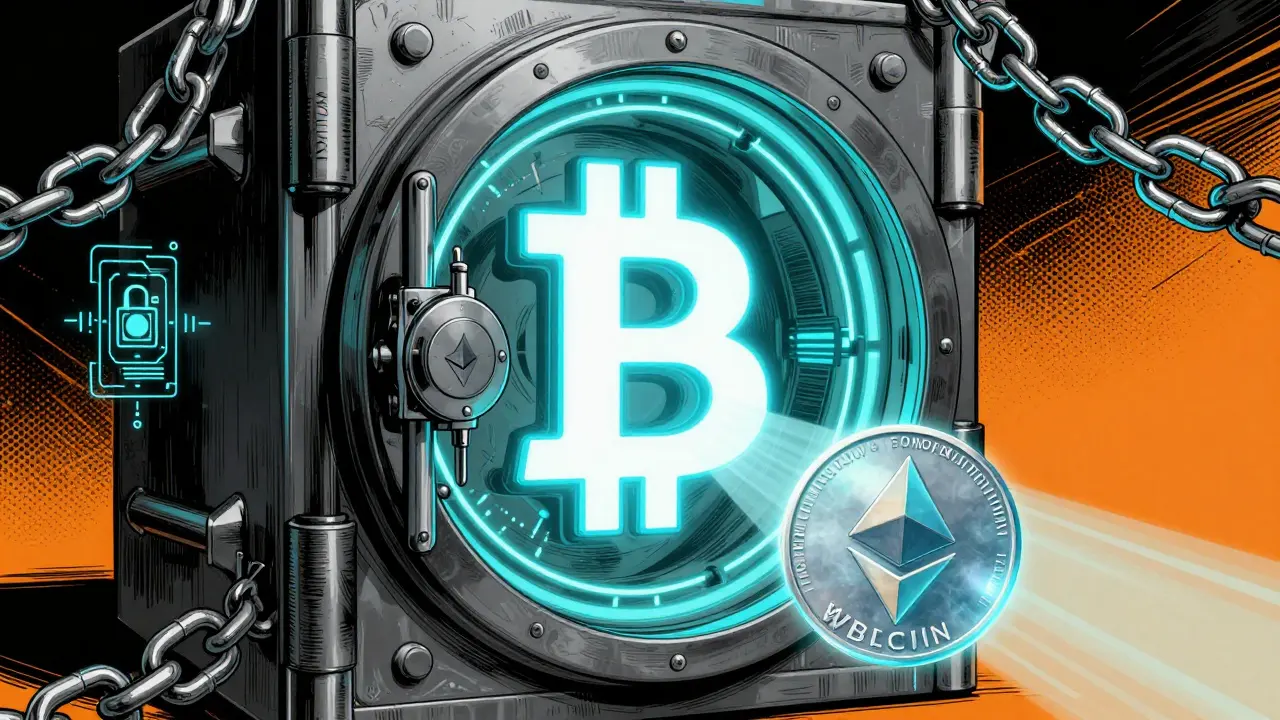
Imagine trying to spend your Bitcoin at a store that only accepts Ethereum. It sounds impossible because, technically, it is. Bitcoin and Ethereum live in separate digital universes with different rules, languages, and security models. They cannot talk to each other directly. This fragmentation creates a massive problem for users who want to use their crypto across different networks. The solution? Wrapped assets and the bridge mechanisms that make them possible.
Wrapped tokens are essentially digital proxies. They allow an asset from one blockchain to exist and function on another. For example, you can take your native Bitcoin (BTC) and convert it into Wrapped Bitcoin (WBTC) on the Ethereum network. This WBTC behaves exactly like any other ERC-20 token on Ethereum, meaning you can lend it, trade it, or use it in decentralized finance (DeFi) applications that don’t support native Bitcoin. But how does this magic happen without breaking the fundamental security of either chain? Let’s break down the mechanics, the risks, and why this infrastructure is critical for the future of crypto.
The Lock-and-Mint Model: How Wrapping Actually Works
To understand wrapped assets, you need to visualize a vault. The core mechanism behind most wrapped tokens is called the "lock-and-mint" model. It’s a straightforward process, but it relies heavily on trust and technical precision. Here is the step-by-step flow:
- Deposit: You send your native asset (like BTC) to a secure custody address or smart contract controlled by a custodian. These funds are locked away. They are not spent; they are held as collateral.
- Minting: Once the deposit is confirmed, the custodian or an automated oracle system mints an equivalent amount of wrapped tokens (like WBTC) on the target blockchain (Ethereum). These new tokens are sent to your wallet.
- Usage: You now hold WBTC. You can use it anywhere on Ethereum. It has the same value as your original BTC, pegged 1:1.
- Burning: When you’re done, you send the WBTC back to the protocol. The system burns (destroys) these tokens, removing them from circulation.
- Redemption: With the wrapped tokens gone, the custodian releases the original BTC from the vault and sends it back to you.
This cycle ensures that for every wrapped token in existence, there is an underlying asset backing it. If someone holds 100 WBTC, there must be 100 BTC sitting in a reserve somewhere. This 1:1 peg is what gives wrapped assets their value. Without this strict accounting, the system would collapse instantly.
Bridge Mechanisms: The Plumbing of Cross-Chain Tech
Wrapped assets don’t appear out of thin air. They require bridge mechanisms to facilitate the communication between blockchains. Bridges are the software and economic structures that connect two isolated networks. There are two main types of bridges, and understanding the difference is crucial for your security.
| Feature | Centralized Bridges | Decentralized/Trust-Minimized Bridges |
|---|---|---|
| Custody Model | Single entity or small group holds keys | Distributed nodes or smart contracts hold keys |
| Speed | Fast (minutes) | Slower (depends on consensus/oracle updates) |
| Security Risk | High (single point of failure) | Lower (requires collusion of many parties) |
| Example | Early WBTC implementation | Chainlink CCIP, LayerZero |
Centralized bridges rely on trusted intermediaries. In the case of WBTC, a federation of companies manages the private keys to the Bitcoin vault. You have to trust that they won’t steal the Bitcoin and that their servers won’t be hacked. This was the standard in early DeFi because it was simple and fast. However, it introduces a significant centralization risk. If the custodian fails, the wrapped tokens become worthless IOUs.
Decentralized or trust-minimized bridges aim to remove this single point of failure. Protocols like Chainlink’s Cross-Chain Interoperability Protocol (CCIP) use a network of independent oracles and validators to verify transactions. Instead of trusting one company, you trust a mathematical consensus among many unrelated parties. While slower and more complex, this approach is much harder to exploit. As the industry matures, we are seeing a shift toward these trust-minimized models.
Why Do We Need Wrapped Assets?
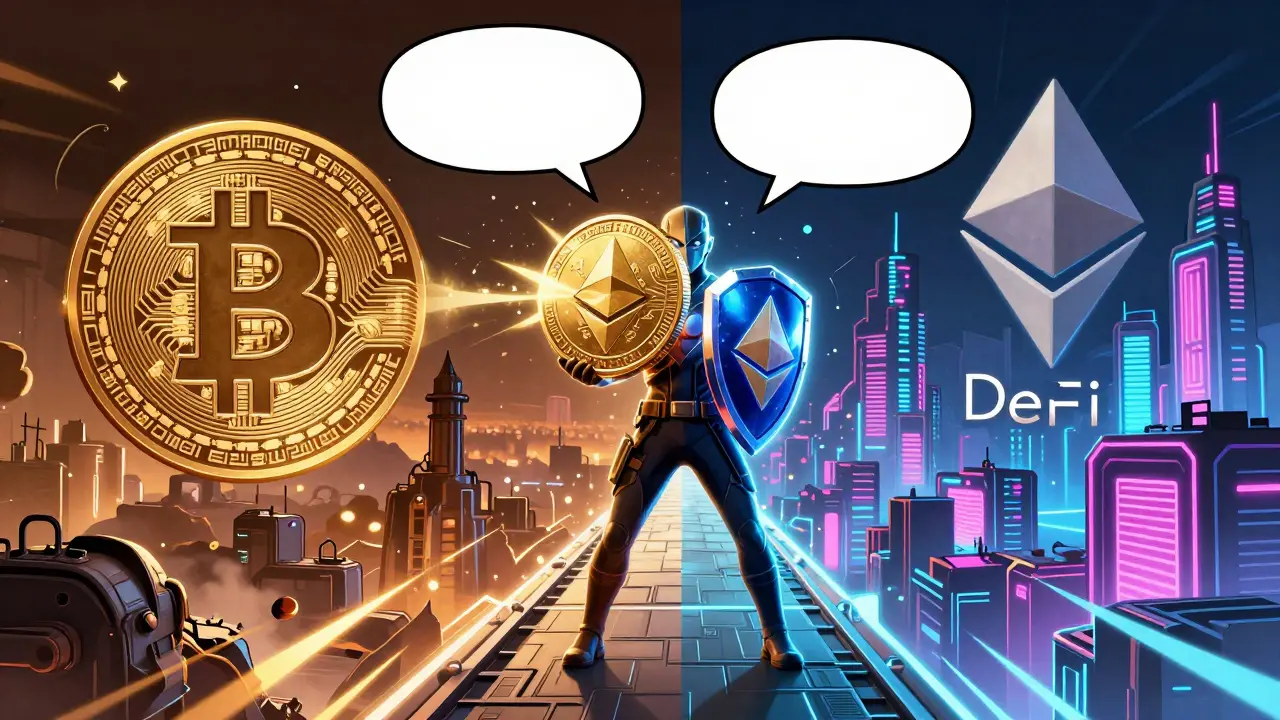
You might wonder why we bother wrapping assets at all. Why not just use native Bitcoin? The answer lies in functionality. Bitcoin is designed primarily as a store of value and a peer-to-peer payment system. It lacks the smart contract capabilities needed for complex financial applications.
Ethereum, on the other hand, is a programmable blockchain. It hosts thousands of DeFi protocols like Uniswap, Aave, and Compound. These apps are built to work with ERC-20 tokens. Native Bitcoin doesn’t fit into this ecosystem. By wrapping Bitcoin into WBTC, developers unlock its liquidity for use in lending markets, yield farming, and automated market makers. Essentially, wrapped assets turn "dumb" money into "smart" money that can participate in advanced financial services.
This interoperability drives what experts call the "liquidity explosion." Instead of having siloed pools of capital on different chains, wrapped assets allow liquidity to flow freely. A trader can move capital from Ethereum to Arbitrum or Optimism seamlessly using wrapped versions of their tokens. This efficiency lowers transaction costs and increases market depth across the entire crypto landscape.
Wrapped Tokens vs. Synthetic Assets: What’s the Difference?
A common confusion in crypto is mixing up wrapped tokens with synthetic assets. They look similar-they both track the price of an underlying asset-but their structures are fundamentally different.
Wrapped tokens are fully backed. Every WBTC exists because there is a real BTC locked in a vault. If the protocol shuts down tomorrow, you could theoretically redeem your WBTC for the actual BTC. The value is derived from direct ownership of the underlying asset.
Synthetic assets, such as those offered by protocols like Synthetix, do not hold the underlying asset. Instead, they use over-collateralized smart contracts to mint tokens that track the price of an asset via oracles. For example, sUSD tracks the US Dollar, but there is no bank account holding dollars. The value is maintained by algorithmic incentives and collateral ratios. If the collateral drops too low, the position gets liquidated. Synthetic assets offer exposure to prices (stocks, commodities, forex) without custody, but they carry different risks related to oracle manipulation and depegging events.
The Security Risks and Trust Problems
No discussion of wrapped assets is complete without addressing the elephant in the room: security. Because wrapped assets introduce a layer of complexity and often centralized custody, they have become prime targets for hackers. History is littered with bridge exploits where billions of dollars were stolen due to vulnerabilities in smart contracts or compromised private keys.
The primary risk is the custodian trust model. When you wrap your assets, you are effectively handing over control to a third party. You are betting that their security measures-multi-signature wallets, cold storage, and proof-of-reserves audits-are robust. If they fail, your wrapped tokens may lose their peg or become unredeemable. This is why transparency is vital. Reputable projects publish regular Proof of Reserves (PoR) reports, allowing anyone to verify that the locked collateral matches the circulating supply of wrapped tokens.
Another risk is smart contract vulnerability. Even if the custodian is honest, the code governing the minting and burning process can have bugs. A flaw in the bridge logic could allow attackers to mint infinite tokens or drain the vault. This is why formal verification and rigorous auditing by firms like OpenZeppelin or Trail of Bits are non-negotiable for any serious wrapped asset project.
The Future: Trust-Minimization and Regulation
The industry is actively working to solve the trust deficit. The trend is moving away from federated custodians toward trust-minimized architectures. Technologies like Chainlink CCIP and LayerZero are building standardized messaging layers that allow blockchains to communicate securely without relying on a single central authority. These systems use threshold signature schemes (TSS) and decentralized oracle networks to validate cross-chain messages, making it exponentially harder for bad actors to compromise the bridge.
Regulation is also shaping the future of wrapped assets. Governments are increasingly scrutinizing stablecoins and wrapped tokens because they resemble traditional financial instruments. Expect stricter requirements for transparency, auditing, and reserve management. Projects that fail to meet these standards may face delisting from major exchanges or legal action. Conversely, compliant projects will likely gain more institutional adoption, bringing deeper liquidity and stability to the space.
As Layer 2 scaling solutions mature, the demand for efficient cross-chain movement will only grow. Wrapped assets will remain the backbone of this multi-chain ecosystem, but the technology underpinning them will become more transparent, decentralized, and secure. For users, the key takeaway is to always research the custody model before wrapping your assets. Understand who holds the keys, how the reserves are audited, and whether the bridge uses decentralized validation. In crypto, your keys, your coins-but when you wrap, you’re entrusting others with temporary custody. Choose wisely.
What is the biggest risk of using wrapped assets?
The biggest risk is counterparty risk. Since wrapped assets rely on custodians to hold the underlying collateral, you must trust that these custodians are solvent, secure, and honest. If the custodian is hacked, goes bankrupt, or acts maliciously, your wrapped tokens could lose their value or become unredeemable. Additionally, smart contract vulnerabilities in the bridge mechanism can lead to exploits.
Is WBTC safe to use?
WBTC is one of the most established wrapped assets, but it still carries centralization risks. It is managed by a federation of companies that control the Bitcoin reserves. While it has a strong track record and undergoes regular audits, it is not decentralized in the same way as native Bitcoin. Users should weigh the convenience of using BTC in DeFi against the trust required in the WBTC operators.
How do I know if a wrapped token is fully backed?
Reputable wrapped asset projects publish Proof of Reserves (PoR) reports. These documents provide cryptographic evidence that the amount of underlying assets held in custody matches the total supply of wrapped tokens in circulation. You can also check on-chain data using block explorers to verify the balance of the custody addresses.
What is the difference between a bridge and a wrapped token?
A bridge is the infrastructure or protocol that facilitates the transfer of assets between blockchains. A wrapped token is the resulting asset created on the destination chain. Think of the bridge as the factory and the wrapped token as the product. The bridge locks the original asset and mints the wrapped version.
Can wrapped tokens ever lose their 1:1 peg?
Yes, although it is rare for well-established tokens like WBTC. If there is a loss of confidence in the custodian, a hack, or a redemption crisis, the market price of the wrapped token may drop below the value of the underlying asset. This is known as depegging. In extreme cases, if the protocol collapses, the wrapped token could become worthless.