
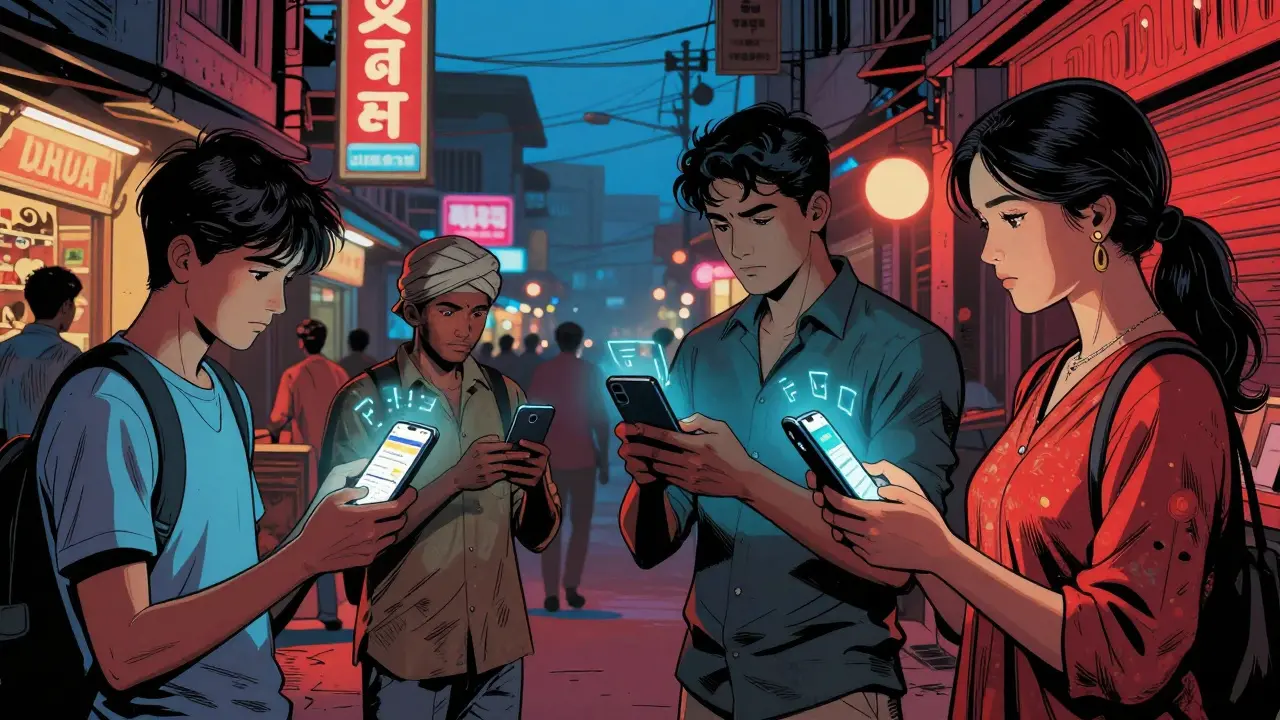
Over 600,000 people in Bangladesh are using Binance every day - even though the government says it’s illegal. You won’t find any official signs or news reports shouting about it. But if you walk through the streets of Dhaka, Chittagong, or Sylhet, you’ll hear the same quiet conversation: "I bought Bitcoin last week." This isn’t a fringe group. It’s not a handful of tech geeks. It’s a massive, hidden network of ordinary people - shop owners, students, factory workers, freelancers - who are choosing crypto over banks.
How Can You Use Crypto If It’s Banned?
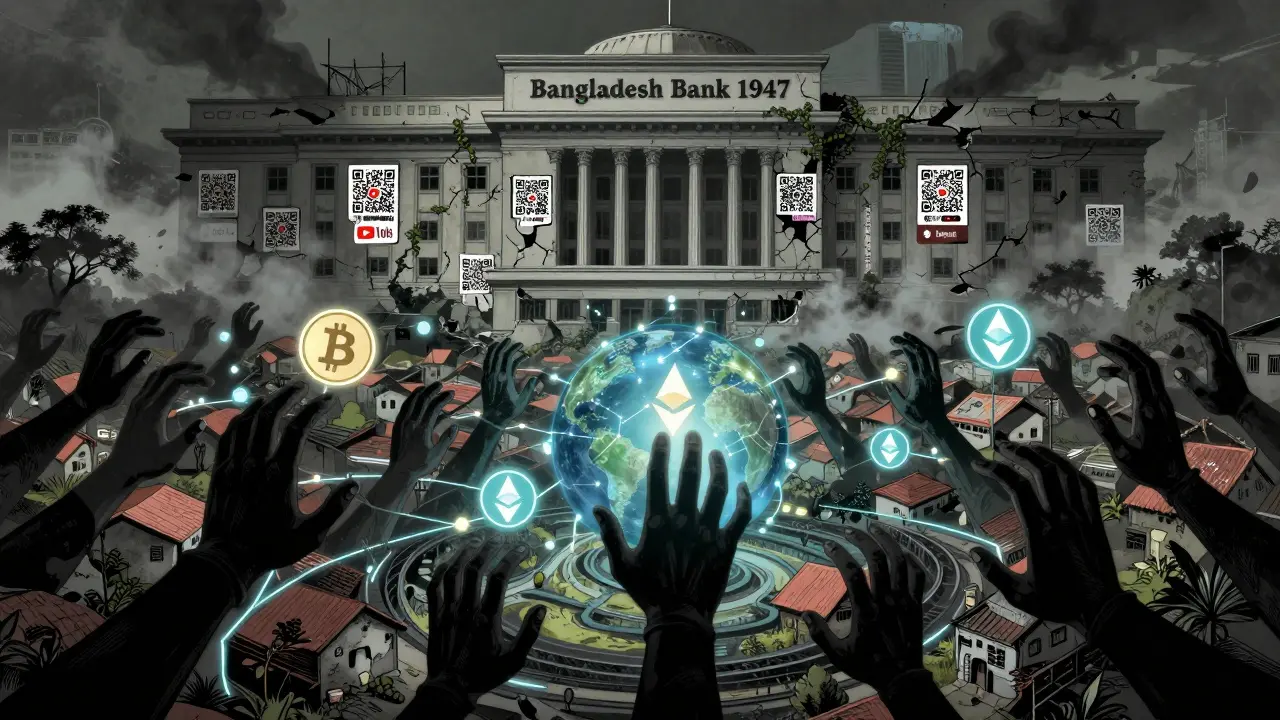
Bangladesh hasn’t passed a law that says "Crypto is illegal." Instead, it uses old rules to crush it. The central bank, Bangladesh Bank, has been warning people since 2014 that using Bitcoin could break the Foreign Exchange Regulation Act of 1947. That’s a law meant to control how money leaves the country. It wasn’t written for digital coins. But the government says: if you use crypto, you’re breaking the law. Period.
Here’s the twist: the ban doesn’t work the way you’d expect. You can still download Binance and KuCoin from the Google Play Store. No blocks. No warnings. No pop-ups saying "This app is illegal." The apps work just fine. People use their local bank cards to buy Tether (USDT), then trade it for Bitcoin or Ethereum. Some use agents - people who swap cash for crypto in person. You hand over 10,000 Bangladeshi Taka. They send you $100 in USDT. They take a 1-2% fee. Simple. Fast. No paperwork.
Why Do People Risk It?
Why would someone risk jail or fines to use crypto? Because the alternatives are worse.
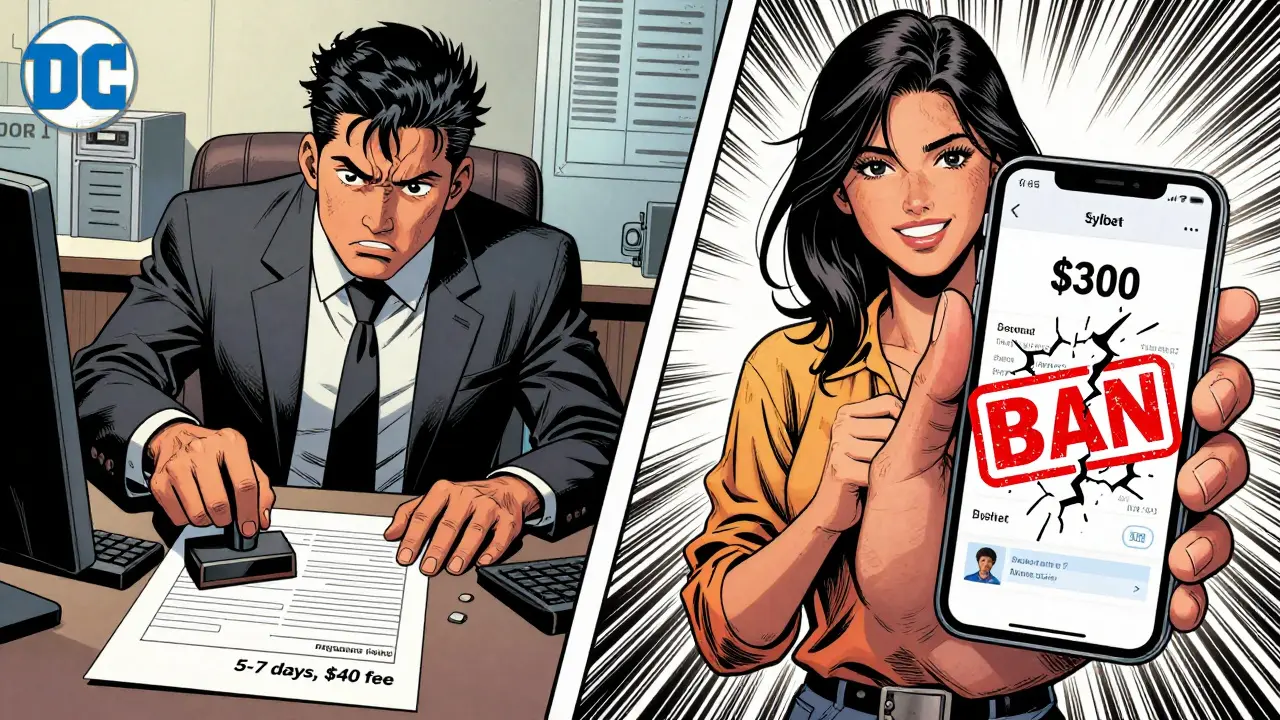
Imagine you’re a freelance graphic designer in Dhaka. You get paid by a client in the U.S. - $500. Traditional wire transfers take 5-7 days. Fees? Up to $40. And that’s if your bank doesn’t reject it. Crypto? Send it in 10 minutes. Pay $1 in fees. Get the money instantly.
Or think about remittances. Bangladesh gets over $20 billion a year from workers abroad. Most of it comes through formal channels like Western Union - expensive and slow. Crypto lets families skip the middleman. A son working in Malaysia sends $300 in USDT. His mother in rural Sylhet cashes out through a local agent. No bank branch needed. No long line. No hidden fees.
And then there’s inflation. The Bangladeshi Taka has lost nearly 15% of its value against the U.S. dollar since 2020. People aren’t just looking for crypto to make money. They’re using it to protect what they have.
The Government’s Blind Spot
Bangladesh’s government has a strange contradiction. In 2020, it launched a National Blockchain Strategy - saying blockchain is key to digital transformation. It wants to use blockchain for land records, voting, and public services. But it still calls cryptocurrency a crime.
That’s like saying: "We love the engine of your car, but we’re banning gas." The technology isn’t the problem. It’s the money. The fear is that crypto lets people move cash without the government watching. And that’s true. But so do cash envelopes, gold bars, and hawala networks. Why target crypto?
The Bangladesh Bank claims crypto enables money laundering and terrorism financing. But the Financial Intelligence Unit (FIU) has never published a single case of crypto being used for terror in Bangladesh. Meanwhile, cash smuggling and fake invoices are far bigger problems - and they’re not banned.
Who’s Behind the 600,000 Users?
It’s not just young men with laptops. A 2025 survey by a Dhaka-based research group found:
- 42% are between 18 and 25 - students and entry-level workers
- 31% are small business owners - tailors, mechanics, shopkeepers
- 17% are women - mostly freelancers and home-based entrepreneurs
- Only 10% are "tech experts" - the rest learned from YouTube or friends
They don’t talk about "decentralized finance." They talk about "getting paid faster" or "saving money on transfers." They don’t care about blockchain. They care about results.
What Happens If You Get Caught?
Technically, you can be fined, have your bank account frozen, or even face criminal charges. But in practice? Almost no one has been prosecuted.
Why? Because the government doesn’t have the tools to track it. Banks can see when you send money to a crypto exchange. But once the money leaves the bank - and turns into USDT - it vanishes into a global network. The FIU can’t trace it. The police can’t raid a server in Singapore.
And even if they could, arresting 600,000 people isn’t realistic. It’s not a crime that can be policed. It’s a movement.
The Experts Say: Stop Banning. Start Regulating.
Dr. B M Mainul Hossain, a professor at Dhaka University and director of its Institute of Information Technology, says it plainly: "Banning is not a solution. Sitting back and doing nothing is not the answer."
He’s not alone. Academics, economists, and fintech founders in Bangladesh are pushing for a middle path: regulate, don’t ban. Let people use crypto - but require identity verification. Tax gains. Monitor large transfers. Treat it like stocks or forex - not a crime.
Compare that to India. India bans crypto as payment, but lets you buy, sell, and hold. You pay taxes. You get a record. You’re not breaking the law. Bangladesh could do the same. It already has the tech infrastructure. It has the digital payment systems. It just needs the will.
The Future Is Already Here
The government’s ban is crumbling under the weight of real-world demand. Every day, more people join. More agents open up. More apps get downloaded. The number of users is growing - not shrinking.
And it’s not just Binance. KuCoin, Bybit, OKX - all are active. Telegram groups for crypto trading in Bengali have over 200,000 members. YouTube tutorials on "how to buy crypto in Bangladesh" have millions of views.
Meanwhile, neighboring countries are moving forward. India allows crypto. Nepal just lifted its ban. Sri Lanka is testing a digital rupee. Bangladesh is stuck in 2014 while the world moves on.
The real question isn’t whether people will keep using crypto. It’s whether the government will finally admit: the ban isn’t working. And if it’s not working, what’s next?
Is it really illegal to use Binance in Bangladesh?
Yes, under current banking regulations, using Binance or any crypto platform is considered illegal because it violates the Foreign Exchange Regulation Act of 1947 and the Money Laundering Prevention Act of 2012. The Bangladesh Bank does not recognize cryptocurrencies as legal tender. However, there are no known cases of individuals being criminally prosecuted for personal use - enforcement is inconsistent and limited.
How do people buy crypto if banks block it?
Most users bypass bank blocks by using local agents who exchange Bangladeshi Taka for USDT or Bitcoin in person. Others use credit or debit cards linked to international payment processors that don’t flag crypto purchases. Some also use peer-to-peer (P2P) trading on Binance where buyers and sellers connect directly, often meeting in cafes or through WhatsApp.
Can the government shut down Binance in Bangladesh?
Technically, yes - but they haven’t. Binance and other apps remain available on the Google Play Store. The government lacks the technical capability to block all crypto platforms across all networks, and attempts to block websites have failed because users switch to mobile apps or mirror sites. Even if they blocked Binance’s website, users would still access it through VPNs or P2P channels.
Do Bangladeshis pay taxes on crypto gains?
There is no specific crypto tax law. But the National Board of Revenue says crypto profits fall under the Income Tax Ordinance of 1984. In theory, you should report gains. In practice, almost no one does. The tax agency doesn’t track crypto transactions, so enforcement is nearly zero. This creates a gray zone where crypto is illegal to use but not illegal to profit from.
Why hasn’t Bangladesh banned crypto apps from the Play Store?
Google and Apple don’t let governments dictate which apps are available unless they violate global policies (like gambling or fraud). Binance doesn’t break those rules. It’s a financial app, not a gambling site. Bangladesh’s regulators have no legal authority to force Google to remove apps. That’s why the ban exists on paper - not in practice.
Is blockchain different from cryptocurrency in Bangladesh’s policy?
Yes. The government supports blockchain for public services like land records and digital IDs, but bans cryptocurrency. They see blockchain as a tool - and crypto as a threat. This split is artificial. Blockchain runs on crypto networks. You can’t have one without the other. Experts say this contradiction shows the policy is outdated and not based on real technology understanding.
What’s Next?
The 600,000 users aren’t waiting for permission. They’re already building the future - one USDT transfer at a time. The government’s ban is a wall. And people are climbing it.
Either Bangladesh will wake up and start regulating - or it will keep pretending the problem doesn’t exist. One path leads to innovation, transparency, and economic growth. The other leads to more underground activity, more distrust, and more missed chances.
The choice isn’t about technology. It’s about trust. And right now, the people have already made theirs.
Jesse VanDerPol
March 8, 2026 AT 05:48jay baravkar
March 10, 2026 AT 02:12Rachel Rowland
March 11, 2026 AT 14:31Jeffrey Dean
March 12, 2026 AT 20:47Eva Gupta
March 13, 2026 AT 23:13Christina Young
March 14, 2026 AT 05:49Leah Dallaire
March 15, 2026 AT 22:42prasanna tripathy
March 17, 2026 AT 19:47Issack Vaid
March 18, 2026 AT 08:21Shawn Warren
March 18, 2026 AT 12:12Jackson Dambz
March 20, 2026 AT 03:26Megan Lutz
March 20, 2026 AT 08:41Datta Yadav
March 20, 2026 AT 13:00Lydia Meier
March 20, 2026 AT 18:20Ian Thomas
March 22, 2026 AT 10:41Bryanna Barnett
March 23, 2026 AT 09:16Josh Moorcroft-Jones
March 24, 2026 AT 02:40Bonnie Jenkins-Hodges
March 24, 2026 AT 13:10Melissa Ritz
March 25, 2026 AT 17:33