
Have you ever stumbled upon a coin name that sounds like a season but acts more like a ghost? That’s the current reality for Summer (SUMMER), an ERC-20 cryptocurrency token launched on the Ethereum blockchain in September 2021. It sits quietly in the vast ocean of digital assets, trading with barely a ripple. If you are reading this because you saw it on a portfolio tracker or heard a whisper about it in a forum, you need to know exactly what you are looking at before you click "buy."
This isn’t a guide on how to get rich quick. It is a breakdown of a specific asset class: the forgotten altcoin. We will look at the hard numbers, the technical setup, and the stark reality of why tokens like Summer exist and why they often disappear from relevance.
The Core Identity: What Is the SUMMER Token?
To understand Summer, you have to strip away any marketing hype and look at the code. Summer is an ERC-20 token that operates on the Ethereum network, following standard protocols for fungible tokens. It was born on September 5, 2021, right in the middle of a massive bull market when anyone could launch a token with minimal friction. Its contract address is 0x4d4f3715050571a447fffa2cd4cf091c7014ca5c. This string of characters is its only true identity on the blockchain.
Unlike Bitcoin, which has miners securing the network, or Ethereum, which powers smart contracts, Summer does not have its own blockchain. It relies entirely on Ethereum’s infrastructure. This means every time you send or receive Summer, you pay gas fees to Ethereum validators, not to a Summer-specific network. The token has a maximum supply cap of 33,100,000 units, but only about 7,483,000 tokens currently exist in total supply. The circulating supply-the amount actually moving around in wallets-is murky, with some data sources reporting near-zero activity.
There is no whitepaper detailing a revolutionary technology. There is no roadmap showing upcoming partnerships. Summer represents a segment of the crypto market where the asset exists primarily as a speculative instrument rather than a utility tool. You hold it hoping someone else pays more for it later, not because it gives you access to a service or voting rights in a decentralized organization.
Market Performance: The Numbers Don't Lie
Let’s talk money. As of late 2025, Summer trades at approximately $0.005154 USD. That might sound cheap, but in crypto, price per unit is less important than market capitalization. Summer’s market cap hovers around $34,200. To put that in perspective, that is less than the annual revenue of a small local coffee shop. It ranks #4,428 among all cryptocurrencies. This places it firmly in the "long tail"-the thousands of projects that have negligible impact on the broader market.
| Metric | Value | Context / Implication |
|---|---|---|
| Current Price | ~$0.005154 | Extremely low unit value; high volatility potential |
| Market Cap | ~$34,200 | Micro-cap status; highly susceptible to manipulation |
| All-Time High (ATH) | $0.0388 | Down 88.23% from peak; significant value erosion |
| 24h Volume | $100 - $778 | Critically low liquidity; difficult to exit large positions |
| Ranking | #4,428 | Obscure project with minimal global attention |
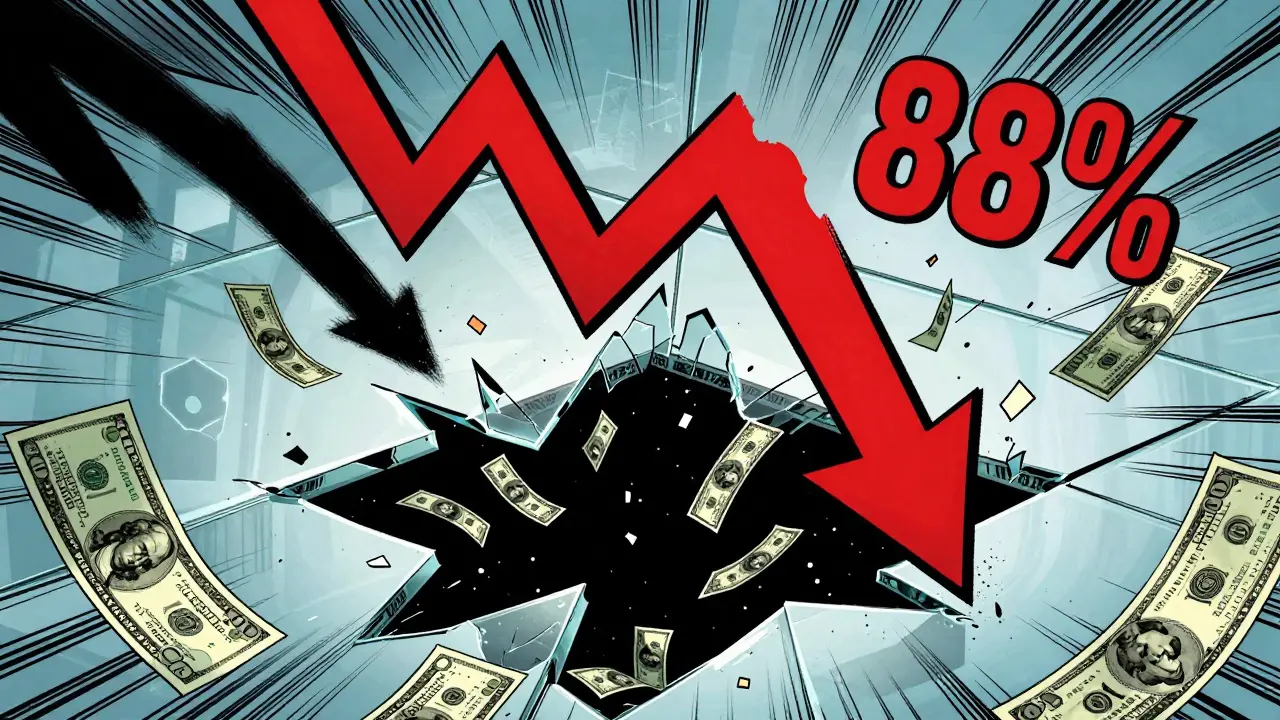
The volatility here is brutal. Summer hit an all-time high of $0.0388 during the frenzy of 2021. Since then, it has lost over 88% of its value. While it may show small green candles on daily charts-like an 8.13% increase in a single day-these are noise against a backdrop of structural decline. Compared to Bitcoin, Summer has underperformed by nearly 48% over the last year. Against Ethereum, it trails by almost 45%. When the major assets rise, Summer often stays flat or drops further, indicating a lack of investor confidence and capital inflow.
Liquidity Traps: Why You Can't Easily Sell
Price is just one side of the coin. The other side is liquidity. Liquidity determines how easily you can buy or sell an asset without drastically changing its price. For Summer, liquidity is dangerously thin. The 24-hour trading volume ranges between $100 and $778. Imagine trying to sell $1,000 worth of Summer. You might wipe out the entire day’s buying interest, causing the price to crash instantly. This is known as slippage, and in micro-caps, it can eat up 20% or more of your trade.
This lack of volume creates a trap. New buyers see a low price and think there is room for growth. But without consistent buyers, there are no sellers willing to take the other side of the trade. Most exchanges delist tokens with such low volumes because they don’t generate enough fee revenue. Currently, Summer is listed on very few platforms, if any major ones. This isolation makes it harder to find reliable price feeds and increases the risk of encountering fake listings or scam sites pretending to offer SUMMER pairs.
Furthermore, algorithmic prediction tools, like those used by CoinCodex, cannot even generate forecasts for Summer. Why? Because there isn’t enough historical trading data. A machine learning model needs patterns to predict trends. Summer offers chaos and silence. This absence of analytical coverage is a red flag. It means professional traders and institutions are ignoring it completely.

Technical Setup: How to Hold (and Find) SUMMER
If you still decide to proceed, knowing how to handle the token technically is crucial. Since Summer is an ERC-20 token, it lives on the Ethereum blockchain. You cannot store it in a basic Bitcoin wallet. You need an Ethereum-compatible wallet like MetaMask a popular browser extension and mobile app for managing Ethereum accounts and interacting with dApps.
- Download MetaMask: Install the browser extension or mobile app. Create a new wallet or import an existing one. Secure your seed phrase offline.
- Add the Network: Ensure you are connected to the Ethereum Mainnet. Do not use testnets unless you are developing.
- Import the Token: Go to the "Assets" tab and click "Import Tokens." Paste the contract address:
0x4d4f3715050571a447fffa2cd4cf091c7014ca5c. - Verify Details: The symbol should auto-fill as "SUMMER" and the decimals as 18. Double-check this carefully. Scammers often create fake tokens with the same name but different addresses.
Once imported, you will see your balance. However, sending these tokens requires ETH for gas fees. Even if you only send $10 worth of Summer, you might pay $2-$5 in Ethereum gas fees depending on network congestion. This friction discourages frequent trading and effectively locks users into holding until the network is cheaper or the token gains value significantly.
The Verdict: Speculation vs. Investment
So, what is Summer really? It is a relic of the 2021 mania. It lacks utility, community engagement, and development updates. The team behind it is silent. The social media presence is nonexistent. In the hierarchy of cryptocurrency investments, Summer falls into the highest risk category: the dormant micro-cap.
For most investors, Summer is not a viable option. The potential upside is theoretical and unproven, while the downside is concrete-you could lose 100% of your capital if the remaining holders dump their bags or if the last exchange listing disappears. However, for collectors of obscure tokens or those interested in studying market dynamics of failed projects, it serves as a case study in how quickly enthusiasm fades in the crypto space.
Always remember: just because a token exists on the blockchain doesn’t mean it has value. Value comes from people believing in it and using it. Summer currently has neither. Proceed with extreme caution, do your own research, and never invest money you cannot afford to lose.
Is Summer (SUMMER) a safe investment?
No, Summer is considered extremely high-risk. With a market cap under $40,000, minimal trading volume, and no active development, it carries a high probability of total loss. It lacks the liquidity and security audits associated with safer assets.
Where can I buy SUMMER token?
Summer is listed on very few, if any, major centralized exchanges due to low volume. It may be available on decentralized exchanges (DEXs) like Uniswap via the Ethereum network, but you must manually add the contract address. Be wary of fake listings.
Why is the price of SUMMER so low?
The low price reflects a lack of demand and adoption. Launched in 2021, it has failed to build a user base or utility. The 88% drop from its all-time high indicates sustained selling pressure and loss of investor interest.
Does Summer have a whitepaper or roadmap?
There is no publicly available, credible whitepaper or active development roadmap for Summer. The absence of documentation suggests the project is dormant or abandoned.
Can I store SUMMER in my hardware wallet?
Yes, since it is an ERC-20 token, you can store it in hardware wallets like Ledger or Trezor that support Ethereum. You will need to add the custom token contract address to view and manage the balance.