

Imagine if every smartphone and car camera on the planet could help build a real-time map of the world, and you got paid for simply driving or walking. That is the core promise of NATIX Network, a decentralized physical infrastructure network (DePIN) that crowdsources visual data from everyday cameras to create geospatial intelligence for autonomous driving and smart cities. The project uses its native cryptocurrency, the NATIX token ($NATIX), to reward users who contribute this data. If you have heard the ticker symbol NATIX buzzing around crypto forums or seen it listed on exchanges, you are likely wondering what actually backs this coin.
NATIX is not just another speculative meme coin. It belongs to a specific sector of blockchain technology known as DePIN, which aims to solve real-world problems by decentralizing physical infrastructure. In NATIX’s case, the problem is the high cost and slow update cycle of traditional mapping services. By turning billions of existing cameras into an "Internet of Cameras," NATIX attempts to provide low-cost, real-time data for applications like self-driving cars. This article breaks down how the network works, the role of the token, and whether it has potential in the current market landscape of mid-2026.
How NATIX Network Works: The Internet of Cameras
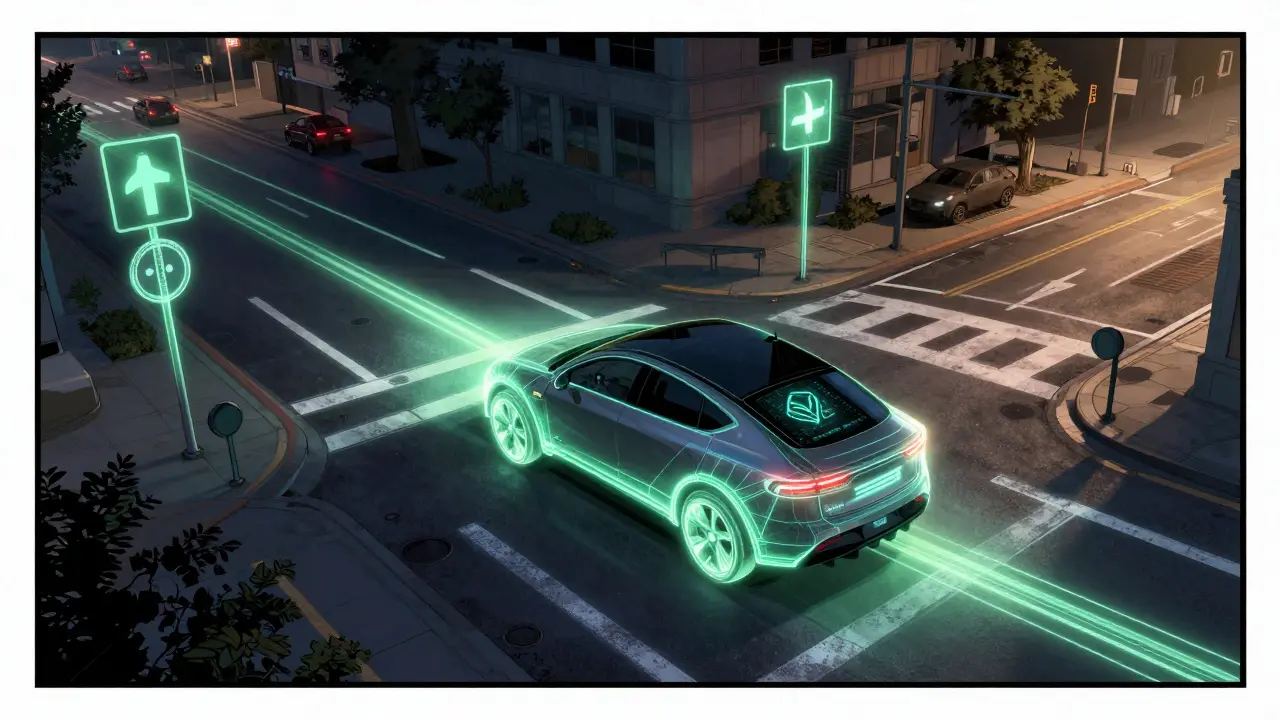
To understand the value proposition of NATIX, you need to look at how mapping data is traditionally collected. Companies like Google or specialized HD map providers use expensive survey vehicles equipped with LiDAR and high-end sensors. These fleets are costly to maintain and cannot cover every street corner in real time. NATIX flips this model by leveraging the cameras already in our pockets and dashboards.
The network operates on a concept called DePAI (Decentralized Physical AI). Here is the simple workflow:
- Data Collection: Users install apps like the original Drive& app or the newer VX360 platform on their smartphones or connect vehicle cameras.
- AI Processing: Proprietary computer vision algorithms analyze the video feeds. They identify road signs, potholes, lane markings, traffic conditions, and construction zones.
- Standardization: Raw video is converted into structured geospatial data sets. This means the data is clean, tagged with GPS coordinates, and ready for software to use.
- Reward Distribution: Contributors receive $NATIX tokens based on the quality and quantity of data they provide.
This approach significantly lowers the barrier to entry. You do not need a million-dollar sensor rig; you just need a smartphone with a camera and internet connectivity. The system is designed to operate in near real-time, which is crucial for safety-critical applications like autonomous driving where static maps are often outdated within hours.
The NATIX Token ($NATIX): Utility and Economics
The NATIX token (the native utility token of the NATIX Network ecosystem) is deployed on the Solana blockchain. Its primary function is to serve as the unit of account and medium of exchange within the network. Without the token, the economic loop that incentivizes data collection would break.
Here is how $NATIX is used in practice:
- Staking: Holders can stake their tokens to earn rewards, helping to secure the network and align long-term interests.
- Governance: Token holders participate in decisions regarding the protocol’s development and fund allocation.
- Data Access Fees: Enterprises, such as autonomous vehicle developers or city planners, pay in $NATIX to access the high-resolution geospatial data feeds.
- Contributor Rewards: As mentioned, everyday users earn $NATIX for contributing valid camera data.
The tokenomics design ties demand directly to network usage. As more companies buy data, the demand for $NATIX increases. Conversely, as more users join to collect data, the supply dynamics shift. To manage inflation and increase scarcity, NATIX Network executed a significant token burn in April 2026, removing 110,000,000 $NATIX from circulation permanently. This move signals an intent to align token economics with sustainable growth rather than short-term speculation.
Market Performance and Supply Dynamics (Mid-2026 Context)
As of late June 2026, NATIX remains a micro-cap asset. Data from aggregators like CoinGecko and CoinMarketCap shows the price hovering around 0.000084 USD. While this number looks small, it reflects the massive circulating supply, which stands at over 40 billion tokens. The daily trading volume is relatively modest, typically ranging between $160,000 and $170,000, indicating that liquidity is still developing compared to major cryptocurrencies.
| Metric | Value |
|---|---|
| Ticker Symbol | NATIX |
| Blockchain | Solana |
| Approximate Price | $0.000084 USD |
| Circulating Supply | ~40.6 Billion |
| Recent Major Event | 110M Token Burn (April 2026) |
| Primary Use Case | Geospatial Data for Autonomous Driving |
The low price point often attracts retail investors looking for high-leverage plays, but it also comes with higher volatility. The market capitalization suggests that NATIX is still in an early adoption phase. Its value is heavily dependent on the success of its strategic pivots and partnerships rather than pure hype.
Strategic Pivot: From Drive& to VX360 and Autoware
A critical development for NATIX occurred in April 2026. The project shifted its primary focus away from the consumer-facing Drive& app toward a product called VX360 (NATIX's enterprise-focused geospatial data product suite). This pivot marks a transition from a gamified B2C model to a more serious B2B infrastructure play.
Simultaneously, NATIX joined the Autoware Foundation, a leading open-source consortium for autonomous driving. This membership is significant because it integrates NATIX’s data layer directly into the software stack used by many robotics companies and automotive OEMs. Instead of just rewarding drivers for playing a game, NATIX is positioning itself as a foundational data provider for the actual deployment of self-driving vehicles.
This shift addresses one of the biggest criticisms of early DePIN projects: lack of tangible enterprise utility. By embedding itself in the Autoware ecosystem, NATIX creates a direct pipeline for its data to be consumed by industry leaders, potentially driving organic demand for the $NATIX token.

Risks and Challenges to Consider
While the technology is innovative, investing in or using NATIX carries specific risks that you should weigh carefully.
- Data Quality and Validation: Crowdsourced data can be noisy. Ensuring that a blurry photo from a smartphone doesn’t corrupt the geospatial map requires robust AI validation. If the data is inaccurate, enterprises will stop buying it.
- Regulatory Uncertainty: Collecting visual data from public spaces raises privacy concerns. Regulations around facial recognition and location tracking vary globally. NATIX claims to anonymize data on-device, but regulatory shifts could impact operations.
- Competition: Tech giants like Google, Apple, and Tesla already have massive data collection capabilities. NATIX must prove that its decentralized, lower-cost model offers superior granularity or speed to win market share.
- Token Volatility: As a micro-cap token, NATIX is susceptible to large price swings. Liquidity is lower than top-tier coins, meaning large buys or sells can drastically affect the price.
Conclusion: Is NATIX Worth Your Attention?
NATIX Network represents a compelling intersection of artificial intelligence, blockchain incentives, and physical infrastructure. By solving the expensive problem of real-time mapping through crowdsourcing, it taps into the growing demand for data in the autonomous driving sector. The pivot to VX360 and the partnership with Autoware show a maturing strategy focused on enterprise utility rather than just community growth.
However, it remains an early-stage project with a micro-cap valuation. The success of the $NATIX token depends entirely on the network’s ability to scale its camera coverage and maintain data quality standards that satisfy professional clients. For those interested in the DePIN narrative, NATIX offers a unique angle centered on visual intelligence, but it requires patience and a tolerance for volatility.
What blockchain is NATIX built on?
The NATIX token ($NATIX) is deployed on the Solana blockchain. This choice allows for fast transaction speeds and low fees, which are essential for processing the high volume of micro-rewards distributed to data contributors.
How do I earn NATIX tokens?
You can earn NATIX tokens by contributing visual data to the network. Historically, this was done via the Drive& app by driving with your smartphone. Currently, the focus is shifting to the VX360 platform and integrations with vehicle cameras. You need to link a compatible Solana wallet to receive your rewards.
Is NATIX a safe investment?
Like all cryptocurrencies, NATIX carries risk. It is a micro-cap token with high volatility. Additionally, its value depends on the successful adoption of its technology by enterprises in the autonomous driving space. Regulatory changes regarding data privacy could also impact the project. Always do your own research before investing.
What is the difference between Drive& and VX360?
Drive& was NATIX’s initial consumer-facing app that gamified data collection for drivers. VX360 is the newer, enterprise-focused product launched in 2026. It emphasizes providing high-quality, structured geospatial data for business and industrial applications, particularly within the autonomous driving ecosystem.
Why did NATIX join the Autoware Foundation?
Joining the Autoware Foundation in April 2026 was a strategic move to integrate NATIX’s data layer with a widely used open-source autonomous driving software stack. This helps NATIX reach automotive manufacturers and robotics companies directly, creating a clear path for enterprise data consumption and revenue.