
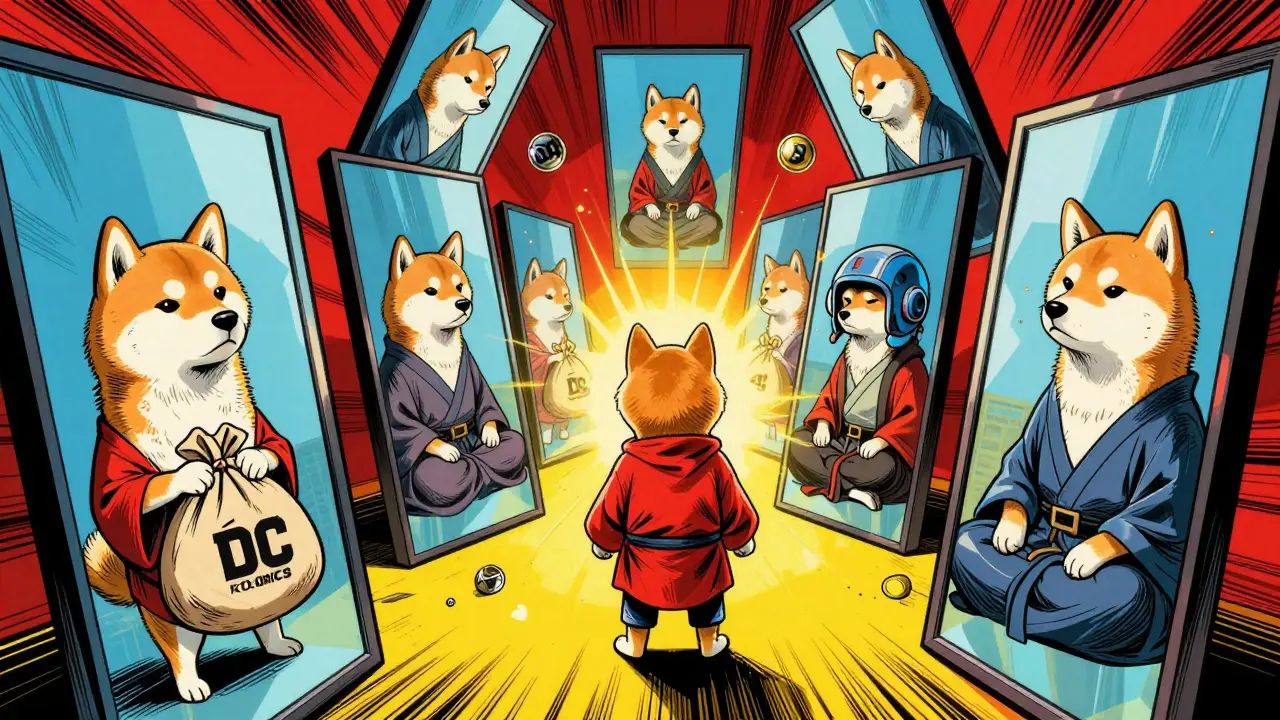
Have you ever scrolled through a crypto tracker and felt like you were looking at a hall of mirrors? You see one name-KabosuCoin-but suddenly there are five different versions of it. One promises charity for dogs. Another talks about Zen Buddhism. A third claims to be a payment network. It’s confusing, frustrating, and honestly, a little dangerous if you don’t know what you’re clicking on.
If you landed here asking What is KabosuCoin (ERC) (KABOSU), you’ve hit the nail on the head. This isn’t just one coin; it’s a fragmented ecosystem of tokens all riding the coattails of Kabosu, the Shiba Inu dog who became the face of the Doge meme before she passed away in May 2024. Today, we’re going to cut through the noise. We’ll separate the specific KabosuCoin (ERC) nostalgic tribute token from its many lookalikes, so you know exactly what you’re holding-and what you might accidentally buy instead.
The Origin Story: Why So Many Kabosu Tokens?
To understand why there are so many tokens with the ticker KABOSU, you have to look at the source material. Kabosu was the real-life Shiba Inu photographed by her owner, Atsuko Sato, in 2010. That photo became the "Doge" meme, which eventually inspired the creation of Dogecoin. When Kabosu passed away in 2024, the crypto community reacted not with silence, but with a flurry of new projects.
In the world of meme coins, code is cheap. Anyone can deploy a smart contract on Ethereum or a Layer-2 network and name it whatever they want. There is no central authority that says, "You can’t call your coin KabosuCoin." This has led to a crowded field where multiple teams launched independent tokens using the same image, similar names, and often the same ticker symbol. The result? A market full of confusion.
KabosuCoin (ERC) is just one player in this game. Its branding leans heavily into nostalgia. It positions itself as a tribute to the "true face behind the meme," focusing on community fun rather than complex utility. But because it shares its name and ticker with other projects, identifying it correctly is the first step in any interaction.
Identifying KabosuCoin (ERC): The Specs
Let’s get specific. If you are looking at the listing titled KabosuCoin (ERC) price KABOSU on major trackers like CoinMarketCap, here is what defines this specific asset:
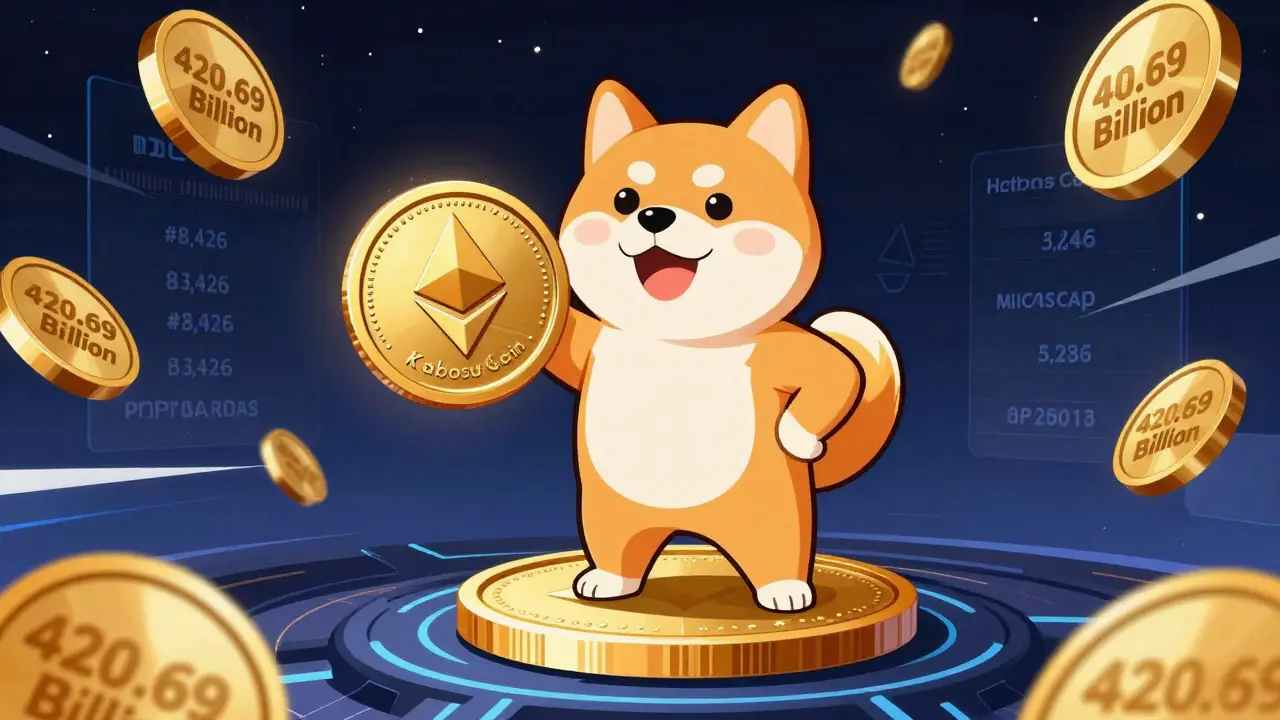
- Supply: The total and circulating supply is reported as 420.69 billion KABOSU. This number is chosen for its internet-culture significance (420.69), a common trope in meme coins.
- Blockchain: As the name suggests, it is an ERC-standard token, most likely ERC-20, operating on the Ethereum network or an Ethereum-compatible chain.
- Mission: Unlike some variants, this listing does not emphasize charity mechanics or tax redistribution. It focuses on being a speculative, community-driven tribute.
- Ranking: It sits around rank #8,426 on CoinMarketCap, placing it firmly in the micro-cap category.
Notice what’s missing? There is no mention of a whitepaper, a named founding team, or a detailed roadmap in the public listing data. This is typical for low-tier meme coins. The value proposition here is purely sentimental and speculative. You are buying into the story of Kabosu and the hope that the community will drive the price up.
The Trap: Other Tokens Using the Same Name
This is where things get tricky. If you search for "KABOSU" on an exchange or a block explorer, you might not find the right contract address. Here are the other major contenders that could confuse you:
| Token Variant | Total Supply | Key Feature / Mission | Network |
|---|---|---|---|
| KabosuCoin (ERC) | 420.69 Billion | Nostalgic tribute to Doge origins | Ethereum (ERC) |
| Charity Kabosu | ~1 Quadrillion* | 5% holder rewards, 5% liquidity lock, dog charity donations | EVM Compatible |
| Ethereum Memecoin KABOSU | 18 Billion | Zen theme, commemorates Kabosu's passing (May 2024) | Ethereum |
| Real Kabosu | 10 Million | Low supply, scarce variant | Unspecified |
| Kabosu (BASE) | Not Disclosed | DeFi payment network, algorithmic stablecoin reserve | Base (Layer-2) |
*Note: Data discrepancies exist between trackers for the Charity variant, with some showing zero supply due to listing errors.
See the difference? The Charity Kabosu token has a completely different economic model. It takes a 5% tax on every transaction to reward holders and fund liquidity. If you send KABOSU to the wrong address thinking it’s the simple tribute coin, you might be sending funds to a high-tax charity project, or worse, losing them entirely if the contract doesn’t support transfers as expected.
Market Reality: Liquidity and Risk
Let’s talk numbers, because they tell a stark story. As of mid-2026, these tokens are not household names. They are not trading on Coinbase or Binance. They are niche assets.
The CoinGecko-tracked Kabosu (likely the charity variant) had a market cap of roughly $2.5 million and a daily trading volume of less than $4 USD in recent snapshots. What does that mean for you? It means liquidity is extremely thin. If you try to sell a significant amount, you could crash the price yourself. This is known as slippage, and in micro-cap coins, it can eat up 50% or more of your trade value.
KabosuCoin (ERC) is even lower on the radar, ranked over #8,000. This indicates very low interest and potentially very low liquidity. You might find it on decentralized exchanges (DEXs) like Uniswap, but you need to check the pool depth before swapping. If there is only $100 worth of ETH in the pool, you cannot buy much without moving the needle drastically.
How to Verify You Have the Right Token
Never trust the name alone. Never trust the ticker alone. In the world of EVM chains, the Contract Address is the only truth.
- Find the Official Source: Look for the official website or social media links provided in the specific CoinMarketCap or CoinGecko listing for KabosuCoin (ERC).
- Copy the Contract Address: It will look like
0x...followed by a long string of letters and numbers. - Paste into Your Wallet: When adding a custom token to MetaMask or Trust Wallet, paste this exact address. Do not type it manually.
- Check the Network: Ensure your wallet is set to the correct network (Ethereum Mainnet, Base, BSC, etc.). Sending ERC-20 KABOSU to a Base-chain address will result in lost funds.
If you are unsure, do not buy. The risk of interacting with a scam token that mimics the legitimate ones is high. Scammers often launch fake versions of trending meme coins with slightly altered names to catch careless buyers.

Is KabosuCoin (ERC) a Good Investment?
I’m going to be direct: No credible financial analyst recommends micro-cap meme coins as investments. They are speculative instruments. Their value is driven entirely by attention, sentiment, and community hype.
KabosuCoin (ERC) lacks the utility of a DeFi protocol, the scarcity of Bitcoin, or the charitable structure of its sibling tokens. Its primary appeal is nostalgia. While nostalgia can drive short-term spikes in price, it rarely sustains long-term growth without additional development or marketing push.
If you choose to participate, treat it like buying a lottery ticket. Only spend what you are willing to lose entirely. Do not leverage money you need for rent or bills. The volatility in this sector is extreme, and the lack of institutional oversight means there is no safety net if something goes wrong.
Conclusion: Proceed with Caution
The crypto space is filled with opportunities, but also with traps. The proliferation of Kabosu-branded tokens is a perfect example of how easily branding can be diluted and confused. KabosuCoin (ERC) is a specific, low-cap tribute token with a playful supply cap and a focus on community fun. It is distinct from the charity-focused, Zen-themed, or DeFi-oriented variants that share its name.
Your best defense is verification. Always check the contract address. Always check the liquidity. And always remember that in the world of meme coins, the narrative is everything-but the math is what determines if you can actually cash out.
What is the difference between KabosuCoin (ERC) and Dogecoin?
Dogecoin is a standalone cryptocurrency with its own blockchain and massive adoption. KabosuCoin (ERC) is a token built on top of the Ethereum network (or compatible chains). It is a tribute to the dog that inspired Dogecoin, but it has no technical connection to the Dogecoin network and operates independently with a much smaller market cap.
Why are there so many different Kabosu tokens?
Because anyone can create a token on public blockchains like Ethereum. After Kabosu the dog passed away in 2024, multiple developers launched their own tokens using her name and image. Some focus on charity, others on speculation, and others on DeFi utilities, leading to a fragmented ecosystem with shared tickers but different contracts.
Which Kabosu token supports animal charities?
The variant often listed simply as "Kabosu" or "Charity Kabosu" explicitly states a mission to support dog welfare. It uses a tokenomics model where a portion of transaction fees is redistributed to holders and locked into liquidity, with profits directed to charities. KabosuCoin (ERC) does not highlight this feature in its primary listing.
Is KabosuCoin (ERC) safe to buy?
Like all micro-cap meme coins, it carries high risk. The primary risks include low liquidity (making it hard to sell), potential scams (fake tokens with similar names), and extreme price volatility. Always verify the contract address on a reputable tracker before purchasing.
Where can I buy KabosuCoin (ERC)?
It is likely available on decentralized exchanges (DEXs) such as Uniswap, depending on the specific blockchain it resides on. You will need a Web3 wallet (like MetaMask) and the native currency of that chain (e.g., ETH) to swap for KABOSU. It is not typically found on major centralized exchanges like Coinbase.