
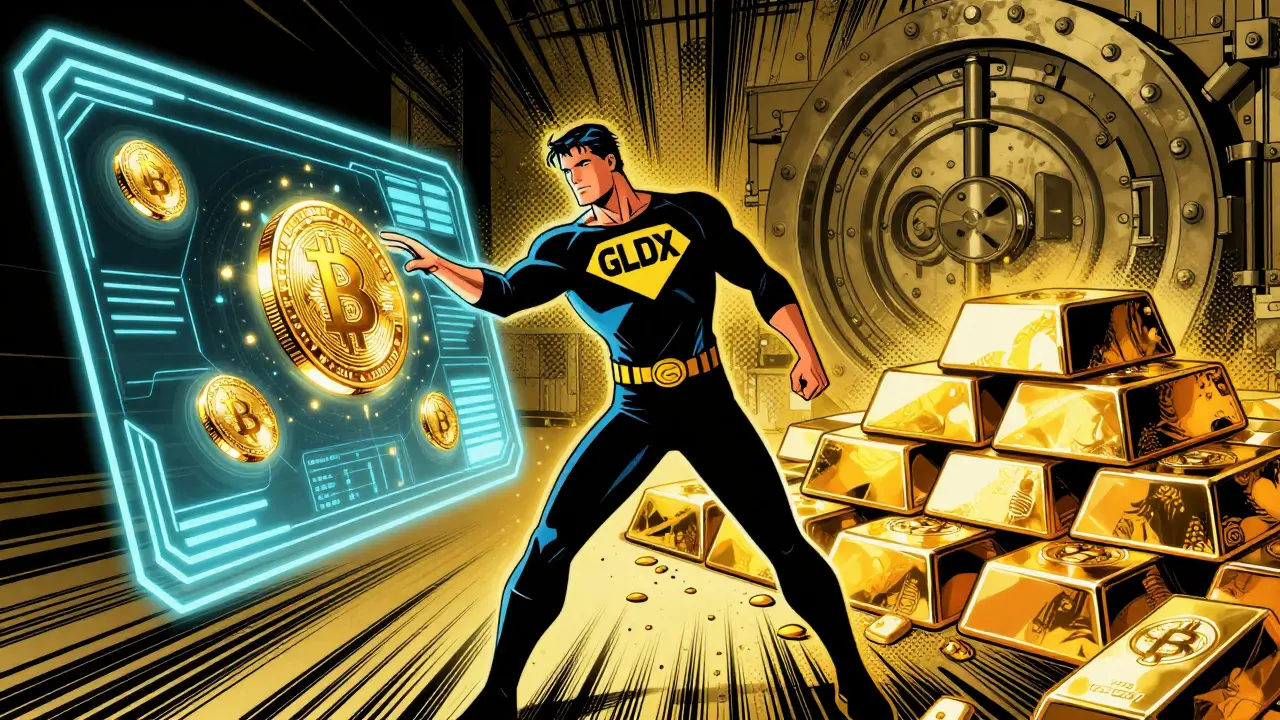
You want to own gold, but you don't want a heavy bar sitting in your safe. You also want the speed of crypto, not the slow settlement times of traditional stock markets. That is exactly where GLDX, or Gold Tokenized ETF (xStock), fits in. It promises to bridge the gap between physical bullion and digital trading. But before you buy, you need to know what you are actually holding.
This article breaks down what GLDX is, how it works on the blockchain, and how it compares to established players like PAX Gold. We will look at the benefits, the risks, and the critical information gaps that every investor needs to understand in 2026.
Understanding the Core Concept: What is GLDX?
GLDX is a cryptocurrency token designed to track the value of physical gold through blockchain technology. The ticker symbol is GLDX. It falls under the broader category of tokenized real-world assets (RWA). Instead of buying an ounce of gold from a jeweler, you buy a digital token that represents ownership of that gold.
The "xStock" branding suggests this token might be part of a larger ecosystem focused on tokenizing traditional financial instruments, like stocks or ETFs, onto a blockchain. However, specific details about the xStock platform's architecture are limited in public documentation. What we do know is that GLDX aims to provide fractional ownership of gold. This means you can buy $10 worth of gold instead of needing thousands for a single coin.
In the current market landscape of 2026, tokenized gold is gaining traction because it offers 24/7 liquidity. Traditional gold exchanges close when the stock market closes. Blockchain never sleeps. If gold prices spike at 3 AM on a Sunday, you can trade your GLDX tokens immediately on a decentralized exchange (DEX).
How Tokenized Gold Works: The Mechanics Behind GLDX
To trust a token like GLDX, you need to understand the supply chain. Here is the typical process for legitimate tokenized gold products:
- Sourcing: The issuer buys LBMA-certified gold bars from tier-1 distributors. These are high-purity bars stored in secure vaults.
- Custody: The gold is held by a professional custodian. They ensure the metal is safe and insured.
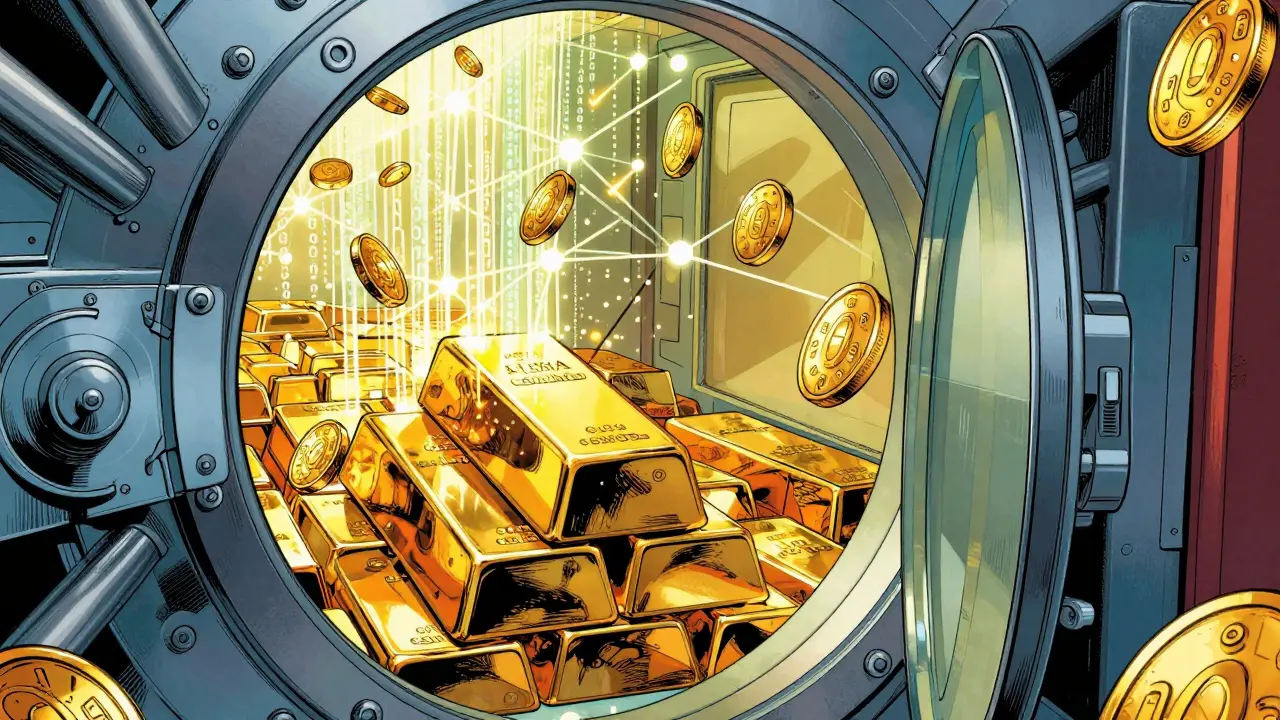
- Minting: For every gram of gold deposited, a corresponding number of tokens are created on the blockchain. This is a 1:1 backing ratio.
- Trading: Investors buy and sell these tokens using crypto wallets. The underlying gold stays in the vault.
- Burning: If an investor redeems their tokens for physical gold, the tokens are destroyed (burned) to match the reduced gold supply.
For GLDX specifically, the process involves connecting a crypto wallet to a decentralized exchange. You swap stablecoins or other cryptocurrencies for GLDX. The transaction settles instantly on the blockchain. This contrasts sharply with traditional gold ETFs, which take one to two business days to settle.
| Feature | GLDX (Tokenized) | Traditional Gold ETF (e.g., GLD) | Physical Gold Bars |
|---|---|---|---|
| Trading Hours | 24/7 | Market Hours Only | Dealer Hours |
| Settlement Time | Instant | 1-2 Business Days | 2-4 Business Days |
| Minimum Investment | Low (~$70) | Medium (~$200+) | High ($500+) |
| Custody Fees | Often Low/Zero | ~0.25% Annual | Storage Insurance Costs |
| Ownership Type | Allocated (Verifiable) | Unallocated (Paper Claim) | Direct Ownership |
GLDX vs. Established Competitors: PAXG and XAUT
If you are looking at GLDX, you should already know about PAX Gold (PAXG) and Tether Gold (XAUT). These are the giants of the tokenized gold space. They have been around since 2019 and 2020, respectively. They have transparent audit reports, clear team structures, and massive liquidity on major centralized exchanges like Coinbase and Binance.
GLDX is a newer entrant. The key difference lies in accessibility and platform integration. PAXG and XAUT are widely available on centralized exchanges (CEXs). GLDX appears to rely more heavily on decentralized exchanges (DEXs). This appeals to users who prefer non-custodial control over their assets. However, DEX trading often comes with higher slippage and lower liquidity compared to CEXs.
Another differentiator is the "staking" potential. Some tokenized gold projects allow you to stake your tokens to earn yield. This transforms gold from a passive store of value into an income-generating asset. While PAXG has introduced staking features, it is unclear if GLDX currently offers this utility. You must check the official xStock documentation to see if GLDX holders can earn rewards simply by holding the token.
Critical Information Gaps and Risk Assessment
Here is the hard truth: There is very little public information about GLDX compared to its competitors. When evaluating any crypto project, especially one tied to physical assets, transparency is non-negotiable. Currently, GLDX lacks several key pieces of data that serious investors expect:
- Founding Team: Who built this? Are they anonymous? Do they have a track record in finance or blockchain?
- Audit Reports: Has the smart contract been audited by a reputable firm like CertiK or Trail of Bits? Without an audit, there is a risk of code vulnerabilities.
- Vault Locations: Where is the physical gold stored? Is it in London, Zurich, or Singapore? Knowing the jurisdiction matters for legal recourse.
- Regulatory Compliance: Does GLDX comply with KYC (Know Your Customer) and AML (Anti-Money Laundering) regulations? Or is it fully permissionless?
- Total Supply and Market Cap: Basic metrics are often missing from aggregator sites for newer tokens, making it hard to gauge market dominance.
This lack of information does not mean GLDX is a scam, but it does mean it carries higher risk. In the crypto world, opacity is a red flag. You are trusting the issuer to hold the gold without easy ways to verify it yourself. With PAXG, you can request proof of reserves regularly. With GLDX, that process is less defined.
How to Buy and Store GLDX Safely
If you decide to proceed with buying GLDX, here is the step-by-step process based on current availability:
- Get a Crypto Wallet: You need a non-custodial wallet that supports the blockchain network GLDX is built on (likely Ethereum or a compatible EVM chain). MetaMask or Trust Wallet are common choices.
- Fund Your Wallet: Purchase ETH or USDT on a centralized exchange like Binance or Coinbase. Transfer these funds to your personal wallet address.
- Find a Decentralized Exchange (DEX): Connect your wallet to a DEX like Uniswap or PancakeSwap. Search for the GLDX token pair.
- Verify the Contract Address: This is crucial. Scammers create fake tokens with the same name. Always double-check the smart contract address from the official xStock website or trusted community channels.
- Execute the Swap: Set your slippage tolerance appropriately (often 1-3% for smaller caps) and confirm the transaction.
- Secure Your Assets: Once you receive GLDX, consider moving it to a hardware wallet like Ledger or Trezor for long-term storage. Never leave large amounts on a hot wallet connected to the internet.
Future Outlook: Will GLDX Survive?
The tokenized asset market is growing rapidly. By 2026, institutional interest in blockchain-backed commodities is at an all-time high. Projects that offer true transparency, low fees, and easy redemption will survive. Those that hide behind vague marketing will fade away.
GLDX has the advantage of being part of the "xStock" narrative, which could expand to include tokenized equities and bonds. If the platform succeeds in building a robust multi-asset ecosystem, GLDX could become a gateway product for new users. However, until the team publishes regular audits and clear reserve proofs, it will remain a speculative play compared to blue-chip tokens like PAXG.
Keep an eye on price prediction platforms. They track GLDX forecasts through 2030, indicating some level of analyst interest. But remember: predictions are not guarantees. They are based on historical data and market sentiment, which can change overnight.
Is GLDX backed by real gold?
According to its description as a tokenized ETF, GLDX claims to be backed 1:1 by physical gold. However, unlike established competitors, independent verification of these reserves is not easily accessible to the public. You must rely on the issuer's statements until third-party audits are published.
Where can I buy GLDX tokens?
GLDX is primarily traded on decentralized exchanges (DEXs). You will need to connect a crypto wallet to a DEX like Uniswap. It may not be available on major centralized exchanges like Coinbase or Binance yet, which limits liquidity for some users.
What is the difference between GLDX and PAXG?
PAXG is a mature, highly liquid token with transparent audits and wide exchange support. GLDX is a newer, likely smaller-cap token that focuses on decentralized trading via DEXs. PAXG is safer for conservative investors; GLDX carries higher risk due to limited public information.
Can I redeem GLDX for physical gold?
Most tokenized gold products allow redemption for physical bars, but usually only in large quantities (e.g., 400 oz bars). For retail investors holding small amounts of GLDX, selling the token back for crypto is the practical option. Check the xStock terms for specific redemption thresholds.
Is GLDX a good investment for beginners?
Not necessarily. Beginners should start with established, regulated options like PAXG or traditional gold ETFs. GLDX requires understanding of decentralized exchanges, wallet security, and smart contract risks. It is better suited for experienced crypto users comfortable with higher-risk assets.
Lee Paige
June 3, 2026 AT 17:10The entire concept of tokenized gold is a elaborate distraction designed to keep the masses engaged in digital fiat games while the real wealth is hoarded by the central banking cartel. They want you to believe that a string of code on a blockchain represents physical metal, but it is merely another layer of abstraction between you and your assets. The government has been devaluing the dollar for decades, and now they are trying to digitize the very hedge against their incompetence. I have seen these schemes before, always ending with a rug pull or a regulatory crackdown that wipes out the retail investors. Do not trust the narrative sold by these crypto evangelists who are likely paid shills for the issuers.
Brad Ranks
June 5, 2026 AT 03:38I actually bought some GLDX last week because the charts looked promising and I wanted to diversify away from my usual meme coins. It feels weird holding something that claims to be backed by gold but trades like a volatile shitcoin. One minute it is tracking the spot price, the next minute it is down five percent for no reason at all. I am just waiting for the pump so I can sell and buy some pizza. This whole decentralized finance thing is either going to make me rich or bankrupt me within the year. Either way, it is more entertaining than watching the news.
Yogendra Dwivedi
June 5, 2026 AT 04:08It is interesting to see how technology is bridging the gap between traditional commodities and modern trading platforms. The fractional ownership aspect makes gold accessible to many people who could never afford a full ounce otherwise. However, one must remain cautious about the transparency of the underlying reserves. Without regular, independent audits, it is difficult to verify if the tokens are truly backed 1:1. Perhaps the project team should release more frequent reports to build trust with the community. Education is key here for new investors.
Sylvia Mossman
June 5, 2026 AT 14:48Oh please, spare me the lecture on 'trust' and 'audits.' You think PAXG is any safer? It is still a centralized entity holding your money in a vault somewhere. At least with GLDX you are getting into it early before the big banks swallow it whole. If you are too scared to take a calculated risk on a newer protocol, you deserve to stay poor. Stop crying about red flags and start looking at the potential upside. The contrarian play is usually the winning one in this market.
Alexis Abster
June 6, 2026 AT 16:51I really hope this project succeeds because it would mean more options for everyday people to participate in global markets. The idea of instant settlement is fantastic for those of us who need liquidity quickly. I remember struggling with bank transfers taking days during emergencies, so this innovation feels like a breath of fresh air. Let us support projects that try to improve financial inclusion. We need more optimism in the space rather than constant doom-mongering. Everyone deserves a chance to grow their wealth.
Caitlin Donahue
June 7, 2026 AT 21:09i dont get why ppl are so hung up on the audit stuff like its gonna save them. i bought some gl dx just cause it was cheap and i liked the name. seems fine to me so far. no one has stolen my wallet yet lol. maybe im lucky or maybe its just a slow day. anyway, im hodling till the moon or till i forget my password. whatever comes first tbh. life is short might as well gamble a bit right?
Karthikeyan S
June 9, 2026 AT 03:51Look at this pathetic attempt at explaining basic blockchain mechanics 🙄. You clearly do not understand the fundamental flaws in the tokenization model. The slippage on DEXs is astronomical for these low cap tokens. You are essentially donating your capital to the liquidity providers who are front-running your transactions. It is a slaughterhouse for the uninformed. And don't get me started on the custody risks. Who is guarding the vault? A random company with no track record? Pathetic. 😒
Dinesh Pattigilli
June 10, 2026 AT 12:04Typical reddit crowd falling for every new shiny object that rolls off the assembly line. GLDX is nothing more than a rebranded scam with better marketing copy. The elite know that real value lies in tangible assets held in offshore accounts, not in these digital receipts. But sure, keep buying your fractional ounces while the institutions accumulate the actual bars. Your ignorance is literally their profit margin. How quaint.
Madhu Menon
June 11, 2026 AT 19:04In the grand tapestry of human exchange, what is gold but a collective agreement on value? Tokenizing it merely shifts the locus of trust from physical possession to cryptographic verification. Is this progress or regression? Perhaps both. The philosopher must ask whether the medium changes the essence of the asset. I find myself contemplating the nature of ownership in a digital age. It is a profound question indeed.
Narendra Kulkarni
June 13, 2026 AT 08:57Nice post man. I think its good to have info like this available for everyone. I am not an expert but it sounds cool. Maybe i will try a little bit later when i learn more. Thanks for sharing the details about how to buy it safely. That part was helpful. Keep up the good work.
verna kennedy
June 14, 2026 AT 09:57If you cannot articulate the specific smart contract vulnerabilities of the xStock platform, you have no business commenting on its viability. Most of you are gambling, not investing. True financial literacy requires understanding the legal jurisdiction of the custodian and the insurance policies in place. Until then, stay out of my thread. I only engage with those who demonstrate superior knowledge.
Kelly Tenney
June 15, 2026 AT 18:02You all have such strong opinions! I love seeing the diversity of perspectives here. Remember to take care of yourselves while navigating these complex markets. Investing should be empowering, not stressful. If anyone needs help setting up their wallets, feel free to reach out privately. We are all in this together and supporting each other is what makes this community special. Stay positive!
Greg Lewis
June 17, 2026 AT 16:22why do you care about the vault location really does it matter if the gold is in london or zurich its still atoms arranged in a lattice structure isnt it? i bet you sleep better knowing where your paper claims are stored but do you really own anything in this system? probably not. wake up sheeple. the matrix is made of gold bars and blockchain hashes. neither is real.
JEVON HALL
June 18, 2026 AT 01:20Hey folks 👋 Just a quick tip for anyone looking to swap GLDX on Uniswap. Make sure you set your slippage tolerance correctly or the transaction will fail due to volatility. Also double check the contract address on Etherscan before connecting your wallet. There are lots of fake tokens out there trying to steal your funds. Stay safe out there! 🛡️💰
Meg Gran
June 18, 2026 AT 07:49Sure, let us pretend that decentralization means safety when the majority of liquidity is controlled by a handful of whale wallets. The irony is palpable. You claim to distrust institutions but blindly trust anonymous developers to hold your keys. Typical. I suppose cognitive dissonance is a feature, not a bug, for this demographic. Carry on with your delusions.
Alexander DeVries
June 19, 2026 AT 18:33This is a significant development in the fintech sector. The ability to trade gold assets instantly provides a level of efficiency previously unavailable to retail investors. While risks exist, as with any emerging technology, the potential for growth is substantial. Investors should conduct thorough due diligence but also recognize the innovative strides being made. Embrace change and adapt to the new economic landscape.
Mark Corpuz
June 19, 2026 AT 22:09The article provides a comprehensive overview of the current state of tokenized gold. It is essential to note the distinction between allocated and unallocated holdings. Allocated gold offers direct ownership rights, which is a crucial factor for risk-averse investors. The comparison table effectively highlights the advantages of GLDX regarding trading hours and settlement times. Well-researched piece.
Steven Jacobowitz
June 21, 2026 AT 05:51I am curious about the staking yields mentioned in the post. Are they sustainable or just inflationary rewards printed out of thin air? I need to understand the tokenomics better before committing any capital. Can someone explain the mechanism behind the yield generation? Is it coming from trading fees or external revenue streams? I want to make an informed decision based on data not hype.
Caralee Robertson
June 22, 2026 AT 00:45im from canada and we have strict rules about crypto here so im hesitant. but the idea of having gold in my phone is kinda cool. i guess i will wait and see if it gets listed on a bigger exchange first. dont wanna lose my hard earned cash on some sketchy dex. safety first i guess. maybe ill read more articles like this one.
Dr Lynea LaVoy
June 22, 2026 AT 22:49As a financial advisor, I always recommend clients to diversify across asset classes. Tokenized gold can serve as a useful hedge against inflation and currency debasement. However, it is imperative to understand the counterparty risks involved. Ensure that the issuer is reputable and that the reserves are audited regularly. Do not allocate more than a small percentage of your portfolio to high-risk assets. Knowledge is power.