

Imagine sending money across the world instantly, without a bank charging you fees or asking for permission. That is the promise of cryptocurrency. It sounds like science fiction, but it is happening right now. Millions of people are using digital coins to buy goods, invest, and send money to family overseas. But if you have never touched crypto, it can feel like a confusing maze of jargon, charts, and scary headlines about crashes.
You do not need to be a computer genius to understand this. You just need to know how it works, where to start, and how to keep your money safe. This guide breaks down everything from the basic technology to practical steps for buying your first coin. We will cut through the hype and give you the facts you need to make smart decisions in 2026.
The Core Concept: What Is Cryptocurrency?
At its simplest, cryptocurrency is digital money. Unlike the dollars in your pocket or the numbers in your bank account, no government prints it. Instead, it exists purely as code on a computer network. The word "crypto" comes from cryptography, which means secret writing. This technology keeps transactions secure and prevents anyone from copying or faking the money.
Think of traditional banking like a club with a bouncer. The bank (the bouncer) decides who gets in, who can spend money, and when. If the bank closes, you cannot move your money. Crypto removes the bouncer. It uses a system called blockchain, which is a decentralized digital ledger that records all transactions across a network of computers. Instead of one company holding the records, thousands of computers around the world hold identical copies. If someone tries to cheat, the rest of the network rejects the fake transaction. This makes it incredibly hard to hack or manipulate.
The idea started in 2008 with a mysterious person or group named Satoshi Nakamoto. They published a whitepaper describing Bitcoin, the first successful cryptocurrency. Since then, the market has exploded. As of 2025, the total value of all cryptocurrencies reached $2.3 trillion. While Bitcoin remains the biggest player, there are now over 10,000 different digital assets, each with its own purpose.
How Does Blockchain Actually Work?
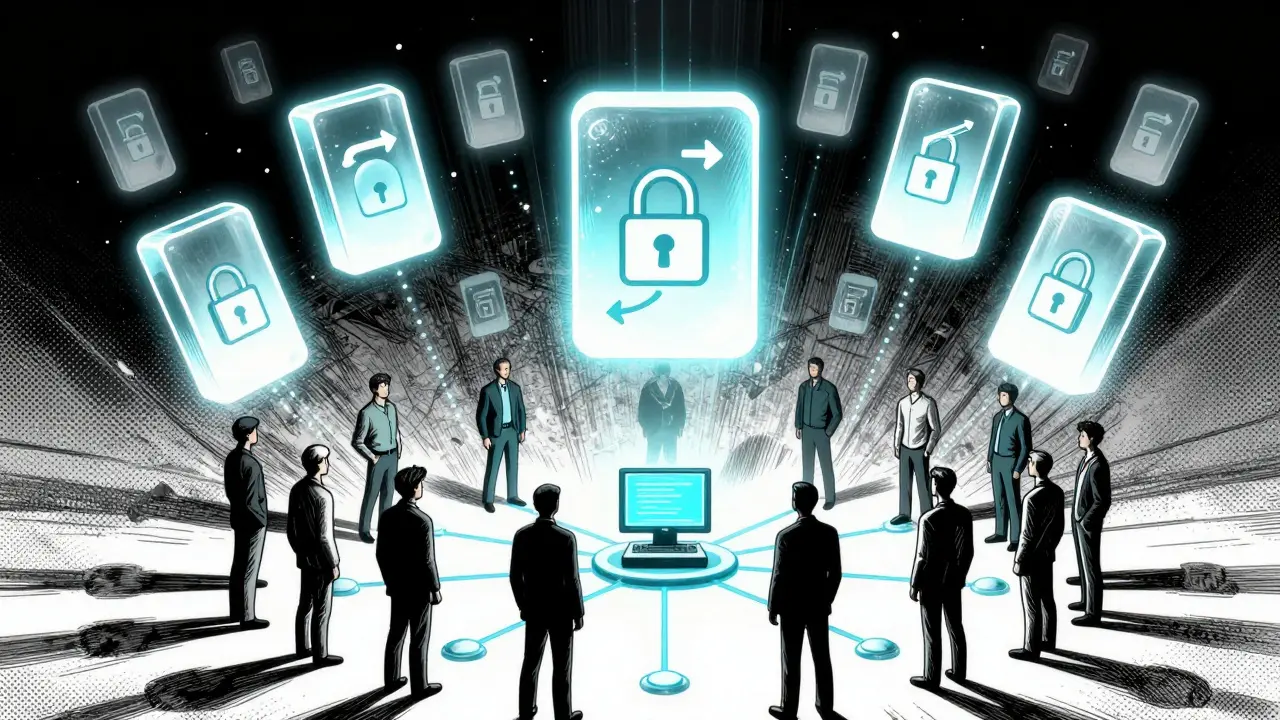
To understand crypto, you must understand the engine running it: the blockchain. Imagine a notebook where every page is a "block" of transactions. Once a page is full, it is sealed shut with a unique mathematical lock (a hash). This sealed block is linked to the previous one, forming a chain. Because each block references the one before it, you cannot change an old entry without breaking the entire chain. Everyone on the network sees these changes immediately, so fraud is nearly impossible.
This process relies on "nodes," which are computers running the software. When you send Bitcoin to a friend, your request goes out to these nodes. They verify that you actually own the Bitcoin and haven't spent it already. Once verified, the transaction is added to a new block. This usually takes minutes, depending on the network. In contrast, traditional bank transfers can take days, especially internationally.
There are two main ways networks agree on what is true:
- Proof of Work (PoW): Used by Bitcoin. Computers solve complex math puzzles to secure the network. This is secure but uses a lot of electricity.
- Proof of Stake (PoS): Used by Ethereum. Validators lock up their own coins as collateral to approve transactions. This is much more energy-efficient and faster.
Bitcoin vs. Ethereum: The Two Giants
While there are thousands of coins, two dominate the conversation. Understanding the difference between them is crucial for any beginner.
| Feature | Bitcoin (BTC) | Ethereum (ETH) |
|---|---|---|
| Primary Purpose | Digital Gold / Store of Value | Platform for Apps & Smart Contracts |
| Consensus Mechanism | Proof of Work | Proof of Stake |
| Transaction Speed | Slow (10 mins per block) | Faster (12 seconds per block) |
| Avg. Fee (2025) | $5 - $50 during peak times | $0.10 - $5 depending on congestion |
| Market Share | ~40% of total crypto market | ~20% of total crypto market |
Bitcoin was designed to be simple. Its goal is to be a scarce asset, like gold, that you can hold onto for years. There will only ever be 21 million Bitcoins. This scarcity drives its value. Ethereum, created by Vitalik Buterin, is more like a global computer. Developers build applications on top of it, known as decentralized apps (dApps). These include lending platforms, games, and art markets. When you use an app on Ethereum, you pay gas fees in ETH. This versatility makes Ethereum essential for the broader crypto ecosystem, often referred to as Web3.
Where Do You Buy Crypto? Exchanges Explained
You cannot withdraw Bitcoin from an ATM like cash. You need a middleman to convert your fiat currency (dollars, euros, etc.) into crypto. These middlemen are called exchanges. Choosing the right one is your first big decision.
For beginners, user experience matters most. Coinbase is a regulated cryptocurrency exchange popular for its ease of use and customer support. It is widely recommended for new users because it complies with strict US regulations and has a clean interface. However, convenience costs money. Coinbase charges fees ranging from 1.5% to 4% per trade. If you buy $100 worth of Bitcoin, you might lose $2 to $4 instantly.
If you plan to trade frequently, lower fees matter. Binance offers trading fees as low as 0.1%. However, its interface can be overwhelming for newcomers, and it faces regulatory scrutiny in some countries. Kraken is another solid option, balancing security with moderate fees. Regardless of the platform, creating an account takes only minutes, but verifying your identity (KYC) usually takes 24 to 72 hours. You will need to upload a photo ID and proof of address.
Remember: leaving your money on an exchange is risky. If the exchange gets hacked or goes bankrupt, your funds could vanish. This leads us to the most important rule in crypto.
Security First: Wallets and Private Keys
In the crypto world, there is a famous saying: "Not your keys, not your coins." When you leave Bitcoin on Coinbase, Coinbase holds the keys. You are trusting them to keep it safe. True ownership means you hold the private key yourself. A private key is a long string of random characters that acts like a password to your funds. Anyone with this key can access your money. There is no "forgot password" button.
There are two main types of wallets to store your keys:
- Hot Wallets: Connected to the internet. Examples include mobile apps like MetaMask or Trust Wallet. They are convenient for small amounts and frequent trading but are vulnerable to hackers and malware.
- Cold Wallets: Offline hardware devices. Examples include Ledger Nano X ($149) or Trezor Model T ($219). These look like USB sticks. They store your keys offline, making them nearly immune to online attacks. For long-term investments, a cold wallet is essential.
When you set up a wallet, you will receive a "recovery phrase"-usually 12 or 24 words written on paper. Write these down physically. Never take a screenshot or save them digitally. If you lose this phrase, your money is gone forever. If someone steals it, they steal your money. Treat this paper like a deed to your house.
Investing Strategies for Beginners
Cryptocurrency is volatile. Prices can swing 10-20% in a single day. Stocks rarely move that much. This volatility creates opportunities but also risks. Financial advisors generally recommend allocating no more than 5-10% of your total investment portfolio to crypto. It is high-risk, high-reward territory.
The best strategy for most beginners is Dollar-Cost Averaging (DCA). Instead of trying to time the market (buying at the bottom), you invest a fixed amount regularly, regardless of price. For example, buy $50 of Bitcoin every week. When prices are high, you get less Bitcoin. When prices are low, you get more. Over time, this smooths out your average cost and removes the emotional stress of watching charts all day.
Data supports this approach. Social media sentiment analysis shows that users who follow DCA strategies and hold for 2+ years report satisfaction rates above 70%. In contrast, day traders-who try to profit from short-term price swings-report success rates below 20%. Most lose money due to fees and emotional decision-making.
Also, beware of scams. Chainalysis reported that $3.8 billion was lost to crypto scams in 2022 alone. Common traps include fake giveaways, phishing emails pretending to be from exchanges, and unknown tokens promising guaranteed returns. If it sounds too good to be true, it is. Always double-check URLs and never share your recovery phrase with anyone.
The Future of Crypto in 2026 and Beyond
The landscape is changing fast. In 2025, the approval of Bitcoin and Ethereum ETFs (Exchange-Traded Funds) brought institutional investors into the fold. This means big companies like BlackRock and Fidelity can now offer crypto exposure to regular retirement accounts. This influx of professional money tends to stabilize prices and reduce extreme volatility.
Regulation is also maturing. The European Union implemented MiCA (Markets in Crypto-Assets) regulation in 2024, providing clear rules for businesses. The US is still working on federal guidelines, but state-level oversight is increasing. This clarity helps legitimize the industry and protects consumers.
Technological improvements continue too. Layer 2 solutions for Bitcoin and Ethereum are reducing transaction costs by up to 90% and speeding up confirmations. By 2026, sending crypto should feel as easy as sending an email. Adoption is growing globally, with 320 million people worldwide owning crypto. Developing nations like Nigeria see high adoption rates (32%) because crypto offers a way to bypass unstable local currencies.
While predictions vary, many experts believe crypto will become a standard part of the financial system. Whether it reaches $1 million per Bitcoin or stabilizes as a niche asset class, the underlying technology of blockchain is here to stay. It is reshaping how we think about money, ownership, and trust.
Is cryptocurrency legal?
Yes, in most major economies including the US, EU, UK, and New Zealand, cryptocurrency is legal to buy, sell, and hold. However, tax laws vary. In many countries, selling crypto for a profit is considered a taxable event, similar to selling stocks. Always check your local regulations.
Can I lose all my money in crypto?
Yes. Cryptocurrency is highly volatile. Prices can drop 80% or more during bear markets. Additionally, if you lose your private keys or fall victim to a scam, your funds may be unrecoverable. Never invest money you cannot afford to lose.
What is the difference between a hot and cold wallet?
A hot wallet is connected to the internet (like a mobile app) and is convenient for small, frequent transactions but less secure. A cold wallet is a physical hardware device kept offline, offering maximum security for long-term storage of larger amounts.
How much should I start with?
Start small. Many experts suggest beginning with $50-$200 to learn the process of buying, storing, and tracking your assets. Use this period to educate yourself before committing larger sums. Focus on learning rather than immediate profits.
Why is Bitcoin so expensive?
Bitcoin's price is driven by supply and demand. There is a hard cap of 21 million Bitcoins, making it scarce. As more people and institutions want to buy it, and supply remains limited, the price rises. You do not need to buy a whole Bitcoin; you can buy fractions (satoshis).