
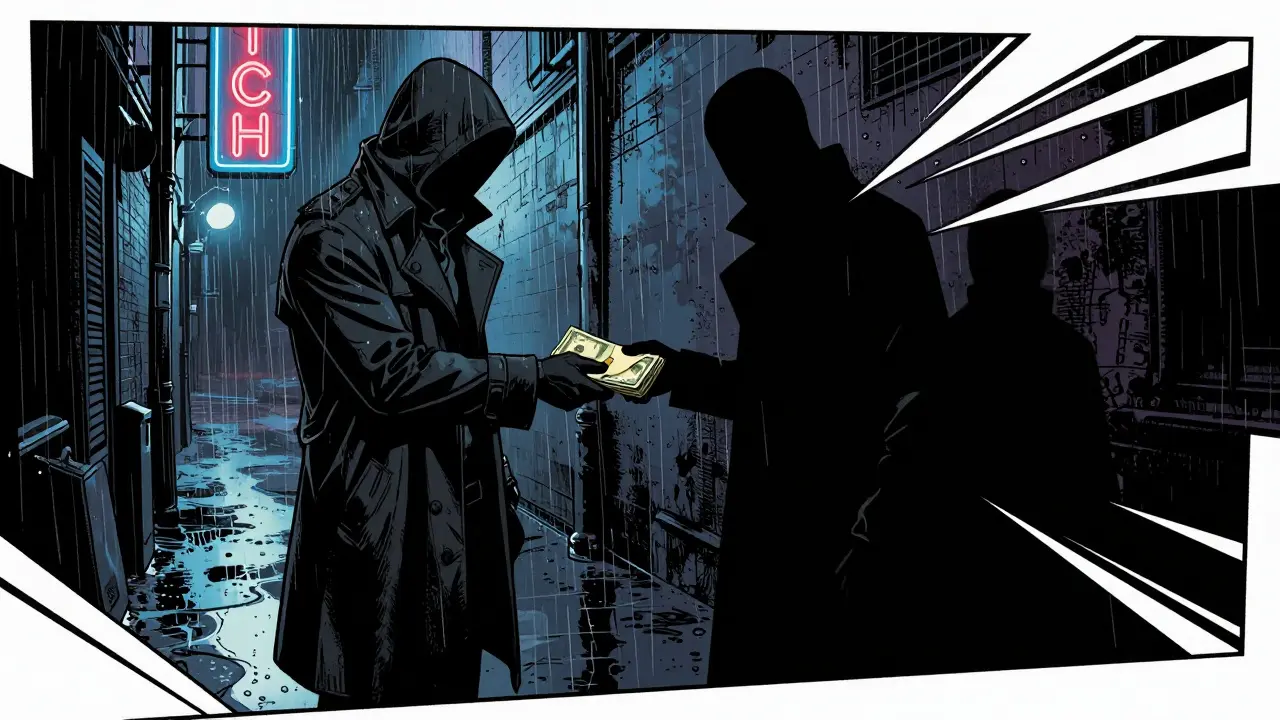
When a government says "you cannot own Bitcoin," people don't stop wanting it. They just go where the cameras can't see. This creates a shadow economy with its own pricing rules. In places like China or Afghanistan, buying crypto isn't just illegal; it's expensive. The price difference between what you pay on a legitimate exchange in London and what you pay to a stranger in a restricted zone is called the underground crypto market premium. As of mid-2026, these premiums are not just theoretical concepts. They are real costs driven by fear, scarcity, and enforcement.
What Drives the Underground Crypto Premium?
You might think the premium is just about greed. It’s not. It’s basic economics mixed with high stakes. When supply is cut off by law, but demand stays steady, prices rise. But in the underground market, two other factors push the price even higher: risk and liquidity.
- Risk Premium: Sellers know they could be arrested, fined, or have their assets seized. They charge extra to compensate for that danger. If a trader in Egypt faces jail time for selling USDT, they won’t sell at the global spot price. They’ll add a buffer.
- Liquidity Crunch: Legitimate exchanges have millions of dollars in order books. Underground markets rely on individual contacts. If you need $10,000 worth of Bitcoin instantly in a banned zone, you’re taking all the available supply from a few scared sellers. That drives the price up.
- Counterparty Risk: There’s no customer support. No chargebacks. If the seller disappears after you send fiat money, you’re out of luck. Buyers often pay more to deal with trusted middlemen who guarantee the trade.
This structure means the premium isn’t fixed. It fluctuates based on local police raids, internet censorship levels, and even weather (since some trades happen in person). Understanding these drivers helps explain why rates in one country can be double the global average.
The Case of China: Total Prohibition Creates Black Markets
China offers the starkest example of how strict bans warp markets. On May 30, 2025, Beijing passed legislation that didn’t just ban mining or trading-it criminalized personal ownership of cryptocurrencies like Bitcoin and Ethereum. The state is betting everything on the digital yuan (e-CNY), leaving zero room for private digital assets.
| Factor | Pre-Ban Status | Post-May 2025 Reality |
|---|---|---|
| Legality of Holding | Tolerated but restricted | Criminalized |
| Trading Venues | Overseas exchanges accessible | Deep web / P2P only |
| Premium Level | Low (5-10%) | High (Estimated 20-40%+) |
| Enforcement Focus | Mining operations | Individual wallets & transactions |
Because holding is now a crime, the pool of willing sellers has shrunk dramatically. Those who still hold are either deeply committed believers or criminals looking to launder money. Both groups demand higher prices. Data from public research remains scarce because participants won’t report illegal activity, but anecdotal evidence from traders suggests premiums spiked significantly after the May 2025 law took effect. The lack of transparency itself becomes a cost factor-buyers must spend time verifying sellers, which adds friction and expense.
Afghanistan and Egypt: Religious Bans and Active Enforcement
In Afghanistan, the Taliban regime maintains an absolute ban on all cryptocurrency activities since 2022. They justify this on religious grounds, declaring crypto "haram" under Sharia law, and economically, to control the fragile financial system. Da Afghanistan Bank (DAB) and FinTRACA enforce this through arrests and confiscations.
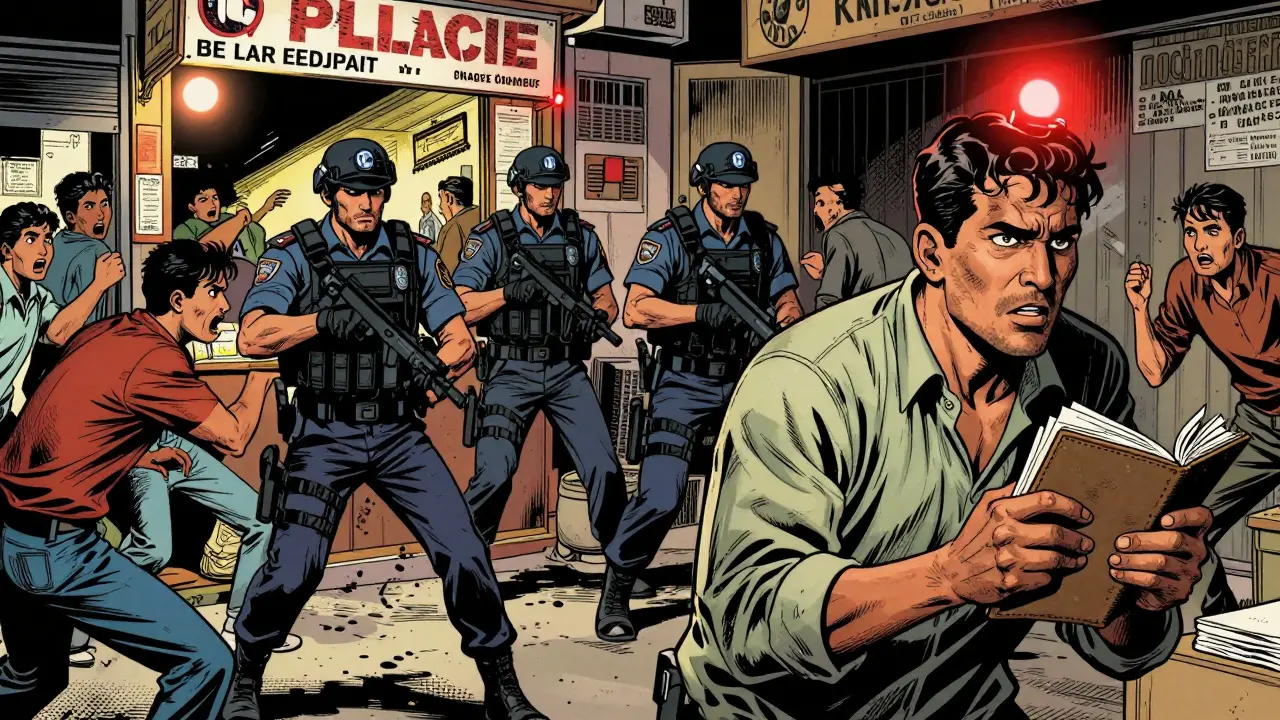
Similarly, Egypt imposed a blanket ban on crypto trading. In 2025 alone, authorities arrested 112 individuals for violating anti-crypto regulations. These aren’t passive laws. They are actively enforced.
What does this mean for premiums? In both countries, the operational risk is extreme. A seller in Kabul or Cairo isn’t just worried about losing profit; they’re worried about physical safety. This pushes premiums to some of the highest levels globally. Unlike China, where sophisticated tech-savvy users might find loopholes, these markets are smaller, more fragmented, and reliant on trust networks within communities. You can’t buy Bitcoin via an app here. You meet someone. You verify them. You pay cash. That human element carries a heavy price tag.
Emerging Markets: Compliance as a De Facto Ban
Not every country with high premiums has a total ban. Some create conditions so harsh that activity goes underground anyway. India, South Africa, and Nigeria show us how aggressive compliance enforcement mimics prohibition.
In 2024, India’s Financial Intelligence Unit (FIU) fined non-compliant platforms $9.5 million-a 32% jump from the previous year. South Africa suspended licenses for 12 crypto firms in 2025 for failing Anti-Money Laundering (AML) checks. The Philippines blacklisted 20 unlicensed exchanges, freezing $150 million in funds.
These actions drive users away from regulated channels. Why deal with KYC (Know Your Customer) hurdles, tax reporting, and potential account freezes if you can trade peer-to-peer? The result? A gray market emerges. While not technically "banned," the cost of compliance makes the underground route attractive for many. Here, the premium is lower than in China or Afghanistan-maybe 5-15%-but it exists because users are paying for convenience and anonymity rather than survival.
How Traders Navigate the Shadow Economy
If you’re operating in a banned jurisdiction, you’re not using Coinbase or Binance. You’re using tools designed to evade detection. This technological shift influences pricing too.
- Decentralized Exchanges (DEXs): Platforms like Uniswap allow swaps without a central authority. However, bridging fiat currency onto these chains is hard in banned zones. Users often pay intermediaries to convert cash to stablecoins, adding layers of fees.
- Privacy Coins: Monero and Zcash often command higher premiums than Bitcoin in these regions. Why? Because they hide transaction details. In a place where owning Bitcoin is a crime, being able to prove you *didn’t* transact is valuable. Privacy features become a luxury good.
- P2P Platforms with Escrow: Even underground, trust is rare. Local P2P forums or Telegram groups act as mini-exchanges. Reputable sellers build track records. Newcomers pay more because they lack that reputation capital.
Cross-border transfers also play a role. A user in Nigeria might use a friend in Canada to buy Bitcoin, then transfer it back. The Canadian friend charges a fee for the service and the risk. This arbitrage opportunity keeps the underground market alive, but it’s slow and risky.

Why Exact Premium Data Is Hard to Find
You won’t find a live ticker showing "Bitcoin Premium in Afghanistan: +45%." That data doesn’t exist publicly. And that’s intentional.
Participants in underground markets stay silent. Reporting prices could lead to prosecution. Researchers face ethical and legal barriers accessing this information. What we do know comes from sporadic leaks, academic studies, and observations from blockchain analytics firms tracking unusual wallet behaviors.
For instance, when enforcement spikes-like the 112 arrests in Egypt-we see sudden drops in on-chain volume followed by price dislocations in local OTC (over-the-counter) desks. The gap widens during crackdowns and narrows when attention shifts elsewhere. This volatility makes investing or trading in these spaces incredibly dangerous for outsiders.
Global Regulatory Pressure Tightens the Net
The landscape is getting harder to navigate. As of June 2025, the Financial Action Task Force (FATF) noted that 99 jurisdictions had passed or were passing crypto-related legislation. Brazil issued 57 enforcement actions against fraudulent ICOs in 2024. Colombia saw a 40% increase in Suspicious Transaction Reports (STRs) in early 2025.
This global coordination means borders are less porous. Previously, you could move value easily across jurisdictions. Now, VASP (Virtual Asset Service Provider) registration is mandatory in 83% of emerging markets. If you try to move large amounts, banks flag it. If you use crypto, regulators flag it. The squeeze increases the cost of moving money illegally, which feeds back into higher premiums for those who still manage to do it.
Risks Beyond the Price Tag
Focusing only on the premium misses the bigger picture. The real cost isn’t just monetary. It’s existential.
- Asset Seizure: Authorities in countries like Nigeria have seized tens of millions in crypto linked to cybercrime. If your wallet gets flagged, you lose everything. No insurance covers this.
- Scams: Underground markets are rife with fraud. Without regulatory oversight, scammers thrive. Fake escrow services, rug pulls, and identity theft are common.
- Legal Consequences: In China and Afghanistan, penalties include prison time. In Egypt, fines and imprisonment are standard. Is saving 10% on a purchase worth risking your freedom?
For most people, the answer is no. But for others-those fleeing economic collapse, political persecution, or hyperinflation-the risk is calculated differently. They view crypto not as an investment, but as a lifeline. For them, the premium is the price of survival.
What is the typical size of crypto premiums in banned countries?
There is no single number, but estimates suggest premiums range from 10% to over 50% depending on the country and enforcement intensity. In total ban zones like China post-2025, premiums likely exceed 20-40%. In partial ban or high-compliance zones like India, they may sit around 5-15%.
Why are privacy coins like Monero more expensive in these markets?
Privacy coins offer enhanced anonymity, which is highly valued in jurisdictions where crypto ownership is criminalized. Users pay a premium for the reduced risk of having their transactions traced by authorities, making Monero and Zcash more desirable-and costly-than transparent ledgers like Bitcoin.
How does China's 2025 ban affect the underground market?
China's ban criminalized personal ownership, drastically reducing the supply of willing sellers. This scarcity, combined with high enforcement risks, has pushed underground premiums significantly higher. Trading has moved entirely to decentralized and peer-to-peer channels, increasing friction and cost.
Is it safe to trade crypto in banned jurisdictions?
No. Trading in banned jurisdictions carries severe risks including arrest, asset seizure, and scams. There is no legal recourse if you are defrauded. The financial premium you pay reflects these dangers, but it does not mitigate them.
Do emerging markets like India have underground crypto premiums?
Yes, though they are often driven by compliance avoidance rather than outright bans. Aggressive fines and licensing suspensions push some users to peer-to-peer networks to avoid KYC requirements and taxes, creating a moderate premium compared to fully regulated exchanges.