
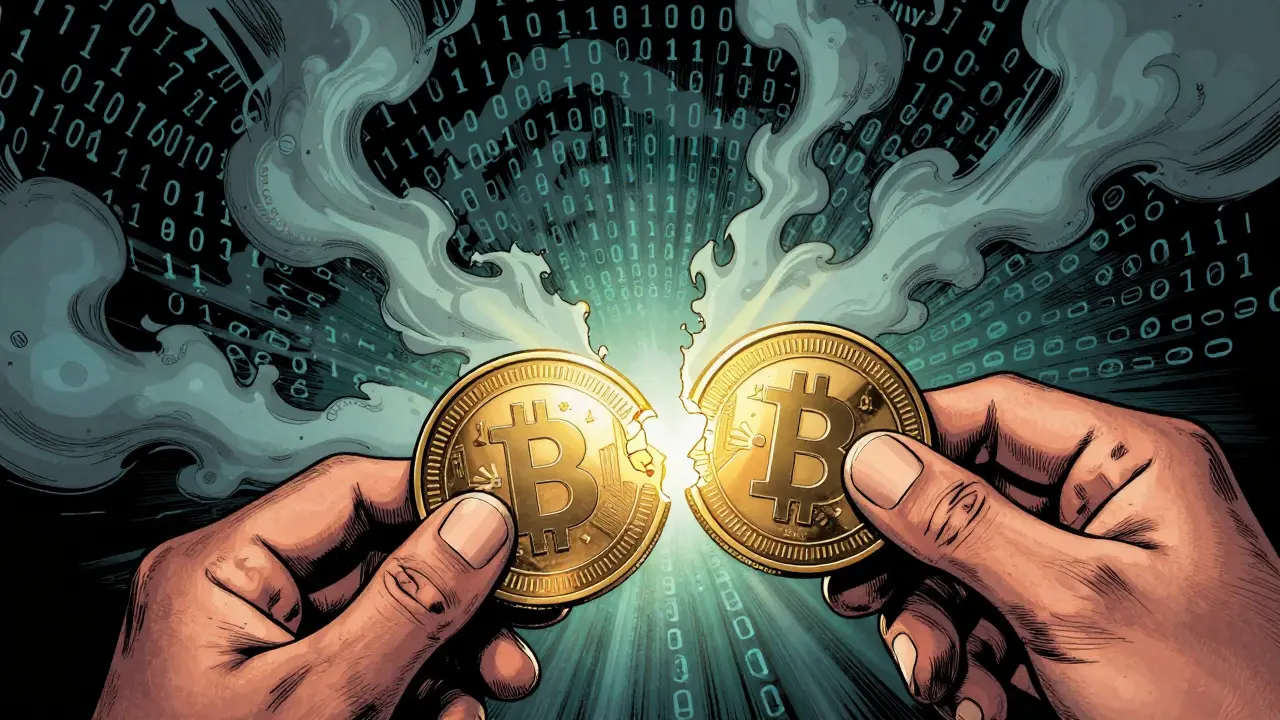
Imagine holding a $20 bill. You can’t hand it to your friend and simultaneously keep it in your pocket. Physical objects occupy one space at a time. But digital files? They are just ones and zeros. You can copy them infinitely without degrading quality. This simple distinction creates a massive headache for anyone trying to build money out of code.
If you could simply duplicate a file representing 1 Bitcoin (BTC) and send it to two different people before the network notices, you’d have created money from thin air. This is the double-spending problem, the fundamental vulnerability that threatens every decentralized digital currency. It’s not just a technical glitch; it’s the primary reason why early attempts at electronic cash failed. Without a solution, a cryptocurrency isn't money-it's just a database with no integrity.
Why Digital Money Is Different from Cash
To understand the risk, you have to look at how value is stored. In the physical world, scarcity is enforced by nature. There is only so much gold, and each coin has a unique serial number verified by a mint. In the digital world, information is easily replicated. If I own a digital token worth $100, my computer stores that fact as data. A hacker-or even me-could theoretically make a copy of that data and send it to Bob while sending the original to Charlie.
In a traditional bank system, this isn't an issue because a central authority keeps the books. When you spend your balance, the bank immediately updates its single ledger to show zero funds remaining. The bank acts as the referee, checking every transaction against their internal records. But cryptocurrencies were designed to remove that referee. They aim to be peer-to-peer systems where no single company or government controls the ledger. So, if there is no central bank checking the books, who ensures that Alice doesn't spend her coins twice?
The Core Causes of Double Spending
The problem stems from two main factors: the nature of digital data and the delay in communication across a distributed network.
- Digital Duplication: Since cryptocurrency exists as information, it can be copied. Without cryptographic locks, a user could create multiple identical transaction files.
- Network Latency: In a decentralized network, thousands of computers (nodes) communicate over the internet. Information travels at the speed of light, but that still takes milliseconds. If Alice sends a transaction to Bob, it might take a fraction of a second for that message to reach all nodes. During that tiny window, Alice could broadcast a conflicting transaction to Charlie. Both transactions look valid initially because neither node has confirmed the other yet.
This temporal gap is the attacker's opportunity. If the network is slow or fragmented, malicious actors can race to get their version of the transaction accepted first. If both transactions get into the ledger, the supply of currency inflates instantly, destroying trust in the system.
How Bitcoin Solved the Problem
When Satoshi Nakamoto launched Bitcoin in 2009, they didn't just create a new currency; they solved a decades-old computer science puzzle. The solution wasn't to add a central bank, but to replace it with a mathematical game called Proof-of-Work.
Here is how it works in practice:
- Broadcasting: When you send a Bitcoin transaction, it is broadcast to the entire network. Every node sees it almost simultaneously.
- Validation: Nodes check the transaction against the existing history. If the sender already spent those coins in a previous block, the new transaction is rejected.
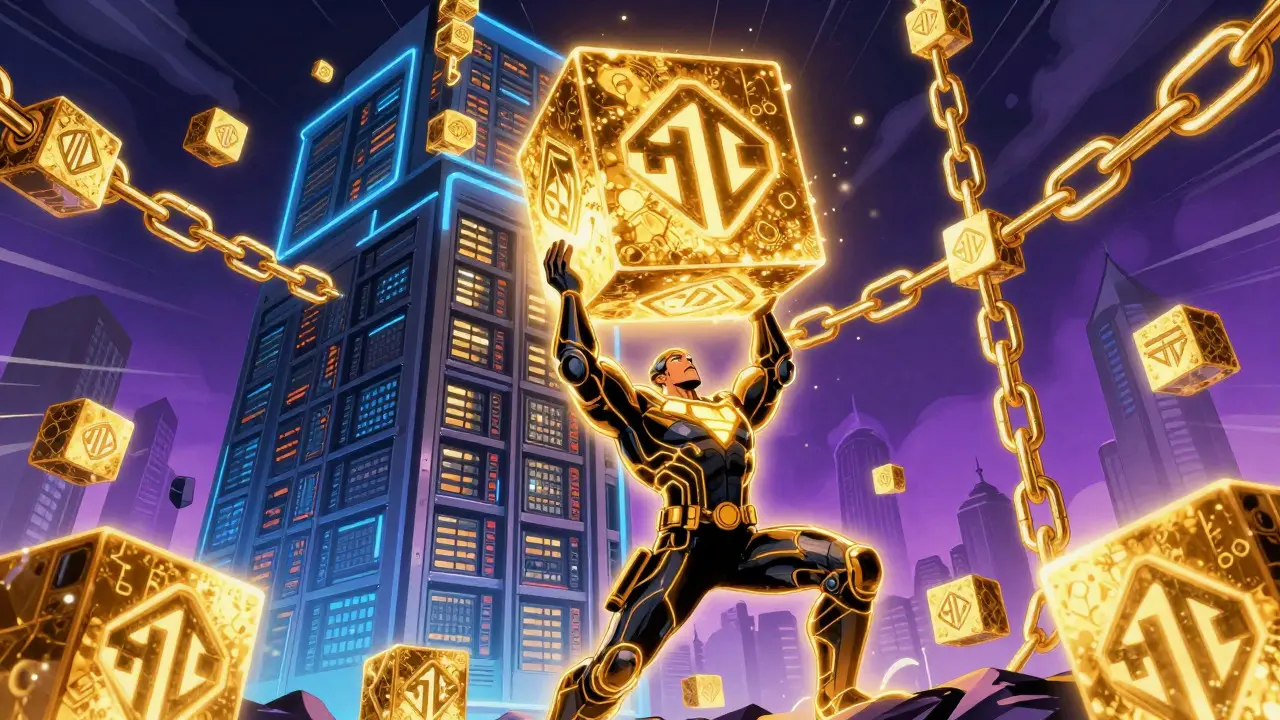
- Block Creation: Specialized nodes called miners group pending transactions into a "block." To add this block to the permanent record, they must solve a complex mathematical puzzle. This requires significant computational power.
- Consensus: Once a miner solves the puzzle, they announce the new block. Other nodes verify the work and add the block to their copy of the ledger. This creates a chain of blocks-the blockchain.
The key here is cost. Because solving the puzzle requires electricity and hardware, it is expensive to cheat. If Alice tries to double-spend, she would need to control more than 50% of the network's total computing power to create an alternative version of the blockchain where her double-spend is valid. This is known as a 51% attack. For large networks like Bitcoin, this is economically prohibitive because the cost of buying enough mining equipment exceeds the value of the coins she could steal.
The Role of Confirmations
You might wonder: "What if I just wait a few seconds?" Time matters in cryptocurrency. When a transaction is first broadcast, it is "unconfirmed." It’s in a waiting room. It becomes safe once it is included in a block. But even then, there is a small chance that another block gets found first that excludes your transaction, creating a temporary fork in the chain.
This is why merchants often ask for multiple confirmations. Each new block added on top of yours makes it exponentially harder to reverse your transaction.
- 1 Confirmation: Your transaction is in the latest block. Safe for small purchases, but technically reversible if a fork occurs.
- 6 Confirmations: Six new blocks have been added after yours. The probability of reversal drops to near zero. This is the standard for high-value transfers.
As time passes, the "weight" of the blockchain increases. To double-spend a transaction from six blocks ago, an attacker would need to mine seven new blocks faster than the rest of the network combined. The longer you wait, the safer your money becomes.
Alternative Solutions: Proof-of-Stake
Not all cryptocurrencies use Proof-of-Work. Many newer networks, like Ethereum (after its 2022 upgrade), use Proof-of-Stake. Instead of burning electricity to solve puzzles, validators lock up a portion of their coins as collateral. If they try to approve a double-spend or act dishonestly, their locked coins are "slashed" (confiscated).
This approach also prevents double spending, but through economic penalty rather than computational cost. The core principle remains the same: make cheating more expensive than being honest. Whether through energy consumption or financial collateral, the goal is to align the incentives of network participants so that maintaining a single, truthful ledger is the most profitable strategy.
| Mechanism | Primary Cost to Cheat | Security Model | Example Network |
|---|---|---|---|
| Proof-of-Work | Computational Power & Energy | Expensive to outpace the network | Bitcoin |
| Proof-of-Stake | Locked Capital (Stake) | Penalty via Slashing | Ethereum |
| Centralized Ledger | Legal/Trust Risk | Single Point of Authority | Visa/Banks |
Real-World Risks and Edge Cases
While the technology is robust, it isn't magic. Double spending can still happen in specific scenarios:
- Low-Fee Transactions: If you send a transaction with a very low fee, miners may ignore it in favor of higher-paying transactions. If you accidentally (or intentionally) send a competing transaction with a higher fee, the network might accept the second one and drop the first. This is a form of self-inflicted double-spend resolution.
- Orphan Blocks: Occasionally, two miners find a block at the exact same time. The network temporarily splits until one block wins. If your transaction was in the losing block, it goes back to the unconfirmed pool. This is rare but possible.
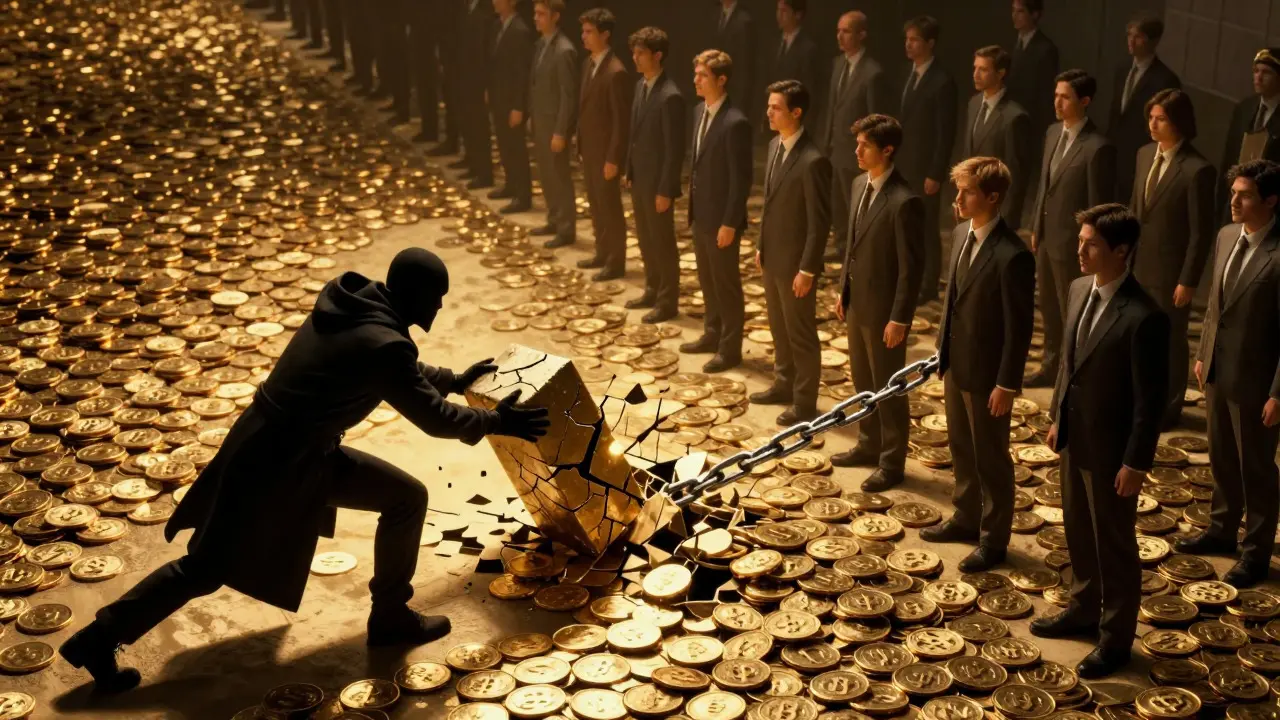
- Small Networks: On smaller, less secure cryptocurrencies, a 51% attack is cheaper to execute. There have been historical cases where attackers reorganized the blockchain to double-spend tokens on altcoins. This is why liquidity and network size matter for security.
Why This Matters for Everyday Users
For most users, the double-spending problem is invisible. You click "send," wait for confirmations, and move on. But understanding this mechanism explains why crypto transactions aren't instant like credit card swipes. The delay is the price of security. It’s the time the network needs to agree that your transaction is real and that you haven't tried to trick the system.
Without this layer of verification, digital money would be fragile. One successful double-spend could erode confidence in the entire asset class. The fact that Bitcoin has operated since 2009 with virtually no major double-spend incidents on the main chain is a testament to the effectiveness of these consensus mechanisms. It proves that we don't need a central bank to prevent fraud; we just need math, incentives, and a global network working together.
Frequently Asked Questions
Can you really double-spend Bitcoin?
Theoretically, yes, but practically, it is extremely difficult. To successfully double-spend a confirmed Bitcoin transaction, an attacker would need to control more than 50% of the network's mining power to create an alternative blockchain. The cost of acquiring this power usually outweighs the value of the coins stolen, making it economically irrational for most actors.
How many confirmations do I need for safety?
For small, low-risk transactions, 1 confirmation is often sufficient. For larger purchases or B2B payments, 6 confirmations are the industry standard. Each additional block reduces the probability of reversal exponentially. After 6 blocks, the chance of a double-spend is negligible for mainstream networks like Bitcoin.
Does Proof-of-Stake prevent double spending differently?
Yes. While Proof-of-Work uses computational energy as a barrier, Proof-of-Stake uses financial collateral. Validators must lock up coins to propose blocks. If they try to validate a double-spend, their staked coins are slashed (taken away). This makes cheating financially punishing rather than computationally expensive.
Why do crypto transactions take longer than credit cards?
Credit cards rely on a central processor that approves transactions instantly based on internal rules. Crypto relies on a decentralized network reaching consensus. This process involves broadcasting data, validating it against history, and securing it in a block. The delay is the time required for global agreement, which ensures no single party can manipulate the outcome.
Has double spending ever happened on Bitcoin?
On the main Bitcoin network, no major double-spend has ever succeeded in reversing a deeply confirmed transaction. However, minor forks have occurred naturally due to network latency, and some smaller altcoins have suffered 51% attacks where double-spending was used to manipulate prices. These events highlight the importance of network size and security budget.