
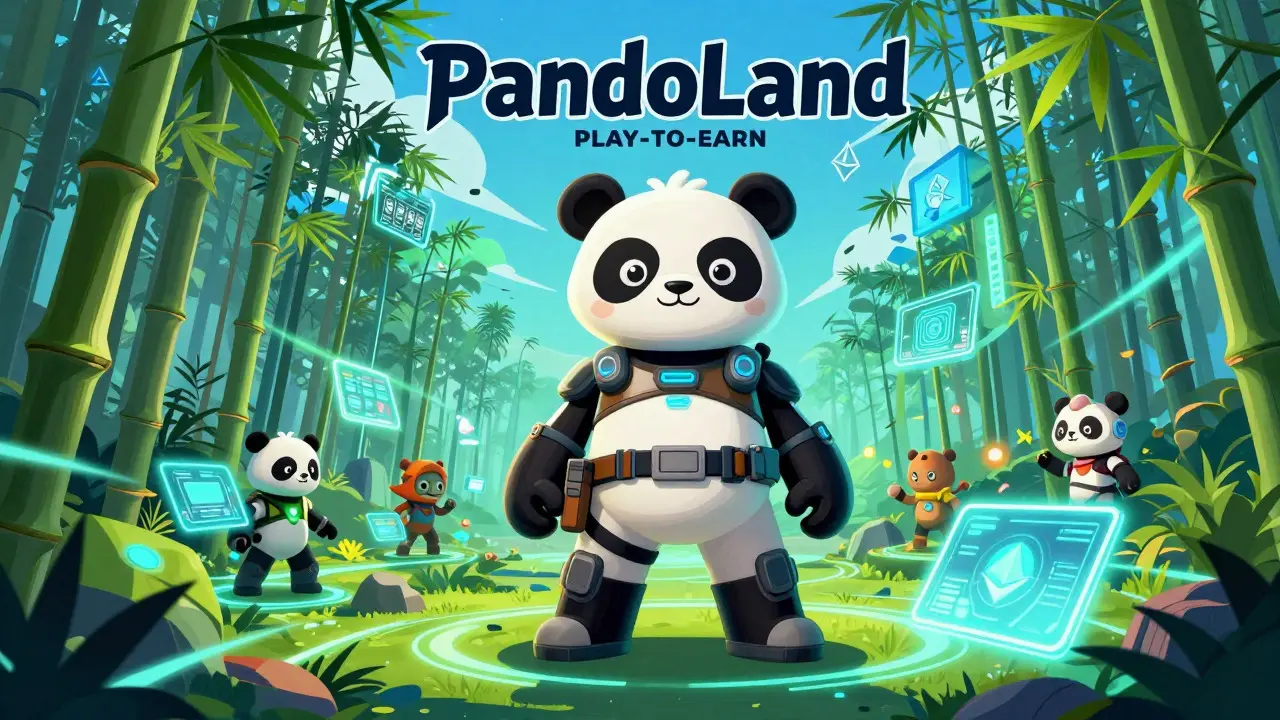
Missing out on a Pando airdrop can feel like leaving money on the table, especially when you see others posting their wallet screenshots. But before you rush to sign up for social media tasks, it’s crucial to understand exactly what this event was and how it works. The PandoLand ($PANDO) token distribution is a specific type of cryptocurrency giveaway tied to a Play-to-Earn (P2E) game on the Ethereum blockchain. Unlike massive, open-ended point systems that run for months, this event had a strict timeline, a fixed number of winners, and clear entry requirements.
This guide breaks down everything you need to know about the Pando airdrop mechanics, the technical details of the token, and what you should expect if you are participating in similar gaming-focused distributions. Whether you are a seasoned DeFi user or just curious about how these events work, understanding the structure helps you avoid common pitfalls and maximize your chances.
What Is the PandoLand Project?
To understand the airdrop, you first need to look at the project behind it. PandoLand is a virtual world inspired by pandas where players earn cryptocurrency through gameplay. It operates on the Ethereum blockchain, which provides a secure environment for storing digital assets. The core concept is simple: you play games, complete quests, and earn rewards in the form of NFTs and tokens.
The project uses an NFT-based economy. This means characters, items, and land parcels are unique digital assets that you truly own. You can trade them on secondary markets or use them within the game. The integration with Ethereum ensures that every transaction is recorded on the public ledger, making ownership transparent and verifiable. For many users, this combination of entertainment and financial incentive is the main draw.
Airdrop Mechanics: How It Works
The Pando airdrop followed a traditional social media engagement model. Instead of requiring complex testnet interactions or holding specific NFTs, the project focused on broad accessibility. Here is how the distribution process typically unfolded for participants:
- Platform: Twitter (now X) served as the primary hub for all announcements and task verification.
- Tasks: Participants were required to follow official accounts, retweet promotional content, and engage with community posts.
- Selection: Winners were chosen from the pool of eligible participants based on completed tasks.
- Distribution: Tokens were sent directly to connected wallets after the selection period ended.
This method prioritizes ease of entry over technical complexity. You don’t need to be a developer or hold expensive NFTs to qualify. However, this simplicity also means competition can be high, as the barrier to entry is low for everyone.
Tokenomics and Reward Structure
Understanding the numbers behind the airdrop helps set realistic expectations. The total supply of the $PANDO token was established at 1,000,000,000 units. From this massive pool, only a small fraction was allocated for the initial airdrop event. Specifically, 500,000 tokens were set aside for distribution.
| Parameter | Value | Description |
|---|---|---|
| Total Token Supply | 1,000,000,000 $PANDO | The maximum number of tokens that will ever exist. |
| Airdrop Allocation | 500,000 $PANDO | Tokens specifically reserved for the giveaway event. |
| Number of Winners | 500 | The exact count of participants who received tokens. |
| Average Reward Value | $1,000 USD | The estimated value per winner at the time of announcement. |
| Percentage of Supply | 0.05% | The portion of the total supply distributed in this phase. |
With 500 winners sharing 500,000 tokens, each participant received approximately 1,000 $PANDO. At the valuation used during the campaign, this translated to roughly $1,000 worth of cryptocurrency per person. While not life-changing money for most, it represents a solid return for spending a few minutes on social media tasks. The key takeaway here is the exclusivity: only 500 people won, making it a competitive rather than guaranteed reward system.

Eligibility and Participation Requirements
You might wonder if you still have a chance or what you need to do for future similar events. For the PandoLand event, eligibility was straightforward but required active participation. Here are the core requirements that defined a valid entry:
- Active Twitter Account: You needed a verified or aged account to prevent bot spam.
- Task Completion: Following the official handle and engaging with pinned tweets was mandatory.
- Wallet Connection: An Ethereum-compatible wallet (like MetaMask) was required to receive the tokens.
- No Prior Holders: Some campaigns exclude existing large holders to ensure fair distribution among new users.
One important detail is the wallet setup. Since PandoLand runs on Ethereum, you must have a wallet that supports ERC-20 tokens. If you are using a hardware wallet, make sure it is connected via a bridge or interface that allows contract interactions. Beginners often struggle here, so double-checking your network settings before submitting your address is critical to avoid losing funds due to wrong network transfers.
Comparative Context: How It Stacks Up
To put the Pando airdrop in perspective, it helps to compare it with other major crypto distributions from the same period. Not all airdrops are created equal; some focus on scale, while others prioritize utility.
| Feature | PandoLand ($PANDO) | Arena Two ($ATWO) | Play AI Network ($PLAI) |
|---|---|---|---|
| Blockchain | Ethereum | BNB Chain | Multichain |
| Distribution Method | Social Media Tasks | Tournament Mechanics | Point Accumulation |
| Timeline | Fixed (March 4-10, 2025) | Extended (Until April 2026) | Ongoing (TGE Q4 2025) |
| Winner Limit | 500 Fixed | Open/Tiered | Open/Tiered |
| Primary Focus | Gaming Community Building | Esports/Tournaments | AI Integration |
As you can see, PandoLand took a more traditional, time-limited approach. Projects like Arena Two offered larger scales but required sustained tournament participation. Play AI Network used a points system that allowed users to accumulate value over time without a hard deadline for winning. The advantage of PandoLand’s model is clarity: you know exactly when it ends and what you stand to win. The disadvantage is the smaller pool of winners compared to broader community airdrops that distribute to thousands or millions of users.
Strategic Tips for Future Airdrops
If you missed the Pando event or want to prepare for the next one, here are practical strategies to improve your odds. These tips apply to most social-media-based crypto giveaways.
- Act Fast: Early engagement often correlates with higher visibility. Don’t wait until the last day to complete tasks.
- Verify Your Wallet: Always send a small test transaction to your own wallet to confirm the address is correct and the network is set to Ethereum.
- Engage Authentically: Simple likes are good, but thoughtful comments on project updates can sometimes help you stand out in manual review processes.
- Check Deadlines: Set reminders for the end date. Missing the cutoff by even an hour means zero reward.
- Understand Tax Implications: In many jurisdictions, airdropped tokens are considered income at the time of receipt. Keep records of the value at the moment you claimed them.
Also, be wary of scams. Official airdrops rarely ask you to connect your wallet to unknown dApps without warning. Always verify the contract address on trusted platforms like Etherscan before interacting with any claim page.
Frequently Asked Questions
Is the Pando airdrop still active?
The original PandoLand airdrop event ran from March 4 to March 10, 2025, and has since concluded. Any current claims should be verified against official project channels to avoid scams targeting latecomers.
How many winners were there in the Pando airdrop?
Exactly 500 winners were selected. Each winner received an allocation of tokens totaling approximately $1,000 USD in value at the time of distribution.
Which blockchain does the $PANDO token use?
The $PANDO token operates on the Ethereum blockchain. This means you need an Ethereum-compatible wallet to store and trade the assets.
Do I need to buy NFTs to participate in PandoLand?
No, the airdrop itself did not require purchasing NFTs. It was designed for broad accessibility through social media tasks. However, owning NFTs may provide additional benefits within the game ecosystem later on.
What is the total supply of the Pando token?
The total supply of $PANDO is capped at 1,000,000,000 tokens. The airdrop represented 0.05% of this total supply, highlighting its role as a community incentive rather than a major liquidity source.