

You probably remember the headlines from 2021. People were paying millions for pictures of monkeys and pixelated punks. It felt like a gold rush where everyone was trying to flip JPEGs for profit. But if you think that’s all NFTs are good for, you’re missing the bigger picture. The hype cycle has cooled down, and what’s left is something far more interesting: actual utility.
Non-fungible tokens (NFTs) aren’t just art frames. They are unique, verifiable certificates of ownership stored on a blockchain. Think of them as digital deeds or IDs that can’t be forged. While the art market grabbed the spotlight, industries like gaming, real estate, healthcare, and logistics have been quietly building infrastructure around this tech. If you’re wondering how these tokens actually work outside of a gallery, let’s break down the real-world jobs they do.
Gaming and Virtual Economies
The strongest argument for NFTs right now isn’t in galleries; it’s in your video games. In traditional Web2 games, you might spend hundreds of dollars on skins or weapons, but you don’t really own them. If the server shuts down or the publisher bans you, those items vanish. You’re essentially renting access.
NFT-based gaming flips this model. Here, every sword, character, or plot of land is an unique token on a public ledger. You own it outright. This means you can sell that rare weapon to another player on an open marketplace, even if they play a different game that supports the same standard. Developers are using this to create "play-to-earn" models, though the sustainability of those early experiments is still being tested. The key shift is interoperability-your assets aren’t locked into one company’s walled garden anymore.
Digital Identity and Credentials
Imagine never having to call a university registrar to verify your degree during a job application. That friction exists because our current system relies on centralized databases that don’t talk to each other. NFTs offer a solution through verifiable credentials.
Educational institutions can issue diplomas as NFTs. These tokens contain metadata proving you completed the course, signed by the issuer’s private key. An employer can check this on-chain instantly, without needing to contact the school. This applies to driver’s licenses, professional certifications, and even medical records. Instead of carrying paper copies or relying on slow background checks, your identity becomes portable and tamper-proof. Privacy remains a challenge, so many implementations store only a hash of the data on-chain while keeping sensitive details off-chain, ensuring you control who sees what.
Real Estate Tokenization
Buying a house is slow, expensive, and paperwork-heavy. Title searches take days, and selling property takes months. NFTs aim to streamline this by tokenizing real estate. This doesn’t mean you buy a house with Bitcoin alone; it means the legal deed is represented by an NFT.
This unlocks two major benefits: fractional ownership and faster transfers. Instead of needing $500,000 to buy a rental property, you could buy ten NFT shares representing 1% equity each. These shares can be traded 24/7 on secondary markets, adding liquidity to an asset class that is traditionally illiquid. Smart contracts handle the distribution of rental income automatically, sending payouts to token holders without a property manager taking a cut. While regulatory frameworks vary wildly by country, the potential to reduce administrative overhead is massive.

Supply Chain Provenance
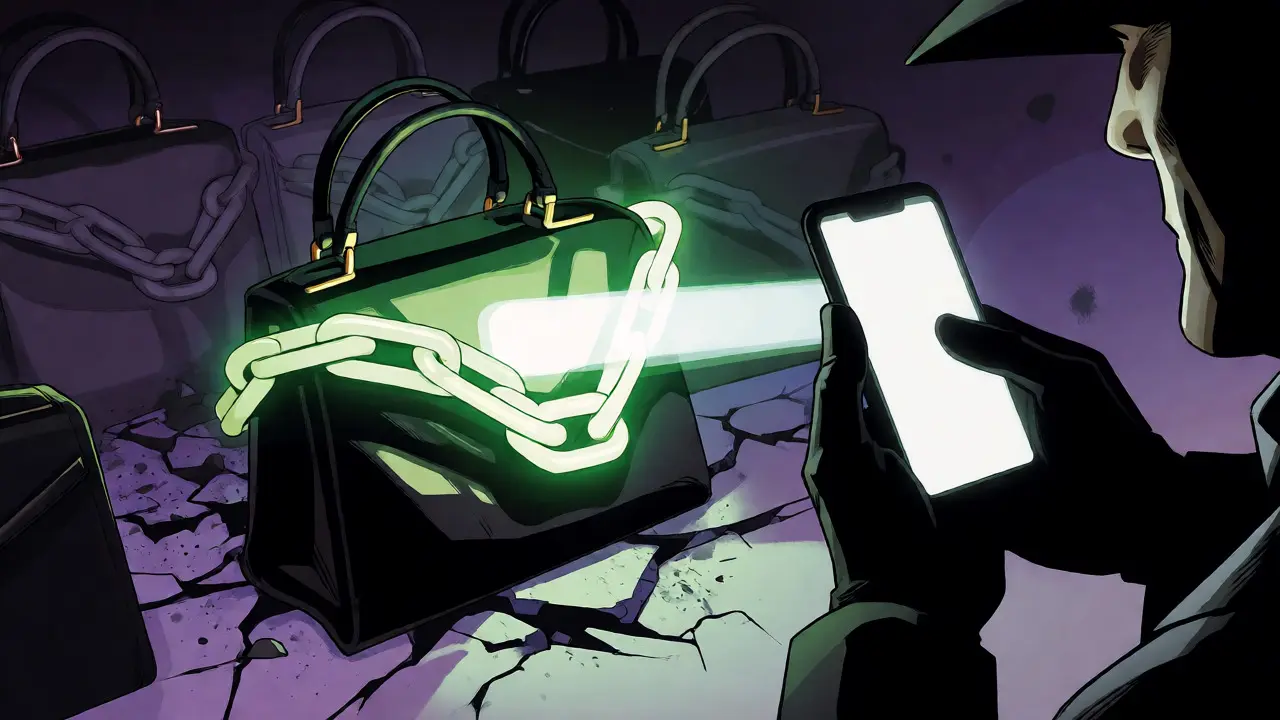
How do you know that luxury handbag is real? Or that your coffee beans actually came from that specific farm in Colombia? Counterfeiting costs brands billions annually. NFTs act as digital passports for physical goods.
When a product is manufactured, an NFT is minted and linked to it via a QR code or NFC chip. As the item moves through the supply chain-from factory to distributor to retailer-the NFT is updated with timestamped location data. When you buy the bag, you scan the code and see its entire history. This immutable record makes counterfeiting incredibly difficult because fakes lack the corresponding on-chain provenance. Projects like VeChain have pioneered this approach, helping brands combat gray-market diversion and build consumer trust.
Ticketing and Event Access
If you’ve ever bought a concert ticket, you’ve likely dealt with scalpers. Traditional tickets are often static PDFs or QR codes that can be copied infinitely. This leads to fraud and price gouging. NFT tickets solve this by encoding rules directly into the token.
Organizers can set resale caps in the smart contract, preventing scalpers from marking up prices by 500%. They can also enforce royalties, meaning the artist gets a percentage every time the ticket is resold. For the buyer, the ticket is a collectible that might grant future perks, like early entry or exclusive merch drops. It turns a disposable piece of paper into a persistent relationship between the fan and the brand.
| Feature | Traditional System | NFT-Based System |
|---|---|---|
| Ownership Proof | Centralized database / Paper certificate | Immutable public ledger entry |
| Transfer Speed | Days to weeks (manual processing) | Minutes (automated via smart contract) |
| Interoperability | Siloed within single platform/vendor | Portable across compatible wallets/marketplaces |
| Fraud Resistance | Vulnerable to forgery/copying | Cryptographically secured uniqueness |
Music and Intellectual Property Rights
Musicians have long struggled with fair compensation. Streaming platforms pay fractions of a cent per play, and intermediaries take large cuts. NFTs allow artists to sell music directly to fans. A fan might buy an NFT that grants them a lifetime stream of an album, plus backstage access to virtual meetups.
More importantly, smart contracts automate royalties. If an artist sells an NFT of their song rights, and that song is later resold, the original creator can automatically receive a percentage of the sale price. This creates a new revenue stream beyond initial sales. It also helps protect intellectual property by providing a clear, timestamped record of creation and ownership transfer, which can be crucial in copyright disputes.
Environmental Assets and Carbon Credits
Voluntary carbon markets are often opaque. It’s hard to verify if a carbon credit actually represents a tree planted or just a promise. NFTs bring transparency here. Each carbon offset can be minted as a unique NFT, linked to specific project data and retirement status.
This prevents double-spending, where the same credit is sold to multiple buyers. Companies looking to meet ESG (Environmental, Social, and Governance) goals can purchase these NFT-backed credits with confidence, knowing the underlying asset is verified on-chain. Some networks, like Hedera Hashgraph, operate with carbon-negative footprints, aligning the technology itself with the environmental goal.
Practical Challenges and Future Outlook
It’s not all smooth sailing. User experience remains a hurdle. Managing private keys and paying gas fees confuses mainstream users. If you lose your password, you might lose your asset forever unless you use custodial solutions. Additionally, regulation is still catching up. Is an NFT representing real estate a security? How does tax law apply to fractional ownership? These questions need clear answers before institutional money floods in.
However, the trajectory is clear. We are moving away from speculative flipping toward functional utility. The most successful projects today aren’t promising moonshots; they’re solving boring problems like verifying degrees, tracking shipments, and simplifying ticket sales. As standards improve and interfaces become invisible, NFTs will likely fade into the background, powering the ownership layer of the internet without us even noticing we’re using them.
Are NFTs only used for digital art?
No. While digital art popularized NFTs, they are widely used in gaming for item ownership, in real estate for tokenized deeds, in supply chains for provenance tracking, and in identity verification for credentials like diplomas and licenses.
How do NFTs help with real estate?
NFTs can represent property titles or fractional ownership shares. This allows for faster transfers, reduced paperwork, and enables smaller investors to buy portions of high-value properties, increasing market liquidity.
Can NFTs prevent ticket scalping?
Yes, potentially. Smart contracts attached to NFT tickets can enforce resale price caps and ensure creators receive royalties on secondary sales, giving organizers more control over pricing and reducing fraudulent duplicates.
What is the main advantage of NFTs in supply chains?
They provide an immutable, transparent record of a product's journey from origin to consumer. This helps verify authenticity, combat counterfeiting, and track ethical sourcing practices.
Are NFTs environmentally friendly?
It depends on the blockchain. Proof-of-Work chains like Ethereum (pre-merge) had high energy usage, but newer networks like Solana, Polygon, and Hedera use Proof-of-Stake or Hashgraph consensus mechanisms, which are significantly more energy-efficient and sometimes carbon-negative.