
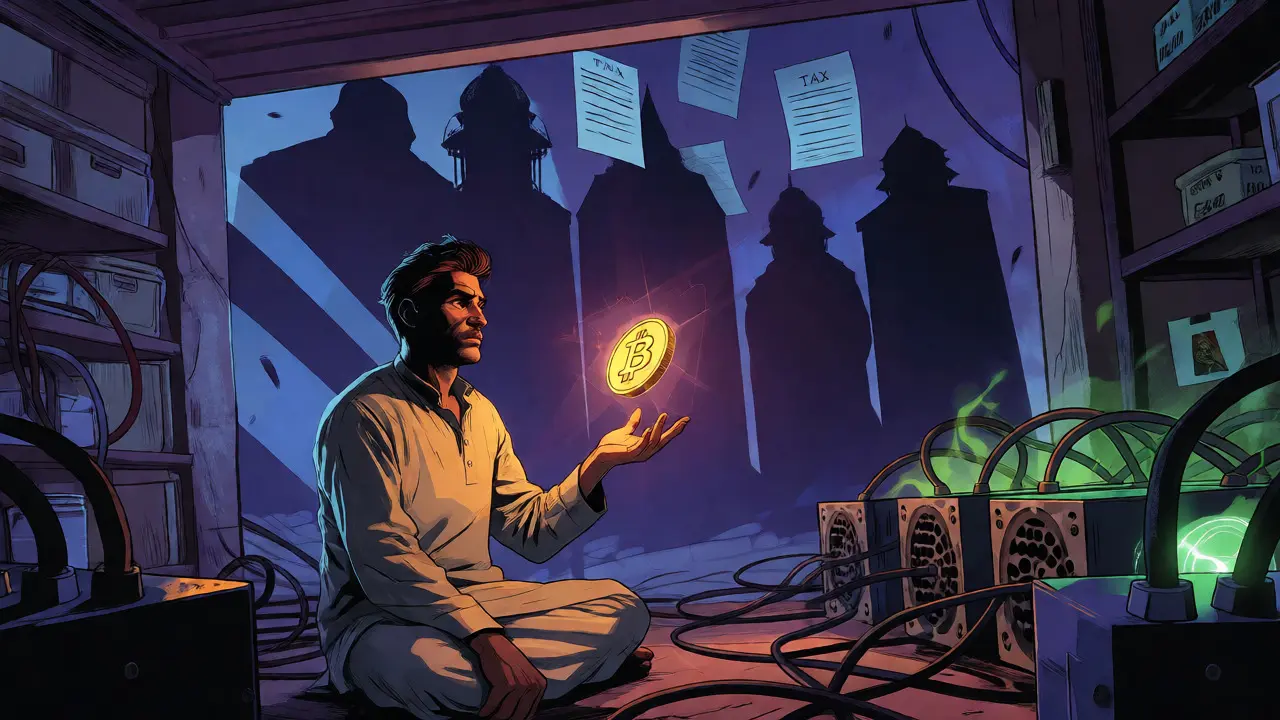
Imagine buying a high-end gaming PC for ₹1.5 lakh, running it 24/7 to mine Ethereum or Bitcoin, and then being hit with a tax bill that wipes out most of your profit before you even cash out. That’s the reality for crypto mining in India. Unlike countries like El Salvador or even neighboring Nepal where mining is either state-supported or loosely regulated, India treats every mined coin as a taxable event with zero mercy on operational costs.
If you are an Indian miner-whether you run a single rig in your garage or manage a small warehouse of ASICs-you need to understand that there is no specific "Mining Act" in India. Instead, you are operating under the broad umbrella of Virtual Digital Assets (VDA) regulations introduced in the Finance Act 2022 and updated through the Income Tax (No. 2) Bill, 2025. This distinction matters because it means miners are often lumped in with traders, despite having vastly different cost structures.
The Current Legal Status: Grey Area but Heavy Compliance
Is crypto mining illegal in India? No. But is it clearly legal? Also no. The Reserve Bank of India (RBI) has maintained a cautious stance since 2013, issuing multiple public cautions about the risks of cryptocurrencies. However, the Supreme Court’s 2020 ruling in *Internet and Mobile Association of India v Reserve Bank of India* struck down the RBI’s blanket banking ban, allowing crypto exchanges to operate again. Yet, this did not legalize mining; it merely allowed transactions to resume.
Today, mining falls under Section 2(47A) of the Income Tax Act, which defines VDAs as any code, number, token, or information created through cryptography. This definition explicitly excludes fiat currencies but includes everything from Bitcoin to NFTs. For miners, this means every block reward you receive is treated as income at the moment of receipt, valued at the market rate in INR. There is no grace period, no averaging mechanism, and no recognition of the electricity bill you just paid to generate that block.
| Agency | Role in Mining Context | Recent Action/Focus |
|---|---|---|
| Income Tax Department | Enforces 30% tax on mining rewards | Uses AI systems (Project Insight) to track non-compliance |
| Financial Intelligence Unit (FIU-IND) | Monitors Anti-Money Laundering (AML) compliance | Fined Binance ₹18.82 crore; issued notices to 25 offshore exchanges |
| Reserve Bank of India (RBI) | Systemic risk monitoring and policy advice | Maintains cautionary stance; advocates for global regulation alignment |
| SEBI | Regulates tokens resembling securities | Began monitoring crypto tokens as securities from April 1, 2025 |
The Punitive Tax Structure: Why Most Miners Lose Money
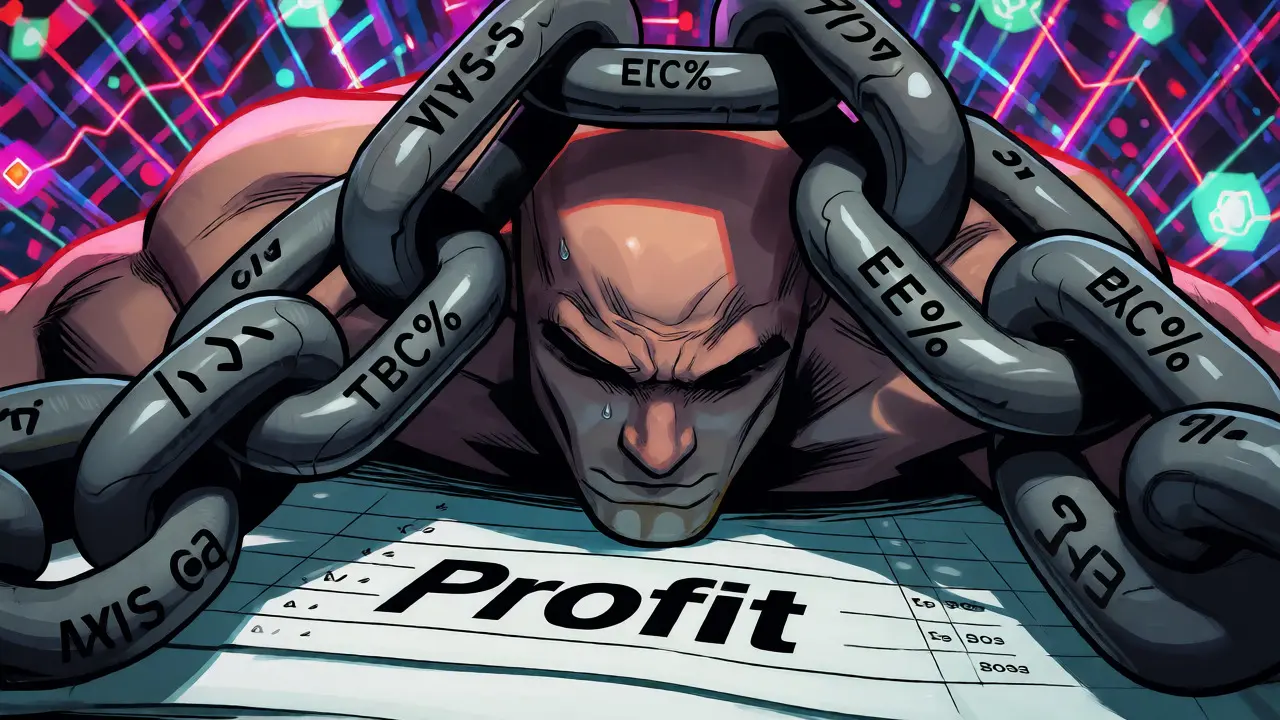
Here is the part that hurts. India imposes a flat 30% tax on all income derived from VDAs, plus a 4% cess, bringing the effective rate to 31.2%. But the real killer isn’t the rate-it’s the lack of deductions. Under normal business taxation, if you spend ₹100 to earn ₹200, you pay tax on the ₹100 profit. In Indian crypto mining, if you spend ₹100 on electricity and hardware depreciation to earn ₹200 in mined coins, you still pay tax on the full ₹200.
Let’s break down the math for a typical solo miner:
- Mining Revenue: ₹10,000 worth of BTC mined per month.
- Electricity Cost: ₹6,000 (non-deductible).
- Hardware Depreciation: ₹2,000/month (non-deductible).
- Taxable Income: ₹10,000 (not ₹2,000 profit).
- Tax Due (31.2%): ₹3,120.
- Net Profit After Tax & Costs: ₹10,000 - ₹6,000 - ₹2,000 - ₹3,120 = -₹1,120 loss.
This structure makes small-scale and individual mining economically unviable unless you have access to extremely cheap power or subsidized industrial rates. Furthermore, a 1% Tax Deducted at Source (TDS) applies to all crypto transactions above certain thresholds, including when you convert mined assets to fiat currency via an exchange. This creates a cash-flow crunch where you owe taxes on paper gains before you’ve actually realized them in your bank account.
Compliance Requirements: What You Must Report
Navigating the paperwork is half the battle. Since January 2023, taxpayers must declare all VDA activities under Schedule VDA in their Income Tax Returns (ITR). For miners, this involves meticulous record-keeping. You cannot simply say “I mined some Bitcoin.” You must report:
- Date of Receipt: The exact timestamp when the mining pool credited your wallet.
- Asset Name: Specific ticker symbol (e.g., BTC, ETH).
- Value in INR: Market value at the time of receipt, sourced from recognized exchanges.
- TDS Paid: Details of any TDS deducted during subsequent sales.
Failure to comply triggers aggressive enforcement. The Income Tax Department uses AI-powered tools like Project Insight and NUDGE to cross-reference blockchain data with bank statements. If you sell mined coins without reporting the initial mining income, you face penalties ranging from 50% to 200% of the tax due, and potential imprisonment up to seven years. Additionally, the Financial Intelligence Unit (FIU-IND) requires exchanges to report suspicious transactions under the Prevention of Money Laundering Act (PMLA) 2002. Recent fines against giants like Binance (₹18.82 crore) show that regulators are serious about tracking the flow of funds.
Operational Hurdles: GST and Import Duties
It’s not just income tax. From July 7, 2025, major exchanges began imposing an 18% Goods and Services Tax (GST) on crypto-related services. While this primarily affects trading fees, miners who use centralized platforms to swap mined coins for stablecoins or fiat incur these additional costs. More critically, importing mining hardware (ASICs, GPUs) attracts significant customs duties. As of 2026, import duties on electronics remain high, adding to the capital expenditure burden.
Moreover, commercial mining operations face scrutiny regarding their electricity usage. State electricity boards may classify heavy-duty mining rigs as commercial consumers rather than domestic ones, leading to higher tariff rates. Without a clear national policy on energy consumption for mining, miners are at the mercy of local utility providers who can change rates or impose surcharges with little notice.

Future Outlook: CARF and Global Alignment
The regulatory landscape is shifting toward global standardization. India plans to adopt the OECD Crypto-Asset Reporting Framework (CARF) by April 2027. This framework will require comprehensive reporting of all global mining activities involving Indian residents, including participation in offshore mining pools. Essentially, if you mine via a pool hosted in Iceland or Canada, those earnings will be visible to Indian tax authorities through automatic exchange of information.
A discussion paper released in mid-2025 hinted at a multi-agency regulatory model involving the RBI, SEBI, and the Finance Ministry. This suggests that while mining itself might not be banned, sector-specific regulations could emerge. For instance, SEBI’s move to monitor tokens resembling securities implies that if you mine altcoins that later get classified as securities, you might face additional disclosure requirements similar to IPO investors.
Strategic Options for Indian Miners
Given the harsh tax environment, many Indian miners are choosing one of three paths:
- Offshore Migration: Moving physical rigs to countries with clearer laws and lower energy costs (e.g., Paraguay, Kazakhstan). This avoids Indian tax residency issues for the operation but complicates repatriation of profits.
- Cloud Mining Contracts: Investing in cloud mining services offered by international firms. This shifts the operational burden but introduces counterparty risk and potential scams.
- Hold and Accumulate: Accepting the tax hit and holding mined assets long-term, betting on price appreciation to offset the initial tax drag. This strategy works only if the asset appreciates significantly over several years.
For those staying put, professional accounting support is no longer optional. Generic tax consultants often misunderstand VDA rules. You need specialists who understand blockchain timestamps and wallet addresses. Keeping private keys secure is also vital; if you lose access to your mined coins, you still owe tax on them if they were reported as received.
Is crypto mining legal in India?
Yes, crypto mining is not explicitly prohibited by law. However, it operates in a regulatory grey area governed by Virtual Digital Asset (VDA) tax laws. While you can mine, you must comply with strict reporting and tax obligations under the Income Tax Act.
What is the tax rate on mined cryptocurrency in India?
Mined cryptocurrency is taxed at a flat rate of 30%, plus a 4% health and education cess, totaling 31.2%. Crucially, no deductions are allowed for operational expenses like electricity, internet, or hardware depreciation. Only the cost of acquisition (which is effectively zero for mined coins) can be considered, meaning you pay tax on the gross value of the mined coins.
Do I need to pay GST on mining equipment?
Yes, purchasing mining equipment within India attracts GST (currently 18%). Additionally, imported equipment incurs customs duties and IGST. These costs increase your initial capital expenditure but, unfortunately, cannot be deducted from your mining income tax liability under current VDA rules.
How does the RBI view crypto mining?
The Reserve Bank of India maintains a cautious stance, frequently warning about financial stability risks associated with crypto assets. While the RBI does not directly regulate mining operations, its policies influence banking channels used by miners. Banks may restrict transactions related to crypto purchases or withdrawals, creating liquidity challenges for miners converting rewards to fiat.
Will future regulations ban crypto mining in India?
A complete ban remains possible but less likely given the government's focus on regulation rather than prohibition. Upcoming frameworks like the OECD Crypto-Asset Reporting Framework (CARF) suggest India aims to integrate mining into the formal economy through transparency and taxation rather than outright bans. However, political shifts could always introduce stricter measures.