
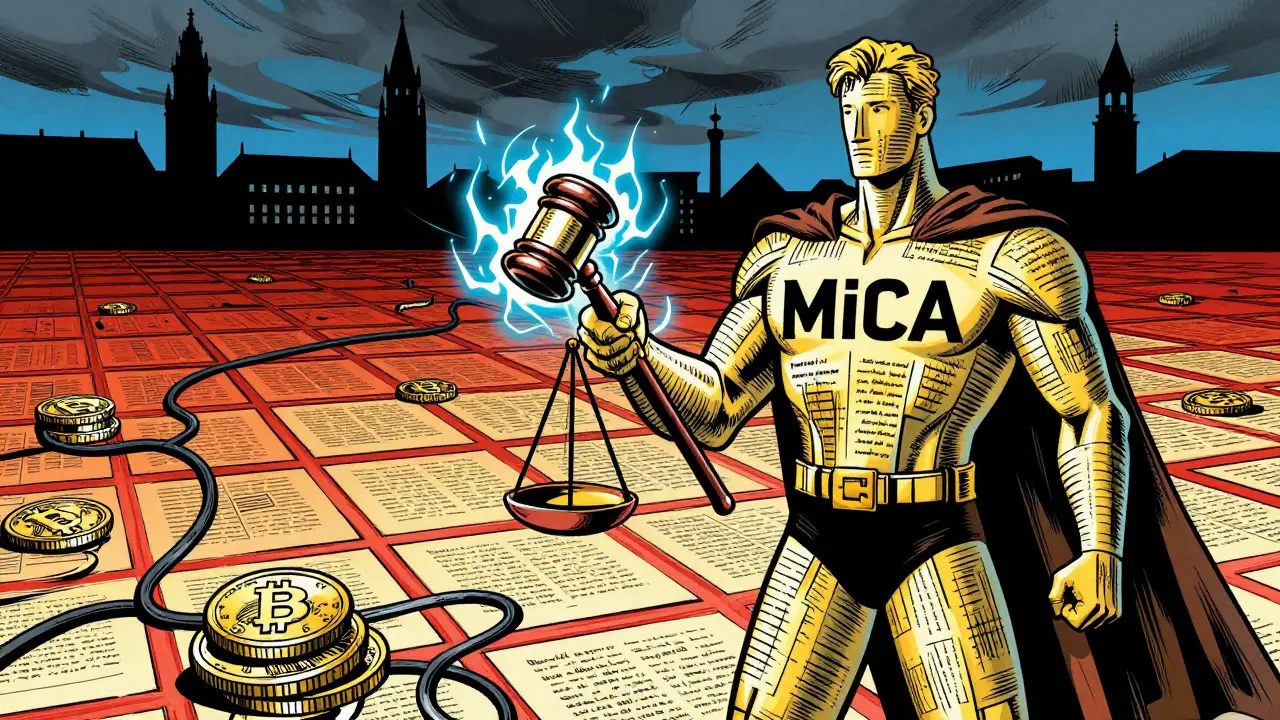
On December 30, 2024, the European Union flipped the switch on full MiCA is the Markets in Crypto-Assets regulation, the world's first comprehensive legal framework for digital assets. This wasn't just another rule update; it was the moment the EU stopped treating crypto as a gray area and started regulating it like traditional finance. If you hold tokens or run a service in Europe, this date marked the end of the "wild west" era. The deadline enforced strict licensing for providers and tight controls on stablecoins, reshaping how millions of users interact with their wallets.
You might be wondering why this specific date mattered so much when the law passed years earlier. It’s because MiCA rolled out in phases. While stablecoin rules kicked in mid-2024, the heavy lifting for exchanges, custodians, and other service providers landed on that final day. Now, more than a year later, we can see exactly what worked, what broke, and where the industry stands. Let’s break down the reality behind the headlines.
The Two-Phase Rollout: Why Timing Matters
To understand the impact, you have to look at how the implementation actually unfolded. The regulation didn’t hit all at once. It used a phased approach to give the market time to adjust without causing a total freeze.
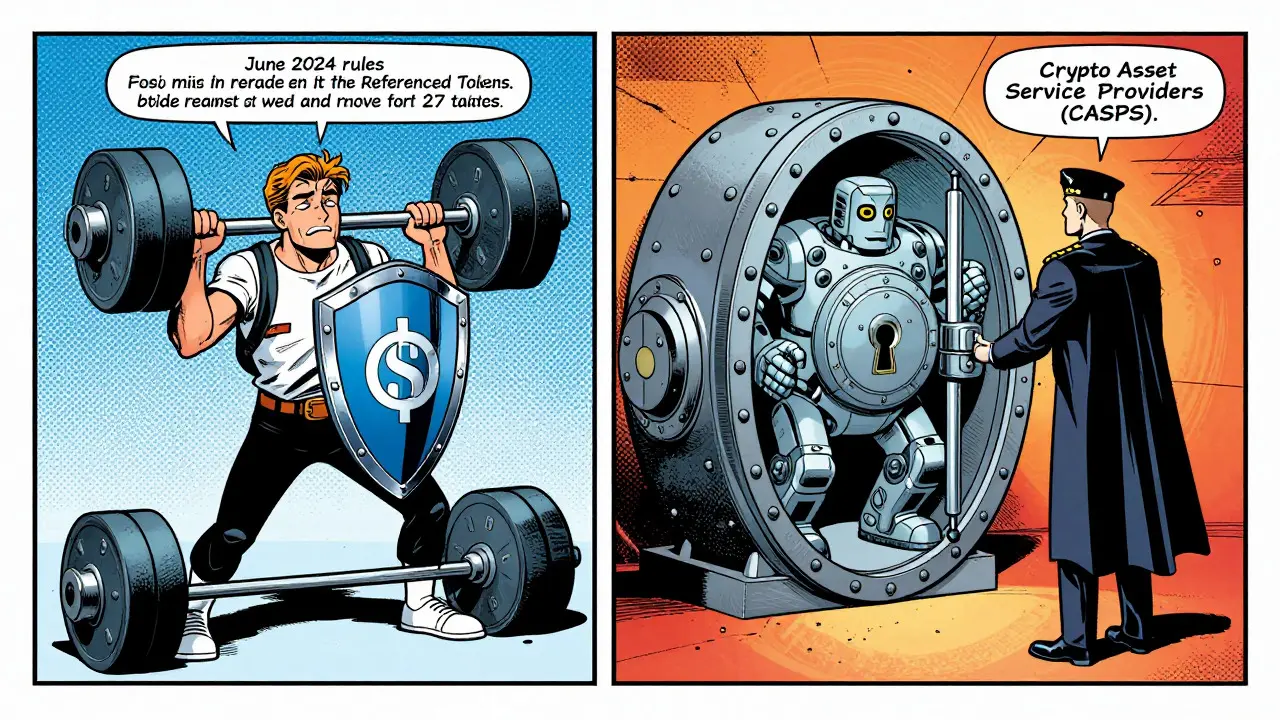
- June 30, 2024: Rules for Asset-Referenced Tokens (ARTs) and E-Money Tokens (EMTs) became enforceable. These are your typical stablecoins pegged to fiat currencies or baskets of assets.
- December 30, 2024: Full application for all other crypto assets and, crucially, the licensing regime for Crypto Asset Service Providers (CASPs).
Who Had to Get Licensed? Understanding CASPs
The biggest shift on December 30 was the creation of the Crypto Asset Service Provider is a legal entity authorized to offer services related to crypto-assets, such as trading, custody, or issuance. Before MiCA, every EU country had its own patchwork of rules. Some required licenses, others didn’t. Now, there is one standard across all 27 member states.
If you run an exchange, a wallet provider, or a staking service, you needed authorization from a National Competent Authority (NCA). This isn’t just paperwork. It means:
For large players like Coinbase or Kraken, this meant applying for a single EU passport. Once approved by one country’s regulator, they could legally serve customers in any other EU nation. For smaller startups, though, the cost of compliance became a massive barrier to entry. Many chose to exit the EU market rather than spend millions on legal fees and infrastructure upgrades.
The Stablecoin Shakeout: Delistings and Deadlines
While CASP licensing took time to process, the stablecoin rules hit hard immediately after the main deadline. The European Securities and Markets Authority (ESMA) set a clear timeline: non-compliant stablecoins had to be restricted or delisted by March 31, 2025. Why? Because not all stablecoins met the new transparency and reserve standards. Under MiCA, issuers must keep enough liquid assets to cover 100% of issued tokens. They also have to publish whitepapers detailing risks and technology. Many popular stablecoins failed these tests. As a result, major exchanges removed them from trading pairs. Users were given a window to sell off their positions or convert them to compliant alternatives. This caused short-term liquidity dips but ultimately cleaned up the market of questionable assets.

Market Impact: Legitimacy vs. Cost
So, did MiCA kill innovation or save the industry? The data suggests it’s a mix of both. On one hand, consumer confidence has grown. Institutional investors are more willing to enter the EU market now that there’s a clear legal safety net. The timing coincided with Bitcoin breaking $100,000, signaling that big money sees regulated crypto as a viable asset class. On the other hand, the costs are real. Compliance isn’t cheap. Firms need dedicated legal teams, updated tech stacks for reporting, and ongoing audit preparations. Smaller firms struggled with the stress testing requirements mandated by the European Banking Authority (EBA). These technical standards demanded sophisticated risk modeling that many small teams couldn’t build in time. The result? Consolidation. Fewer, larger players dominate the EU space now, offering more stability but less variety.
Navigating the New Normal: What to Do Next
If you’re an investor, check which stablecoins your exchange still supports. Make sure they are MiCA-compliant to avoid sudden delistings. If you’re a business owner, don’t assume grandfathering means you’re safe. Transition periods ended, and full compliance is now the baseline. Here’s a quick checklist to stay ahead:
- Verify Licenses: Ensure your service provider holds a valid CASP authorization from an EU NCA.
- Check Reserves: Look for public proof of reserves for any stablecoin you hold.
- Monitor ESMA Updates: Regulatory technical standards are still being refined. Keep an eye on official guidance for changes in capital or liquidity rules.
What happened exactly on December 30, 2024?
This was the date when the full MiCA regulation became applicable for all crypto assets not covered by the earlier June 2024 phase. Specifically, it activated the licensing requirements for Crypto Asset Service Providers (CASPs) and established unified market abuse prevention rules across the EU.
Do I need a license to trade crypto in the EU now?
As an individual investor, no, you don’t need a license to buy or sell. However, the platforms you use to trade must be licensed CASPs. If you run a business providing services like custody, exchange, or advisory, yes, you need authorization from a National Competent Authority.
Why were some stablecoins delisted in early 2025?
ESMA mandated that non-compliant stablecoins be restricted by March 31, 2025. Many stablecoins failed to meet MiCA’s strict requirements for transparent reserve backing and regular audits, forcing exchanges to remove them to avoid regulatory penalties.
What is the difference between ARTs and EMTs?
Asset-Referenced Tokens (ARTs) are stablecoins pegged to a basket of assets (like multiple currencies or commodities). E-Money Tokens (EMTs) are pegged to a single fiat currency (like the Euro or Dollar). Both fell under the stricter rules that began in June 2024, requiring full liquid asset backing.
Can companies outside the EU serve EU customers?
Yes, but they must obtain a MiCA license through a subsidiary in an EU member state or partner with a licensed EU entity. Without this, they cannot legally offer services to EU residents, leading many global firms to restructure their operations to comply.