
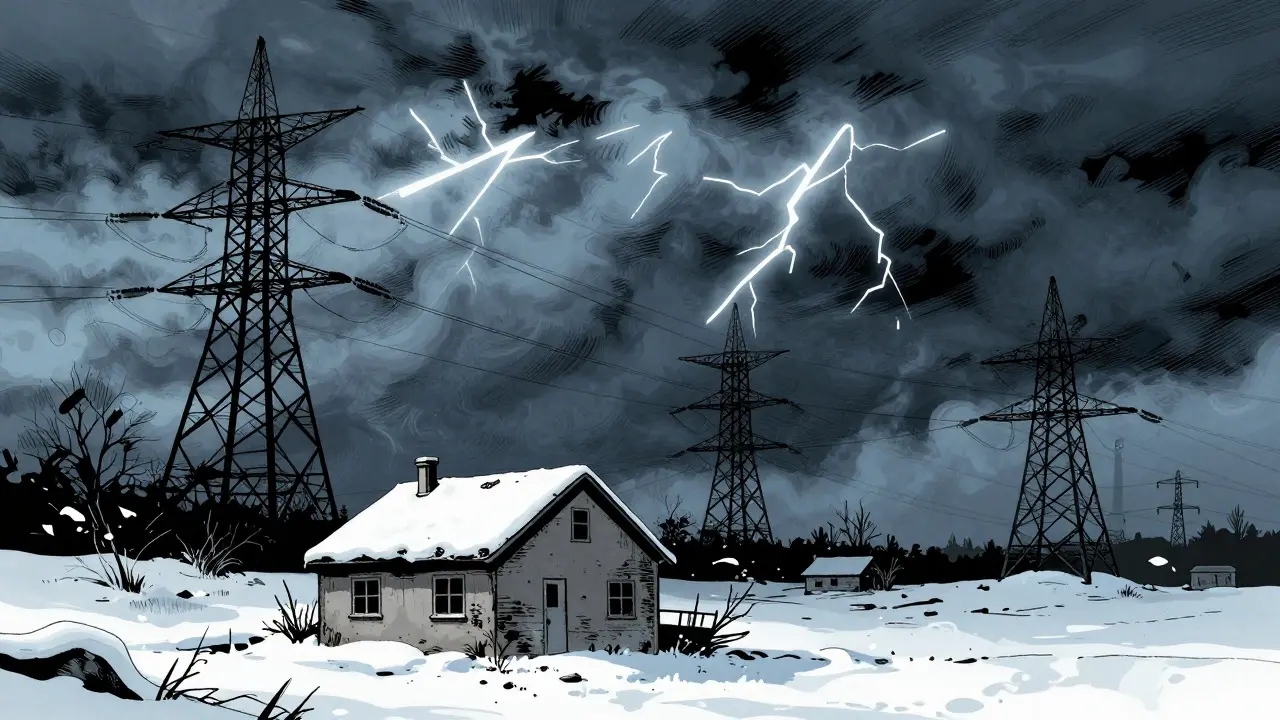
Imagine losing your entire income source overnight because the government decides your job is using too much electricity. That was exactly what happened to thousands of miners in Kosovo is a small Balkan nation that faced a severe energy shortage in late 2021 and early 2022. In January 2022, the country effectively shut down its cryptocurrency mining sector with a complete ban, marking one of the most aggressive governmental responses to energy crises in the digital asset world.
This wasn't just a temporary hiccup; it was a structural shift. If you are looking at investing in the region or trying to understand why certain jurisdictions remain hostile to proof-of-work mining, Kosovo's story is critical. It highlights how fragile energy grids can be when competing against high-consumption industries like Bitcoin mining. Here is what actually happened, why it stuck, and where things stand today.
The Spark: Energy Crisis and the January 2022 Ban
To understand the ban, you have to look at the winter of 2021. Kosovo was dealing with a dual threat: rising global fossil fuel prices and a local supply crunch. The government declared a state of emergency in December 2021 as power outages became common. On January 4, 2022, Minister of Economy Artane Rizvanolli announced a total prohibition on cryptocurrency production across the territory.
The logic was straightforward. Proof-of-work mining consumes massive amounts of electricity to solve complex mathematical problems, validating transactions on blockchains like Bitcoin. With the grid already strained, every kilowatt-hour used by a miner was a kilowatt-hour not available for hospitals, schools, or homes. The ban targeted all forms of mining, but the focus was heavily on industrial-scale operations that had quietly grown in the region due to cheaper labor and previously overlooked regulatory gaps.
Enforcement: Raids, Confiscations, and Grid Monitoring
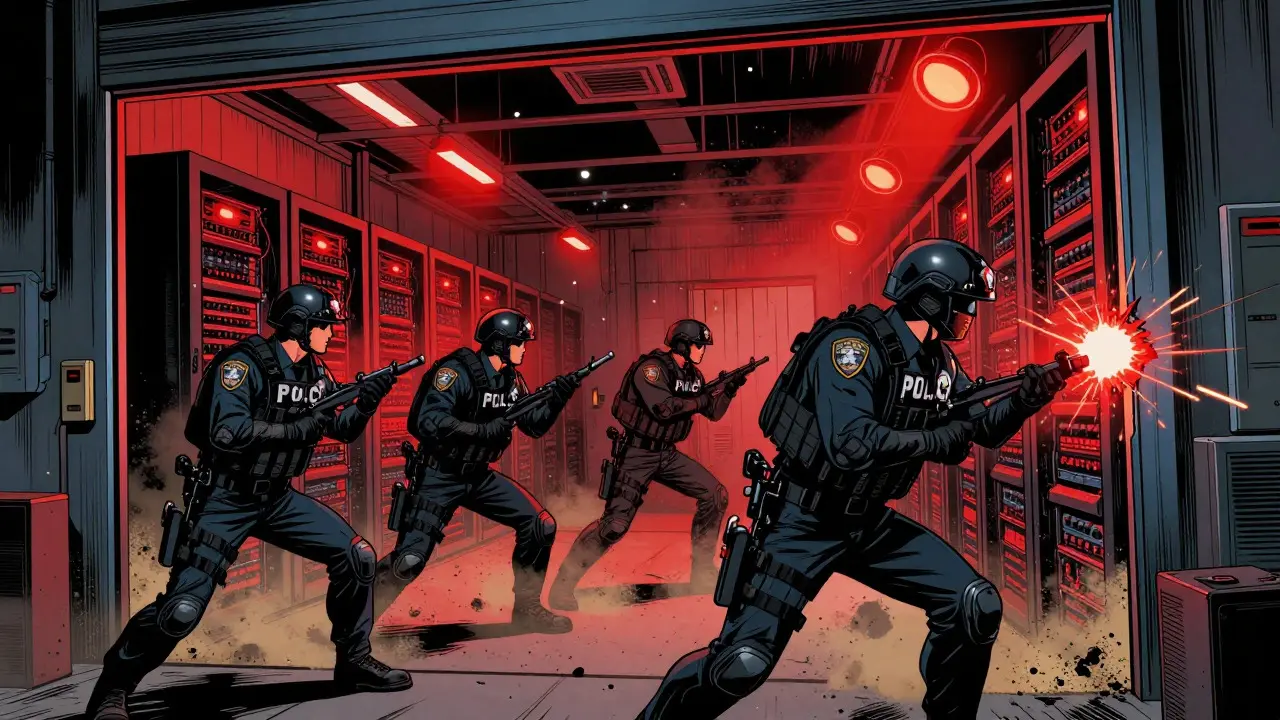
A ban is only as good as its enforcement. Kosovo didn't just put out a press release; they mobilized police and customs authorities. In the months following the announcement, law enforcement conducted coordinated raids targeting unauthorized mining sites. The results were immediate and tangible: over 300 Bitcoin mining devices were confiscated in the initial wave of operations.
But catching the hardware was only half the battle. The real challenge was detecting who was still mining. The government implemented specific monitoring protocols for electricity consumption patterns. Utilities began flagging accounts with unusually high or consistent usage spikes that didn't match typical residential or commercial profiles. This data sharing between energy providers and law enforcement created a net that made it very difficult for miners to operate under the radar without risking heavy fines or equipment seizure.
The Northern Kosovo Factor: Unpaid Electricity and Political Tensions
There was a geographic nuance to this crackdown that many international observers missed. The restrictions hit particularly hard in northern Kosovo, municipalities with large Serbian-majority populations. In these areas, there had been a long-standing tradition of non-payment for electricity, often due to political disputes over infrastructure control.
Miners exploited this loophole. By setting up rigs in regions where citizens weren't paying their bills, they could access subsidized or essentially free power, drastically lowering their operational costs. The Committee for Economy in the Assembly of Kosovo specifically targeted this misuse. The ban wasn't just about saving energy; it was about closing a revenue leak and asserting state control over utility distribution in politically sensitive zones. This added a layer of complexity to the regulation, making it as much about domestic politics as it was about energy security.
Extension Mechanisms: How Long Did It Last?
You might expect a ban to be either permanent or lifted quickly once the crisis passed. Kosovo took a middle path. The original restrictions included built-in flexibility. From August 1, 2022, the ban was extended for another 60 days. The legal framework allowed the government to adjust the duration based on conditions, with extensions ranging from 30 to 180 days depending on the health of the energy sector.
This adaptive approach showed a level of planning that surprised some analysts. Instead of a rigid 'on/off' switch, the government treated the ban as a dynamic tool. If the grid stabilized, restrictions could ease. If shortages returned, they could tighten again. As of 2025, this flexibility has kept the core ban in place, though with minor tweaks discussed below.
Current Status (2025-2026): Still Banned, But With Cracks
Fast forward to today. Is mining illegal in Kosovo? Yes, largely. The country remains one of eight nations worldwide with outright bans on cryptocurrency mining according to international monitoring groups. However, the landscape isn't entirely black and white anymore.
Recent developments suggest limited exceptions for operations powered exclusively by alternative energy sources. If a miner can prove their rigs run on solar, wind, or other off-grid renewable power that doesn't burden the national electrical grid, they may find a narrow path to legality. This creates a bifurcated market: traditional grid-tied mining is dead, but independent, renewable-powered micro-mining is potentially viable. For investors, this means the barrier to entry has shifted from 'can I afford electricity?' to 'can I secure off-grid renewable capacity?'

Economic Impact: Who Lost Out?
The restrictions had ripple effects beyond just the miners. For investors, the legal uncertainty froze potential projects. For everyday users, it meant fewer local services built around crypto assets. Perhaps most significantly, it impacted the diaspora. Kosovo has a large population living abroad who send money home. Crypto-based remittances, which often offer lower fees than traditional banks, were hindered by the broader climate of illegality surrounding crypto activities in the country.
| Stakeholder Group | Primary Impact | Long-term Consequence |
|---|---|---|
| Professional Miners | Equipment confiscation, forced relocation | Exit from the market or move to friendlier jurisdictions |
| Investors | Legal risk, lack of clear frameworks | Reduced FDI in tech/crypto sectors |
| Diaspora | Limited access to low-cost remittance tools | Continued reliance on traditional banking channels |
| Energy Sector | Immediate reduction in peak demand | Improved grid stability during winter months |
What Comes Next? The Legislative Roadmap
The government hasn't stopped at banning mining. There are ongoing efforts to create a comprehensive cryptocurrency legislation framework. This new law aims to categorize different cryptocurrencies, define taxation rules, and set compliance standards for trading and usage. The goal is to separate 'mining' (which stays restricted due to energy concerns) from 'using' or 'trading' crypto (which may become regulated and legal).
For anyone watching this space, keep an eye on the Assembly of Kosovo's economic committee. They are the ones drafting the rules that will determine if Kosovo becomes a hub for compliant crypto finance or remains a closed door. The distinction between energy-intensive production and financial utility is the key battleground for the next few years.
Is cryptocurrency mining completely illegal in Kosovo in 2026?
Yes, for the most part. Mining using the national grid is banned. However, there are emerging exceptions for operations powered exclusively by alternative, off-grid renewable energy sources, provided they do not strain the public utility network.
Why did Kosovo ban crypto mining in January 2022?
The primary reason was a severe energy crisis. High electricity demand from miners contributed to widespread power outages. The government also aimed to stop the misuse of unpaid or subsidized electricity in northern municipalities.
How does Kosovo enforce the mining ban?
Enforcement involves police and customs raids to confiscate hardware, combined with data monitoring of electricity consumption patterns to identify suspicious usage levels indicative of mining operations.
Can I trade cryptocurrency in Kosovo legally?
Currently, the legal status of trading is gray and subject to change. While mining is strictly banned, new legislation is being developed to regulate trading and usage. Until those laws are fully enacted and clarified, traders face legal uncertainty.
Did the ban affect other countries' mining strategies?
Yes. Kosovo's ban followed China's 2021 shutdown and highlighted the risks of relying on unstable grids. It reinforced the global trend of miners seeking jurisdictions with stable, cheap, and green energy, moving away from regions prone to political or energy shocks.